


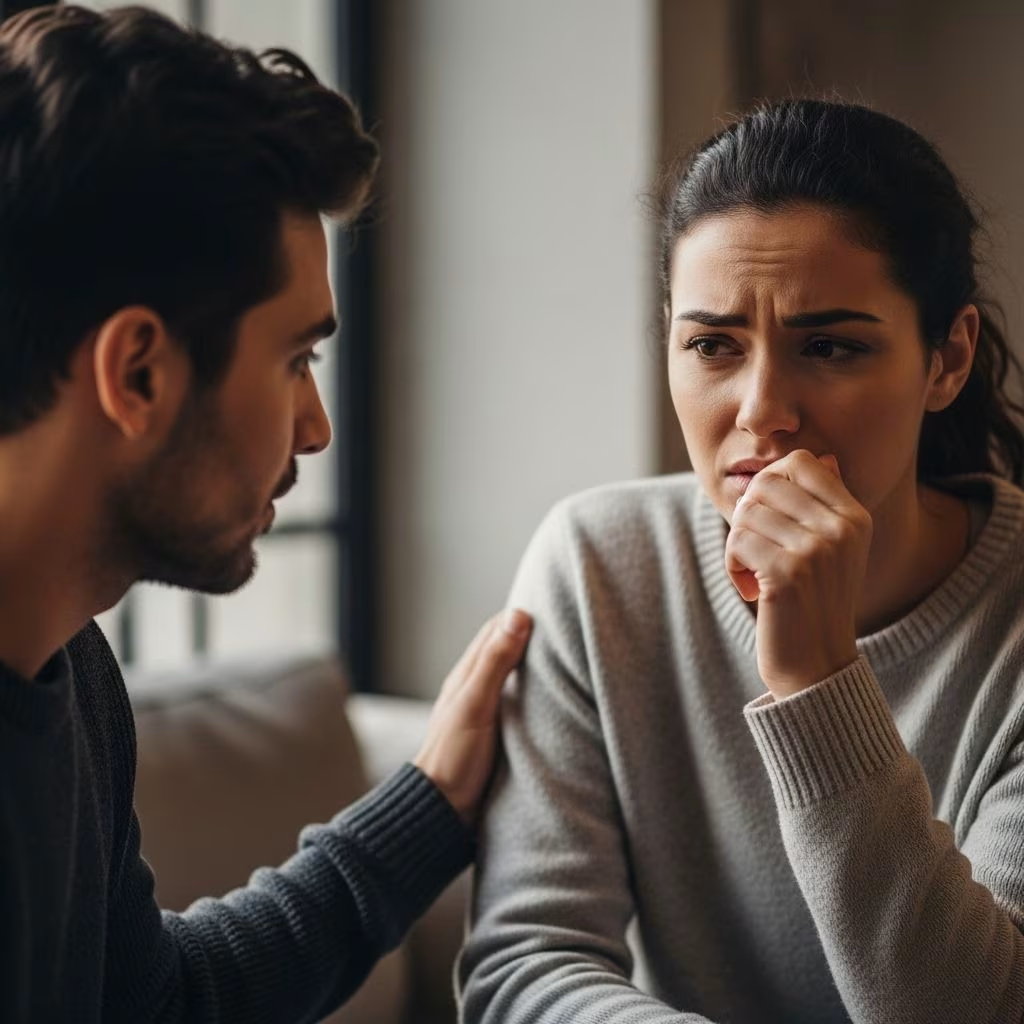
Starting a new relationship should feel exciting and full of promise, yet for many people, the early stages of romance trigger overwhelming feelings of worry, doubt, and fear. This phenomenon, known as new relationship anxiety, affects countless individuals who find themselves questioning everything from their partner’s intentions to their own worthiness of love. Understanding these anxious feelings and learning how to navigate them can mean the difference between sabotaging a potentially wonderful connection and building a foundation for lasting intimacy.
New relationship anxiety manifests differently than general nervousness about dating. While it’s perfectly normal to feel butterflies or uncertainty when getting to know someone, relationship anxiety goes deeper, creating persistent patterns of overthinking, self-doubt, and fear that can undermine even the healthiest partnerships. The good news is that recognizing these signs early and implementing proven coping strategies can help you move past anxiety and fully embrace the joy of new love.
Understanding New Relationship Anxiety
New relationship anxiety represents a specific form of worry that emerges when you’re beginning a romantic partnership with someone. Unlike the excitement and anticipation that typically accompany new love, this anxiety creates a persistent undercurrent of fear and insecurity that can overshadow positive experiences. The anxiety often stems from deeper psychological patterns related to attachment, past experiences, and self-perception.
What makes new relationship anxiety particularly challenging is its timing. Just when you should be enjoying the honeymoon phase of getting to know someone special, anxious thoughts intrude and create unnecessary stress. You might find yourself analyzing every text message, questioning whether your feelings are reciprocated, or worrying that the relationship will inevitably end in disappointment. These thought patterns become exhausting and can prevent you from being present and authentic with your partner.
The roots of relationship anxiety frequently trace back to past experiences, attachment styles formed in childhood, or underlying mental health conditions. Someone who experienced abandonment, betrayal, or inconsistent emotional availability in previous relationships may carry those fears into new partnerships. Similarly, individuals with anxious attachment styles—developed through early childhood experiences—often struggle with persistent worry about their romantic relationships regardless of how secure the partnership actually is.
Sign 1: Constantly Seeking Reassurance
One of the most recognizable signs of new relationship anxiety is the persistent need for reassurance from your partner. While occasional validation is healthy and normal in any relationship, anxiety transforms this into a constant requirement that can strain the partnership. You might find yourself repeatedly asking your partner if they still like you, if they’re happy, or if they see a future together—even when they’ve already answered these questions multiple times.
This reassurance-seeking behavior stems from a deep-seated fear that your partner’s feelings aren’t genuine or won’t last. Each time they provide reassurance, it offers temporary relief from anxiety, but the calm never lasts long. Within hours or days, the doubts creep back in, and you feel compelled to seek confirmation once again. This creates a cycle where you become dependent on external validation rather than developing internal security about the relationship.
The challenge with constant reassurance-seeking is that it can become self-fulfilling. Partners may initially respond with patience and understanding, but over time, the repeated questions can feel exhausting or suggest a lack of trust. This dynamic can create distance in the relationship, ironically triggering the very abandonment you fear. Breaking this pattern requires developing self-soothing techniques and building confidence in your own perceptions rather than constantly looking outward for validation.
Sign 2: Overthinking Every Interaction
Overthinking represents another hallmark sign of new relationship anxiety. You find yourself analyzing every conversation, text message, or interaction with microscopic detail, searching for hidden meanings or signs of trouble. A delayed response to a text becomes evidence that your partner is losing interest. A slightly different tone in their voice suggests they’re having second thoughts. An innocent comment gets dissected for hours as you try to decode what they really meant.
This hypervigilance to potential relationship threats exhausts both your mental energy and your ability to enjoy the present moment. Instead of appreciating a lovely date, you’re preoccupied with whether your partner seemed as engaged as usual. Rather than relaxing into conversation, you’re monitoring their body language and facial expressions for any hint of dissatisfaction. This constant analysis prevents genuine connection and keeps you trapped in your head rather than present in the relationship.
Overthinking also tends to create problems where none exist. Your anxious interpretations of neutral situations can lead to unnecessary conflict or emotional withdrawal. When you assume the worst about your partner’s intentions or feelings, you may react defensively or pull away, confusing your partner who has no idea why the dynamic has suddenly shifted. Learning to challenge these anxious thoughts and distinguish between genuine intuition and anxiety-driven speculation becomes crucial for relationship health.
Sign 3: Doubting Your Partner’s Feelings
Despite clear evidence of your partner’s affection and commitment, new relationship anxiety manifests as persistent doubt about their true feelings. They tell you they care about you, make time to see you regularly, introduce you to friends and family, and show affection through words and actions—yet you can’t shake the nagging belief that they don’t really love you or that their feelings aren’t as strong as they claim.
This doubt often reveals itself through internal questions that replay constantly in your mind. Do they actually miss you when you’re apart, or are they relieved to have space? Are they genuinely excited to see you, or just being polite? Do they love you for who you are, or what you provide for them? These questions persist regardless of how much evidence contradicts them, because relationship anxiety distorts your ability to accurately interpret your partner’s feelings and intentions.
The underlying issue isn’t really about your partner’s feelings at all—it’s about your own sense of worthiness. When you struggle with low self-esteem or carry wounds from past rejections, it becomes difficult to believe that someone could genuinely care for you. This internal narrative of unworthiness gets projected onto your partner, making it impossible to accept their affection at face value. Healing this pattern requires working on your relationship with yourself first, building self-compassion and recognizing your inherent value independent of others’ validation.
Sign 4: Sabotaging the Relationship
Perhaps the most destructive manifestation of new relationship anxiety is engaging in self-sabotaging behaviors that undermine the partnership. This might look like picking fights over minor issues, withdrawing emotionally when things are going well, or even ending the relationship preemptively to avoid the pain of potential future rejection. The unconscious logic suggests that if you’re the one who ends things or creates distance first, you maintain control and protect yourself from deeper hurt.
Sabotage can take many forms beyond outright ending the relationship. You might test your partner’s commitment by creating unnecessary drama or making unreasonable demands. You might pull away just when the relationship is deepening, using excuses about needing space or not being ready for commitment. Some people sabotage through infidelity or keeping one foot out the door by maintaining active dating profiles or flirting with others as a safety net.
These self-protective behaviors stem from fear of vulnerability and the belief that disappointment is inevitable. If every past relationship has ended painfully, your nervous system learns to anticipate rejection and tries to minimize damage by never fully investing. The tragic irony is that this protective mechanism prevents you from experiencing the secure, loving relationship you actually desire. Breaking free from self-sabotage requires recognizing these patterns, understanding their origins, and consciously choosing vulnerability despite the fear.
Sign 5: Physical Symptoms and Sleep Disruption
New relationship anxiety doesn’t just affect your thoughts and emotions—it manifests physically as well. You might experience racing heartbeat, tightness in your chest, or a knot in your stomach when thinking about the relationship or anticipating seeing your partner. Some people develop headaches, muscle tension, or digestive issues directly related to relationship stress. These physical symptoms reflect how deeply anxiety affects your entire nervous system, not just your mind.
Sleep disturbances represent another common physical manifestation of relationship anxiety. You might lie awake at night replaying conversations, worrying about the future, or imagining worst-case scenarios. Even when you do fall asleep, anxious dreams about the relationship can disrupt rest and leave you exhausted. This sleep deprivation then exacerbates anxiety, creating a vicious cycle where fatigue makes it even harder to manage worried thoughts and emotional regulation.
The physical toll of relationship anxiety signals that your stress response system is in overdrive. When you’re constantly in fight-or-flight mode about your partnership, your body never gets the chance to relax and restore itself. Over time, this chronic stress can impact your immune system, cardiovascular health, and overall wellbeing. Addressing the physical symptoms requires both managing the underlying anxiety and implementing stress-reduction techniques like deep breathing, exercise, and mindfulness practices that calm your nervous system.
How to Overcome New Relationship Anxiety
Practice Self-Awareness and Mindfulness
The foundation for overcoming relationship anxiety begins with developing self-awareness about your thought patterns and triggers. Start by noticing when anxious thoughts arise without immediately believing or acting on them. Mindfulness practices help you observe your thoughts as temporary mental events rather than absolute truths. When you catch yourself spiraling into worry about your partner’s feelings or the relationship’s future, pause and acknowledge: “I’m having anxious thoughts right now.”
Regular mindfulness meditation strengthens your ability to stay present rather than getting lost in anxious projections about the future or ruminations about the past. Even five to ten minutes daily of focused breathing or body-scan meditation can significantly reduce baseline anxiety levels. This practice creates space between stimulus and response, allowing you to choose how you react to anxious thoughts rather than being controlled by them.
Challenge Cognitive Distortions
Relationship anxiety thrives on cognitive distortions—irrational thought patterns that skew your perception of reality. Common distortions include catastrophizing (assuming the worst possible outcome), mind reading (believing you know what your partner thinks), and all-or-nothing thinking (viewing the relationship as either perfect or doomed). Learning to identify and challenge these distortions helps you develop more balanced, realistic perspectives.
When an anxious thought arises, ask yourself: “What evidence supports this thought? What evidence contradicts it? Is there another way to interpret this situation?” For example, if your partner doesn’t text back immediately and you think “They’re losing interest,” challenge this by considering alternative explanations: they might be in a meeting, driving, or simply focused on another task. This cognitive restructuring prevents you from accepting anxious thoughts as facts.
Communicate Openly With Your Partner
While constant reassurance-seeking can strain relationships, honest communication about your anxiety is actually healthy and important. Share with your partner that you sometimes struggle with anxious thoughts about the relationship, without making them responsible for fixing your anxiety. This vulnerability can deepen intimacy and help your partner understand behaviors they might otherwise misinterpret as lack of interest or trust.
Frame these conversations using “I” statements that express your internal experience rather than accusations about your partner’s behavior. Instead of “You never make me feel secure,” try “I sometimes struggle with feeling secure in relationships, and I’m working on managing that anxiety.” This approach invites understanding and support without placing blame. Establishing healthy communication patterns early in a relationship creates a foundation for navigating challenges together as they arise.
Build Self-Esteem and Security
Much relationship anxiety stems from low self-worth and the belief that you’re undeserving of love. Building genuine self-esteem requires looking inward rather than seeking validation externally. Engage in activities that make you feel competent and valuable independent of the relationship. Pursue hobbies, maintain friendships, and invest in personal growth. The more secure you feel in your own identity and worth, the less you’ll depend on your partner to provide that security.
Practice self-compassion by treating yourself with the same kindness you’d offer a good friend. When anxious thoughts arise, respond to yourself gently rather than with harsh self-criticism. Acknowledge that anxiety is a normal human experience and doesn’t make you broken or unlovable. Building this compassionate inner voice gradually replaces the critical inner dialogue that fuels insecurity and relationship anxiety.
Develop Healthy Coping Mechanisms
Instead of seeking constant reassurance or engaging in anxious behaviors when worry strikes, develop a toolkit of healthy coping strategies. Physical exercise provides powerful anxiety relief by releasing endorphins and discharging nervous energy. Journaling helps externalize anxious thoughts and gain perspective on them. Creative activities like art, music, or writing offer constructive outlets for emotional energy.
Breathing exercises and progressive muscle relaxation directly calm your nervous system when anxiety spikes. Try the 4-7-8 breathing technique: inhale for four counts, hold for seven, exhale for eight. This activates your parasympathetic nervous system, counteracting the fight-or-flight response. Having multiple coping strategies ensures you can choose appropriate tools for different situations and intensity levels of anxiety.
Consider Professional Support
If relationship anxiety significantly impacts your wellbeing or consistently undermines your partnerships, working with a therapist can provide invaluable support. Cognitive-behavioral therapy has strong evidence for treating anxiety disorders, helping you identify and change unhelpful thought patterns. Attachment-focused therapy explores how early relationships shaped your current patterns and helps develop more secure ways of relating.
A skilled therapist creates a safe space to explore the roots of your anxiety without judgment, offering tools and strategies tailored to your specific needs. They can help you process past relationship trauma that may be fueling current anxiety and develop healthier relationship patterns. There’s no shame in seeking professional help—it’s a sign of strength and commitment to your own growth and relationship health.
Give Yourself Time and Patience
Overcoming new relationship anxiety isn’t an overnight process. These patterns developed over years and won’t disappear immediately, even with dedicated effort. Be patient with yourself as you practice new skills and challenge old patterns. You’ll have setbacks where anxiety feels overwhelming again—this doesn’t mean you’ve failed or that progress isn’t happening. Growth is rarely linear, and each time you notice anxiety and choose a healthier response, you’re rewiring your brain.
Celebrate small victories along the way. Notice when you managed to sit with anxious feelings without seeking reassurance, or when you challenged a cognitive distortion successfully. Acknowledge when you communicated openly with your partner about your needs, or when you caught yourself catastrophizing and redirected your thoughts. These incremental changes accumulate over time, gradually building confidence in yourself and security in your relationships.
The Role of Past Experiences
Understanding how past experiences shape current relationship anxiety provides crucial context for healing. If you experienced abandonment, betrayal, or emotional inconsistency in previous relationships, your nervous system learned to anticipate these outcomes. This isn’t irrational—it’s your brain’s attempt to protect you from repeating past pain. The challenge is that this protection mechanism can’t distinguish between past threats and current safety, treating every new relationship as potentially dangerous.
Childhood attachment experiences also profoundly influence relationship anxiety. Children who experienced inconsistent caregiving, emotional unavailability, or unpredictable responses to their needs often develop anxious attachment styles. As adults, they carry forward the belief that love is unreliable and that they must work hard to maintain others’ affection. Recognizing these patterns allows you to understand that your anxiety isn’t about your current partner—it’s about unhealed wounds that need attention and compassion.
Healing from past relationship trauma requires acknowledging its impact without letting it define your future. This might involve processing painful memories with a therapist, forgiving yourself for past relationship choices, or grieving what you didn’t receive in earlier relationships. As you work through these experiences, their grip on your current relationships gradually loosens, creating space for new, healthier patterns to emerge.
Building Trust in New Relationships
Trust forms the cornerstone of secure, fulfilling relationships, yet it’s precisely what relationship anxiety undermines. Building trust when you’re anxious requires both giving your partner opportunities to prove their reliability and working on trusting yourself. Start by noticing evidence of your partner’s trustworthiness—times they’ve followed through on commitments, respected your boundaries, or been honest even when it was difficult. Actively acknowledging these positive behaviors helps counterbalance anxiety’s tendency to focus on potential threats.
Equally important is learning to trust your own judgment and instincts. Relationship anxiety can make you doubt your ability to accurately assess situations or make good relationship choices. Remind yourself of past instances where your judgment served you well. Recognize that you have the wisdom and strength to handle disappointment if it occurs. This self-trust provides internal security that makes you less dependent on constant external reassurance.
Trust builds gradually through consistent, positive experiences over time. Each time your partner demonstrates care, honesty, and reliability, it adds another brick to the foundation of trust. Allow yourself to take small risks of vulnerability and notice what happens. Most likely, your partner will respond with care and support, providing corrective experiences that challenge anxious expectations. This experiential learning proves more powerful than any amount of cognitive work alone.
Frequently Asked Questions
Q: Is it normal to have anxiety in a new relationship?
A: Some nervousness when starting a new relationship is completely normal—it’s natural to feel uncertain when opening yourself to someone new. However, if anxiety becomes overwhelming, interferes with your ability to enjoy the relationship, or leads to behaviors that push your partner away, it crosses into relationship anxiety that deserves attention and support.
Q: How long does new relationship anxiety typically last?
A: The duration varies significantly depending on individual factors, past experiences, and whether you actively work on managing the anxiety. For some people, it naturally diminishes as the relationship develops security and consistency. For others, especially those with deeper attachment wounds, anxiety may persist without intentional intervention through therapy or self-work.
Q: Can relationship anxiety ruin a good relationship?
A: Yes, unfortunately relationship anxiety can undermine even healthy partnerships if left unaddressed. Constant reassurance-seeking, overthinking, and self-sabotaging behaviors can exhaust your partner and create the very distance you fear. However, when you recognize these patterns and work on them, many relationships not only survive but actually deepen through the process of vulnerable growth together.
Q: Should I tell my new partner about my relationship anxiety?
A: Honest communication about your anxiety can actually strengthen intimacy when approached appropriately. Share that you sometimes struggle with anxious thoughts about relationships without making your partner responsible for managing your anxiety. This vulnerability helps them understand your experience and creates space for supportive partnership while you work on developing healthier patterns.
Q: What’s the difference between intuition and relationship anxiety?
A: Genuine intuition typically feels calm and grounded, providing clear information about a situation without excessive emotional charge. Relationship anxiety feels chaotic, obsessive, and creates physical tension. Intuition guides you toward self-protective action when needed, while anxiety often leads to behaviors that harm the relationship. Learning to distinguish between the two takes practice and self-awareness.
Q: Can medication help with relationship anxiety?
A: For some individuals with underlying anxiety disorders, medication prescribed by a psychiatrist can reduce anxiety symptoms enough to engage effectively in therapy and relationship work. However, medication alone doesn’t address the root causes or teach coping skills. The most effective approach often combines medication (when appropriate) with therapy and self-development strategies.
Moving Forward With Confidence
New relationship anxiety doesn’t have to define your romantic experiences or prevent you from building the loving partnership you deserve. By recognizing the signs—constant reassurance-seeking, overthinking, doubting your partner’s feelings, self-sabotaging behaviors, and physical symptoms—you take the first crucial step toward change. Understanding that these patterns stem from past experiences, attachment wounds, or underlying anxiety rather than reflecting reality about your current relationship provides important perspective.
Overcoming relationship anxiety requires commitment to personal growth, willingness to challenge long-held beliefs, and patience with yourself as you develop new patterns. The strategies outlined—practicing mindfulness, challenging cognitive distortions, communicating openly, building self-esteem, developing healthy coping mechanisms, and seeking professional support when needed—provide a comprehensive roadmap for healing. Each small step you take strengthens your capacity for secure, fulfilling relationships.
Remember that vulnerability, while frightening for those with relationship anxiety, represents the gateway to genuine intimacy and connection. As you gradually build trust in yourself, your partner, and the relationship itself, anxiety’s grip loosens. You discover that you’re capable of navigating uncertainty, that disappointment won’t destroy you, and that you are worthy of love exactly as you are. This journey toward security transforms not just your romantic relationships but your entire relationship with yourself, creating lasting positive change that extends into every area of life.
References
- https://www.calm.com/blog/anxiety-in-relationships
- https://www.betterup.com/blog/relationship-anxiety
- https://www.healthline.com/health/relationship-anxiety
- https://www.impossiblepsychservices.com.sg/our-resources/articles/2024/09/25/recognising-the-subtle-signs-of-relationship-related-anxiety
- https://roaringbrookrecovery.com/journal/what-is-relationship-anxiety/
- https://www.columbiapsychiatry-dc.com/counseling-blog/common-signs-of-relationship-anxiety/
- https://www.sondermind.com/resources/articles-and-content/relationship-anxiety-signs-causes-and-how-to-overcome-it/
- https://healingspringswellness.com/anxiety-in-relationships/
- https://www.paired.com/articles/relationship-anxiety


