


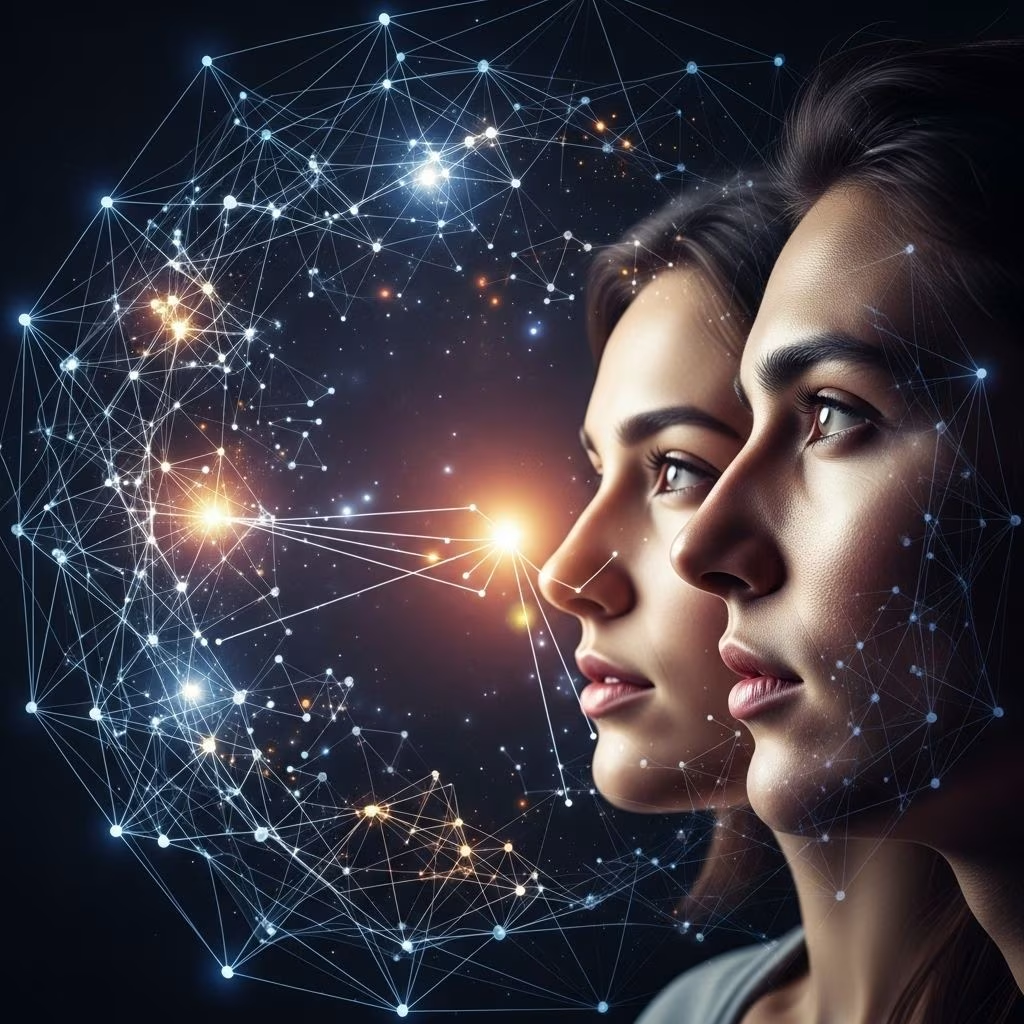
The intersection of technology and romance has reached unprecedented levels of sophistication. As artificial intelligence continues to evolve, researchers and tech companies are developing systems capable of analyzing relationship dynamics with remarkable accuracy. These AI-powered tools are transforming how we understand compatibility, predict relationship outcomes, and navigate the complex landscape of modern dating.
The concept of using technology to predict relationship success isn’t entirely new, but the methods have become increasingly refined. What once relied on simple questionnaires and basic compatibility matching has evolved into sophisticated systems that analyze communication patterns, behavioral data, and countless other variables to forecast whether a relationship will thrive or falter.
The Science Behind Relationship Prediction
At the core of relationship prediction technology lies advanced machine learning algorithms that process vast amounts of data to identify patterns associated with successful partnerships. These systems analyze multiple dimensions of human interaction, from communication styles and conflict resolution patterns to shared values and lifestyle preferences. The technology builds upon decades of psychological research about what makes relationships work, translating human behavioral insights into computational models.
Research institutions have been developing predictive models that examine how couples interact during conversations, particularly during disagreements. By analyzing speech patterns, word choice, tone, and even physiological responses, these systems can identify warning signs of relationship distress with surprising accuracy. The algorithms look for specific indicators such as contempt, defensiveness, stonewalling, and criticism—what relationship expert John Gottman famously termed the “Four Horsemen of the Apocalypse” in relationships.
The mathematical models underlying these predictions incorporate numerous variables simultaneously. They consider factors like communication frequency, response times in digital conversations, sentiment analysis of messages, shared activities, social network overlap, and alignment on major life goals. By weighing these elements together, AI systems can generate probability scores for relationship longevity that often prove remarkably accurate.
How AI Analyzes Relationship Dynamics
Modern AI systems employ natural language processing to understand the nuances of how couples communicate. These tools examine not just what people say, but how they say it. The technology can detect subtle shifts in language that might indicate growing emotional distance or increasing intimacy. For instance, a decrease in the use of words like “we” and “us” in favor of “I” and “me” can signal a relationship moving toward dissolution.
Behavioral pattern recognition represents another crucial component of relationship prediction technology. AI systems track how couples spend time together, how they resolve conflicts, and how they support each other during stressful periods. Machine learning algorithms identify patterns that distinguish stable, happy relationships from those likely to end. These patterns often involve factors that individuals might not consciously recognize but that prove statistically significant across large datasets.
The technology also considers temporal dynamics—how relationships change over time. AI models track relationship trajectories, identifying whether couples are moving toward greater stability or heading toward problems. This temporal analysis allows the system to recognize critical turning points where intervention might be most beneficial. The algorithms can detect when a relationship is at risk even before the partners themselves fully recognize the warning signs.
Dating Platforms and AI Integration
Major dating platforms have integrated AI-driven compatibility prediction into their core functionality. These systems analyze user data to suggest matches with the highest likelihood of forming lasting connections. Platforms like eHarmony and OkCupid use advanced matching algorithms to evaluate compatibility based on personality traits, values, lifestyle preferences, and relationship goals. The technology goes far beyond simple demographic matching to assess deeper psychological compatibility.
AI-powered features like Hinge’s “Most Compatible” leverage machine learning to predict which users are likely to connect based on their interaction history and preferences. These algorithms continuously learn from user behavior, refining their predictions as they gather more data about successful matches. The system considers factors like which profiles users linger on, who they message, and which conversations lead to meaningful connections.
The integration of AI extends beyond initial matching to ongoing relationship support. Some platforms now offer AI-driven coaching features that provide personalized advice for improving communication and navigating relationship challenges. These tools analyze conversation patterns between matched users and offer suggestions for keeping the dialogue engaging and meaningful. The technology helps users craft more effective messages and respond to potential partners in ways that increase the likelihood of connection.
Communication Pattern Analysis
One of the most powerful applications of AI in relationship prediction involves analyzing how couples communicate. Research has shown that communication patterns serve as reliable indicators of relationship health and longevity. AI systems can now perform this analysis at scale, examining thousands of interactions to identify patterns associated with relationship success or failure.
The technology evaluates multiple dimensions of communication quality. It assesses responsiveness—how quickly and thoroughly partners reply to each other. It measures reciprocity—whether both partners contribute equally to conversations. It analyzes emotional tone, detecting whether interactions trend positive or negative over time. These metrics combine to create a comprehensive picture of relationship communication health.
Advanced systems can even detect micropatterns in digital communication that human observers might miss. For example, the technology might notice that successful couples tend to mirror each other’s communication styles over time, adapting their texting patterns and word choices to match their partners. These subtle synchronizations often indicate deep compatibility and investment in the relationship.
Behavioral Data and Relationship Outcomes
Beyond communication, AI systems analyze broader behavioral patterns to predict relationship outcomes. This includes examining how couples navigate conflicts, make decisions together, and support each other through challenges. The technology considers factors like compromise patterns, mutual respect indicators, and the balance of give-and-take in the relationship.
Social media behavior provides another data source for relationship prediction algorithms. AI systems can analyze how couples present their relationship publicly, how they interact on social platforms, and how their social networks overlap. Research suggests that certain patterns in social media behavior correlate with relationship stability, such as maintaining appropriate boundaries while still acknowledging the relationship publicly.
The technology also tracks lifestyle compatibility factors that might seem mundane but prove crucial for long-term success. This includes alignment on issues like financial management, household responsibilities, social activities, and future planning. AI systems can identify mismatches in these areas that might cause friction over time, even if they seem minor initially.
Accuracy and Limitations
While AI-powered relationship prediction has shown impressive accuracy in research settings, it’s important to understand the technology’s limitations. Most systems achieve prediction accuracy rates between 60-80% when forecasting relationship outcomes over specific timeframes. While this represents a significant improvement over chance, it means the technology is far from infallible. Relationships remain complex human phenomena that can’t be reduced entirely to algorithms and data points.
One fundamental limitation involves the quality and completeness of data available to AI systems. Predictions are only as good as the information they’re based on, and much of what happens in relationships occurs in private moments that technology cannot access or measure. The technology can analyze digital communications and observable behaviors, but it cannot fully capture emotional intimacy, physical attraction, or the countless intangible factors that influence relationship success.
Another challenge involves the dynamic nature of human beings and relationships. People change over time, sometimes in ways that algorithms struggle to predict. A relationship that appears strong by all measurable indicators might end due to unexpected life changes or personal growth that leads partners in different directions. Conversely, couples who face significant challenges according to AI predictions might overcome them through commitment and effort.
Ethical Considerations
The use of AI to predict relationship outcomes raises important ethical questions that deserve careful consideration. Privacy concerns are paramount—these systems require access to intimate details of people’s lives and communications. Who owns this data? How is it protected? What happens when relationships end—can individuals delete their data completely? These questions become increasingly urgent as the technology becomes more sophisticated and widely adopted.
There’s also the risk that prediction technology could become self-fulfilling prophecy. If an AI system tells a couple they’re unlikely to last, might that prediction itself undermine the relationship? Could people become overly reliant on algorithmic guidance, abandoning relationships that might have succeeded with effort and commitment? The technology must be implemented thoughtfully to avoid creating harmful feedback loops.
Another ethical dimension involves the potential for AI systems to perpetuate biases present in their training data. If the algorithms are primarily trained on data from certain demographic groups or relationship types, they might perform poorly or unfairly when applied to others. Developers must ensure that relationship prediction technology serves diverse populations fairly and accurately.
The Future of AI in Relationships
Looking ahead, the role of artificial intelligence in relationships will likely expand significantly. Advanced AI systems may soon offer real-time relationship coaching, providing personalized suggestions during conflicts or difficult conversations. Imagine technology that could detect rising tension in a conversation and offer de-escalation strategies tailored to both partners’ communication styles. These tools could help couples navigate challenges more effectively, potentially preventing small issues from becoming relationship-ending problems.
Virtual relationship counselors powered by AI may become increasingly sophisticated, offering accessible mental health support for couples who might not otherwise seek professional help. These systems could provide evidence-based therapeutic techniques adapted to each couple’s unique dynamics and challenges. While they won’t replace human therapists, they could make relationship support more widely available and affordable.
The technology may also evolve to help individuals understand themselves better before entering relationships. AI systems could analyze past relationship patterns to help people recognize their own behaviors that contribute to success or failure. This self-knowledge could empower individuals to make better partner choices and become better partners themselves.
Balancing Technology and Human Intuition
Despite the impressive capabilities of AI relationship prediction technology, human intuition and emotional intelligence remain irreplaceable. The most effective approach involves using technology as a tool to enhance, rather than replace, human judgment. AI can provide valuable insights and identify patterns we might miss, but ultimately, relationship decisions require human wisdom, empathy, and understanding.
Successful integration of AI in relationships requires maintaining the human element at the center. Technology should inform decisions without controlling them. Couples and individuals should use AI insights as one input among many, considering their own feelings, values, and circumstances. The goal is to harness technology’s analytical power while preserving the authentically human aspects of love and connection.
Relationship experts emphasize that no algorithm can fully capture what happens between two people. Chemistry, shared experiences, mutual growth, and countless intangible factors contribute to relationship success in ways that resist quantification. The most sophisticated AI system cannot replicate the lived experience of being in love or the complex emotional realities that shape relationships.
Practical Applications Today
For those interested in leveraging AI for relationship insights, several practical applications are already available. Dating apps incorporate compatibility algorithms to suggest better matches based on behavioral data and stated preferences. Couples can use AI-powered communication tools that analyze their messaging patterns and offer suggestions for improvement. Some platforms provide relationship health assessments based on questionnaires analyzed by machine learning systems.
However, users should approach these tools with realistic expectations. View AI insights as helpful information rather than definitive predictions. Use technology to supplement, not replace, open communication with partners. Consider algorithmic suggestions alongside personal feelings and experiences. The most successful users of relationship AI are those who treat it as one resource among many in their relationship toolkit.
Frequently Asked Questions
Q: How accurate are AI relationship predictions?
A: Current AI systems achieve accuracy rates of 60-80% in predicting relationship outcomes over specific timeframes, which is significantly better than chance but not perfect. Accuracy varies depending on the specific system, the quality of available data, and the timeframe of prediction.
Q: What factors do AI systems analyze to predict relationship success?
A: AI systems analyze communication patterns, conflict resolution styles, shared values and interests, behavioral compatibility, emotional responsiveness, and numerous other variables. Advanced systems may examine thousands of data points to make predictions.
Q: Can AI predictions become self-fulfilling prophecies?
A: Yes, there is a risk that negative predictions could undermine relationships by affecting how partners view their future together. This is why experts recommend using AI insights as one input among many rather than treating them as definitive answers.
Q: Is my private relationship data secure with AI dating platforms?
A: Data security varies by platform. Reputable dating services implement encryption and security measures, but users should carefully review privacy policies and understand what data is collected and how it’s used before using AI-powered relationship tools.
Q: Will AI replace human relationship counselors?
A: AI tools are unlikely to fully replace human therapists and counselors. Instead, they serve as complementary resources that can make relationship support more accessible and affordable while human professionals provide the empathy, nuanced understanding, and personalized guidance that technology cannot replicate.
Q: How can I use AI relationship tools effectively?
A: Use AI insights as helpful information rather than absolute truth. Combine technological analysis with open communication, personal reflection, and human judgment. Consider AI predictions alongside your own feelings, values, and circumstances when making relationship decisions.


