


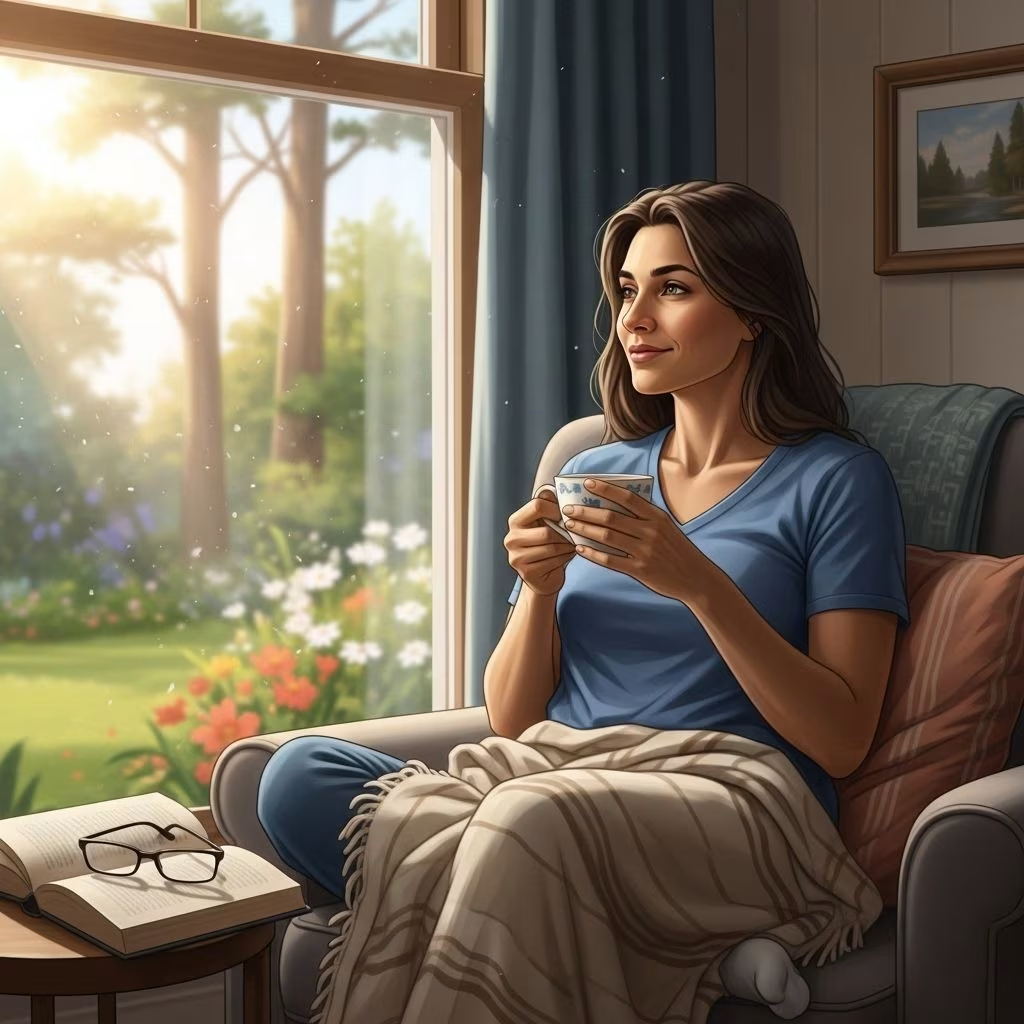
In the whirlwind of modern romance, couples often find themselves caught in a beautiful paradox: the desire to spend every waking moment together versus the need for personal space. While being deeply connected to your partner is wonderful, the often-overlooked ingredient to a lasting, passionate relationship might surprise you—it’s the time you spend apart. Understanding the delicate balance between togetherness and solitude can transform your relationship from good to extraordinary.
The Lost Art of Being Alone
Many people in relationships find themselves falling into patterns of constant togetherness, driven not just by love but by an underlying fear of being alone. This phenomenon is more common than most admit. When you’re in love, the natural inclination is to maximize time with your partner, creating routines that revolve around shared experiences and continuous companionship.
However, this constant proximity can lead to an unsettling realization: you’ve forgotten how to entertain yourself and enjoy your own company. The ability to be comfortably alone—once a natural state—becomes a lost talent, overshadowed by the warmth of partnership. This loss is particularly frustrating for individuals who once prided themselves on their independence and self-sufficiency.
The fear of solitude manifests in various ways within relationships. It might appear as always choosing to stay at your partner’s place instead of going home, making plans that exclusively involve your significant other, or feeling anxious when faced with an evening alone. These patterns, while seemingly harmless, can gradually erode your sense of self and personal identity.
Why Personal Space Fuels Relationship Success
Taking time for yourself isn’t selfish—it’s essential maintenance for both your individual wellbeing and your relationship’s health. When you carve out genuine alone time, something transformative happens: you reconnect with your authentic self, process your thoughts clearly, and nurture the independence that made you attractive to your partner in the first place.
Research and relationship experts consistently emphasize that the healthiest partnerships involve two complete individuals choosing to share their lives, not two incomplete halves desperately clinging together. This distinction is crucial. When both partners maintain their sense of self, the relationship operates from a place of want rather than need, creating a foundation built on strength rather than desperation.
The benefits of me time extend far beyond personal satisfaction. During periods of solitude, you can accomplish tasks that require focus, pursue hobbies that fulfill you individually, and engage in the kind of self-reflection that’s impossible when another person’s presence fills your space. This isn’t about creating distance from your partner—it’s about maintaining the complete, interesting person your partner fell in love with.
Reconciling Independence Within Partnership
One of the greatest fears many independent people face when entering serious relationships is losing themselves in the process. This concern is valid and deserves attention. The journey from single independence to coupled interdependence requires conscious effort to maintain your individual identity while building a shared life.
Nurturing your independence means actively feeding your spirit through activities, thoughts, and experiences that are uniquely yours. Without this nourishment, the vibrant individuality that defines you begins to fade. Many people convince themselves that wanting to be with their partner constantly is natural and acceptable, losing sight of the “I” in the midst of “we.”
Being selfish with your time occasionally isn’t just acceptable—it’s necessary. The art of being alone has become increasingly rare in our hyper-connected world, where constant communication and presence are expected. Embracing solitude before it becomes a completely lost practice is essential for maintaining the balanced self that makes you a better partner.
The Freedom Found in Solitude
Spending time alone allows you to revisit feelings of freedom that can become buried under the weight of partnership routines. Being in love is undeniably wonderful, but self-knowledge requires regular maintenance. When you cut yourself off from independence, you risk creating a suffocating environment that diminishes both you and your relationship.
The key isn’t establishing rigid rules about specific amounts of time apart or creating mathematical formulas for separation. Instead, it’s about giving yourself permission to take alone time when you need it, recognizing that this practice keeps you mentally and emotionally balanced. Quality alone time acts as a reset button for your psyche, allowing you to return to your relationship refreshed and fully present.
Initially, carving out this space can feel uncomfortable, even scary. When you’ve fallen into patterns of constant togetherness, the prospect of breaking that routine generates anxiety. However, like any skill, being alone improves with practice. The more consistently you engage in solo activities and quiet reflection, the more you come to cherish these moments. They become something you look forward to rather than endure.
Building Relationships on Strength, Not Need
The strongest relationships feature partners who could survive independently but choose to be together because it enhances their already fulfilling lives. This dynamic creates an entirely different energy than relationships built on codependence, where one or both partners need the other to feel complete or happy.
When both individuals in a relationship have robust hobbies, substantial friend groups, and personal passions they pursue independently, the partnership operates from abundance rather than scarcity. She might adore working on art projects while he perfects his writing craft. They might both love fitness but prefer working out alone. These separate pursuits don’t diminish the relationship—theystrengthen it by ensuring both partners remain interesting, fulfilled individuals.
The ability to feel fulfilled while sitting alone represents relationship gold. When you genuinely cherish your own company, you never desperately need your partner to be happy. This knowledge—that you’d be fine even if the relationship ended—paradoxically makes the partnership stronger. It eliminates the desperate clinging that suffocates so many relationships, replacing it with genuine appreciation for time spent together.
The Danger of Codependency
Relationships built on codependency might superficially resemble true love because the partners appear inseparable. However, beneath the surface lies a troubling foundation: two insecure individuals unleashing their inner pain on each other. This dynamic creates relationships where one person becomes upset when the other makes independent plans, where arguments erupt over time spent apart, and where hurt feelings become routine.
This foundation proves disastrous for long-term relationship health. When both halves of a couple are codependent, the relationship might look intense and passionate from the outside. Yet internally, it’s simply two people who lack the courage to be alone, treating each other poorly while simultaneously lacking the strength to end the destructive cycle.
Avoiding codependency requires falling in love with yourself before seeking romantic partnership. This means creating a life so incredible that you don’t require a lover to feel fulfilled. Dating and self-development experts consistently identify this as the vital first step to finding authentic love that lasts.
Understanding Life Purpose Beyond Partnership
A common relationship myth suggests that partners want to be loved more than anything else in their significant other’s world. While being the most important person in your partner’s life sounds romantic, healthy relationships actually require something different: partners with purposes beyond the relationship itself.
Most people actually want partners who have deeper life purposes than simply pleasing them. Without individual purpose, relationships become smothering, creating uncomfortable pressure that kills attraction and connection. When your partner serves as your entire purpose, you inadvertently create an environment where they feel responsible for your happiness, fulfillment, and identity—a burden too heavy for any single person to carry.
This concept appears prominently in relationship literature, with experts explaining that although your partner may seem to want primacy in your life, she actually can trust and love you more when she isn’t your sole focus. A person’s highest purpose should be their priority, not just their intimate relationship. Deep down, healthy partners recognize and appreciate this truth, even if it seems counterintuitive.
Practical Steps for Maintaining Independence
Implementing healthy alone time doesn’t require dramatic gestures or rigid schedules. Instead, it involves gradual, intentional choices that honor both your relationship and your individual needs. Start by identifying activities that fulfill you independently—hobbies you’ve neglected, creative pursuits that energize you, or simple pleasures you’ve abandoned since coupling up.
Create a personal routine that exists separately from your couple routine. This might mean dedicating specific evenings to solo activities, maintaining friendships that don’t include your partner, or pursuing skills and interests that belong entirely to you. These boundaries aren’t walls keeping your partner out; they’re scaffolding that keeps your sense of self strong.
Practice spending time alone without filling every moment with digital connection to your partner. Resist the urge to constantly text updates or share every thought. Allow yourself the experience of processing life independently, making decisions without consultation, and discovering how you function as a complete individual.
The Long-Term Perspective
For couples considering moving in together or taking other steps toward greater commitment, understanding the importance of alone time becomes even more critical. Once you share a home with your significant other, opportunities for genuine solitude naturally decrease. The ability to retreat to separate spaces, maintain independent routines, and nurture individual identities requires more intentional effort when you live together.
This reality makes the practice of healthy independence before cohabitation even more valuable. Establishing patterns of comfortable alone time, clear communication about personal needs, and mutual respect for individual pursuits creates skills that serve you well when your lives become more intertwined. Couples who master this balance before living together typically navigate shared living spaces more successfully, with less conflict around personal space and independence.
Keeping the Spark Alive Through Space
Ironically, the secret to maintaining that honeymoon-period passion years into a relationship often lies in the time spent apart rather than together. Couples who remain fascinated by each other, who constantly amaze one another, and who maintain strong physical attraction typically share a common trait: both partners lead interesting, fulfilling individual lives.
When you pursue passions independently, reconnect with yourself regularly, and maintain your individual identity, you bring fresh energy and experiences back to your relationship. You become someone worth missing, someone whose company is chosen rather than expected, someone who maintains the mystery and appeal that first attracted your partner.
Epic adventures and romantic dates certainly contribute to relationship vitality, but they aren’t solely responsible for keeping couples crazy about each other. The foundation lies in two people who love themselves, who can be alone without anxiety, and who choose partnership from a place of strength rather than fear.
Embracing the Balance
Finding the right balance between togetherness and independence is an ongoing practice rather than a destination. Different relationships require different ratios, and these needs may shift over time. What matters most is maintaining open communication about individual needs, respecting your partner’s requirements for alone time, and consistently nurturing your own sense of self.
Remember that wanting time alone doesn’t indicate problems in your relationship or diminished love for your partner. Instead, it signals healthy self-awareness and commitment to maintaining the complete, interesting person your partner chose to love. The strongest relationships feature two people who are whole on their own but choose to intertwine their lives because doing so enhances both individual experiences.
Frequently Asked Questions
Q: How much alone time is healthy in a relationship?
A: There’s no universal rule for how much alone time couples need. The right amount varies based on individual personalities, life circumstances, and relationship dynamics. What matters most is that both partners feel they have adequate space to maintain their independence and pursue individual interests without guilt or conflict.
Q: Is wanting alone time a sign that something is wrong with my relationship?
A: No, wanting alone time is actually a sign of a healthy relationship and strong self-awareness. It indicates that you understand the importance of maintaining your individual identity and personal fulfillment alongside your partnership. Relationships where neither partner ever wants time alone often involve unhealthy codependency.
Q: How do I ask for alone time without hurting my partner’s feelings?
A: Communicate clearly and compassionately, emphasizing that alone time helps you be a better partner. Explain that taking space to recharge and pursue individual interests strengthens your ability to show up fully in the relationship. Frame it as something positive for both of you rather than a rejection of your partner.
Q: What if my partner takes my need for alone time personally?
A: If your partner struggles with your need for independence, have an honest conversation about how healthy relationships require two complete individuals. Consider suggesting they also develop independent hobbies and interests. If resistance continues, couples therapy can help establish healthier patterns and address underlying insecurity.
Q: Can too much alone time damage a relationship?
A: Yes, excessive time apart can create emotional distance and disconnect. The goal is balance—enough independence to maintain individual identity but sufficient togetherness to nurture intimacy and connection. If you consistently prefer being alone over being with your partner, it may signal deeper relationship issues worth exploring.


