


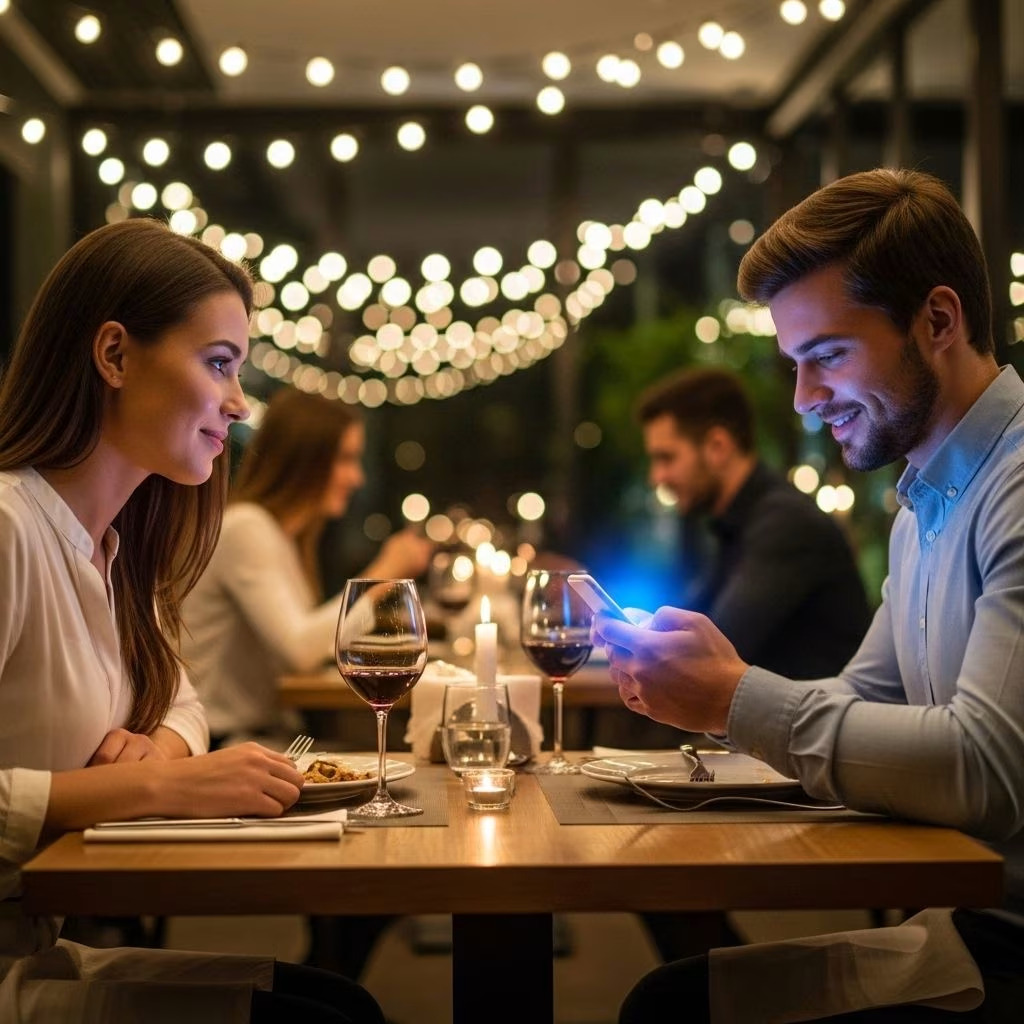
Are You In Love With Your Partner Or Social Media?
Love in the digital era finds its way onto screens, scrolls, and stories. For many couples, social media isn’t just a platform for connection—it has become the public stage where the quality of our relationships is performed, measured, and, sometimes, scrutinized. But amid the heart emojis and curated feeds, one question quietly pulses: Are you truly in love with your partner, or with the way your relationship looks on social media?
Understanding the Social Media–Relationship Paradox
Our collective obsession with sharing relationship highlights online isn’t just a modern quirk—it’s a reflection of deeper changes in the way we seek and display validation. The line between private emotion and public performance blurs, leaving many to wonder whether our love is for our partner or for our audience.
Why Do We Share Our Relationships Online?
Social media invites us to document and share every milestone, anniversary, or romantic getaway. The urge isn’t always about vanity or a need to gloat; sometimes, it’s about seeking validation or reassurance—both from others and ourselves. But what’s the purpose of all this sharing?
- Affirmation: Posting cute couple photos or loving captions often brings a flood of likes and comments, offering instant affirmation of our happiness.
- Social proof: Making a relationship ‘official’ on social media can be seen as a sign of legitimacy or seriousness.
- Memories: For some, platforms serve as digital photo albums—snapshots of life and love to look back on.
- Comparison: Observing others’ romantic posts can spur us to share our own, often in a cycle of one-upmanship or reassurance.
Yet, it’s crucial to ask: Are these impulses about love, or about audiences?
The Trap of Digital Validation
When the measure of love becomes filtered by likes and external approval, it can obscure genuine intimacy. Social media’s constant feedback loop can create an unhealthy dependence on digital validation, leading us to:
- Base relationship satisfaction on online feedback
- Feel pressure to share or overshare romantic moments
- Doubt the authenticity of a relationship that isn’t showcased extensively online
- Misinterpret a partner’s reluctance to post as disinterest or lack of commitment
It’s important to remember that social media posts are not love letters—they’re public broadcasts, often shaped as much by trends and audience expectations as by authentic emotion.
Is Real Love Measured Online?
There’s a persistent myth: if your partner doesn’t proclaim their love for you on social media, it must not be serious. In reality, many value privacy—and may want to keep their relationship offline and sacred. Quiet love isn’t less love; often, it’s built on deeper foundations of trust.
Consider these truths:
- Some people simply do not enjoy sharing their private lives online.
- Expressing love in person—through small acts, shared experiences, and honest conversations—often has more meaning than online declarations.
- Reserve your energy for genuine connection—ask if sharing is about your happiness or your audience’s perception of that happiness.
The Myth of the Insta-Couple
Cultural narratives can convince us that the most enthusiastic social-media couples are the happiest. But frequent posting does not necessarily reflect authentic contentment; it may signal insecurity, need for validation, or simply a love of sharing for its own sake. True intimacy flourishes in moments that don’t need to be broadcasted.
When Sharing Becomes a Burden
For some, the ritual of posting every romantic moment can start to drain the joy out of genuine connection:
- Arguments can arise over photo choices or the prominence of a partner on feeds.
- Milestones may feel performative, as if celebrated for strangers rather than each other.
- The need to document can interrupt the experience of meaningful moments.
If you find yourself feeling anxious about when, how, or if your partner posts about you, it’s worth reflecting on why social media approval holds so much weight in your relationship story.
Healthy Relationship Expression in a Digital Age
So, what does it look like to balance healthy relationship habits with the urge to share online? Consider these guidelines:
- Communicate openly: Discuss your feelings about social media and what (if any) level of sharing feels right.
- Respect boundaries: If one partner prefers to keep things private, honor that preference and seek understanding rather than conflict.
- Diversify intimacy: Prioritize physical presence, verbal affirmation, and private gestures over digital displays.
- Audit your motives: Pause before sharing—are you posting out of pride, joy, anxiety, or a need for public approval?
- Practice digital detox: Take periods of time where you enjoy your relationship with no posts, likes, or outside validation at all.
Are You Chasing Likes Or True Connection?
A key step in this journey is self-reflection. Are you using social media to fill emotional gaps? Do you feel a rush with every new like, or anxiety when there’s online silence? Do you equate online absence with real-world absence? Here’s how to check your motives:
| Motive for Posting | Red Flag | Green Flag |
|---|---|---|
| Seeking validation | Basing happiness on likes | Posting for memories, not approval |
| Comparing to others | Feeling worse after scrolling feeds | Finding inspiration, not competition |
| Documenting moments | Curating a ‘perfect’ relationship | Cherishing authenticity, even in imperfection |
When Social Media Affects Relationship Dynamics
Beyond the personal, social media can impact the dynamic of your partnership. Negative outcomes may include:
- Jealousy over likes or interactions with others
- Comparisons to more “public” relationships
- Arguments over digital boundaries (e.g., blocking ex-partners, privacy settings)
- Reduced focus on nurturing your real-world connection
Healthy couples discuss these potential pitfalls openly, setting boundaries and pledging to prioritize each other over their feeds.
Signs You May Be In Love with Social Media Over Your Partner
- You feel a need to share every aspect of your relationship online before enjoying it together in private.
- You get anxious or upset if your partner doesn’t like or comment on your posts.
- Your relationship’s worth feels tied to how others react, rather than your own feelings.
- Arguments occur over posting habits, captions, or perceived online ‘signals.’
- You spend more time curating posts than enjoying real-world intimacy.
How to Recenter Your Love Offline
Reconnecting with your partner away from the glare of social media is possible, and deeply rewarding. Try these strategies:
- Set aside tech-free time—no phones, no posting, just each other.
- Develop rituals—date nights, handwritten notes, private traditions that belong to only the two of you.
- Celebrate milestones in person—not with a post, but a shared experience.
- Communicate deeply—talk openly about your feelings, worries, and hopes, rather than airing them through captions.
- Remind yourself what you love about your partner in real, tangible ways.
The Case for Private Love
Love doesn’t need to be loud to be true. Keeping your relationship off timelines and away from outside eyes can protect intimacy, create trust, and relieve the pressure to constantly perform.
Ask yourself: If no one could ‘like’ your relationship, would you feel as good about it?
Frequently Asked Questions (FAQs)
Q: Is it a red flag if my partner never posts about me?
A: Not necessarily. Many people prefer to keep their relationships private. The most important thing is how your partner treats you in real life, not just online.
Q: How can I talk to my partner about social media boundaries?
A: Approach the conversation with curiosity, not accusation. Express your feelings, explain why social media matters to you, and ask about their preferences and boundaries. Agree on common ground.
Q: Can sharing on social media ever be healthy for relationships?
A: Yes, when done for the right reasons: celebrating memories, expressing gratitude, or simply sharing joy without expecting validation or competition.
Q: I feel inadequate when I see other couple’s posts. What should I do?
A: Remember, social media often showcases the highlight reel, not the behind-the-scenes reality. Focus on your own relationship’s strengths and take breaks from comparing yourself to others.
Bringing Love Back to Reality
Social media isn’t the villain, but it shouldn’t be the standard by which you measure love. Genuine connection—built upon trust, honesty, and shared experiences—will always be more meaningful than a perfectly curated grid. Ask yourself who you’re loving: your partner or your audience. Then choose to nurture the relationship that exists when the cameras are off.


