


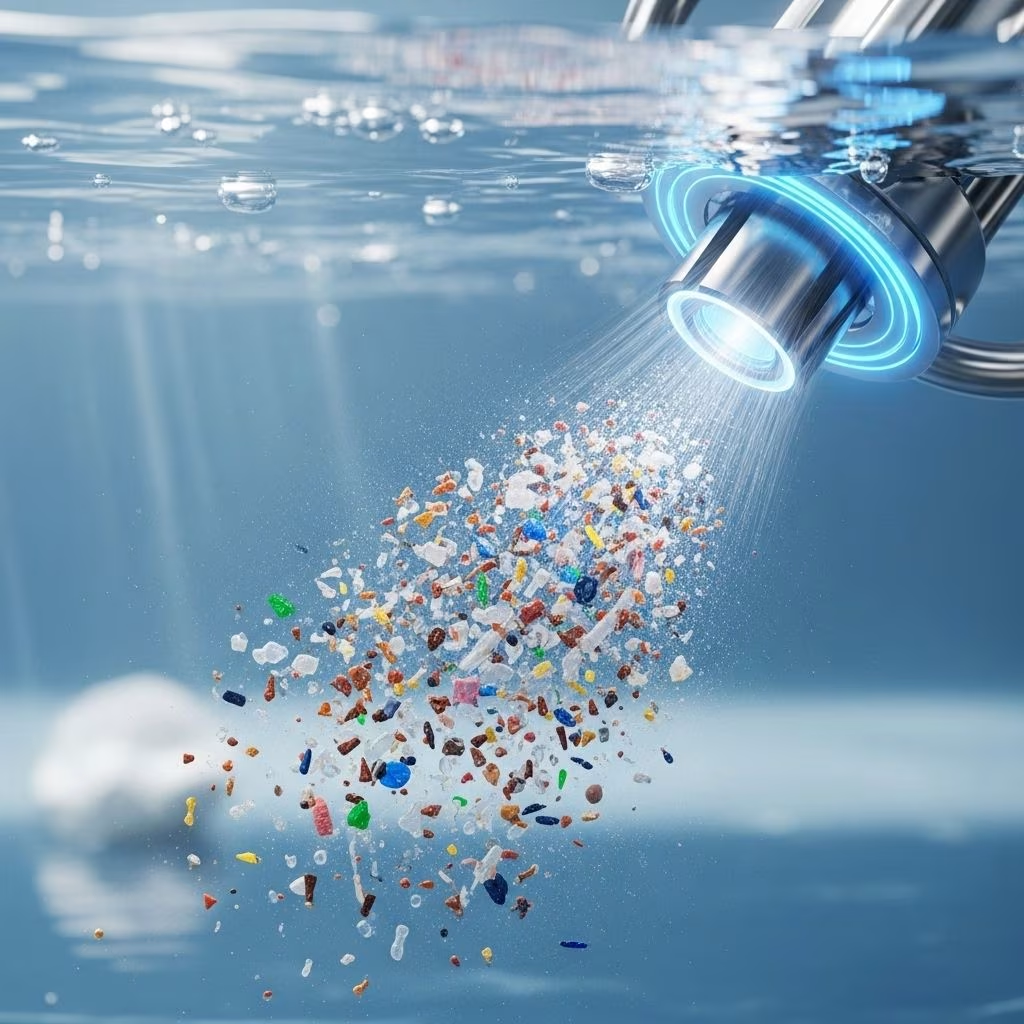
Magnets: An Unlikely Solution to the Microplastics Crisis
Microplastics are a growing menace in Earth’s waterways, littering oceans and rivers with persistent plastic particles that are often invisible to the naked eye. As researchers searched for more efficient ways to remove these contaminants, an unexpected hero emerged: magnets. Magnet-based technology could hold the key to extracting microplastics from water without harming marine life or introducing new pollutants.
Understanding Microplastics
- Definition: Microplastics are plastic fragments typically less than 5 millimeters in diameter.
- Sources: They originate from direct manufacturing (e.g., exfoliating beads in cosmetics) or break down from larger plastic debris (bottles, tires).
- Impact: Microplastics absorb toxins and can enter the food chain when ingested by aquatic organisms, posing health risks to animals and humans.
These tiny particles are not only difficult to filter out using conventional methods but also persist for decades, accumulating in fish and shellfish and ultimately in our diets.
Microplastic Pollution: The Scope and Challenge
The magnitude of microplastic pollution is staggering. Scientists have found microplastic debris virtually everywhere—from remote oceans to the seafood humans consume. A significant portion of these pollutants includes particles from plastic tire wear, constituting up to 40% in some harbor environments and sometimes more than 90%. Conventional water treatments are often unable to tackle these minute contaminants.
Why Current Solutions Fall Short
- Standard filtration methods can be inefficient or costly for particles smaller than a human hair.
- Microplastics from products like exfoliants and degraded bottles often evade industrial treatment plants.
- Attempts to eliminate microplastics by filtration, sand screens, or centrifugation have proven ineffective at scale.
The Magnet Revolution: Scientific Innovations
Recent breakthroughs suggest that magnet-based techniques could provide an efficient and environmentally safe solution to microplastic pollution. Researchers have developed several promising approaches:
Carbon-Based Magnetic Nanosprings
- Developed by Australian scientists, these tiny coil-shaped carbon-based magnets can break down microplastics in water without harming microorganisms.
- Nanosprings are enhanced by nitrogen, boosting their ability to generate short-lived chemicals called reactive oxygen species (ROS). The ROS break long plastic molecules into tiny, harmless segments.
- Unlike typical methods that use heavy metals (which can cause secondary pollution), carbon nanosprings are stable and nontoxic.
- A small amount of manganese gives the springs magnetic properties, making it simple to collect them from water with magnets after cleanup.
- Remediation can occur in as little as eight hours, and the springs can be reused for multiple cleaning cycles.
This method offers potential not only for neutralizing microplastics but also for transforming byproducts into energy sources for beneficial microorganisms, enhancing algae growth and supporting aquatic ecosystems.
Fionn Ferreira’s Magnet Innovation: The Power of Ferrofluids
- Ferrofluid technology mixes a magnetic liquid (made from vegetable oil and iron oxide) with contaminated water, causing the ferrofluid to bind microplastic particles.
- Applying an external magnet then sweeps the microplastics from solution.
- Ferreira’s approach is simple, scalable, and tackles the most challenging microplastics—those smaller than the width of a human hair.
- Early experiments proved successful and sparked further research into large-scale water purification using magnetic binding.
NADES: Natural Deep Eutectic Solvents as Magnetic ‘Magnets’
- Scientists at the University of Kentucky have developed a method using Natural Deep Eutectic Solvents (NADES), which act like chemical ‘magnets’ for plastics.
- NADES are made from natural sources (mint, coconuts) and transition from solid to liquid state to bind with hydrophobic microplastics, pulling them out efficiently.
- This innovation is both eco-friendly and safe, as NADES do not introduce new pollutants and can be tailored for different plastics.
- Researchers believe future versions of NADES may improve extraction even further.
How Magnet-Based Methods Compare: Summary Table
| Approach | Main Mechanism | Eco-Friendliness | Strengths | Limitations |
|---|---|---|---|---|
| Carbon Magnetic Nanosprings | Generation of ROS and magnetic recovery | High (carbon-based, minimal metals) | Stable, reusable, effective for diverse microplastics | Still in lab testing; efficacy for all plastic types being studied |
| Ferrofluid Binding | Magnetic liquid binds microplastics | Moderate (uses iron oxide and oil) | Direct, fast extraction, simple setup | May require extensive filtration post-treatment |
| NADES (Natural Deep Eutectic Solvents) | Chemical bonding with plastic particles | Very high (made from natural sources) | Targeted binding, non-toxic | Extraction optimization in progress |
The Road Ahead: Challenges and Opportunities
While magnet-based techniques offer significant promise, several scientific and practical hurdles remain:
- Versatility: Ensuring one technique works for all microplastic compositions, shapes, and origins.
- Byproduct Safety: Confirming that reactive intermediates and breakdown products remain non-toxic.
- Scale-Up: Adapting laboratory innovations for real-world application in wastewater plants, rivers, and oceans.
- Cost and Efficiency: Balancing advanced technology with economic feasibility for wide adoption.
Researchers continue testing nanosprings and NADES on diverse plastics and plan to evaluate any environmental impacts further.
Microplastic Pollution: Environmental and Health Implications
Microplastics are found in food sources like oysters, where the existing 44-hour purification process only removes half the plastic particles, and guidelines for cleanup remain undeveloped. Dolphins and other marine life are also ingesting microplastics, often in the form of transparent films, foam, or fibers.
As microplastics adsorb toxins, their consumption affects health at all levels of the food chain, from microorganisms to humans.
Frequently Asked Questions (FAQs)
Q: What are microplastics and why are they dangerous?
A: Microplastics are tiny plastic fragments (<5 mm) that persist in the environment. They adsorb toxins, can be consumed by aquatic life, and enter the food chain, causing potential harm to animals and humans.
Q: Why can’t conventional filtration methods remove microplastics from water?
A: Many microplastics are smaller than the width of a human hair, making traditional filters and centrifuges ineffective or too expensive for routine use.
Q: How do magnets help in microplastic removal?
A: Magnet-based techniques use either magnetic fluids (ferrofluids) or magnetic nanoparticles to bind microplastics and then extract them using magnets. Natural Deep Eutectic Solvents act as chemical magnets for further extraction.
Q: Are there environmental risks with magnet-based microplastic cleanup?
A: The latest technologies use stable, non-toxic materials (like carbon and natural product-based solvents) to minimize new pollution. Researchers are rigorously testing for byproduct safety before broad deployment.
Q: What are the next steps in this research?
A: Scientists plan to test and refine these methods on diverse microplastic types and scale up technology for real-world wastewater and maritime applications.
Key Takeaways
- Microplastics are persistent pollutants found everywhere, from oceans to dinner plates.
- Magnet-based techniques (nanosprings, ferrofluids, NADES) are showing promise in efficiently extracting and breaking down microplastics.
- New methods prioritize eco-friendliness, byproduct safety, and practical recovery.
- Ongoing research aims to overcome barriers to widespread adoption, safeguard ecosystems, and potentially turn waste plastics into resources for beneficial organisms.
References
- “Magnetic ‘springs’ break down marine microplastic pollution” – Phys.org
- “University of Kentucky scientists develop eco-friendly magnet to battle microplastics” – CAUKY News
- “Fionn Ferreira: Fighting microplastic pollution with magnets” – Imagine5
- “New Research Highlights the Problem of Microplastic Pollution” – NIEHS GEH
References
- https://phys.org/news/2019-07-magnetic-marine-microplastic-pollution.html
- https://news.ca.uky.edu/article/university-kentucky-scientists-develop-eco-friendly-magnet-battle-microplastics
- https://imagine5.com/high_five/fionn-ferreira-the-young-inventor-fighting-microplastic-pollution-with-magnets/
- https://www.niehs.nih.gov/research/programs/geh/geh_newsletter/2023/8/articles/new_research_highlights_the_problem_of_microplastic_pollution


