


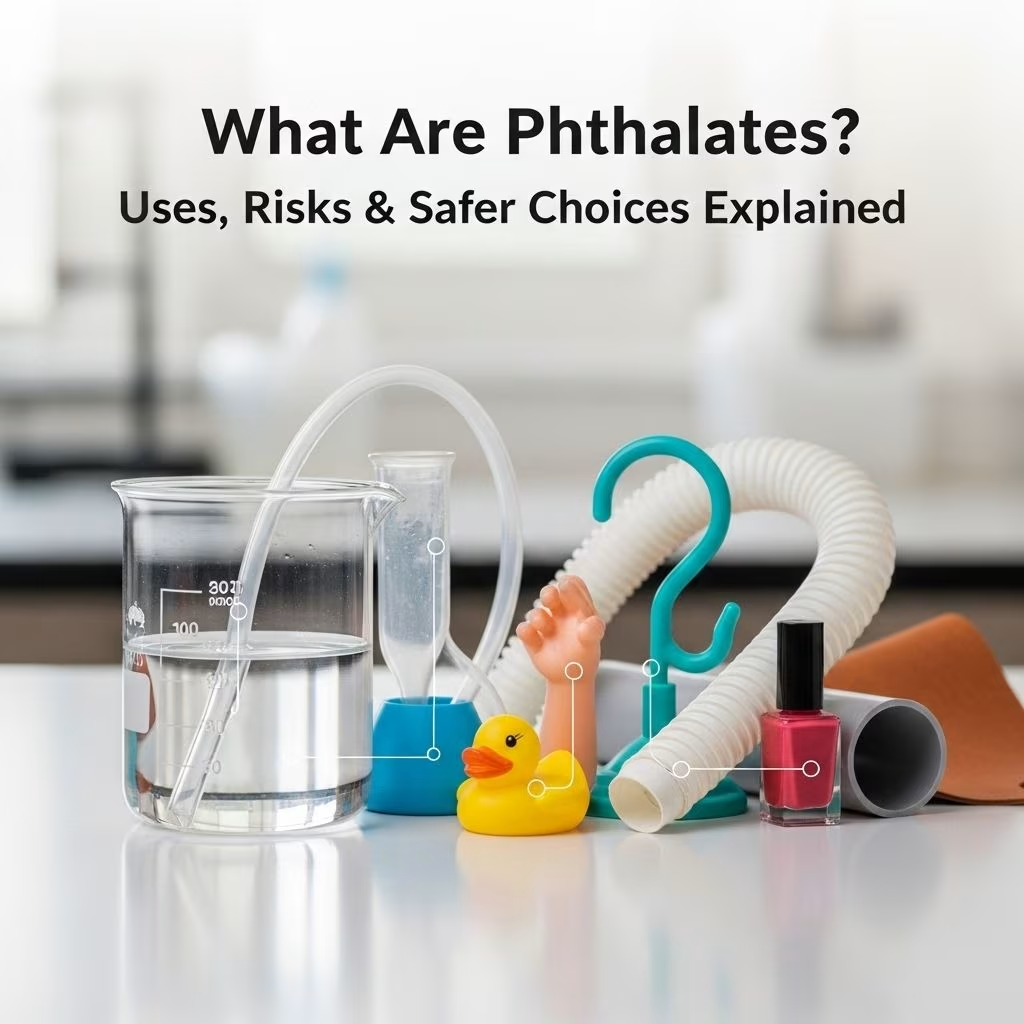
What Are Phthalates?
Phthalates are a group of chemicals typically used as plasticizers, substances added to plastics—especially polyvinyl chloride (PVC)—to increase their flexibility, softness, and durability. They are prevalent in countless consumer products and have become a subject of increasing public health and environmental concern due to their ability to disrupt endocrine function and their potential to cause adverse health effects.
Chemical Overview
- Phthalates are esters of phthalic acid.
- Common phthalates include DEHP, DBP, BBP, DiNP, DIDP, and DEP.
- Because phthalates are not chemically bound to the plastics, they can leach out into the environment or migrate into food and products.
How Phthalates Are Used
Phthalates are widely incorporated into many everyday products to impart softness, flexibility, and resistance to breakage. Their applications span multiple industries from plastics and packaging to personal care items and medical devices.
Main Areas of Application
- PVC Plastics: Used in vinyl flooring, wall coverings, cables, pipes, and toys. Phthalates may compose up to 40% of product weight.
- Personal Care Products: Present in perfumes, nail polishes, hair sprays, moisturizers, and other cosmetics for scent stabilizing and as fixatives.
- Medical Devices: Found in tubing, IV bags, and other flexible medical goods.
- Food Packaging: Historically used in plastic wraps, adhesives, lubricants, sealants, and various forms of packaging.
- Other Uses: Coatings, paints, lacquers, adhesives, artificial leather, car interiors, rain gear, electronic components, and more.
Common Phthalate Compounds and Where They’re Found
| Compound | Abbreviation | Common Uses |
|---|---|---|
| Diethylhexyl phthalate | DEHP | PVC plastic, medical tubing & devices |
| Dibutyl phthalate | DBP | Nail polish, adhesives, printing inks |
| Diethyl phthalate | DEP | Cosmetics, toothbrushes, toys, food packaging |
| Di-isononyl phthalate | DiNP | Soft plastics, toys |
| Di-iso-decyl phthalate | DiDP | Plasticizers in various PVC products |
| Butyl benzyl phthalate | BBP | Flooring, sealants |
| Mono-(2-ethylhexyl) phthalate | MEHP | Vinyl tiles, conveyor belts |
| Di-isobutyl phthalate | DiBP | Adhesives, plastics |
| Dioctyl phthalate | DnOP | Household, building products |
How People Are Exposed to Phthalates
Because phthalates are not covalently bonded to plastics or other materials, they can easily migrate out under heat, friction, or with time, leading to widespread human exposure from multiple sources.
Common Exposure Routes
- Ingestion: From food containers, food packaging, or utensils containing phthalates.
- Inhalation: Breathing dust or fumes from products containing phthalates (such as vinyl flooring, wall coverings, or air freshener sprays).
- Dermal absorption: Through skin via personal care products, lotions, nail polishes, and cosmetics.
- Medical exposure: Use of medical devices made with PVC can lead to direct exposure, especially in hospitalized or chronically ill patients.
Products Most Likely to Contain Phthalates
- Soft plastic toys
- Vinyl flooring & wall coverings
- Plastic shower curtains
- Laundry detergents and fabric softeners
- Perfumes and scented products
- Nail polishes & cosmetics
- Medical tubing and equipment
- Household items such as containers, adhesives, caulks, paints
Why Are Phthalates a Concern?
Phthalates have been identified as endocrine disruptors, meaning they interfere with hormone systems in humans and animals. This disruption can potentially create developmental, reproductive, and chronic health problems.
Documented Health Risks
- Reproductive effects: Some phthalates may harm the developing fetus; they have been linked to decreased fertility, lower sperm quality, and changes in reproductive development.
- Endocrine disruption: Affect hormone signaling, particularly testosterone and estrogen systems.
- Developmental harm: Possible impacts on children’s development, including risks for behavioral and cognitive health.
- Respiratory issues: Some phthalates may increase risks of asthma and allergies.
- Aquatic toxicity: Many phthalates are highly toxic to aquatic life and may persist in the environment.
Who Is Most At Risk?
- Pregnant women and developing children: Most susceptible to hormonal and developmental effects.
- Patients requiring medical devices: May be routinely exposed via tubing or IV bags.
- People living in environments with high plastic use: Such as urban areas, homes with many vinyl and plastic products.
Regulation and Phase-Outs
Regulatory agencies around the world, including those in the European Union and United States, are actively restricting or banning certain phthalates, especially in children’s products and items with direct food or medical contact.
Major Actions & Bans
- Several phthalates (like DEHP, DBP, BBP, DIBP) are restricted by the European Chemicals Agency (ECHA) due to toxicity concerns.
- U.S. Consumer Product Safety Commission (CPSC) prohibits use of specific phthalates in children’s toys and childcare articles.
- The Food and Drug Administration (FDA) monitors and restricts their use in food packaging.
- Alternatives such as non-phthalate plasticizers and lower-risk phthalates (e.g., DINP, DIDP) are increasingly being used, though the phase-out of traditional phthalates is slow.
Safer Alternatives and How to Reduce Exposure
Rising awareness has led to the development of safer alternatives to phthalates in consumer goods, as well as practical steps consumers can take to lower their contact with these chemicals.
Phthalate-Free Product Options
- Look for labels such as “phthalate-free” or “BPA-free” on toys, food containers, and baby products.
- Choose glass, stainless steel, or ceramic containers for food storage over plastic.
- Select fragrance-free personal care items and avoid those with “parfum” or “fragrance” on the ingredient list, as these may include phthalates used as scent stabilizers.
- Minimize use of vinyl products at home.
- Launder new clothing, bedding, or furniture covers before use.
Practical Tips for Reducing Exposure
- Avoid microwaving food in plastic containers, which can increase chemical leaching.
- Ventilate your home regularly to reduce indoor dust that may contain phthalates.
- Wash hands frequently, especially before eating and after handling plastic or vinyl items.
- Check for recalls or safety information about toys and children’s products.
- Support companies and manufacturers committed to safer chemical policies or third-party testing.
Frequently Asked Questions (FAQs)
Are phthalates harmful to everyone?
Phthalate exposure can be particularly problematic for pregnant women, infants, and young children, but chronic exposure has potential risks for all ages.
How can phthalates get into my body?
Phthalates can be ingested, inhaled, or absorbed through skin from many everyday items, including packaging, personal care products, and medical devices.
Do all plastic products contain phthalates?
No, not all plastics include phthalates. Hard plastics (such as polyethylene and polypropylene) are typically phthalate-free, but flexible PVC is a major source.
Will washing reduce phthalate content in products?
Washing may remove some surface residues but does not eliminate phthalates incorporated into the material matrix itself.
Are there safe alternatives to phthalates in plastics?
Yes, there are safer alternative plasticizers available, such as citrates, adipates, and bio-based compounds, as well as phthalate-free products gaining ground in many markets.
Summary Table: PVC Properties With Phthalate Plasticizer Levels
| PVC Type | Phthalate Content (%) | Example Applications |
|---|---|---|
| Rigid | 0 | Window frames, rigid pipes |
| Semi-rigid | 25 | Vinyl flooring, flexible pipes, banners |
| Flexible | 33 | Wire insulation, flexible pipes |
| Very flexible | 44 | Boots, inflatables |
| Extremely flexible | 86 | Fishing lures, polymer clay |
Key Takeaways
- Phthalates are chemical compounds widely used as plasticizers in flexible plastics and other products.
- They have applications in PVC plastics, personal care products, medical devices, coatings, and packaging.
- Human exposure is common and occurs via ingestion, inhalation, and skin contact.
- Phthalates are associated with hormonal disruption and other health risks, especially for vulnerable populations.
- Regulations are restricting certain phthalates, prompting a shift to alternatives and safer product labeling.
- Consumers can take actionable steps to minimize exposure to phthalates by selecting phthalate-free products and handling plastics conscientiously.
References
- https://en.wikipedia.org/wiki/Phthalates
- https://pmc.ncbi.nlm.nih.gov/articles/PMC8157593/
- https://sinlist.chemsec.org/chemical-groups/phthalates/
- https://www.fda.gov/food/food-additives-and-gras-ingredients-information-consumers/phthalates-food-packaging-and-food-contact-applications
- https://www.cpsc.gov/Business–Manufacturing/Business-Education/Business-Guidance/Phthalates
- https://www.center4research.org/what-are-phthalates/
- https://www.americanchemistry.com/chemistry-in-america/chemistries/high-phthalates


