


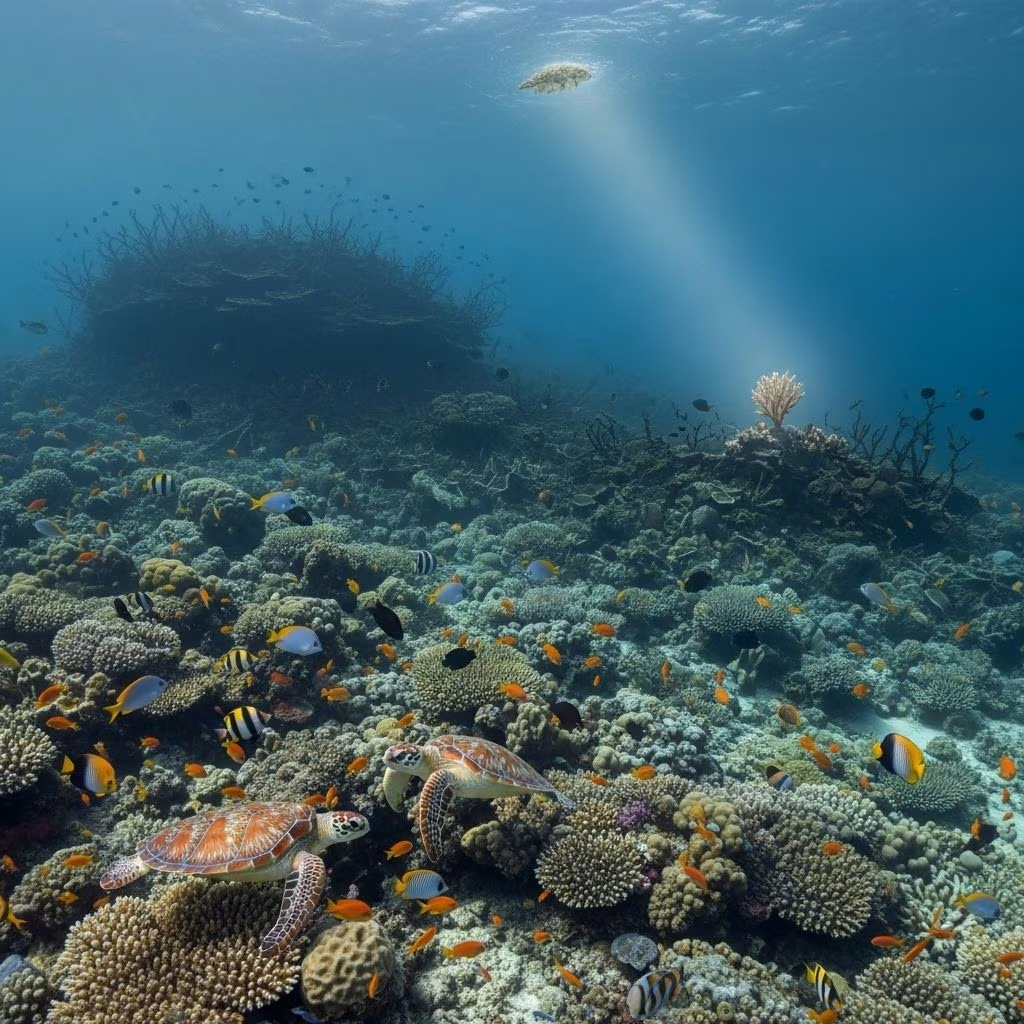
The Collapsing World of Coral Reefs: An Unprecedented Threat
Coral reefs, once vibrant underwater cities, are rapidly reaching a tipping point. Spanning tropical oceans, these complex ecosystems are vital not just for marine biodiversity but for the livelihoods and security of millions of people worldwide. Yet in recent decades, scientists have observed their extensive decline, sparking urgent concerns about the future of the world’s coral reefs.
Why Coral Reefs Matter
Coral reefs support an astonishing array of life, sheltering up to a quarter of all marine species. Their intricate structures protect coastlines from erosion, reduce the impact of storms, and generate billions in revenue through fisheries and tourism. They provide critical ecosystem services, including:
- Biodiversity: Reefs harbor about 25% of known marine species despite covering less than 1% of the ocean floor.
- Coastal protection: Barrier reefs and atolls absorb wave energy, safeguarding human communities from storm surges and erosion.
- Economic benefits: Coral reefs contribute an estimated $375 billion annually to the global economy through fishing, tourism, and shoreline protection.
Understanding Coral Reef Collapse
The collapse of coral reefs is often described as “death by a thousand cuts.” This phrase encapsulates the cumulative, interactive pressures that gradually and sometimes irreversibly undermine the health and functioning of reef ecosystems.
What Does Reef Collapse Look Like?
In technical terms, a coral reef collapses when it can no longer maintain its biological diversity, abundance, or ecosystem functions. This happens when:
- Vibrancy fades: Bright corals and fish give way to dull, algae-dominated expanses.
- Biodiversity dwindles: There is a marked decrease in the variety and number of fish and invertebrate species.
- Soundscapes change: The lively underwater “chatter” of healthy reefs falls eerily silent as animal populations decline.
- Structural complexity is lost: The intricate three-dimensional architecture breaks down, sometimes within just a decade, leaving flat or rubble-strewn seascapes.
This phenomenon is most pronounced in regions such as the Caribbean and the Persian-Arabian Gulf. Only a few strongholds, like parts of the “Coral Triangle” in the Indo-Pacific, show significant resilience—though even these are under threat.
Main Drivers of Coral Reef Decline
Coral reefs are falling victim to a convergence of threats. Their decline is caused and accelerated by a complex interplay between local and global stressors:
Global Warming and Heat Stress
Rising ocean temperatures are the leading cause of mass coral bleaching events and subsequent mortality. When water gets too warm, corals expel their symbiotic algae (zooxanthellae), losing their color and key energy source. Repeated or sustained bleaching leaves corals weakened and susceptible to disease or death. As of the 2020s, scientists estimate that the global threshold for catastrophic bleaching is between 1°C and 1.5°C of warming above preindustrial levels—a line the world is fast approaching or may have already crossed.
Ocean Acidification
The increased absorption of atmospheric CO2 by the world’s oceans makes seawater more acidic, reducing the availability of the carbonate ions that corals need to build their calcium carbonate skeletons. Over time, this impairs reef growth and structural stability, compounding the effects of heat stress.
Overfishing and Destructive Fishing
Excessive fishing removes key species—including herbivorous fish that graze on algae. Without these important grazers, algae proliferate and smother corals. Destructive practices such as blast fishing and cyanide fishing cause immediate and long-term physical damage to reef structures.
Pollution and Nutrient Runoff
Land-based pollution, including agricultural runoff laden with fertilizers and sewage, provides fuel for algal blooms. These blooms reduce water quality, block sunlight, and compete with coral larvae for space. Sedimentation clouds water and physically buries or abrades corals.
Coral Diseases
Infected corals are less able to withstand other stresses, contributing to what ecologists call a “biotic death spiral.” Many coral diseases have risen dramatically in frequency and severity, often in tandem with elevated temperatures and local stressors.
Catastrophic Events
- Storms: Hurricanes and cyclones break apart fragile corals and scatter reef structures.
- Oil spills and chemical pollution: Devastate reef ecosystems in the short and long term.
The Ecological Tipping Points
The concept of a “tipping point” is central to understanding reef dynamics. When stress crosses a certain threshold, the entire ecosystem can shift abruptly and irreversibly from a healthy, coral-dominated state to an impoverished system dominated by algae and rubble. Key signs that a reef has tipped include:
- Loss of coral cover and structural complexity
- Dominance of macroalgae and non-coral organisms
- Collapse of fish and invertebrate populations
In many regions, such as the Caribbean, scientists now believe large-scale reef tipping points have already been surpassed, with entire regional ecosystems at serious risk of collapse.
Impacts: Ecological, Economic, and Social Consequences
The widespread decline of coral reefs has far-reaching repercussions for marine life, human communities, and global economies.
Ecological Impacts
- Biodiversity loss: As corals die, specialized fish (such as butterflyfish and damselfish) and a vast array of invertebrates lose their habitat and food sources, leading to drastic population declines.
- Algal proliferation: Reduced grazing by herbivorous fish facilitates a shift to algae-dominated systems, creating feedback loops that prevent coral recovery.
- Erosion and loss of habitat complexity: The flat, featureless seafloor supports fewer organisms and stores less carbon.
Economic and Social Impacts
- Fisheries collapse: With fewer reef fish, coastal communities lose a half-billion people’s key source of protein and economic stability.
- Loss of tourism: Coral reefs attract millions of divers and snorkelers. Their decline jeopardizes livelihoods in over 100 countries.
- Coastal vulnerability: Without coral barriers, islands and coastal cities are more exposed to wave action, flooding, and storm damage.
- Disrupted cultural practices: Many Indigenous and local communities have deep cultural and spiritual ties to coral reefs.
Regional Snapshots: Where Reefs Are Hurting Most
Though no reef system is untouched, the scope and pace of decline vary. The:
- Caribbean has lost 80% of its coral cover in the past 30-40 years. Iconic species like elkhorn and staghorn corals have become rare, qualifying as threatened under US law.
- Indo-Pacific has seen a 50% reduction in coral cover, though some regions within the Coral Triangle remain relatively robust.
- Persian-Arabian Gulf and other enclosed seas have suffered major collapses due to land-based impacts, overheating, and pollution.
What Happens If We Lose Coral Reefs?
The consequences of losing coral reefs extend from ecosystem collapse to societal hardship:
| Consequence | Details |
|---|---|
| Loss of marine biodiversity | Mass extinction or population collapses of reef-dependent species |
| Economic loss | Billions lost in fisheries, tourism, and natural storm protection |
| Increased coastal risk | Higher damage from storms, flooding, and erosion |
| Food insecurity | Reduced protein and nutrition for vulnerable coastal communities |
| Cultural erosion | Loss of heritage and traditions connected to reefs |
Can We Save Coral Reefs? Solutions, Challenges, and Innovation
Despite the grim outlook, there is still a window of hope. Effective action to protect and restore reefs must operate at both the local and global scales.
Mitigating Local Stressors
- Improved fisheries management: Protecting herbivorous fish and curbing destructive practices support reef resilience.
- Reducing pollution: Implementing better wastewater and agricultural runoff controls diminishes algal overgrowth.
- Establishing marine protected areas: Well-managed reserves give reefs space to recover and buffer against external threats.
Tackling Global Threats
- Reducing greenhouse gas emissions: Global climate action is essential to limit further ocean heating and acidification.
- International cooperation: Many threats to reefs cross national boundaries, requiring coordinated response.
Restoration Science and Innovation
- Coral gardening and transplantation: Scientists are cultivating “baby corals” and transplanting them onto degraded reefs, using new techniques to improve survival and resilience.
- Selective breeding: Innovative programs aim to breed and outplant corals with greater tolerance to heat and acidification.
- Ecological engineering: Artificial reefs and 3D-printed reef structures provide new habitat and bolster natural recovery.
- Emerging technology: Tools such as AI-driven sound monitoring help scientists assess reef health and guide conservation.
Role of Individuals and Communities
While large-scale threats require systemic change, individuals can help protect reefs by:
- Avoiding single-use plastics to prevent marine pollution
- Choosing sustainable seafood and reducing seafood waste
- Supporting responsible tourism and reef-friendly businesses
- Never touching or anchoring boats on coral reefs
Frequently Asked Questions (FAQs)
Q: What are the most immediate threats to coral reefs?
A: The greatest threats are global warming-driven ocean heatwaves, ocean acidification, overfishing, pollution from land, and outbreaks of disease.
Q: Have we already crossed the tipping point for coral reefs globally?
A: Many scientists believe some regional tipping points have already been crossed, especially in the Caribbean. Globally, we are nearing threshold temperatures that could lead to widespread functional collapse within decades if emissions are not curbed.
Q: Which regions still have healthy coral reefs?
A: The “Coral Triangle” region in Southeast Asia has pockets of remarkable resilience, but even there, many local reefs are deteriorating due to local and global drivers.
Q: What fish and animals depend on coral reefs?
A: Many small, ornamental fish (e.g., butterflyfish, damselfish), larger commercially important fish, sea turtles, and countless species of invertebrates rely on the shelter and resources provided by coral reefs.
Q: Is coral restoration a realistic solution?
A: Restoration can help targeted reefs recover, but only if underlying stresses—especially warming and acidification—are addressed at broader scales. Otherwise, newly planted corals will face the same threats and may not survive long term.
Q: What can I do personally to help protect coral reefs?
A: Individuals can reduce their carbon footprint, avoid products that harm marine life, support sustainable fisheries and eco-friendly tourism, and raise awareness about reef conservation.
The Future of Coral Reefs: A Race Against Time
Coral reefs stand at a crossroads. Without swift, coordinated global and local action, the world risks losing these vital ecosystems within our lifetimes. The science is clear: while restoration efforts offer hope, only comprehensive emission reductions and the reversal of local stressors can secure a future for reefs. The choices society makes in the coming years will determine whether coral reefs remain vibrant hubs of life—or become the first major victims of global ecological collapse.
References
- https://www.motherjones.com/environment/2025/06/collapse-coral-reefs-scientific-ecological-impacts-david-obura-interview/
- https://pmc.ncbi.nlm.nih.gov/articles/PMC2989627/
- https://www.epa.gov/coral-reefs/what-you-can-do-help-protect-coral-reefs
- https://www.youtube.com/watch?v=vPn94XAUBoo
- https://www.youtube.com/watch?v=GnB8OoT2UAE
- https://www.barrierreef.org/news/news/three-game-changers-for-coral-reefs
- https://www.treehuggerpod.com/episodes/coral-restoration


