Introduction
As the pursuit of energy-efficient, climate-conscious housing accelerates, the Passive House standard stands out as a pinnacle of sustainable design. Yet, achieving such ultralow energy use presents a unique challenge: how to efficiently provide hot water? Conventional gas and resistance water heaters are ill-suited for these superinsulated, airtight homes. Instead, heat pump water heaters (HPWHs) have emerged as the preferred solution, offering compatibility with all-electric Passive House designs, outstanding efficiency, and the capability to serve dual purposes in certain climates.
What is a Passive House and Why Does It Matter?
The Passive House design approach prioritizes minimizing energy demands for both heating and cooling. This is achieved through superinsulation, airtight construction, high-performance windows, continuous ventilation with heat recovery, and rigorous attention to thermal bridging. Buildings that meet this voluntary performance-based standard use up to 90% less heating energy and up to 75% less total energy than conventional new buildings.
- Ultra-low energy usage leads to reduced operational costs and environmental impact.
- The passive approach brings dramatic reductions in peak loads, flattening energy demand curves and easing grid stress.
- The reduction in heating and cooling loads shifts focus onto domestic hot water (DHW) as a dominant energy use in Passive Houses.
Why Heat Pump Water Heaters are Essential in Passive Houses
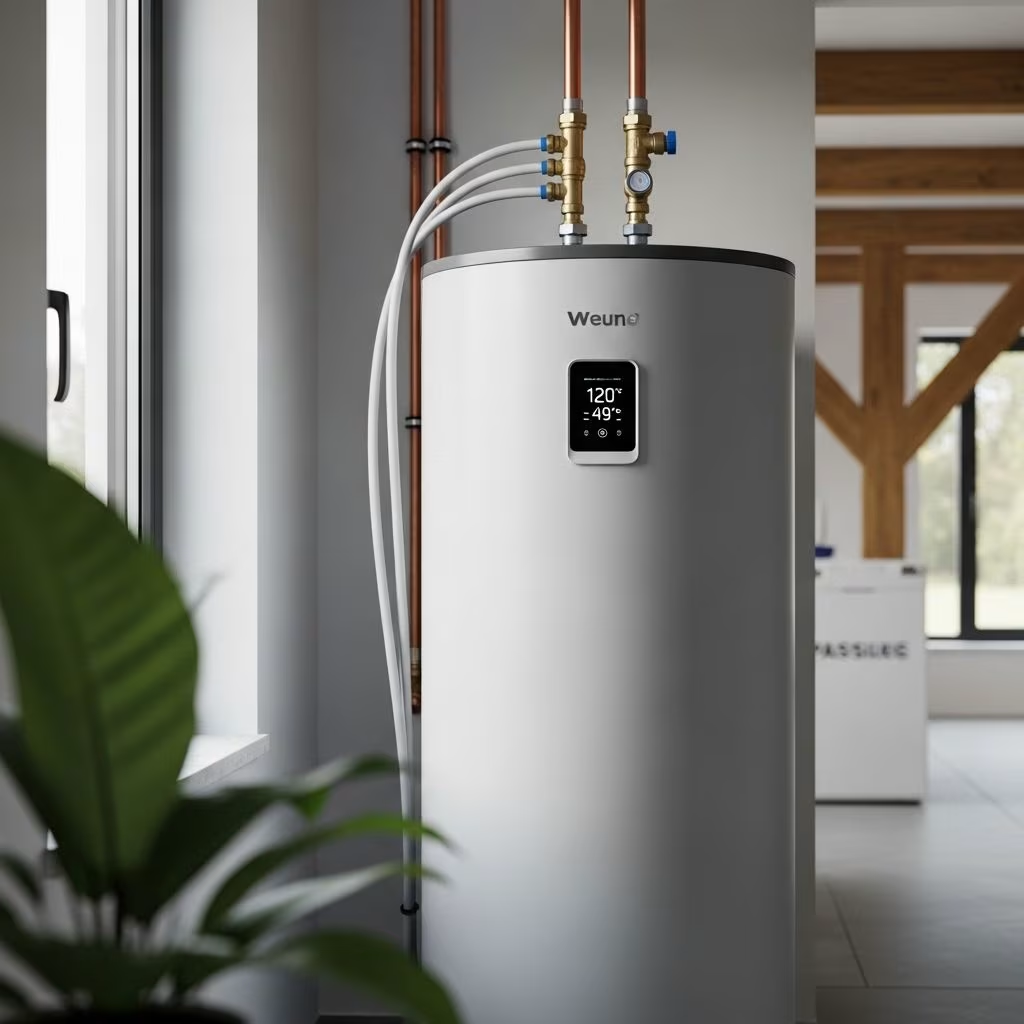
Heat pump water heaters work by extracting heat from ambient air and transferring it to water, typically achieving two to three times the efficiency of conventional electric or gas water heaters. In the absence of a traditional boiler, and with strict targets for energy use, Passive Houses benefit enormously from these high-efficiency, all-electric appliances. Here’s why:
- Efficiency: HPWHs often reach 250-300% efficiency (COP 2.5–3.0), compared to 100% for resistance heaters and around 80% for gas models.
- No combustion emissions: They create hot water without on-site greenhouse gas emissions, supporting decarbonized home energy systems.
- All-electric integration: Aligns seamlessly with the all-electric vision encouraged in Passive House construction.
- Potential for ‘free’ space cooling: In warmer months, their operation can also cool and dehumidify the space they draw air from—a potential benefit in certain climates and designs.
How Heat Pump Water Heaters Work
A typical heat pump water heater consists of a compressor, evaporator, condenser, and storage tank:
- The heat pump draws in air from the room (or, in some cases, from the outdoors).
- A refrigerant coil absorbs ambient heat from the air and the compressor boosts its temperature.
- The hot refrigerant transfers its heat to the water in the tank.
- The cooled air is expelled—lowering the room temperature slightly, which can be beneficial or problematic depending on the setup and climate.
The result: high-efficiency water heating with low operating costs and no combustion byproducts.
Shifting Loads: Hot Water is the New Dominant Energy Use
Traditionally, space heating accounted for the major share of residential energy consumption in colder climates. However, as insulation improves and airtightness nears perfection in Passive Houses, hot water demand now constitutes the largest share of energy use. Reducing space heating needs has worked so well that DHW preparation can easily consume over half of a Passive House’s total energy.
- Traditional hot water solutions become inefficient in super-insulated homes, as standby losses and direct combustion don’t align with efficiency goals.
- HPWHs, by contrast, reduce overall site energy use and emissions, especially as electricity supplies become cleaner.
Key Design Considerations for Heat Pump Water Heaters in Passive Houses
For maximum performance and comfort, careful planning of HPWH installation is essential in Passive House settings.
- Location: Placing the HPWH in a utility room or basement ensures consistent air temperatures for heat extraction, avoiding extreme cold or hot swings that reduce efficiency.
- Space requirements: HPWHs typically need at least 700–1,000 cubic feet of airspace for efficient operation. In smaller homes, make sure the selected location isn’t too tight for airflow, or consider ducted models for drawing from or exhausting to different locations.
- Ventilation: While HPWHs lower ambient air temperature and dehumidify, these effects must be balanced with the building’s overall ventilation strategy.
- Noise: Compressors generate a low hum; placing the heater away from sleeping areas and considering acoustic isolation may be prudent.
- Tank sizing: HPWH recovery rates are slower than traditional models; upsizing tanks (e.g., using an 80-gallon model even for a smaller household) ensures hot water reserves during peak usage.
- Drain management: Like air conditioners, HPWHs remove moisture from the air; ensure reliable condensate drainage.
Special Considerations in Cold Climates
Passive House buildings in cold regions need to avoid excessive cooling of interior spaces by HPWHs. Solutions include:
- Configuring HPWHs to draw air from a warmer (semi-conditioned) space or ducting air from outside during summer only.
- Ensuring the envelope’s airtightness and insulation prevent unwanted drafts or unintended heat flows.
Benefits of Heat Pump Water Heaters in Passive Houses
- Dramatic efficiency gains: HPWHs yield lower utility bills and less resource consumption.
- Cleaner energy footprint: As grids become greener, HPWHs move toward carbon-neutral hot water generation.
- Improved indoor comfort: The cooling effect in summer and dehumidification abilities provide comfort benefits in some climates.
- Enhanced safety: Elimination of combustion appliances cuts risks from carbon monoxide and gas leaks.
- Grid-friendliness: Lower peak energy demand supports grid stability, especially during high-usage periods.
Potential Drawbacks and How to Manage Them
- Lower recovery rates: HPWHs heat water more slowly than traditional gas or resistance heaters. Upsizing your tank or using programmable boost features can offset this.
- Noise: The compressor and fan produce a low, sometimes noticeable hum, though most modern equipment is relatively quiet.
- Cooling effect: In winter, unwanted cooling of the mechanical room must be prevented (through location, design, or seasonal ducting).
- Higher upfront cost: HPWHs cost more to install than basic resistance heaters, but the ongoing savings typically justify the investment within a few years.
Comparison Table: Water Heating Options in Passive Houses
| System Type | Typical Efficiency (COP) | On-site Emissions | Integration with All-Electric Design | Suitability for Passive House |
|---|---|---|---|---|
| Heat Pump Water Heater | 2.5–3.5 (250–350%) | None | Excellent | Highly Recommended |
| Resistance Electric | 1.0 (100%) | None | Good | Limited (High Energy Use) |
| Gas (Standard/Condensing) | 0.8–0.95 (80–95%) | Yes | Poor (Not All-Electric) | Not Suitable |
| Solar Thermal (w Electric or Gas Backup) | Varies | Depends on Backup | Good | Optional / Complex Installations |
Case Studies: Real-World Passive House Performance
Analysis of energy use shows Passive Houses have sharply lower total and peak energy loads, even more so than high-efficiency code-compliant buildings. For example, field data and simulations in California documented:
- 45% lower annual energy load in Passive Houses compared to typical new homes.
- Peak heating loads reduced by up to 40% in winter, translating to smaller required heating systems.
- Effective load shifting, with buildings maintaining temperature for hours with little or no active heating/cooling—enabling synergies with solar and demand response strategies.
In all cases, hot water emerged as the primary remaining energy use, underscoring the importance of efficient water heating strategies like HPWHs.
FAQs: Heat Pump Water Heaters and Passive House
Q: Are heat pump water heaters noisy?
A: Modern HPWHs are engineered to minimize noise. While the compressor and fan may be audible, proper placement (such as in a mechanical room or basement) and acoustic isolation techniques help reduce disturbances.
Q: Will a heat pump water heater cool my Passive House too much in winter?
A: Since HPWHs extract heat from their surroundings, installing them in a conditioned space during heating season could lead to slight cooling. Strategic installation choices (e.g., semi-conditioned rooms, ducting from warmer zones) and considering the building’s insulation help mitigate this.
Q: How much hot water can I expect from a heat pump water heater?
A: HPWHs have slower recovery times than gas or traditional electric models, but upsized tanks and programmable controls can ensure plenty of hot water for most households, even in high-performance homes.
Q: Are heat pump water heaters compatible with solar PV?
A: Absolutely! HPWHs run on electricity and work very well with rooftop PV systems. In fact, pre-heating water during surplus daytime solar hours can reduce both utility bills and grid strain.
Q: Are HPWHs more expensive than traditional water heaters?
A: While upfront costs are higher, HPWHs yield significant savings over time due to their superior efficiency and lower energy use. Incentives and utility rebates often help offset the initial investment.
Best Practices and Tips for Installing HPWHs in Passive Houses
- Plan early: Integrate hot water strategy into the house design from the beginning to optimize system sizing and installation locations.
- Select an appropriately sized unit: Consider tank size, peak usage needs, and climate to avoid running short on hot water.
- Vent and drain responsibly: Ensure adequate airflow and a reliable path for condensate drainage.
- Coordinate with ventilation systems: Balance cooling and dehumidification effects with the home’s whole-house ventilation to ensure comfort year-round.
- Look for incentives: Many utilities and government programs offer rebates or tax credits for heat pump water heater installations, especially in new construction meeting high-efficiency standards.
Conclusion
In a Passive House, every watt counts. Heat pump water heaters provide a powerful path to achieve truly low-carbon, energy-efficient hot water, complementing the airtight comfort and ultra-low energy needs of these advanced buildings. By choosing, sizing, and installing HPWHs thoughtfully, Passive House designers and homeowners can dramatically cut energy bills, reduce environmental impacts, and enjoy all-electric comfort for years to come.
References
- Passive House literature and case studies: Summary of the Existing Literature: Grid Benefits of Passive Houses
- Heat Pump Water Heater technical details: Efficiency First California , Energy Star , Passipedia
References
- https://www.cpuc.ca.gov/-/media/cpuc-website/divisions/energy-division/documents/building-decarb/passive-house-phase-i-report.pdf
- https://efficiencyfirstca.org/blog/heat-pump-water-heaters-we-need-to-get-this-right/
- https://passipedia.org/planning/building_services/heating_and_dhw
- https://passivehousecal.org/performance-advantages-of-air-to-water-heat-pumps/
- https://passivehouseaccelerator.com/articles/passive-house-and-all-electric-homes-are-like-chocolate-falling-in-your-peanut-butter
- https://www.energystar.gov/partner-resources/residential_new/educational_resources/sup_program_guidance/heat_pump_water_heater_guide/design_considerations
- https://www.greenbuildingadvisor.com/article/the-benefits-of-a-heat-pump-water-heater
- https://www.greenbuildingadvisor.com/question/heat-and-ventilation-for-passive-home