


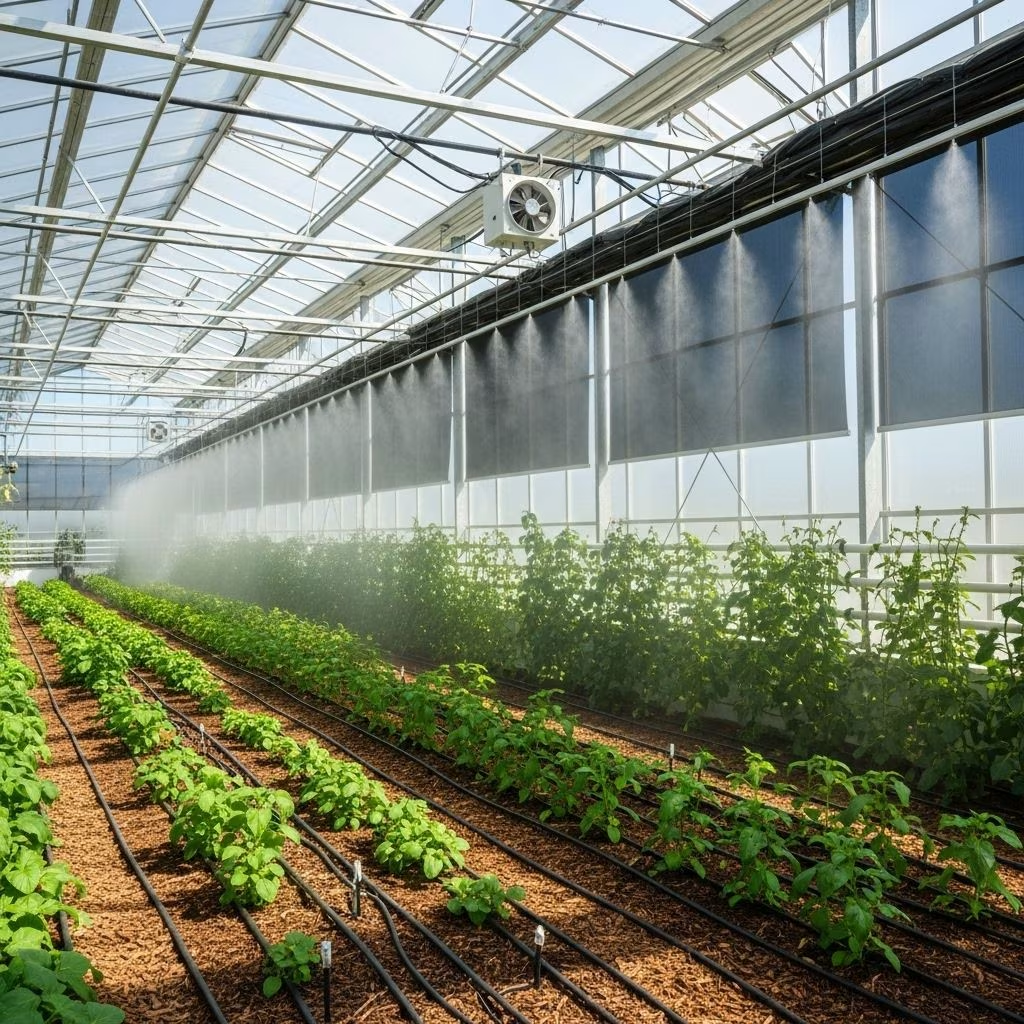
Eco-Friendly Cooling Solutions for High Tunnels and Greenhouses
High tunnels and greenhouses are invaluable tools for growers seeking to extend the growing season, protect crops, and increase yield. However, managing temperature—especially preventing overheating during sunny or warm months—remains a critical challenge. Traditional cooling solutions can be costly, energy-intensive, and environmentally taxing. Thankfully, a range of eco-friendly cooling strategies harness natural principles and smart design to keep high tunnels and greenhouses productive, sustainable, and climate-resilient.
Why Eco-Friendly Cooling Matters
Maintaining optimal temperatures in controlled growing environments is essential for:
- Plant health and productivity: Excessive heat stresses plants, reduces yields, and increases vulnerability to disease.
- Resource efficiency: Reduced need for irrigation and artificial cooling conserves water and energy.
- Climate impact: Eco-friendly cooling methods lower the carbon footprint and operating costs of your growing operation.
Understanding Temperature Fluctuations in High Tunnels and Greenhouses
High tunnels (also called hoop houses) and greenhouses capture sunlight and convert it into heat, which is then trapped under the covering. While this ‘greenhouse effect’ is ideal for season extension and winter protection, it can rapidly lead to overheating, especially on sunny days or in warm climates.
Key challenges involve managing:
- Day–night swings: Rapid heating during the day, quick cooling after sunset.
- Interior–exterior differences: Higher humidity and temperature inside compared to outside.
- Microclimates: Variations in temperature within different parts of the tunnel or greenhouse.
Smart cooling aims to flatten these extremes, keeping the crop environment stable and fostering resilient, healthy growth.
Core Eco-Friendly Cooling Methods for High Tunnels and Greenhouses
1. Passive Ventilation and Air Exchange
Passive ventilation harnesses natural air movement to remove hot, humid air and bring in cooler, drier air. This is essential for regulating temperature without energy consumption.
- Roll-up sides: Flexible sidewalls that can be manually or automatically rolled up to provide extensive ventilation along the length of the structure.
- End wall vents and gable shutters: Openings at the ends or peaks of the tunnel/greenhouse promote airflow and allow hot air—which rises—to escape.
- Doors: Simply opening end doors in addition to sidewalls can significantly improve cross-ventilation.
Many growers rely on daily adjustments, raising sides or opening vents early in the morning and closing them as temperatures drop in the evening. Newer systems may automate these actions for greater precision and reduced labor.
Roll-Up Sidewall Variations
- Manual roll-up: Economical and reliable for small-to-medium tunnels; may require monitoring to avoid rapid temperature change.
- Gearbox-assisted: Easier and safer for larger or longer tunnels, allowing smoother operation.
- Motorized (automated): Uses tube motors and controllers to automatically adjust sides based on preset temperature thresholds.
For growers concerned about “cold air shock” to crops when sides are opened, using partial openings or combining roll-ups with knee walls or windbreaks can help moderate the cooling effect.
2. Thermal Mass for Temperature Moderation
Thermal mass refers to materials that absorb, store, and slowly release heat. Integrating thermal mass helps moderate rapid temperature swings, protecting crops from both excessive daytime heat and nighttime cold.
- Materials: Stone, concrete, water barrels, and even densely packed soil serve as heat sinks.
- Placement: Position barrels or other thermal masses where they can collect sunlight during the day and radiate warmth at night.
- Function: During hot days, thermal mass absorbs excess heat, reducing spike temperatures. At night, it releases stored heat, slowing temperature drop.
This method is entirely passive, requiring no ongoing input or energy, and aligns perfectly with sustainable growing principles.
3. Shading Strategies
Shading prevents excess solar energy from entering the structure in the first place, helping to keep the interior cooler.
- Shade cloth: Install over the top or inside the tunnel/greenhouse; select density (e.g., 30%, 50%, 70%) based on crop needs and climate.
- Removable covers: Temporary or retractable shades allow flexibility in managing sun exposure seasonally or daily.
- Trellising and vertical crops: Use tall or vining crops on the south or west side to shade more sensitive varieties.
- Living shade: Planting shrubs or trees strategically for seasonal shading (careful to avoid root competition with tunnel crops).
Shading balances the need for light and protection against heat, especially during midsummer or in southern climates.
4. Evaporative Cooling and Humidity Control
Eco-friendly evaporative cooling takes advantage of the fact that as water evaporates, it absorbs heat and cools the surrounding air. This can be as simple as:
- Watering floors or walkways in the morning to add humidity and promote evaporative cooling as temperatures rise.
- Using hanging baskets or mistable surfaces to act as evaporation aids.
Be cautious—higher humidity can sometimes promote disease or mold if not balanced correctly. Always integrate good airflow and monitor for excess moisture buildup.
5. Structural Design Modifications
The physical design and orientation of your high tunnel or greenhouse can significantly affect temperature regulation and cooling efficiency.
- Orientation: Structures aligned east–west collect more even sunlight and promote uniform heating. North–south alignments can aid in shading or cooling depending on climate.
- Height and roof pitch: Taller structures and steeper roofs allow hot air to rise above plant level, where it can be vented out more effectively.
- Width and length: Wider tunnels provide more stable interior temperatures, while narrow tunnels may heat and cool more rapidly.
- Insulation: Using insulated baseboards, sealing gaps, and installing infrared (IR) blocking films reduces unwanted heat gains and losses.
Improving insulation also cuts nighttime temperature drops, reducing plant stress.
Advanced and Innovative Cooling Approaches
Automated Climate Control
Recent advances allow integration of sensors, thermostats, and solar-powered motors to automate venting and shading operations. This delivers superior precision and reduces labor, enabling the structure to respond instantly to changing conditions.
- Solar-powered automation: Solar panels, batteries, and 12V motors work together to open and close vents, roll-up walls, or retract shading based on temperature settings.
- Smart controllers: Thermostat or app-controlled systems provide remote alerting and adjustment, even when you’re off-site.
Such automation can be particularly valuable for growers managing multiple structures or seeking to reduce the need for on-site monitoring.
Removable Covers and Seasonal Adjustment
In some climates, removing plastic covers during the hottest months allows the soil and beds to ‘breathe,’ eliminating overheating risks for summer crops. Reinstallation in autumn restores protection for cool-season production. While this method sacrifices season extension, it can be a pragmatic and ultra-low-tech solution for certain crop rotations.
Comparing Cooling Strategies: Benefits and Ideal Use Cases
| Cooling Method | Cost | Labor | Energy Use | Environmental Impact | Ideal For |
|---|---|---|---|---|---|
| Passive Ventilation | Low | Variable (can automate) | None (if manual) | Very Low | All tunnels, especially moderate–hot climates |
| Thermal Mass | Low–Medium (material dependent) | Minimal (after setup) | None | Very Low | Climate with wide day–night swings |
| Shading | Low–Medium | Minimal | None | Very Low | Midsummer/southern locations |
| Evaporative Cooling | Low | Minimal | Low | Low if water used judiciously | Dry or low-humidity areas |
| Automated Controls | Medium–High | Very Low (after setup) | Low (solar powered) | Low | Growers with larger or multiple structures |
Best Practices for Sustainable High Tunnel and Greenhouse Cooling
- Combine multiple methods for layered temperature control—e.g., use shading, passive ventilation, and thermal mass together.
- Monitor temperatures at plant level, not just overhead, to accurately gauge crop stress.
- Regularly inspect and maintain moving parts, covers, and insulation to avoid leaks that compromise efficiency.
- Match cooling strategies to crop needs, local climate, and your management capacity.
- Prioritize low- or no-energy solutions before investing in mechanical or active cooling systems.
Frequently Asked Questions (FAQs)
Q: Why not use air conditioning or mechanical fans in high tunnels?
A: Most high tunnels are designed for passive management and lack the infrastructure for A/C or heavy-duty fans. Mechanical systems increase energy costs, may require electrical hookups, and conflict with the low-tech, sustainable philosophy underpinning high tunnel agriculture.
Q: Will opening the sides too quickly shock my plants?
A: Sudden airflow shifts can stress sensitive crops, particularly in early spring or fall. To avoid cold air shock, open sides incrementally, use knee walls, or combine with other moderating strategies to introduce cooler air more gently.
Q: How much does thermal mass really help in hot climates?
A: Thermal mass provides the greatest benefit in climates with significant day/night swings—absorbing excess heat during the day and moderating rapid drops at night. In consistently hot, humid areas, combine with aggressive ventilation and shade for best results.
Q: Can shade cloth reduce light too much for my crops?
A: Yes, excessive shading can slow growth, especially for sun-loving crops. Use a shade density appropriate to your species and growing conditions, and consider temporary or adjustable shading for flexibility as weather changes.
Q: Are automated systems worth the investment?
A: For larger or commercial operations, automation reduces labor, improves responsiveness, and protects yields. For small-scale growers, simple passive methods may be sufficient, but partial automation (e.g., solar-powered vent openers) offers an efficient middle path.
Conclusion: Building a Cooler, Greener Future
Eco-friendly cooling is about more than simply maintaining comfort—it’s about aligning your growing operation with principles of sustainability, resilience, and stewardship. By using natural forces wisely and choosing low-impact technologies, every grower can protect crops, conserve resources, and help build a food system that thrives under changing climate conditions. Whether you’re a backyard gardener or a commercial grower, embracing these strategies ensures a greener future for your harvests and the planet.
References
- https://gpnmag.com/article/cooling-options-high-tunnels/
- https://hightunnelgreenhouses.net/harnessing-thermal-mass-in-high-tunnel-greenhouses-for-sustainable-year-round-growing/
- https://extension.okstate.edu/fact-sheets/high-tunnels.html
- https://www.extension.purdue.edu/extmedia/ho/ho-297-w.pdf
- https://mindfulfarmerarkansas.com/blogs/news/the-ultimate-guide-to-high-tunnel-or-greenhouse-selection-for-your-garden
- https://extensionpubs.unl.edu/publication/g2246/2014/html/view
- https://rimol.com/greenhouses/high-tunnels/
- https://www.youtube.com/watch?v=VvdwGnB0ivU


