


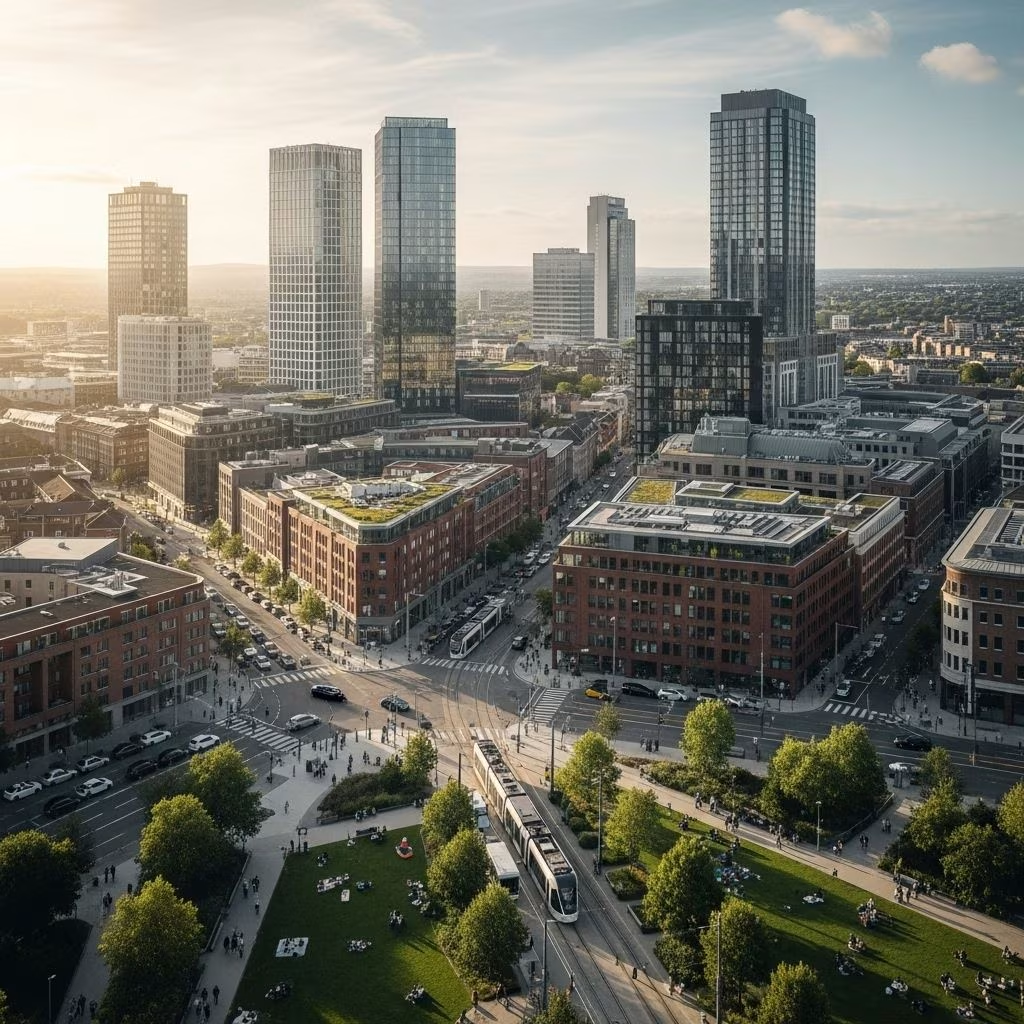
How Hybrid Work Can Transform Our Cities for the Better
Once viewed as a temporary solution to an unprecedented crisis, hybrid work has rapidly become a defining feature of modern professional life. Beyond simply offering flexibility to employees and businesses, hybrid work holds the potential to profoundly reshape our cities—from reducing congestion and carbon emissions to revitalizing local communities and supporting healthier lifestyles. As we examine the impacts of this new work era, it becomes clear that hybrid models could be one of the most significant levers for sustainable urban transformation in the coming decades.
Rethinking the Daily Commute
For generations, the rhythms of urban life have been dictated by the relentless flows of commuter traffic. A hybrid work model—where employees split time between home and the office—offers a path to break this routine, with profound benefits for individuals and cities alike.
- Dramatic Reductions in Commuting: In cities like New York and Dallas, average public transport commutes approach nearly 10 hours a week per person. By integrating remote days, hybrid work can shave off dozens of commuting hours monthly, gifting employees with more time for their families, wellness, and communities.
- Less Traffic, Lower Emissions: Traffic congestion and transit overuse are some of the biggest contributors to urban air pollution and stress. Fewer daily commutes reduce highway gridlock and noise, while also dramatically trimming greenhouse gas emissions from vehicles and trains.
- Public Transit System Benefits: With less peak crowding, transit systems can operate more efficiently, offering improved reliability and comfort for those who continue to rely on public transportation.
Comparing Time and Emissions: Traditional vs Hybrid Work
| Scenario | Weekly Commute Hours | Estimated CO2 Emissions |
|---|---|---|
| Traditional (5-day in-office) | 10 | High |
| Hybrid (2-3 days in-office) | 4–6 | Medium to Low |
| Remote (full-time) | 0 | Lowest |
Figures based on large metro areas with average commute times; actual emissions will vary.
Redefining the Urban Core: Downtowns and Beyond
Urban business districts have long been shaped around the assumption of dense daily employment. As hybrid work reshuffles where and when people spend their workweeks, cityscapes and economies must adapt:
- Office Vacancy and Opportunities: With fewer workers in the office full-time, commercial real estate demand has shifted, creating chances to rethink office layouts, repurpose underused buildings, or develop more flexible, shared workspaces.
- Revitalization of Local Neighborhoods: As people spend more time in their home neighborhoods—shopping, dining, or using local services—smaller business districts, suburban centers, and mixed-use developments can experience renewed vibrancy.
- Equitable Access: Hybrid work can foster inclusion by allowing people who can’t afford to live near nonprofit and tech job clusters to participate in high-value employment from wherever they are.
Environmental Benefits: A Greener Urban Footprint
The transition to hybrid and remote work is an unexpected catalyst in the fight against climate change and urban air pollution.
- Reduced Transportation Emissions: Transportation accounts for roughly 28% of U.S. greenhouse gas emissions. Each skipped commute lowers the collective carbon footprint, especially when multiplied across thousands or millions of workers.
- Lower Office Energy Use: Offices that are vacant or only partially filled most days require less energy for heating, cooling, lighting, and equipment operation. Businesses can downsize, saving both energy and operating costs.
- Support for Walkable Neighborhoods: As daily routines decentralize, there’s increased interest and investment in walkable local communities—reducing over-reliance on cars and supporting urban design that is friendlier to pedestrians and cyclists.
Environmental Case Study: Carbon Savings from Hybrid Work
Recent surveys found that hybrid work, by reducing travel days, could lead to thousands of metric tons of avoided CO2 emissions annually in major cities. These savings rival the effects of some formal municipal sustainability programs.
Well-being, Equity, and Urban Life Quality
The impact of hybrid work reaches beyond infrastructure—it directly shapes how people experience and participate in urban life.
- Enhanced Work-Life Balance: Less time commuting translates to more time for rest, exercise, and social engagement—factors linked to higher productivity and reduced burnout.
- Greater Flexibility for All: Hybrid models allow employees to customize their schedules around caretaking, medical needs, or personal interests, reducing stress and improving health outcomes.
- Social Connections and Community: While working from home can reduce on-the-job socialization, it also frees up time for participation in community organizations, local schools, or volunteering, strengthening social bonds where we live.
- Inclusion Across Socioeconomic Backgrounds: By decoupling job opportunities from expensive city centers or long commutes, hybrid work can broaden access to high-quality jobs for people from a variety of backgrounds and locations.
What About the Risks and Challenges?
Despite its promise, hybrid work isn’t a panacea, and cities must plan for potential challenges:
- Vulnerable Urban Economies: Downtowns built around weekday office crowds—restaurants, transit, and retail—can suffer if worker foot traffic permanently drops.
- Equity in Digital Access: Disparities in broadband, home technology, and quiet space can leave behind those without adequate resources, especially in underserved or rural areas.
- Mental Health and Isolation: Surveys show that while many employees appreciate flexibility, social isolation and loneliness have also risen with the shift to home-based work, particularly for those in smaller living spaces or without strong community ties.
Unlocking Urban Resilience and Regeneration
Organizations and city planners have unique opportunities to harness hybrid work not just to adapt, but to actively make cities stronger, healthier, and more vibrant:
- Supporting Local Enterprises: Policymakers and businesses can encourage investment in local retail, services, and co-working hubs dispersed throughout city neighborhoods, anchoring a new generation of community-centered business districts.
- Expanding Green and Public Spaces: Resources saved from reduced office infrastructure can fund parks, bike lanes, community gardens, or public libraries—spaces that promote well-being and resilience.
- Inclusive Urban Planning: Cities can direct public investment and zoning changes to support mixed-use development, affordable housing close to amenities, and ensure that new urban patterns don’t leave vulnerable communities behind.
Five Practical Urban Innovations Enabled by Hybrid Work
- Flexible Zoning Policies: City planners are re-evaluating zoning to allow easier conversion of underused office space into housing or creative spaces.
- Distributed Coworking and Micro-Offices: Smaller, flexible workplaces within residential districts reduce commutes while maintaining the benefits of in-person collaboration.
- Incentives for Local Spending: Cities can offer tax or grant incentives for businesses that support local hiring and sourcing in decentralized neighborhoods.
- Digital Infrastructure Expansion: Investment in reliable, high-speed connectivity for all regions ensures that no one is digitally left behind.
- Active Transportation Networks: Enhanced bike lanes, pedestrian walkways, and micro-mobility hubs are expanding as fewer people drive to centralized offices daily.
Sustainability, Productivity, and Beyond: The Big Picture
The expansion of hybrid work isn’t simply a shift in employment—it’s a movement with the potential to:
- Reduce environmental impact at scale via lower emissions and energy use
- Drive economic innovation and revitalize stagnant neighborhoods
- Promote equity and access for broader swaths of the population
- Create more livable, resilient cities ready for the challenges of the 21st century
As city leaders, employers, and citizens embrace this paradigm, collaboration across sectors will be crucial for realizing a truly sustainable urban future.
Frequently Asked Questions (FAQs)
Q: What is a hybrid work model?
A: A hybrid work model blends in-office and remote work, allowing employees to split their time between a physical workplace and a remote location based on both organizational needs and individual scheduling preferences.
Q: How does hybrid work benefit city environments?
A: Hybrid work reduces urban traffic congestion and associated air pollution, decreases pressure on public transit systems, lowers commercial energy consumption, and fosters local economic activity in neighborhoods where people live.
Q: Are there any downsides to hybrid work for cities?
A: Potential challenges include decreased foot traffic for downtown businesses and the risk of increased digital inequality. There is also concern about social isolation for fully remote workers and disruption of established urban economies reliant on office workers.
Q: Why is hybrid work seen as good for employee well-being?
A: Employees benefit from reduced commutes, more flexible schedules, greater work-life balance, and increased autonomy, all of which are associated with improved mental and physical health.
Q: How can city planners ensure hybrid work leads to equitable improvements?
A: By expanding broadband access, investing in neighborhoods, promoting affordable housing, and supporting local services outside the urban core, planners can ensure that the gains from hybrid work models are widely shared across all communities.


