


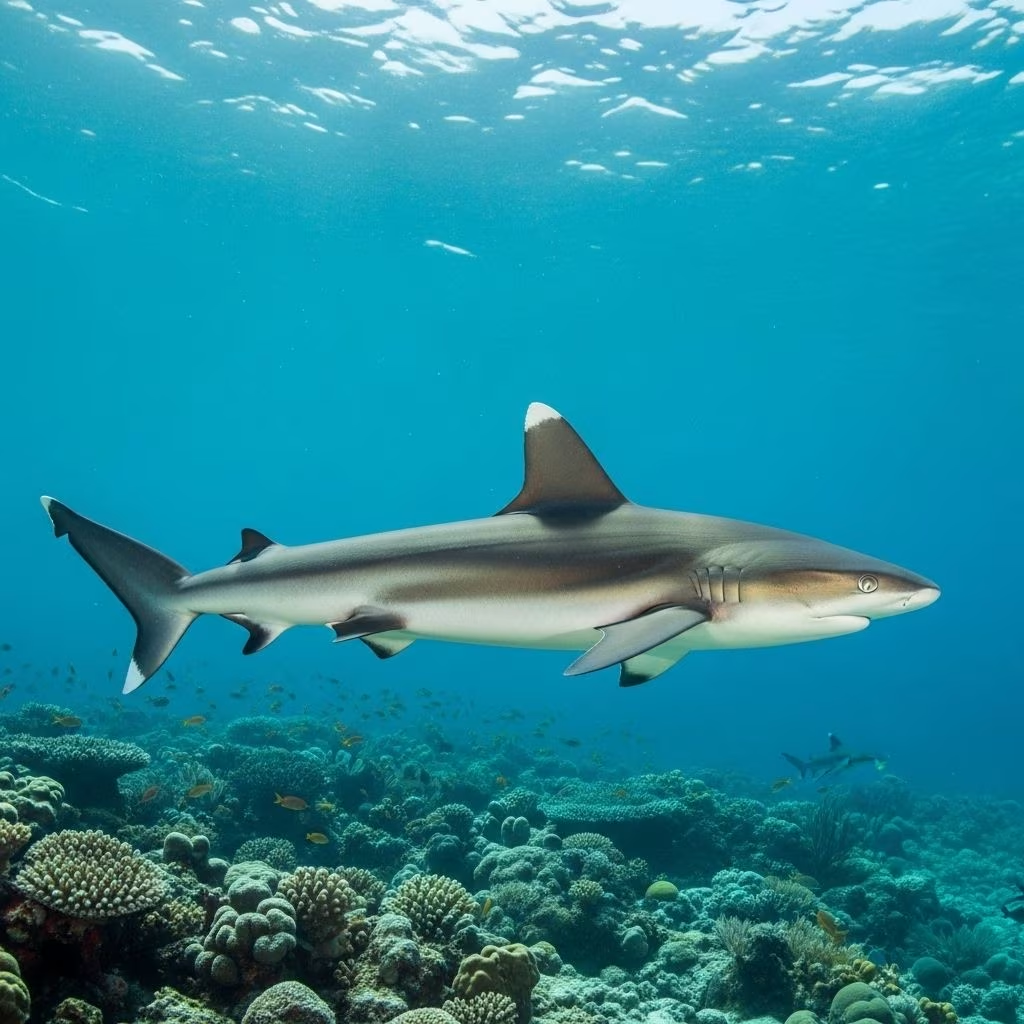
The World’s Most Endangered Sharks: Meet These Imperiled Predators
Sharks have ruled the oceans for hundreds of millions of years, acting as apex predators and balancing marine food webs. Yet, despite their ancient lineage and ecological value, numerous shark species are facing unprecedented threats. Overfishing, habitat destruction, and targeted hunting for fins have thrust many on the verge of extinction. Meet some of the world’s most endangered sharks—each remarkable, each critically imperiled, and each key to the health of our oceans.
Why Are Sharks in Trouble?
Sharks are slow to reproduce, with many species maturing late and giving birth to only a few young at a time. This biological trait makes them highly vulnerable to overexploitation. For numerous sharks today, the threats are overwhelming:
- Overfishing — Sharks are caught intentionally for their fins (used in shark fin soup), meat, liver oil, cartilage, and even skin.
- Bycatch — Many are unintentionally captured in nets meant for other species, such as tuna or swordfish.
- Habitat Loss — Coastal development and pollution degrade essential habitats, especially for species dependent on reefs or estuaries.
- Slow Reproduction — Some sharks give birth to just a few pups every couple of years, so populations recover slowly.
Globally, over one-third of all shark and ray species are now threatened with extinction, according to the International Union for Conservation of Nature (IUCN) Red List.
Remarkable Endangered Shark Species
Below is an in-depth look at some of the most critically endangered sharks, their unique qualities, and the urgent dangers they face.
Ganges Shark (Glyphis gangeticus)
The Ganges shark is one of only a handful of true river-dwelling sharks on the planet. Found in tropical river systems of South Asia, especially the Ganges River, this rare species is critically endangered due to:
- Extensive fishing and bycatch in riverine and estuarine habitats
- Pollution and severe habitat modification from damming, irrigation, and development
- Believed locally extinct in Pakistan, Myanmar, and Borneo, with declining populations elsewhere
Their elusive nature also means that actual numbers are hard to assess, heightening conservation challenges.
Daggernose Shark (Isogomphodon oxyrhynchus)
This small, striking West Atlantic shark is instantly recognizable for its flattened, elongated snout. The daggernose is now one of the rarest sharks on earth, listed as critically endangered due to:
- Intense and unregulated fishing throughout its range
- Very slow reproductive cycle, producing few pups
- Recent sightings are extremely rare; the last recorded neonate was seen in 2016
Sandtiger Shark (Carcharias taurus)
The sandtiger is a large, fearsome-looking but docile shark, often mistaken for more dangerous species. Found in temperate and subtropical oceans, especially off the United States, Australia, and South Africa, the sandtiger faces multiple threats:
- Extremely low reproductive rates (just two pups every other year)
- Vulnerable to overfishing and bycatch
- Habitat loss from pollution and coastal development
The IUCN lists sandtigers as endangered, with populations declining globally.
Oceanic Whitetip Shark (Carcharhinus longimanus)
Recognized for its distinctive rounded fins with white tips, this formerly abundant open-ocean species has experienced dramatic population declines. It is classified as critically endangered due to:
- High vulnerability to longline and surface fisheries
- Targeted for its fins, as well as high rates of bycatch
Estimates show a staggering 98% global population loss over the past 60 years. The species remains listed as threatened under the U.S. Endangered Species Act.
Scalloped Hammerhead Shark (Sphyrna lewini)
The scalloped hammerhead, with its iconic, swept-back cephalofoil (head), is found in warm coastal waters worldwide. Once abundant, it is now critically endangered due to:
- Strong demand for fins (especially in Asia for shark fin soup)
- Bycatch and habitat loss
- A population decline estimated at 77–97% in recent decades
Great Hammerhead Shark (Sphyrna mokarran)
Largest of all hammerhead species, the great hammerhead is highly migratory and often seen near estuaries, coral reefs, and continental shelves. Its fate is grim:
- Relentlessly targeted for its oversized fins
- Population decline over 80% across its range
- Highly sensitive to even small increases in fishing pressure
It is now listed as critically endangered.
Short-tail Nurse Shark (Pseudoginglymostoma brevicaudatum)
Inhabiting coral reefs of East Africa—including Kenya, Tanzania, and Madagascar—this rarely-seen shark is directly linked to the health of dying corals. It is critically endangered because of:
- Destruction and loss of coral reef habitat
- Little to no refuge from fishing pressure
Atlantic Shortfin Mako Shark (Isurus oxyrinchus)
Known as the fastest shark in the ocean, the Atlantic shortfin mako reaches speeds up to 45 mph (72.4 km/h) and dramatic leaps when hunting. Despite their agile prowess, these sharks are in trouble due to:
- Heavy fishing pressure, as they are among the sharks most often caught globally
- Vulnerable population and a decreasing trend listed as vulnerable and potentially at-risk of slipping into greater peril if exploitation continues
Angelsharks (Family: Squatinidae)
Angelsharks resemble flattened rays but are true sharks, key to unique sandy and muddy bottom habitats. With 23 recognized species, more than half face extinction threats—making the family one of the most endangered among all elasmobranchs (sharks and rays). Key facts:
- Extremely slow to mature and reproduce
- Highly vulnerable to overfishing and habitat degradation
- Many angelshark species move only small distances, making localized extinctions likely
- Once common, some species were so heavily fished they were mistaken for white tuna
Shark-Like Rays: The Rhino Rays, Guitarfish, and Wedgefish
Many rays and ray-like species are in even graver danger than many sharks. Among them are the sawfish, guitarfish, and wedgefish—collectively referred to as ‘rhino rays.’ Although technically rays (not sharks), these species share a similar body plan and many of the same threats.
- Sawfish: Noted for their long, toothed snouts (rostra), sawfish have seen their populations battered by overfishing and habitat loss. All sawfish species are now listed as either endangered or critically endangered on the IUCN Red List.
- Guitarfish and Wedgefish: These so-called ‘rhino rays’ are the world’s most threatened marine fish group. Out of 16 wedgefish and giant guitarfish species, 15 are now critically endangered, primarily from overfishing for their meat and valuable fins used in Asian cuisines and traditional medicines.
| Species | IUCN Status | Main Threats |
|---|---|---|
| Ganges Shark | Critically Endangered | River fishing, habitat loss |
| Daggernose Shark | Critically Endangered | Overfishing, slow reproduction |
| Sandtiger Shark | Endangered | Targeted fishing, bycatch, habitat loss |
| Oceanic Whitetip Shark | Critically Endangered | Fisheries bycatch, fin trade |
| Scalloped Hammerhead | Critically Endangered | Fisheries, finning, habitat degradation |
| Great Hammerhead | Critically Endangered | Fisheries, fin trade |
| Short-tail Nurse Shark | Critically Endangered | Habitat loss, fishing |
| Atlantic Shortfin Mako | Vulnerable | Fisheries, longlines |
| Angelsharks (family) | More than half threatened | Overfishing, slow recovery |
| Rhino Rays (wedgefish, guitarfish) | Most critically endangered | Fisheries, fin trade |
Why Do Endangered Sharks Matter?
Protecting endangered sharks is not just about saving iconic species—it’s about safeguarding entire marine ecosystems. Sharks are top predators, which means they:
- Help control populations of prey and competitors
- Remove weak and sick animals, improving prey health
- Maintain the balance and diversity that underpin healthy reefs, seagrass beds, and open ocean systems
The disappearance of sharks sets off a cascade of negative effects, often leading to collapse in fisheries and the degradation of coral reefs and other marine habitats.
What’s Being Done to Save Them?
Efforts to protect endangered sharks are underway globally, though challenges remain:
- International treaties like CITES list key sharks on protected appendices, controlling their trade.
- Some countries have established shark sanctuaries where all shark fishing is banned.
- Fishing quotas and bycatch regulations are now in place in certain regions.
- Public awareness campaigns highlight both shark importance and the ongoing crisis of shark finning.
- Scientific research is providing better data for monitoring and management.
However, enforcement gaps, illegal fishing, and persistent demand for shark products continue to jeopardize recovery. Conservationists urge collective international action for a better future for sharks—and our oceans.
Frequently Asked Questions (FAQs)
Q: How many shark species are endangered?
A: According to the IUCN Red List, over one-third of all shark and ray species are threatened with extinction, and dozens of shark species are listed as critically endangered or endangered.
Q: Why are hammerhead sharks so threatened?
A: Hammerhead sharks, especially the scalloped and great hammerhead, are heavily targeted for their exceptionally valuable fins. Their slow growth and low reproductive rates also mean these species can’t recover quickly from overfishing.
Q: What is the most endangered shark?
A: Multiple species hold the title, but angelsharks, daggernose sharks, sawfish (rhino rays), and certain hammerheads rank among the world’s most endangered sharks, with populations in some regions severely depleted or locally extinct.
Q: What can individuals do to help save endangered sharks?
A: Support sustainable seafood initiatives, avoid shark products, speak out against shark finning, and help raise awareness for shark conservation through education and advocacy.
Q: Are shark-like rays considered sharks?
A: No, but sawfish, guitarfish, and wedgefish are closely related to sharks and face similar threats, prompting their inclusion in conservation discussions about endangered elasmobranchs.
Sharks are ancient survivors, utterly unique, and vital for ocean health. Their future—and that of our seas—depends on global action and collective will to ensure their survival.
References
- https://saveourseas.com/worldofsharks/which-sharks-are-the-most-endangered
- https://www.fisheries.noaa.gov/resource/document/oceanic-whitetip-shark-5-year-review-2025
- https://sharkangels.org/top-10-most-endangered-sharks-rays-2024/
- https://ecos.fws.gov/tess_public/pub/listedAnimals.jsp
- https://www.iucnssg.org/iucnredlist.html
- https://www.worldwildlife.org/species/shark
- https://www.sharkguardian.org/how-many-sharks-are-threatened-endangered
- https://hai.swiss/en/database/red-list


