Wildlife Crossings: Protecting Colorado’s Wildlife and People
As highways carve through Colorado’s iconic landscapes, thousands of animals find themselves in danger. Wildlife-vehicle collisions not only cause devastating injuries and fatalities for animals, but also endanger drivers, disrupt migration routes, and cost millions every year in property damage and medical expenses. Wildlife crossings—including overpasses and underpasses designed specifically for animal movement—have emerged as a transformative solution. By blending thoughtful infrastructure with ecological science, these crossings protect lives, restore connectivity, and ensure Colorado’s iconic species continue to thrive.
Why Colorado Needs Wildlife Crossings
Colorado’s rugged topography and diverse habitats make it home to species like elk, deer, mountain lions, black bears, and pronghorn. Many of these animals follow ancient migration paths that now intersect with busy highways. As a result:
- There are thousands of wildlife-vehicle collisions (WVCs) annually in Colorado, leading to grave injuries and fatalities for both animals and motorists.
- The financial toll is immense: medical costs alone from WVCs in Colorado total an estimated $66.3 million annually.
- Wildlife collisions constitute a significant share of traffic accidents, especially on arterial roads cutting across migration corridors.
In areas such as the I-25 Raton Pass corridor, detailed studies have shown that the majority of wildlife-vehicle collisions involve deer (54%), while elk (17%) and black bears (20%) also suffer significant impact. Mountain passes and river valleys—natural routes for migrating wildlife—are often where human and animal paths most dangerously intersect.
The Ripple Effects of Collisions
- Loss of wildlife, including threatened and keystone species.
- Human injuries and fatalities, both immediate and long-term.
- Insurance costs, vehicle repair, and loss of livestock or pets.
- Disrupted migratory patterns, which can affect whole ecosystems.
The Science Behind Wildlife Crossings
Wildlife crossings come in several forms, each tailored to the specific movement and behavior of local species:
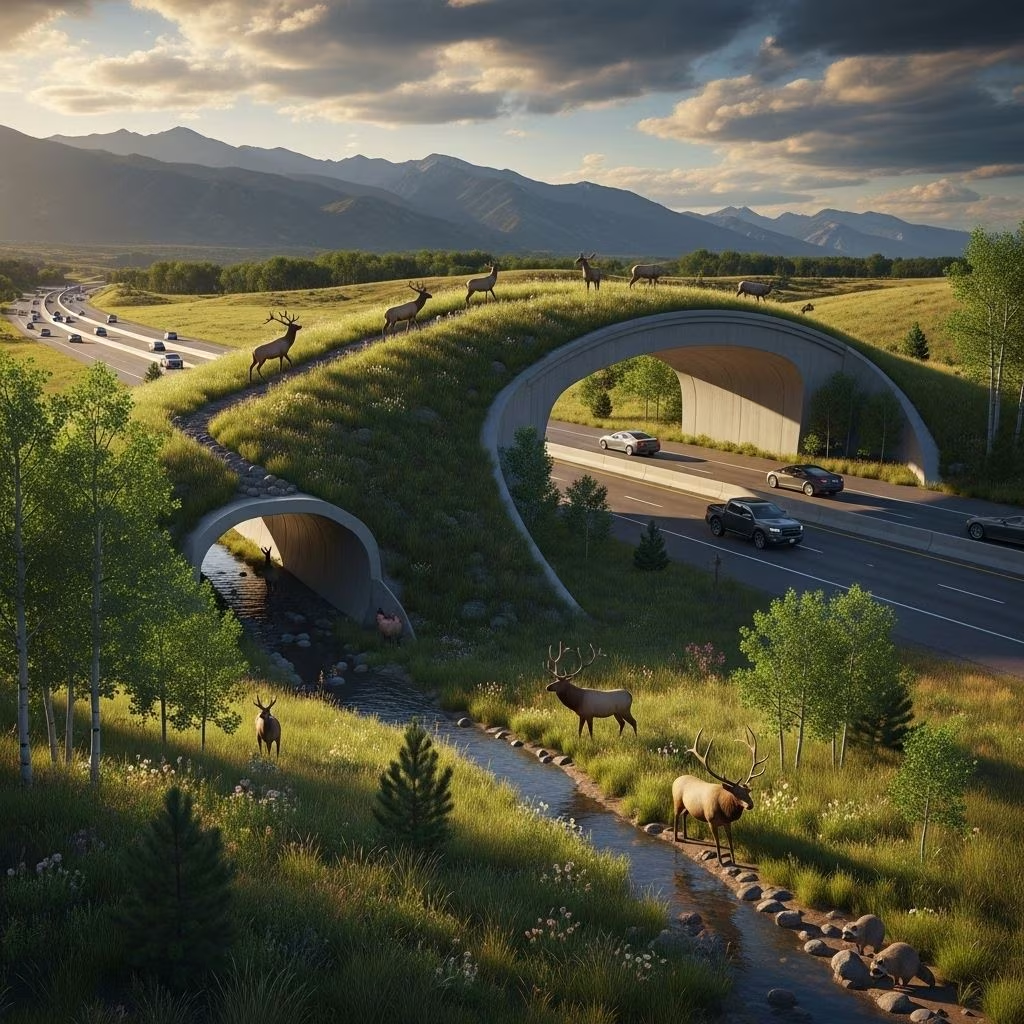
- Overpasses (Green Bridges): Wide, vegetated bridges spanning highways, used by larger mammals and a diversity of species.
- Underpasses & Tunnels: Short or long corridors beneath roads allowing animals—especially those that prefer enclosed spaces or are wary of open bridges—to safely cross.
- Retrofit Culverts: Existing drainage culverts enhanced to accommodate animal movement, often paired with natural substrates or wildlife ledges.
- Fencing and Guide Structures: Direct animals toward designated crossings, increasing efficacy and safety.
When combined with directional fencing, these structures can reduce WVCs by more than 90%, a proven result in Colorado and other western states.
Effectiveness of Different Crossing Structures
| Type of Crossing | Best For | Typical Success Rate |
|---|---|---|
| Overpasses | Elk, deer, moose, carnivores | Up to 97% collision reduction |
| Underpasses | Pronghorn, smaller mammals | 75–90% collision reduction |
| Culverts | Small mammals, amphibians | Variable (locale-dependent) |
Source: Adapted from peer-reviewed studies and agency reports.
Wildlife Crossings in Action: Colorado’s Success Stories
I-25 Raton Pass Project
One of Colorado’s landmark efforts is the I-25 Raton Pass Wildlife Collision Mitigation Study. Stretching from mile point 0 to 14 on Interstate 25, this area was a hotspot for wildlife-vehicle collisions. By evaluating wildlife movement and pinpointing “hot zones” of roadkill and near-misses, the project identified the best locations for new crossings and fencing, focusing on optimizing both ecological benefits and driver safety.
Roaring Fork Valley and South Colorado
Other notable projects include overpasses and underpasses near Glenwood Springs designed for migrating mule deer and elk. In the southern corridor of Colorado, similar structures address bear and mountain lion crossings, making these stretches far safer for motorists and preserving wildlife connectivity.
Neighboring State Models
- In Wyoming’s Trappers Point, two wildlife overpasses and five underpasses decreased pronghorn-vehicle collisions to near zero and allowed the famous migration to continue uninterrupted. The $12 million project is on track to “pay for itself” within 17 years due to reduced crashes and related costs.
The Broad Benefits of Wildlife Crossings
- Human safety: Significant reduction in severe and fatal car crashes. Local communities report not only safer roads but fewer traffic disruptions and insurance claims.
- Wildlife conservation: Preserves the genetic connectivity of populations, reduces inbreeding, and allows species to follow natural, sometimes centuries-old, migration routes.
- Economic savings: While building crossings is a considerable upfront investment, cost-benefit analyses consistently show rapid returns from averted collisions and lower emergency response needs. The Infrastructure Investment and Jobs Act allocates $350 million for wildlife crossings nationally, representing less than 0.1% of the national transportation budget but vast societal returns.
- Ecological resilience: By allowing movement, crossings help ecosystems respond to climate change, enabling animals to shift ranges as habitats change or contract.
How Wildlife Crossings Are Designed
Successful crossings rely on merging scientific data, engineering expertise, and local ecological knowledge. Key principles include:
- Strategic siting: Placing crossings where animal movement is concentrated—identified by tracking, motion-sensor cameras, and local reports.
- Species-adaptive design: Overpass and underpass dimensions, substrate, and fencing are tailored to the preference and needs of target species. Wider overpasses (40–60 meters) generally support higher diversity and greater use by large mammals, while some species—like mule deer and elk—require specific entry and exit gradients.
- Landscape connectivity: Crossings link fragmented habitats, such as river valleys, national forests, or migration routes between summer and winter ranges.
- Monitoring and adaptive management: Crossing usage is tracked with cameras, sensors, and biological markers so approaches can be refined for greater effectiveness over time.
Challenges, Costs, and Community Involvement
Despite their successes, wildlife crossings face challenges:
- Funding: Projects require substantial financial investment up front. However, advocates emphasize that lifetime benefits far outweigh costs—many crossings pay for themselves in fewer than two decades.
- Political will: Legislative support is growing, with national infrastructure bills and state initiatives beginning to dedicate consistent funding and long-term strategy.
- Data gaps: More research is needed to optimize size, width, and placement for maximum effectiveness, as responses can vary between species and locales.
- Community engagement: Involving local residents, Indigenous groups, and stakeholders ensures crossings are supported, well-used, and effective at conserving both animal and human interests.
Who Makes It Happen?
- Public agencies: Colorado Department of Transportation (CDOT), Colorado Parks and Wildlife, and federal agencies typically lead planning, construction, and monitoring efforts.
- Nonprofits and academia: Groups like ARC Solutions, universities, and wildlife advocacy organizations provide technical expertise and public outreach support.
- Private landowners: Some programs incentivize landowners to establish crossings on private property, especially within migration corridors.
Wildlife Crossings and Climate Resilience
Roadways can block animal movement needed for climate adaptation. As plant growth zones and food patches shift, crossings may be crucial—not just for present day populations, but for future resilience in the face of warming, drought, and wildfire disruptions.
Wildlife crossings help:
- Allow animals to track seasonal food and water sources.
- Preserve ecosystem function, sustaining pollinators, predators, and prey links.
- Support the movement of species to cooler or wetter habitats, buffering against climate stress.
Frequently Asked Questions (FAQs)
Q: How much do wildlife crossings cost?
A: Costs range from $250,000 for smaller underpasses to $10 million+ for larger overpasses. However, their lifespan (often 75 years or more) and collision reductions mean they often “pay for themselves” in 17–20 years through averted accidents and less property damage.
Q: Do only large animals use wildlife crossings?
A: No. While crossings are often designed for species like elk and mule deer, they are also used by black bears, mountain lions, coyotes, smaller mammals, birds, and even amphibians, depending on design.
Q: Are crossings effective everywhere?
A: Effectiveness depends on good placement, appropriate design for target species, and fencing to guide animals toward crossings. Studies consistently show 80–97% reductions in wildlife-vehicle collisions when these steps are followed.
Q: What laws support building more wildlife crossings?
A: Recent legislation like the Infrastructure Investment and Jobs Act includes $350 million over five years for wildlife crossings. Some states, such as Utah, have created dedicated funding. New federal bills propose additional support for habitat connectivity projects nationwide.
Q: Can private landowners participate?
A: Yes. Programs exist to help private landowners get funding to build, maintain, or allow wildlife crossings on or adjacent to their properties, particularly if important migration corridors cross their land.
Looking Forward: The Growing Movement for Wildlife Crossings in Colorado and Beyond
With compelling evidence of their success, Colorado’s wildlife crossings are becoming a model for national and international efforts. Through smart engineering, science-based planning, and strong policy support, these crossings show that people and wildlife can co-exist—even along the busiest highways. By keeping migration corridors open, reducing car accidents, and saving millions in costs, Colorado sets the pace for wildlife-friendly infrastructure that works for all living things.
References
- https://www.codot.gov/projects/archives/study-archives/i25wildlifescrossingtudy
- https://wildlife.org/wildlife-crossings-program-reduces-crashes-saves-lives/
- https://www.pew.org/en/research-and-analysis/articles/2024/11/05/wildlife-crossings-save-lives-money-and-improve-the-environment
- https://pmc.ncbi.nlm.nih.gov/articles/PMC9753749/
- https://rosap.ntl.bts.gov/view/dot/61224/dot_61224_DS1.pdf
- https://arc-solutions.org/wp-content/uploads/2021/08/ARC-Solutions-Green-Infrastructure-Toolkit-2-1.pdf
- https://esajournals.onlinelibrary.wiley.com/doi/10.1002/fee.2816