


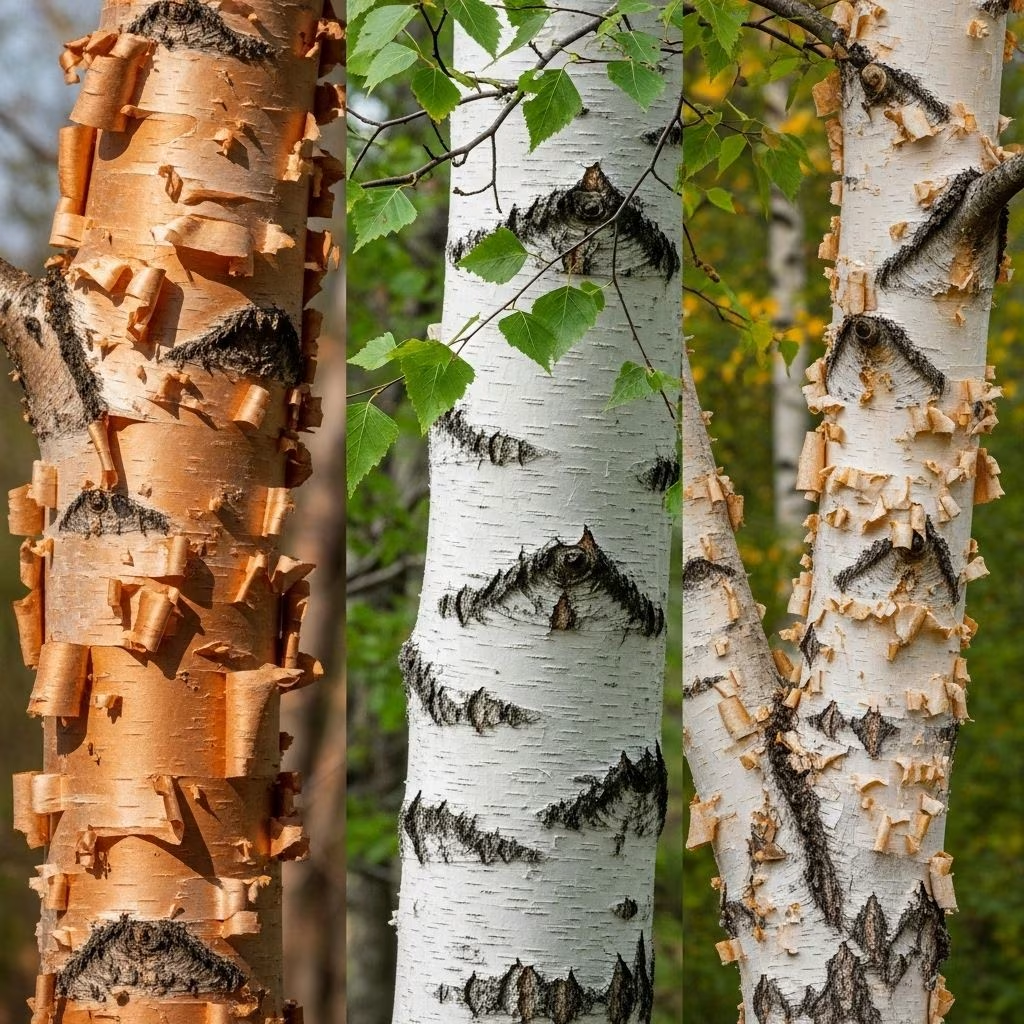
How to Identify Common Birch Trees
Birch trees (Betula spp.) feature some of the most recognizable and beautiful bark in North American woodlands. Their unique characteristics make them favorites among nature lovers, botanists, and foragers alike. However, with several birch species sharing similar features and habitats, accurate identification can be challenging. This comprehensive guide provides detailed insights into distinguishing the most common birch trees using bark, leaf shape, growth habits, location, and other morphological clues.
What Makes a Birch Tree Unique?
Birches belong to the Betulaceae family and are primarily found in cool regions of the Northern Hemisphere. With over 40 species worldwide, these trees are known for:
- Distinctive bark that peels in strips or sheets
- Tapered trunks and pyramidal, open crowns
- Leaves that are often egg-shaped, triangular, and finely toothed
- Catkins (elongated flowering clusters) visible in spring
Birch trees are relatively short-lived and serve important ecological roles, such as providing habitat for wildlife and pioneering reforestation in open sites.
Core Identification Features
- Bark Texture and Color: Most crucial for distinguishing birch species—note color, degree of exfoliation (peeling), and identifying features like lenticels (horizontal markings).
- Leaves: Typically alternate, triangular or ovate, single-toothed, and flat-bladed. Observe color changes in autumn for additional clues.
- Growth Form: Assess whether the tree grows upright, with multiple trunks, or as a single main stem.
- Habitat: Geographic range, soil moisture, and local site conditions narrow down possible species.
Bark: The Main Key to Birch Identification
Bark is the most reliable and visible feature for identifying birch trees throughout the year. Birch bark:
- Ranges from pure white to reddish brown or bronze, depending on the species
- Frequently peels in thin, horizontal strips or papery curls—especially in younger trees
- Displays prominent lenticels—horizontal lines or pores for gas exchange
- Often shows unique patterns, site-specific marks, and age-related changes
The whitest bark is typically found in northern species, reflecting excessive sunlight and preventing trunk warming during cold winters.
Common Birch Tree Species
Five birch species are especially prominent in eastern North America:
| Species | Bark Characteristics | Habitat & Range | Leaf Description |
|---|---|---|---|
| Paper Birch Betula papyrifera | Bright white bark, peeling in broad, papery strips; young bark reddish-brown before whitening | Northern U.S. and Canada; moist sites, open woods | Ovate to triangular, pointed tip, double-serrated edges; bright green turning yellow in fall |
| Yellow Birch Betula alleghaniensis | Yellow-bronze bark, curling in fine, shiny, papery ribbons; older bark rougher and darker | Mature forests, hills, and valleys; northeastern North America | Oval or oblong, finely toothed, yellow-green above, paler below |
| Black Birch Betula lenta | Dark gray to blackish; generally smooth with horizontal lenticels; non-peeling | Appalachians and eastern U.S.; slopes and upland regions | Easily confused with cherry, but has teardrop-shaped leaves; wintergreen aroma in twigs |
| River Birch Betula nigra | Pale pinkish-brown to cinnamon bark, peeling in tough, shaggy curls; multi-hued in mature trees | Floodplains, stream banks, and swamps of Southeast and Midwest U.S. | Diamond-shaped, double-toothed, dark green leaves |
| Gray Birch Betula populifolia | Dull white bark, does not peel; distinctive dark triangular patches below side branches | Northeastern U.S.; poor soils, disturbed areas, edges | Long-pointed, triangular leaves; dark green above, paler beneath |
How to Identify Each Common Birch Species
Paper Birch (Betula papyrifera)
Paper birch is the classic white birch of northern North America. Its white bark peels horizontally in broad, curling sheets, especially in younger trees. As it matures, the bark becomes thicker and can break into large plates. Often found in cooler climates, it thrives in moist, well-drained sites and open woods.
- Bark: Silvery white, curling off in large papery strips; reddish-brown on young trees before whitening.
- Leaf: Triangular to ovate, double-serrate (finely toothed), bright green in summer, yellow in autumn.
- Growth: Can form groves by sending up new shoots from the base of the trunk.
Yellow Birch (Betula alleghaniensis)
Yellow birch is distinguished by its beautiful yellow-bronze bark, which peels in thin, shining, curly ribbons. This species often grows larger and lives longer than other birches, sometimes reaching over 80 feet tall in old-growth forests. Its wood is valued for furniture and flooring.
- Bark: Golden bronze, exfoliates in fine shreds; older trunks can appear dark and rough.
- Leaf: Oval to oblong, finely serrated, yellow-green turning to brilliant gold in fall.
- Growth: Frequently found on north-facing slopes and rich, moist woodlands.
Black Birch (Betula lenta)
Black birch (also called sweet birch) has strikingly dark and non-peeling bark with clear horizontal lenticels. The twigs emit a strong wintergreen scent when scraped. It is a primary source of natural wintergreen oil and has a similar leaf shape to other birches, causing confusion with related species.
- Bark: Shiny, dark gray to almost black; marked with thin white lenticels; does not peel.
- Leaf: Lance-shaped to ovate; finely to coarsely toothed; dark green above.
- Growth: Prefers upland slopes in eastern North America.
River Birch (Betula nigra)
River birch stands out with its salmon-pink to reddish-brown bark, separating in tough, curly, shaggy flakes. Highly tolerant of wet, poorly drained soils, this species is popular in landscaping and resistant to many common birch pests.
- Bark: Tough, shaggy curls in cinnamon, tan, or pinkish hues; reveals lighter layers beneath when exfoliating.
- Leaf: Diamond-shaped, double-serrated margins, dark green turning buttery yellow in fall.
- Growth: Found along rivers, floodplains, and swamps in the Southeast and Midwest.
Gray Birch (Betula populifolia)
Gray birch can be identified by its non-peeling, chalky-white bark with prominent black triangular patches at the bases of branches. Often one of the first trees to colonize open or recently disturbed areas, it grows quickly but remains relatively short-lived.
- Bark: Dull white, non-peeling, dark triangular patches below branches.
- Leaf: Narrowly triangular, long pointed tip, single-toothed edges.
- Growth: Short-lived, slender, often grouped in clumps; colonizes poor or dry soils.
Bark, Leaves, and Catkins: Fine Points of Birch Identification
Bark
- Color: Whites (paper, gray), bronze (yellow), dark/black (black), pinkish/brown (river).
- Peeling: Paper birch and yellow birch peel conspicuously; river birch also peels, but bark is tougher; gray and black birch rarely peel.
- Lenticels: Horizontal lines on bark, especially visible on young trees and black birch.
- Distinct Markings: Triangular dark patches (gray birch).
Leaves
- Generally alternate, simple, with serrated or double-serrate edges
- Shapes range from triangular (paper/gray) to oval/oblong (yellow/black/river)
- Color turns yellow in autumn for most species
Catkins (Birch Flowers)
- Male catkins: Drooping, brownish, visible in spring before leaves emerge
- Female catkins: Upright, slender, greenish; mature and release seeds in late spring or early summer
- Catkins often mistaken for cones due to overlapping scale-like bracts
Understanding Birch Habitats
The most common birches exhibit distinct preferences for soil, moisture, and light, helping to differentiate species in the field:
- Paper birch: Prefers moist, cool climates and is a classic tree in northern forests, open sunny spots, and along edges.
- Yellow birch: Grows in rich, well-drained woodlands, often on north-facing hills or moist ravines.
- Black birch: Occupies drier, upland slopes, commonly found in the Appalachian region.
- River birch: Tolerates flooding and wet soils, thriving near rivers, swamps, and streams.
- Gray birch: Settles in poor, sandy, or disturbed soils, quickly colonizing recent clearings.
Ecological and Ornamental Value
- Wildlife: Birch catkins and seeds provide food for many species of songbirds, ruffed grouse, and small mammals.
- Pioneer Species: Birches are often some of the first trees to populate disturbed or burned areas, stabilizing the soil and paving the way for later successional forests.
- Ornamental Use: Birch trees are popular in landscaping, especially river birch and paper birch, due to their striking bark and elegant posture.
- Timber and Craft: Yellow birch and black birch wood is prized for furniture and flooring, while paper birch bark is traditionally used in canoes, baskets, and artwork.
Frequently Asked Questions (FAQs)
Q: Which birch tree has the whitest bark?
A: The paper birch (Betula papyrifera) is renowned for its bright white, easily peeling bark, especially prominent in northern climates.
Q: How can I tell gray birch from paper birch?
A: Gray birch bark is chalky white but does not peel and features dark, triangular patches under the side branches, unlike the broad, curling strips of the paper birch.
Q: What is the easiest way to distinguish yellow birch from black birch?
A: Yellow birch has golden, shiny, peeling bark; black birch‘s bark is darker, smoother, and does not peel. Black birch twigs also have a noticeable wintergreen scent when broken.
Q: Are birch trees good for landscaping?
A: Yes, birch trees are valued for their dramatic bark and graceful form. River birch is especially recommended for home landscapes due to its resistance to pests and tolerance of various soils.
Q: Why does birch bark peel?
A: Bark peeling, or exfoliation, helps remove parasites and replace old, non-photosynthetic layers, and may also reflect solar radiation in cold climates.
Q: Is it true all birch trees grow in wet areas?
A: No, while river birch prefers moist or swampy sites, other species like gray birch and black birch tolerate dry, upland, or poor soils.
Tips for Field Identification
- Begin by examining the bark’s color and degree of exfoliation.
- Look for any unique markings, such as dark triangles (gray birch) or strong horizontal lenticels (black birch).
- Observe the shape, margin, and color of leaves, especially in spring and autumn.
- Note the surrounding habitat for moisture level and soil type.
- Scratch a twig and check for a wintergreen scent as a cue for black birch.
Further Resources
- Carry an illustrated field guide with images of bark and leaves for comparison on hikes.
- Consult local extension services or arboretums for region-specific birch species.
- Engage in community activities, such as tree walks or forestry events, to gain experience identifying birches in person.
With practice and attentive observation, you can confidently identify North America’s most common birch trees on your next woodland adventure.
References
- https://naturegroupie.org/story/paper-grey-yellow-black-or-river-birch
- https://houmse.com/blog/types-of-birch-tree
- https://www.treeguideuk.co.uk/birch-bark/
- http://capemaywildlife.com/_templates/group_betulaceae.html
- https://www.nybg.org/content/uploads/2022/02/guide_to_birches_in_winter.pdf
- https://www.woodlands.co.uk/blog/tree-identification/birch/
- https://bushcraftusa.com/threads/birch-tree-id-help-please.247028/


