Pioneer Tree Species: Torchbearers of Forest Recovery
When forests face disturbances like fire, storms, or human activity, the natural world responds with remarkable resilience. Pioneer tree species are essential players in this recovery process, igniting the succession that leads from barren land to thriving ecosystems. These trees are nature’s architects of renewal, setting the stage for the return of complex forest communities.
What Are Pioneer Tree Species?
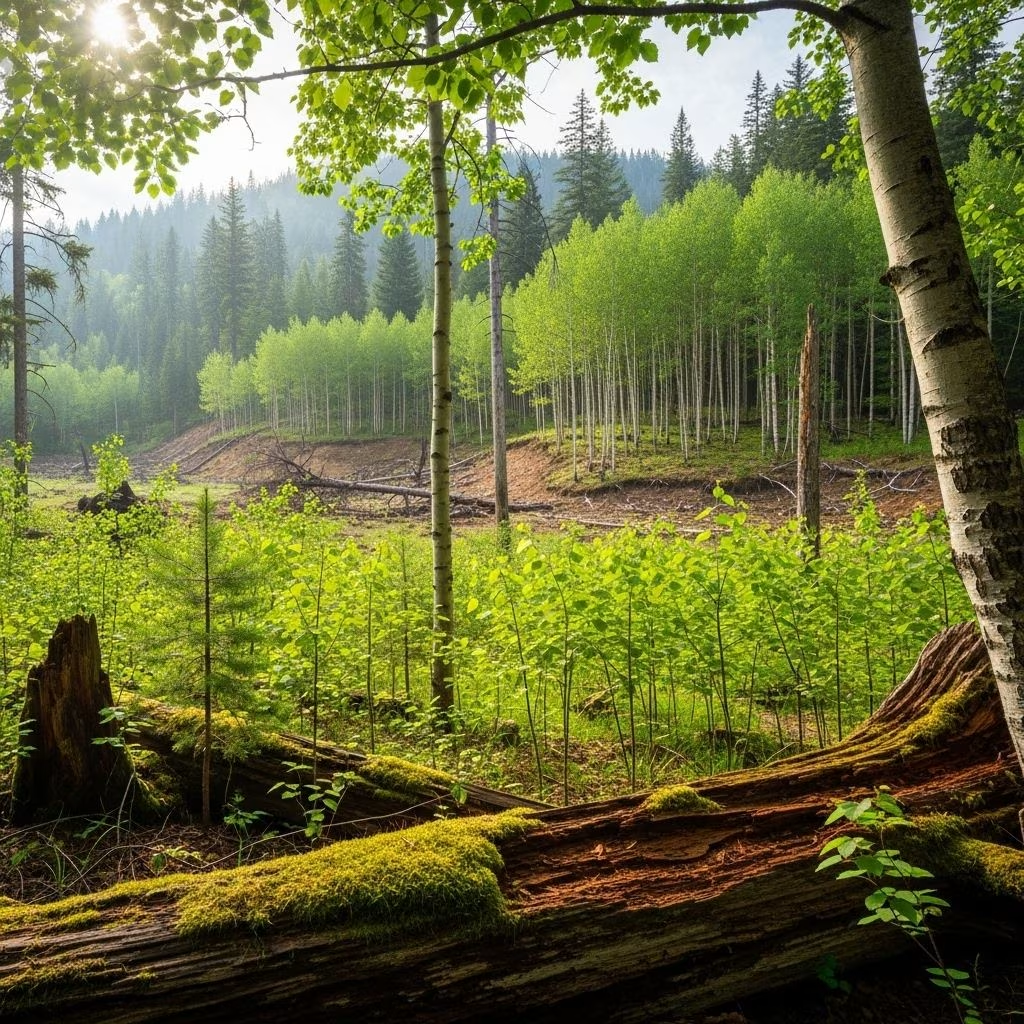
Pioneer tree species are the first trees to colonize disrupted or bare environments. Whether the cause is clear-cutting, wildfire, flood, or storm damage, these rapid growers seize the opportunity, transforming wastelands into habitable terrain for myriad forms of life.
Pioneers commonly include:
- Goat Willow (Salix caprea)
- Aspen (Populus tremula)
- Silver Birch (Betula pendula)
- Bird Cherry (Prunus padus)
- Rowan / Mountain Ash (Sorbus aucuparia)
Core Characteristics of Pioneer Trees
Pioneer species stand out because of distinct life-history traits, which allow them to thrive where others cannot:
- Fast Growth: Young pioneer trees grow quickly, shading out competition and stabilizing soil.
- Prolific Seed Production: These species generate large numbers of seeds, vastly increasing their chances of successful establishment.
- Wide Seed Dispersal: Mechanisms such as fluffy, windborne seeds ensure colonization of distant sites.
- Low Demands: Pioneer trees tolerate poor soil and harsh environmental conditions.
- Easy Regeneration: Many resprout vigorously when cut or damaged.
- Short Lifespan: They are often outlived by slower, long-lived species, but this trait suits their transient, facilitator role.
The Role of Pioneer Species in Ecological Succession
Ecological succession refers to the progressive change of plant communities over time. Pioneer trees begin the succession process, transforming inhospitable land into conditions suitable for other species. As pioneers enrich the soil and provide shelter, they pave the way for intermediate and eventually climax species.
| Successional Stage | Dominant Species | Key Function |
|---|---|---|
| Pioneer | Birch, Aspen, Willow | Soil stabilization, microclimate improvement, rapid colonization |
| Intermediate | Pine, Cherry | Nutrient enrichment, habitat complexity increases |
| Climax | Oak, Beech, Spruce | Stable, diverse forest community, long-lasting structure |
Why Pioneer Tree Species Are Ecologically Valuable
Pioneer trees are the engine behind biodiversity. Their presence leads to multiple ecological benefits, including:
- Biodiversity Boosts: By accelerating succession, pioneers support a wide range of flora and fauna.
- Food Sources: They provide nectar, pollen, and fruits for pollinators, birds, and mammals.
- Habitat Creation: Rapid growth, seed abundance, and senescence create microhabitats for insects, birds, and fungi.
- Soil Improvement: Leaf litter, rapid decomposition, and root systems improve soil structure and fertility.
Pioneer Trees in Detail: Species Profiles and Ecological Roles
Goat Willow: Forest Willow Extraordinaire
The Goat Willow (Salix caprea) is an outstanding pioneer species, thriving not just near water but throughout succession sites and forest edges. Key features:
- Not core-reliant on riparian systems, showing adaptability.
- Acts as a critical pollen and nectar source for early-spring insects and nectar-sucking birds, such as blue tits and warblers.
- Offers food and shelter for almost 30 bird species in Europe, especially during blossom season.
- Older, decaying trees become indispensable feeding grounds for birds such as the lesser spotted woodpecker.
The widespread goat willow thus forms an essential food and habitat node in recovery-phase woodlands, supporting both invertebrates and vertebrates throughout multiple seasons.
Aspen and Silver Birch: Rapid Restoration Specialists
Aspen (Populus tremula) and Silver Birch (Betula pendula) are hallmark pioneers in many temperate forests. Distinctive features include:
- Extraordinarily fast growth and early maturity.
- Exceptional seed dispersal, often colonizing large disturbed patches within a single growing season.
- Capacity to develop diverse tree-related microhabitats (TreMs)—such as deadwood, rot holes, and peeling bark—far faster than slower-growing species.
- Key drivers for habitat restoration, providing shelter for invertebrates, birds, and even small mammals within decades, long before long-lived oaks or spruces mature.
- Important in accelerating ecological processes: facilitating the return of fungi, epiphytes, and a host of species requiring specific microhabitats.
Sycamore: Shelter for Wildlife and People
The American Sycamore (Platanus occidentalis) is an impressive pioneer species commonly found in wet lowlands and floodplains. Its unique characteristics entail:
- Massive size, reaching over 130 feet in height and diameters of 10 feet or more in centuries-old trees.
- Distinct exfoliating bark and camouflage coloration, making it easily identifiable in winter.
- Hollow trunks often sheltering a wide range of animals and, historically, livestock and humans.
- Fast growth and vigorous seedling establishment following floods or land abandonment.
Rowan/Mountain Ash and Bird Cherry: Enriching Diversity
- Rowan/Mountain Ash (Sorbus aucuparia) and Bird Cherry (Prunus padus) often form part of the pioneer community on nutrient-poor soils.
- Provide fruits and shelter for birds and small mammals.
- Contribute to the formation of understory complexity and help anchor soil with dense root systems.
Tree-Related Microhabitats (TreMs): Pioneers’ Hidden Hand in Biodiversity
One of the less visible but hugely important roles of pioneer trees is their ability to rapidly generate tree-related microhabitats (TreMs). These include:
- Bark loss
- Burr canker formation
- Crown deadwood
- Root concavities
- Rot-holes
Pioneer tree species, thanks to their quick life cycles and higher decay rates, provide a rich assemblage of TreMs far earlier than slow-growing trees. This accelerates the emergence of ecological niches that support fungi, lichens, beetles, and nesting birds, speeding up overall forest restoration and biodiversity enhancement.
Management Implications: Valuing Pioneers in Forestry and Conservation
Historically, forestry tended to favor slow-growing, commercially valuable species, sometimes thinning out pioneer trees to reduce competition. However, recent ecological research advocates for a balanced approach:
- Pioneers should not be entirely removed in forest management, as they are crucial for biodiversity and soil rejuvenation.
- Maintaining a mosaic of pioneer patches alongside mature stands supports habitat complexity, improves resilience against pests and diseases, and fosters ecosystem services.
- Active conservation strategies now incorporate pioneer-driven habitats as key restoration tools for both urban and rural forestry.
Frequently Asked Questions (FAQs)
What distinguishes pioneer tree species from other forest trees?
Pioneer tree species are characterized by their fast growth, prolific seed production, adaptability to poor soils, and short lifespans. They are the first to invade disturbed or barren land and enable subsequent succession, in contrast to slow-growing, climax species like oak or spruce.
Why are pioneer tree species important for biodiversity?
Pioneer trees offer rapid habitat creation for a variety of organisms, including insects, birds, and fungi. Their early development of tree-related microhabitats (TreMs) adds ecological complexity and helps restore species richness in recovering forests.
Are pioneer species only beneficial in natural forests?
No; pioneer tree species play vital roles in restoration projects, urban greenspaces, and agroforestry systems. Their ability to colonize degraded land and initiate succession makes them valuable in many contexts.
What are some common management challenges with pioneer trees?
Pioneer trees can sometimes dominate regeneration, requiring thinning or mixed planting to ensure balanced forest structure. However, recent evidence suggests maintaining patches of pioneer-dominated habitat is key for biodiversity and ecological resilience.
Should pioneer trees be removed in forest tending?
Ecologists advise against widespread removal of pioneer species during forest management because they play crucial roles in fostering diversity, habitat complexity, and accelerating restoration after disturbance.
Conclusion: The Ecological Legacy of Pioneer Trees
Pioneer tree species are the unsung heroes of forest renewal. From stabilizing soil and providing food for wildlife to accelerating habitat restoration and microhabitat formation, their impact on biodiversity is profound. Embracing their ecological value ensures healthier, more resilient forests for generations to come.
References
- https://www.waldwissen.net/en/forest-ecology/forest-plants/deciduous/valuable-pioneer-trees
- https://pmc.ncbi.nlm.nih.gov/articles/PMC10316124/
- https://survivalsherpa.wordpress.com/2014/08/04/why-being-a-tree-hugger-builds-self-reliance/
- https://homeroom.earthrangers.com/k-3-classroom-activities/tree-hugger-challenge/