


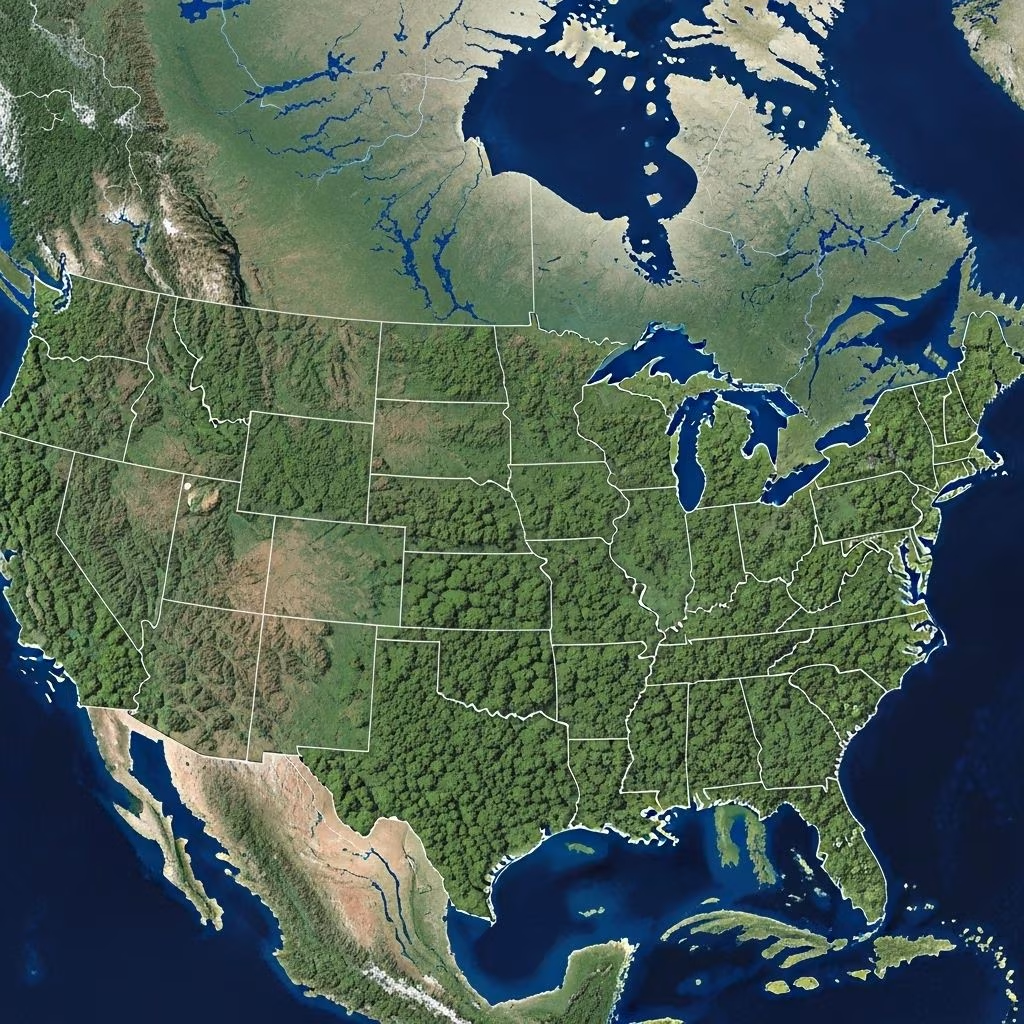
Common Forest Cover Types in the United States
The United States is home to a rich tapestry of forest cover types, each shaped by its unique climate, geographic location, and ecological history. Understanding these forest types is essential for conservation, wildlife management, and appreciating the natural heritage found in American landscapes. This guide explores the most prevalent forest cover regions in the U.S., outlining their distinctive characteristics, primary tree species, locations, and ecological significance.
Introduction
The forests of the United States are globally significant due to their diversity. From towering redwoods and ancient pines to deciduous woodlands bursting with seasonal color, American forests provide habitat for wildlife, stabilize soils, purify air and water, and support recreation and the economy. The primary forest cover types are typically categorized by dominant tree species and their geographic/ecological context. These divisions reflect natural boundaries defined by climate, topography, and soil.
Major Forest Regions in the United States
Broadly, the United States can be divided into two principal forested regions:
- Eastern Forests: Stretch from the Atlantic Coast to the Midwest and south to the Gulf of Mexico. They include a variety of deciduous and mixed forests.
- Western Forests: Found from the Rocky Mountains to the Pacific Coast, dominated by conifers and unique forest types adapted to different elevations and climates.
The following sections break down the major forest cover types within these regions, highlighting the most common and ecologically vital groups.
Eastern Forest Cover Types
Oak-Hickory Forests
Oak-hickory forests form the largest forest type group in the eastern United States, covering a vast area from southern Texas to New England and occupying well-drained upland areas excluding the most rocky or shallow soils.
- Dominant trees: White oak, northern red oak, southern red oak, black oak, scarlet oak, pignut and mockernut hickory.
- Understory: Dogwood, sourwood, blackgum, red maple, viburnums.
- Ecological role: Supports diverse wildlife, important for acorn and nut production, serves as a climax community in many upland areas.
- Distribution: Especially prevalent in the Appalachian region, Ozark Plateau, and much of the Midwest.
Oak-Pine Forests
These transitional forests combine elements of both oaks and pines, occurring where eastern deciduous forests blend with conifer-dominated regions.
- Dominant trees: Several oak species, shortleaf and loblolly pine.
- Distribution: Found in the southeastern U.S., especially where historic agricultural abandonment and fires affect succession patterns.
Maple-Beech-Birch Forests
This cool, moist forest type is characteristic of the northern United States, especially the Northeast and upper Midwest.
- Dominant trees: Sugar maple, American beech, various birches (yellow, white).
- Associated species: Eastern hemlock, red maple, basswood.
- Features: High canopy, vibrant autumn colors, supports shade-requiring understory plants and diverse wildlife.
Elm-Ash-Cottonwood Forests (Bottomland and Floodplain Forests)
These forests thrive in bottomlands and poorly drained sites along rivers and floodplains in the central and eastern U.S.
- Dominant trees: American elm, green and white ash, eastern cottonwood, silver maple, sweetgum, boxelder.
- Conditions: Periodically flooded soils, high fertility, subject to changing water tables.
- Importance: Critical habitat for waterfowl, amphibians, and migratory birds.
Oak-Gum-Cypress Forests (Southeastern Floodplains and Swamps)
Located primarily in the Southeast, these forests dominate extensive floodplains and swamps.
- Dominant trees: Water oak, willow oak, sweetgum, swamp blackgum (tupelo), bald cypress, water tupelo.
- Notable features: Many species have adaptations to flooding and water-saturated soils, such as cypress knees.
- Ecological importance: Serve as important wetland buffers and wildlife corridors.
Aspen-Birch Forests
This forest type is mainly found in the northern Lake States and the northeastern U.S., typically in areas of recent disturbance, fire, or logging.
- Dominant trees: Quaking aspen, bigtooth aspen, paper birch, yellow birch.
- Ecology: Fast-growing, early successional; provide cover and browse for deer, ruffed grouse, and many songbirds.
Western Forest Cover Types
Douglas-fir Forests
Douglas-fir forests are one of the signature ecosystems of the Pacific Northwest and northern Rockies.
- Dominant tree: Douglas-fir (Pseudotsuga menziesii).
- Associated species: Western hemlock, western red cedar, grand fir, ponderosa pine, lodgepole pine.
- Location: Ranges from British Columbia south to California and inland to Montana and Idaho.
- Significance: Key commercial timber species; supports extensive old-growth and second-growth stands.
Ponderosa Pine Forests
Ponderosa pine forests characterize much of the mountain West and parts of the Southwest at moderate elevations.
- Dominant tree: Ponderosa pine (Pinus ponderosa).
- Associated trees: Douglas-fir, western larch, sugar pine.
- Fire ecology: Adapted to frequent, low-intensity fires; natural fire regimes maintain open, park-like stands.
Western White Pine Forests
This forest type, most abundant in northern Idaho and the northern Rockies, features Western white pine as the keystone species.
- Dominant tree: Western white pine (Pinus monticola).
- Mixed with: Douglas-fir, grand fir, western hemlock, Engelmann spruce.
- Uses: Historically vital for lumber, but vulnerable to white pine blister rust.
Spruce-Fir Forests
Dense, cold-adapted forests common at upper elevations in the Rockies, Cascades, and northern Appalachians.
- Dominant trees: Engelmann spruce, blue spruce, balsam fir, Fraser fir, white fir, subalpine fir.
- Location: High elevations with short growing seasons and cold, snowy winters.
- Ecological importance: Essential wildlife habitat, influences snowpack and watershed characteristics.
Lodgepole Pine Forests
Lodgepole pine often forms extensive, even-aged stands following fires in the northern and central Rocky Mountains.
- Dominant tree: Lodgepole pine (Pinus contorta).
- Fire ecology: Serotinous cones open with heat, allowing rapid post-fire regeneration.
- Habitat: Important for black-backed woodpeckers and large mammals like moose and elk.
Redwood and Sitka Spruce-Hemlock Forests
Confined to the Pacific coastal zone, these forests are known for supporting some of the world’s tallest trees.
- Redwood forests: Coastal northern California; dominated by coast redwood (Sequoia sempervirens), with Douglas-fir, tanoak, and madrone.
- Sitka spruce-hemlock forests: Coastal Pacific Northwest and Alaska; dominated by Sitka spruce and western hemlock.
- Moisture: High precipitation and fog, lush understory of ferns and moss.
Western Hardwoods
This group includes various hardwood-dominated forests of the interior and Pacific coast.
- Dominant trees: Oregon white oak, California black oak, tanoak, aspen, bigleaf maple.
- Associated shrubs: Manzanita, madrone, various chaparral species.
- Distribution: Interior valleys, foothills, and lower elevations of western mountains.
Chaparral
Chaparral is a shrubby vegetation type common in Mediterranean climates of California.
- Dominant plants: Chamise, manzanita, ceanothus, scrub oaks.
- Adaptations: Fire-adapted, drought-resistant; regenerates vigorously after wildfires.
- Ecological importance: Prevents soil erosion and provides critical habitat for endemic species.
Pinyon-Juniper Woodlands
Prevalent throughout the arid and semi-arid interior West.
- Dominant trees: Pinyon pine (Pinus edulis, Pinus monophylla), Utah and Rocky Mountain juniper.
- Distribution: Colorado Plateau, Great Basin, foothills of the Rockies and Sierras.
- Characteristics: Sparse, open woodlands with grassy or shrubby understory.
Other Notable and Unique Forest Types
Special Forest Environments
- Blackjack Oak-Post Oak: Rare, found on dry, south-facing bluffs and thin-soil areas with impervious clay layers. Gnarled, open stands, often very short-statured and hard to penetrate.
- Boreal Forest (Taiga): Located in Alaska and parts of northern states, dominated by black spruce, white spruce, larch (tamarack), paper birch, and trembling aspen.
- Southern Pine Forests: Includes longleaf, loblolly, shortleaf, and slash pine, essential for the Southeast’s timber industry and rare fire-dependent ecosystems.
- Tropical and Subtropical Forests: Small pockets in southern Florida, mainly mangrove and hammock forest types.
Conservation and Importance
Each forest type plays a vital role in supporting biodiversity, sequestering carbon, sustaining freshwater supplies, and underpinning regional cultures and economies. Major threats include unsustainable logging, urbanization, invasive species, altered fire regimes, and climate change. Effective conservation requires:
- Protecting representative areas of all forest types, including old-growth and rare stands.
- Mitigating the spread of invasive pathogens (e.g., Dutch elm disease, white pine blister rust).
- Restoring fire regimes where appropriate to maintain open stands and reduce catastrophic wildfire risks.
- Balancing commercial forestry with wildlife habitat and water quality needs.
Federal, state, and private conservation efforts are working to preserve the health and resilience of these critical resources for current and future generations.
Frequently Asked Questions (FAQs)
Q: What is the most common forest type in the United States?
A: The oak-hickory forest group is the most extensive forest type in the U.S., especially prevalent across the eastern and central parts of the country.
Q: How do climate and geography affect U.S. forest cover types?
A: Climate, topography, and soil conditions largely determine which forest types occur in a region, with cold, wet conditions favoring conifer-dominated forests and warmer, seasonally variable climates supporting deciduous hardwoods.
Q: Which U.S. forests are considered old-growth?
A: Old-growth forests typically have large, ancient trees, multi-layered canopies, and abundant deadwood. Significant old-growth persists in parts of the Pacific Northwest, northern Rockies, and some eastern hardwood stands, though these forests are increasingly rare.
Q: Why are bottomland and floodplain forests important?
A: These forests buffer waterways, reduce flooding, filter pollutants, and provide critical wildlife habitat, especially for migratory birds, amphibians, and aquatic organisms.
Q: How does fire affect U.S. forest cover?
A: Fire shapes many forest types, such as ponderosa pine, chaparral, and southern pine forests, by maintaining open stands, recycling nutrients, and aiding regeneration. Suppression of natural fire regimes can lead to denser, more fire-prone forests and loss of fire-adapted species.
Table: Major U.S. Forest Cover Types and Characteristics
| Forest Type Group | Dominant Species | Main Region(s) | Key Features |
|---|---|---|---|
| Oak-Hickory | White, red, black, scarlet oaks; hickories | Midwest, Appalachians, South | Diverse hardwood canopy, wildlife-rich |
| Maple-Beech-Birch | Sugar maple, American beech, birch | Northeast, Great Lakes | Cool, moist, vivid autumn colors |
| Pine | Loblolly, longleaf, shortleaf, slash pine | Southeastern U.S. | Fast-growing, fire-adapted, important timber resource |
| Douglas-fir | Douglas-fir | Pacific Northwest, Rockies | Tall canopies, old-growth potential |
| Ponderosa Pine | Ponderosa pine | Western U.S., Rockies, Southwest | Open, park-like, fire-maintained |
| Spruce-Fir | Spruce, fir | High elevations North, West | Dense, cold-adapted |
| Redwood | Coast redwood | California coast | Tallest trees, fog-dependent |
| Elm-Ash-Cottonwood | Elm, ash, cottonwood | Floodplains, eastern/central U.S. | Flood-tolerant, fertile soils |
| Pinyon-Juniper | Pinyon pine, juniper | Interior West | Sparse, drought-tolerant woodland |
| Chaparral | Scrub oak, manzanita | California, Southwest | Fire-adapted shrubland |
References
- https://dukeforest.duke.edu/forest-environment/forest-covertypes-communities/
- https://www.asprs.org/wp-content/uploads/pers/1994journal/may/1994_may_525-531.pdf
- https://archive.ics.uci.edu/ml/datasets/covertype
- https://store.usgs.gov/assets/MOD/StoreFiles/PDF/100615_ForestTypes_National_Atlas.pdf
- https://www.fs.usda.gov/sites/default/files/fs_media/fs_document/Forest-Atlas-of-the-United-States.pdf
- https://www.mrlc.gov/data/legends/national-land-cover-database-class-legend-and-description
- https://www.arcgis.com/home/item.html?id=10760c83b9e44923bd3c18efdaa7319d
- https://us.fsc.org/download.fsc-us-plantation-classification-worksheet.205.htm


