


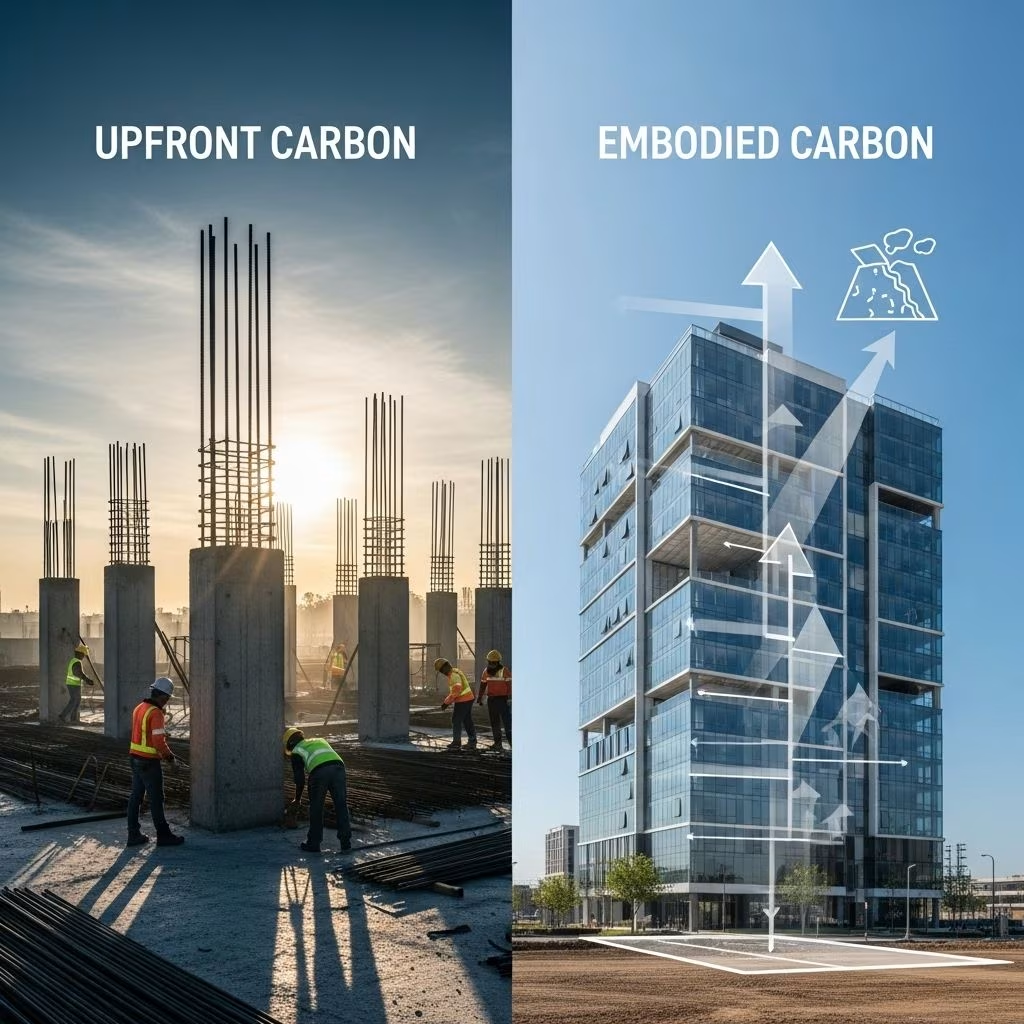
Let’s Rename ‘Embodied Carbon’ to ‘Upfront Carbon Emissions’
For decades, the green building movement has focused on reducing operational carbon—the emissions generated by heating, cooling, and powering our buildings. But as the urgency of the climate crisis grows, it’s clear that operational carbon is only part of the story. More attention is needed on emissions produced before a building is even occupied: the so-called “embodied carbon” from the extraction, manufacturing, transport, and construction of materials. Many argue that the term “embodied carbon” is technical, opaque, and fails to communicate the real-world urgency of this issue. A growing chorus of sustainability experts suggests renaming it “upfront carbon emissions”—a term that immediately signals both importance and immediacy.
What Is Embodied Carbon?
Embodied carbon refers to the sum of all greenhouse gas emissions released during a product’s, building’s, or infrastructure’s lifecycle—from the extraction of raw materials, through manufacturing, transportation, construction, maintenance, renovation, and ultimately to end-of-life disposal or recycling. These emissions are “locked in” before a building is ever used—hence the phrase “upfront carbon.”
| Lifecycle Stage | Description | Type of Carbon |
|---|---|---|
| Raw Material Extraction | Mining, harvesting, or quarrying materials | Upfront / Embodied |
| Manufacturing | Processing raw materials into building products | Upfront / Embodied |
| Transportation | Shipping materials to the construction site | Upfront / Embodied |
| Construction | Building assembly | Upfront / Embodied |
| Operation | Heating, cooling, lighting, etc. | Operational |
| Maintenance & Renovation | Repairs, replacements | Embodied (in-use) |
| End-of-Life | Demolition, disposal, recycling | Embodied |
Why the Term ‘Embodied Carbon’ Falls Short
While technically accurate, “embodied carbon” is vague and passive. It does nothing to emphasize the climate impact of emissions released now during a building’s creation. This matters because:
- Urgency and Timing Matter: Carbon emitted during construction is already in the atmosphere, contributing to warming before any operational energy is used. Unlike operational carbon, which can—theoretically—be reduced over time, embodied carbon is a “sunk” cost: once spent, it cannot be taken back.
- Opaqueness Delays Action: Technical jargon can obscure the stakes for policymakers, designers, and the public. “Embodied” suggests carbon is somehow tucked away—neither here nor there—when, in reality, the emissions are immediate and irreversible.
- Green Grids Are Coming: As electricity grids get cleaner, operational carbon will drop, making upfront emissions an even larger share of a building’s total impact. By 2050, upfront carbon could account for half of all emissions from new construction.
The Case for ‘Upfront Carbon’
Renaming embodied carbon as “upfront carbon emissions” reframes the issue in a way that is direct, clear, and actionable:
- Immediacy: “Upfront” signals that these emissions must be addressed now, not decades later.
- Transparency: It makes it clear that there is no second chance once the building goes up.
- Accountability: By making the cost visible, it empowers designers, developers, and regulators to demand change.
- Policy Focus: Reframing the problem could help catalyze new regulations and incentives to reduce upfront emissions.
The phrase “upfront carbon emissions” is already gaining traction among leading green building experts, especially as the world races to decarbonize the built environment.
How Does Upfront Carbon Compare to Operational Carbon?
The built environment is responsible for about 40% of annual global CO₂ emissions. Until recently, most of that was operational. But as buildings become more energy efficient and grids get cleaner, the balance is shifting:
- Operational Carbon: Emissions from running the building (heating, cooling, lighting, etc.) that occur over its lifetime.
- Upfront Carbon: Emissions from producing, transporting, and assembling building materials and systems before occupancy.
In countries like Canada, Sweden, and Norway, where energy grids are already low-carbon, upfront emissions can account for almost half of a new building’s total carbon footprint. This trend will accelerate globally as grids decarbonize.
| Aspect | Upfront Carbon | Operational Carbon |
|---|---|---|
| When Emitted | Before use (locked in) | During use (over years) |
| Reduction Options | Only at design/construction phase | Ongoing retrofits, greener grids |
| Who Is Responsible | Developers, architects, contractors | Owners, tenants, municipalities |
| Urgency | Immediate | Long-term |
Why Language and Clarity Matter
Language shapes perception and action. The way we talk about the problem—vague “embodied” vs. direct “upfront”—influences how seriously it is taken, both by professionals and the public. By shifting to clearer, more urgent language, we can:
- Raise Awareness: Make it easier for everyone to understand the stakes.
- Drive Policy: Encourage governments and industry bodies to regulate upfront emissions.
- Promote Innovation: Inspire architects, engineers, and material suppliers to develop lower-carbon solutions.
What Actions Can We Take?
Reducing upfront carbon requires rethinking how we build:
- Material Choices: Opt for low-carbon, plant-based, or recycled materials.
- Transportation: Source materials locally to cut transport emissions.
- Design Efficiency: Use less material overall through smarter design.
- Reuse and Recycle: Retrofit rather than demolish; recycle materials at end-of-life.
- Transparency: Demand full lifecycle carbon declarations from material suppliers.
- Policy: Lobby for building codes and standards that limit upfront emissions.
Frequently Asked Questions (FAQs)
Q: What is upfront carbon emissions?
A: Upfront carbon emissions refer to all greenhouse gas emissions generated during the manufacturing, transportation, and construction of building materials and systems before a building is occupied.
Q: Why is upfront carbon worse than operational carbon?
A: Upfront carbon is emitted now and cannot be reduced later, while operational carbon can be addressed over a building’s lifetime as grids get cleaner and technologies improve.
Q: How much of a building’s total emissions are upfront carbon?
A: Upfront carbon typically accounts for 20–30% of a building’s total emissions today, but this share is rising as operational emissions decrease. In some countries with low-carbon grids, upfront carbon can be nearly half of a new building’s footprint.
Q: What can architects and builders do to reduce upfront carbon?
A: They can choose low-carbon materials, design for material efficiency, use local suppliers, and advocate for policies that require upfront carbon accounting and limits.
Q: Is embodied carbon and upfront carbon the same thing?
A: Upfront carbon is a subset of embodied carbon, specifically the emissions released before a building is occupied. Embodied carbon also includes emissions from maintenance, renovation, and end-of-life demolition.
Q: What is the new term the industry is using?
A: “Upfront carbon emissions” is emerging as a clearer, more urgent replacement for “embodied carbon” in the pre-completion phase.
Conclusion
The shift from “embodied carbon” to “upfront carbon emissions” is more than just semantics—it is a call to action. As the world races to decarbonize, the immediacy and irreversibility of construction emissions must be made clear. Architects, engineers, policymakers, and the public all have a role to play in reducing upfront emissions, starting with a clearer understanding of the problem. Renaming the issue is the first step toward real change.
References
- https://se2050.org/resources-overview/embodied-carbon/what-is-embodied-carbon/
- https://oneclicklca.com/en-us/resources/articles/embodied-carbon-vs-operational-carbon
- https://www.gresb.com/nl-en/what-is-embodied-carbon-in-the-real-estate-sector-and-why-does-it-matter/
- https://imegcorp.com/insights/blog/know-the-difference-between-operational-and-embodied-carbon/
- https://ukgbc.org/wp-content/uploads/2023/02/operational-and-embodied-carbon-1.pdf
- https://savingplaces.org/stories/upfront-carbon-and-why-it-matters
- https://www.iesve.com/discoveries/view/45462/embodied-carbon-vs-operational-carbon
- https://community.carbonleadershipforum.org/t/embodied-vs-operational-lca-ghg-emissions-messaging/5646


