


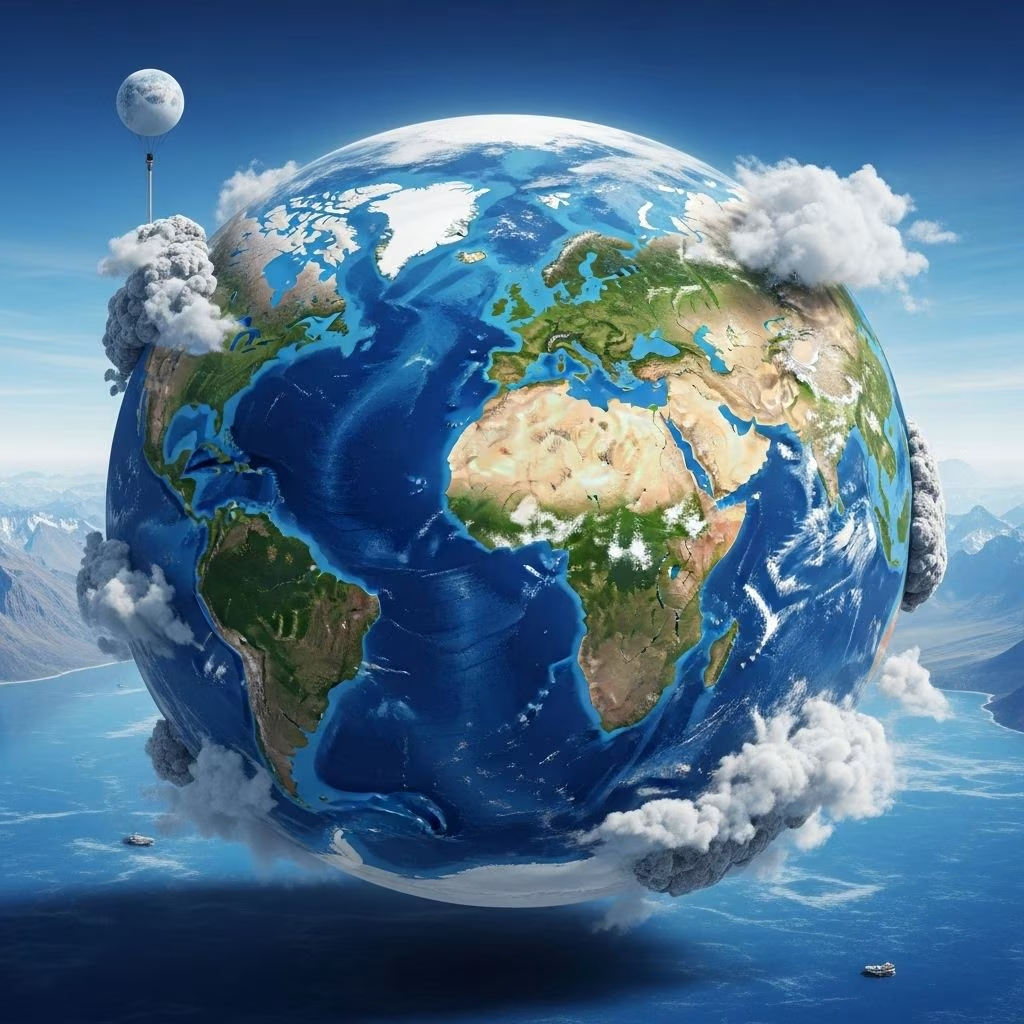
Fascinating Facts About Earth’s Land Biomes
Earth’s land biomes are vast, distinct regions defined by their climates, dominant vegetation, and characteristic animal life. Understanding biomes gives us insight into how life adapts to environmental extremes, and their importance in sustaining the planet’s ecological balance is profound. This article explores key facts about the world’s major land biomes, examining what sets each apart and how they contribute to our planet’s diversity and health.
What Is a Biome?
A biome is a large, naturally occurring community of plants and animals that occupies a distinct region defined by a specific climate, soil type, and ecological features. Unlike ecosystems, which focus on interactions in a specific area, biomes encompass broader geographic expanses and may include many smaller ecosystems within them.
- Characteristic climate: Each biome is characterized by distinctive temperature and precipitation patterns.
- Vegetation: Plant communities are a primary defining feature; the same climate across different continents yields similar plant forms even if the species are unrelated.
- Animal life: Animal species are also shaped by biome conditions, evolving specialized adaptations to survive.
According to leading ecological classifications, there are typically five to nine major terrestrial (land) biomes, though the specific number varies depending on classification criteria and scientific perspective.
Main Types of Land Biomes
The world’s land biomes can be grouped by their climatic conditions and the adaptations needed for survival. Here are the most widely recognized:
- Forest Biomes (Tropical, Temperate, Boreal/Taiga)
- Grassland Biomes (Savanna, Temperate Grasslands/Steppe, Prairie)
- Desert Biomes (Hot and Cold)
- Tundra Biome (Arctic and Alpine)
- Chaparral/Mediterranean Biomes
The Climate Factor
Climate—primarily temperature and precipitation—controls the distribution of biomes around the globe. Regions with high rainfall and warm temperatures host luxuriant forests, while those with little rain and extreme temperatures harbor deserts or grasslands.
- Temperature: Dictates the metabolic rates of organisms and the type of vegetation possible.
- Precipitation: Determines water availability, shaping plant communities and the animals that depend on them.
Forest Biomes
Forests cover a significant portion of the world’s land and are grouped into three primary categories based on their climate:
Tropical Rainforests
- Location: Found near the equator, especially in the Amazon, Central Africa, and Southeast Asia.
- Climate: Warm with high, year-round rainfall; little to no seasonal temperature variation.
- Biodiversity: Home to over half of the world’s plant and animal species despite covering less than 10% of land area.
- Vegetation: Multi-layered canopies, dense undergrowth, vast diversity of broadleaf trees.
Tropical rainforests act as major carbon sinks and play a vital role in climate regulation.
Temperate Deciduous Forests
- Location: Eastern North America, Europe, East Asia, and parts of South America.
- Climate: Moderate temperature rhythms with four distinct seasons.
- Vegetation: Dominated by broadleaf trees like oaks, maples, and beeches, which shed leaves annually.
- Animal life: Varied, including deer, foxes, small mammals, and abundant bird life.
Rich, fertile soils and complex forest layers support high biodiversity.
Boreal Forests (Taiga)
- Location: Spans much of Canada, Alaska, Northern Europe, and Siberia.
- Climate: Long, cold winters; short, warm summers; low precipitation mainly as snow.
- Vegetation: Evergreen conifers such as spruces, pines, and firs dominate.
- Soils: Acidic, with slow decomposition rates and extensive litter/humus layers.
- Wildlife: Moose, bears, wolves, lynx, and migratory birds.
Boreal forests are the largest land biome and store significant amounts of carbon in both plants and soil.
Grassland Biomes
Grasslands are regions dominated by herbaceous (non-woody) plants, especially grasses. They occur in climates too dry for forests and too wet for deserts, and are divided into:
Savannas
- Location: Tropical and subtropical regions, notably Africa, South America, northern Australia, and India.
- Climate: Warm temperatures with pronounced dry and wet seasons.
- Vegetation: Grasses are dominant, interspersed with widely spaced trees or shrubs.
- Wildlife: Immense herbivore populations (zebras, elephants, antelopes) and predators (lions, cheetahs).
Savannas are crucial grazing grounds and host impressive migrations.
Temperate Grasslands (Prairies & Steppes)
- Location: North American prairies, South American pampas, Eurasian steppes, and South African veldt.
- Climate: Significant seasonal fluctuations, including cold winters and hot summers.
- Vegetation: Dense grasses, few trees.
- Wildlife: Bison, pronghorn, prairie dogs, numerous birds of prey.
Fertile soils make prairies ideal for agriculture, but less than 1% of original tallgrass prairie remains due to cultivation.
Desert Biomes
Deserts are defined by extremely low rainfall (usually less than 250 mm/year), not simply by high temperatures. There are both hot and cold deserts:
- Hot Deserts: Include the Sahara, Arabian, and Mojave deserts; characterized by scorching daytime temperatures and very low precipitation.
- Cold Deserts: Such as the Gobi and the Great Basin; experience cold winters, hot summers, and relatively dry air.
Plants and animals exhibit remarkable drought resistance—succulents like cacti, deeply rooted shrubs, reptiles, nocturnal mammals, and specialized insects all thrive here.
Tundra Biome
The tundra is the coldest biome, found in extreme latitudes and altitudes near and above the Arctic Circle (Arctic tundra) and on high mountain slopes worldwide (alpine tundra).
- Climate: Frigid, long winters; very short, cool summers. Growing seasons last only a few weeks. Permafrost beneath the surface.
- Biodiversity: Low but highly adapted—mosses, lichens, sedges, dwarfed shrubs.
- Wildlife: Reindeer, lemmings, Arctic foxes, migratory birds.
The tundra’s ecosystems are slow to recover from disturbances, making them vulnerable to climate change.
Chaparral/Mediterranean Biomes
Sometimes called chaparral or Mediterranean shrubland, these biomes occupy regions with hot, dry summers and mild, rainy winters:
- Location: Mediterranean basin, California, parts of South Africa, Chile, and southwestern Australia.
- Vegetation: Dense, drought-adapted shrubs and small trees; sclerophyllous (hard-leaved) plants.
- Fire-adapted: Many plants are adapted to frequent wildfires, resprouting quickly or producing seeds that germinate after fire.
Biodiversity is high, with many endemic species, though plant and animal life must endure pronounced seasonal dryness.
Alternative Biome Classification: The Zonobiome System
Heinrich Walter’s system divides the world into nine zonobiomes based on temperature and precipitation patterns.
| Biome | Zonal Soil | Main Vegetation |
|---|---|---|
| Equatorial | Equatorial brown clays | Evergreen tropical rainforest |
| Tropical Seasonal | Red clays, red earths | Dry forest, scrub, savanna |
| Subtropical Arid | Sierozems, serosemes | Desert vegetation |
| Mediterranean | Brown earths | Shrublands, woodland |
| Warm Temperate | Forest/sandy soils | Evergreen forest |
| Temperate Deciduous | Brown/grey forest soils | Deciduous forests |
| Continental/Steppe | Chernozems, serozems | Grasslands, temperate desert |
| Boreal/Taiga | Podsols | Needle-leaved forest |
| Polar/Tundra | Tundra humus, permafrost | Low evergreen/mosses |
Why Land Biomes Matter
- Carbon Sequestration: Forests, especially tropical and boreal, absorb and store vast amounts of atmospheric carbon dioxide, which helps regulate global climate.
- Biodiversity Hotspots: Biomes like rainforests and Mediterranean shrublands are biodiversity hotspots, containing large numbers of unique species.
- Human Support: Many of the world’s staple foods and raw materials are derived from particular biomes, such as grains from grasslands.
- Regulatory Functions: Land biomes stabilize soils, influence water cycles, and moderate climate extremes.
- Cultural and Economic Value: Biomes shape cultures, inspire art, and underpin major industries like agriculture and forestry.
Biomes and Global Change
Human activities, particularly deforestation, land conversion for agriculture, and climate change, are affecting the health and balance of land biomes worldwide:
- Deforestation: Loss of forest biomes reduces carbon storage, disrupts water cycles, and leads to loss of biodiversity.
- Desertification: Overgrazing and poor land management can convert grasslands into deserts, affecting local and global systems.
- Climate Change: Rising temperatures are shifting biome boundaries, melting permafrost, expanding deserts, and altering the timing of ecosystem processes.
- Loss of Tundra: Tundra is particularly sensitive to warming, with loss of permafrost threatening to release trapped greenhouse gases.
Conservation of biomes is crucial for maintaining the ecological balance that sustains both nature and human society.
Amazing Biome Adaptations
- Tundra plants grow low to the ground and group together to resist cold and wind; animals migrate or hibernate.
- Savanna trees often have thick bark and deep roots to survive fires and droughts.
- Desert animals and plants conserve water, becoming nocturnal or developing extensive root systems.
- Rainforest plants grow tall to reach sunlight, while diverse creatures use every layer from the forest floor to the canopy.
Frequently Asked Questions About Land Biomes
Q: How many main land biomes are there?
A: The number ranges from five to nine, depending on the classification system used (common types include forest, grassland, desert, tundra, and chaparral/mediterranean biomes).
Q: What’s the difference between a biome and an ecosystem?
A: A biome is a broad geographic area defined by similar climate and communities, while an ecosystem refers to all the interactions of organisms (plants, animals, microbes) and their physical environment in a specific location.
Q: Which biome has the highest biodiversity?
A: Tropical rainforests possess the greatest biodiversity, hosting more plant and animal species than any other terrestrial biome.
Q: Are deserts always hot?
A: No. Deserts are defined by low precipitation, not temperature; there are both hot (e.g., Sahara) and cold (e.g., Gobi, Antarctica) deserts.
Q: Why are biomes important for people?
A: Biomes provide key ecosystem services, including oxygen production, food, medicine, raw materials, climate regulation, and recreation.
Conclusion
Land biomes reveal the immense adaptability and interconnectedness of life on Earth. Whether lush rainforests, expansive grasslands, or harsh deserts, each biome plays a vital role in sustaining biodiversity, climate, and human societies. Protecting them is critical for a healthy and thriving planet.


