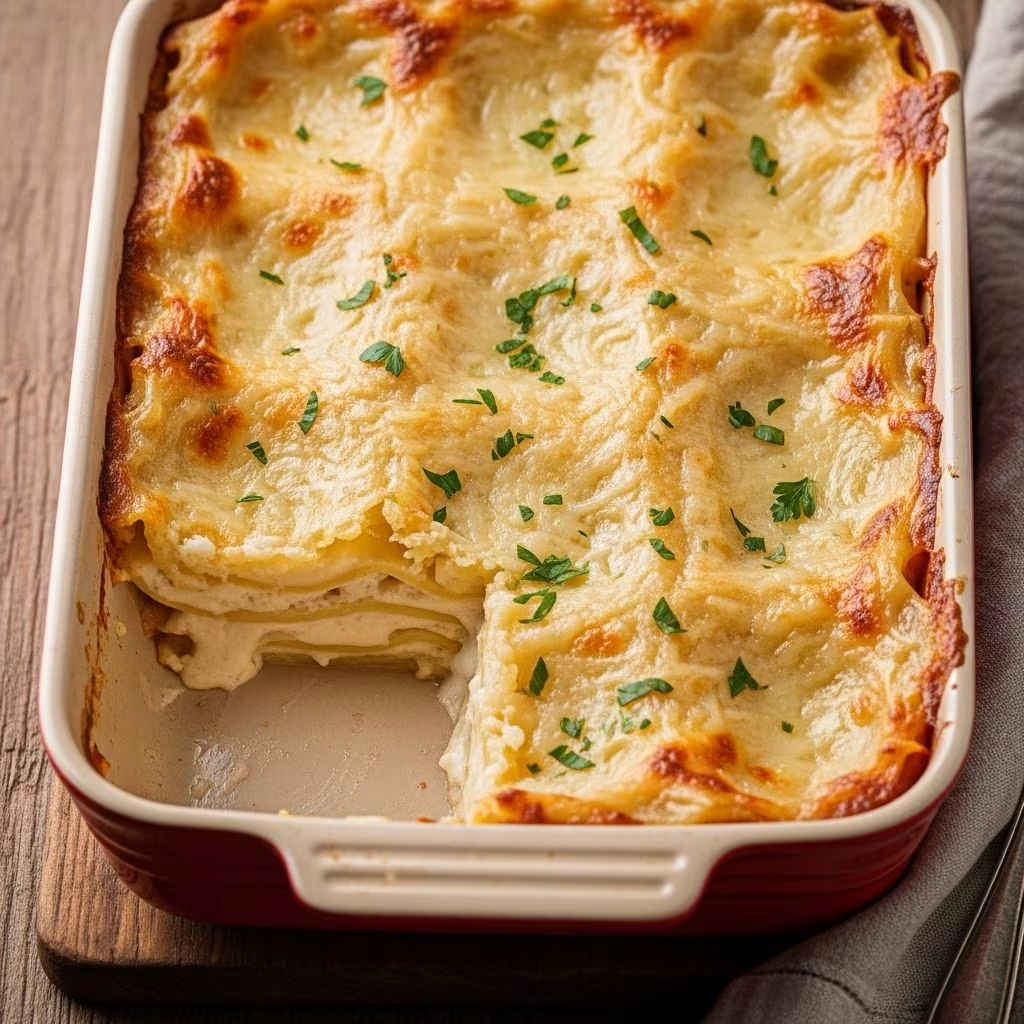
The Ultimate Guide to White Lasagna: A Creamy Comfort Food Classic
White lasagna represents the pinnacle of comfort food excellence, trading the traditional tomato-based sauce for a rich, creamy béchamel that envelops every layer in luxurious indulgence. This sophisticated take on the Italian classic combines the heartiness of traditional lasagna with the elegance of French culinary technique, creating a dish that’s both familiar and extraordinary.
Unlike its red-sauced counterpart, white lasagna relies on the subtle interplay between creamy white sauce, multiple cheeses, and carefully selected ingredients to create depth of flavor. The result is a dish that’s incredibly satisfying yet refined enough for special occasions while remaining approachable for weeknight family dinners.
Understanding Béchamel: The Heart of White Lasagna
The foundation of exceptional white lasagna lies in mastering béchamel sauce, one of the five mother sauces in classical French cuisine. This creamy white sauce begins with a simple roux – a mixture of butter and flour cooked together to create a smooth, golden paste that serves as the thickening agent.
Creating the perfect béchamel requires patience and constant attention. The key is whisking continuously as you slowly incorporate milk and cream, preventing lumps from forming and ensuring a silky-smooth texture. The sauce should be thick enough to coat the back of a spoon but still flow easily when poured.
Essential Béchamel Ingredients:
- Butter for richness and flavor base
- All-purpose flour for thickening
- Whole milk for creaminess
- Heavy cream for extra richness
- Seasonings including salt, pepper, and herbs
- Freshly grated Parmesan cheese for depth
Choosing the Perfect Ingredients
Cheese Selection: The Trinity of Flavors
The most memorable white lasagnas feature a carefully curated selection of cheeses, each contributing unique characteristics to the final dish. The classic combination includes:
Ricotta Cheese forms the creamy foundation layer, providing moisture and a mild, slightly sweet flavor that doesn’t compete with other ingredients. Whole-milk ricotta offers the best texture and richness, creating those perfect spoonfuls that hold together beautifully.
Mozzarella Cheese delivers the signature stretch and mild flavor that makes lasagna so appealing. Fresh mozzarella provides superior melting qualities, though low-moisture mozzarella works well for those seeking easier handling and longer storage.
Parmesan Cheese adds sharp, nutty complexity that elevates the entire dish. Freshly grated Parmigiano-Reggiano provides the most authentic flavor, though good-quality domestic Parmesan works well for budget-conscious cooks.
Vegetable Components
White lasagna provides an excellent canvas for incorporating fresh vegetables, adding color, nutrition, and varied textures to complement the rich dairy components.
Fresh Spinach remains the classic choice, offering mild flavor and beautiful color contrast. Proper preparation involves wilting the spinach and thoroughly draining excess moisture to prevent a watery final product.
Seasonal Vegetables like zucchini, broccoli, and bell peppers add variety and nutritional value. These should be lightly sautéed beforehand to remove excess moisture and concentrate flavors.
Step-by-Step White Lasagna Construction
Preparing the Foundation
Success begins with properly prepared lasagna noodles. Cook them for 2-3 minutes less than package directions specify, as they’ll continue cooking during the baking process. This prevents the dreaded mushy texture that can ruin an otherwise perfect lasagna.
Immediately after draining, rinse the noodles under cold water to stop the cooking process and prevent sticking. Lay them flat on clean kitchen towels until ready to use.
Creating the Béchamel Sauce
In a heavy-bottomed saucepan, melt butter over medium heat, whisking in flour to create a smooth roux. Cook this mixture for 2-3 minutes, whisking constantly to eliminate the raw flour taste without allowing it to brown.
Gradually add warm milk and cream, whisking continuously to prevent lumps. The sauce will gradually thicken as it heats. Once it coats the back of a spoon, remove from heat and stir in grated Parmesan cheese, allowing residual heat to melt the cheese completely.
Assembling the Layers
Proper layering technique ensures each bite contains the perfect balance of pasta, sauce, cheese, and vegetables. Begin with a thin layer of béchamel in the bottom of your greased baking dish to prevent sticking.
Layer Sequence:
- Spread 1 cup béchamel sauce in baking dish
- Arrange 4 lasagna noodles lengthwise
- Spread 1½ cups béchamel sauce
- Layer half the mozzarella cheese
- Spread half the ricotta mixture
- Add half the prepared vegetables
- Repeat layering process
- Top with remaining noodles and sauce
- Sprinkle with remaining Parmesan
Baking Techniques for Perfect Results
Achieving the ideal texture and flavor requires careful attention to baking technique. Preheat your oven to 400°F, ensuring even heat distribution throughout the cooking process.
Cover the assembled lasagna with aluminum foil, tenting it to prevent contact with the cheese layer. Place the baking dish on a sheet pan to catch any potential overflow and bake for approximately 20 minutes until edges begin bubbling.
Remove the foil and continue baking for 30-35 minutes until the top achieves a beautiful golden brown color. For extra browning, switch to broil for the final minute, watching carefully to prevent burning.
Storage and Reheating Guidelines
Proper Storage Methods
White lasagna stores exceptionally well, making it perfect for meal planning and entertaining. Allow the lasagna to cool completely before covering and refrigerating, where it will keep for up to 4 days.
For longer storage, wrap individual portions in plastic wrap and aluminum foil before freezing for up to 3 months. Thaw frozen lasagna overnight in the refrigerator before reheating.
Reheating Techniques
Oven Method: Preheat to 350°F, cover with foil, and heat for 15-20 minutes until the center reaches 165°F. This method preserves texture best.
Microwave Method: Place portions on microwave-safe plates, insert a toothpick in the center to prevent covering from touching cheese, and heat in 90-second intervals until thoroughly warmed.
Air Fryer Method: Heat at 375°F for 5-8 minutes, checking temperature regularly to ensure even heating throughout.
Nutritional Benefits and Variations
White lasagna provides substantial nutritional value, particularly when loaded with vegetables. The combination of dairy proteins, complex carbohydrates, and fresh vegetables creates a well-balanced meal.
For those with dietary restrictions, numerous adaptations work beautifully. Gluten-free lasagna noodles substitute seamlessly, while cauliflower-based sauces can replace traditional béchamel for lower-carb versions.
Troubleshooting Common Issues
Watery Lasagna: Usually results from insufficient draining of vegetables or ricotta cheese. Always press excess moisture from ingredients before assembly.
Lumpy Sauce: Indicates insufficient whisking during béchamel preparation. Strain the sauce or use an immersion blender to achieve smoothness.
Burnt Top: Occurs when baking temperature is too high or baking time too long. Cover with foil if browning too quickly.
Frequently Asked Questions
Q: Can I make white lasagna ahead of time?
A: Yes, white lasagna can be assembled up to 24 hours in advance and refrigerated before baking. Add 10-15 minutes to the covered baking time if starting from cold.
Q: What’s the difference between white sauce and Alfredo sauce in lasagna?
A: Béchamel (white sauce) uses a flour-butter roux for thickening, while Alfredo relies on butter, cream, and cheese. Béchamel provides better structural integrity for lasagna layers.
Q: How do I prevent my white lasagna from being too rich?
A: Balance the richness by incorporating plenty of vegetables, using part-skim cheeses, or adding fresh herbs like basil or parsley to brighten the flavors.
Q: Can I substitute cottage cheese for ricotta?
A: Yes, cottage cheese works as a lower-fat alternative, though it has a slightly different texture. Drain excess liquid and consider blending for smoother consistency.
Q: How do I know when my white lasagna is done?
A: The lasagna is done when edges are bubbling, the top is golden brown, and the center temperature reaches 165°F when tested with a thermometer.
References
- https://ourtableforseven.com/pioneer-woman-vegetable-lasagna-with-white-sauce/
- https://www.thepioneerwoman.com/food-cooking/recipes/a39299811/spinach-lasagna-recipe/
- https://www.thepioneerwoman.com/food-cooking/recipes/a11728/best-lasagna-recipe/
- https://www.thepioneerwoman.com/food-cooking/recipes/a63119510/white-lasagna-recipe/
- https://www.youtube.com/watch?v=vg9EUiYbD9g