Vitamix vs. Blendtec: The Ultimate Blender Showdown
High-performance blenders are a mainstay in modern kitchens, celebrated for their ability to make silky smoothies, nut butters, steaming soups, flours, and more. Vitamix and Blendtec are two titans of the blender world, each boasting loyal fans and distinctive features, making the choice between them a heated debate among home cooks and professionals alike.
This article offers a comprehensive, head-to-head comparison of Vitamix and Blendtec blenders, covering design, power, controls, performance, ease of use, cleaning, and value.
Design & Build Quality
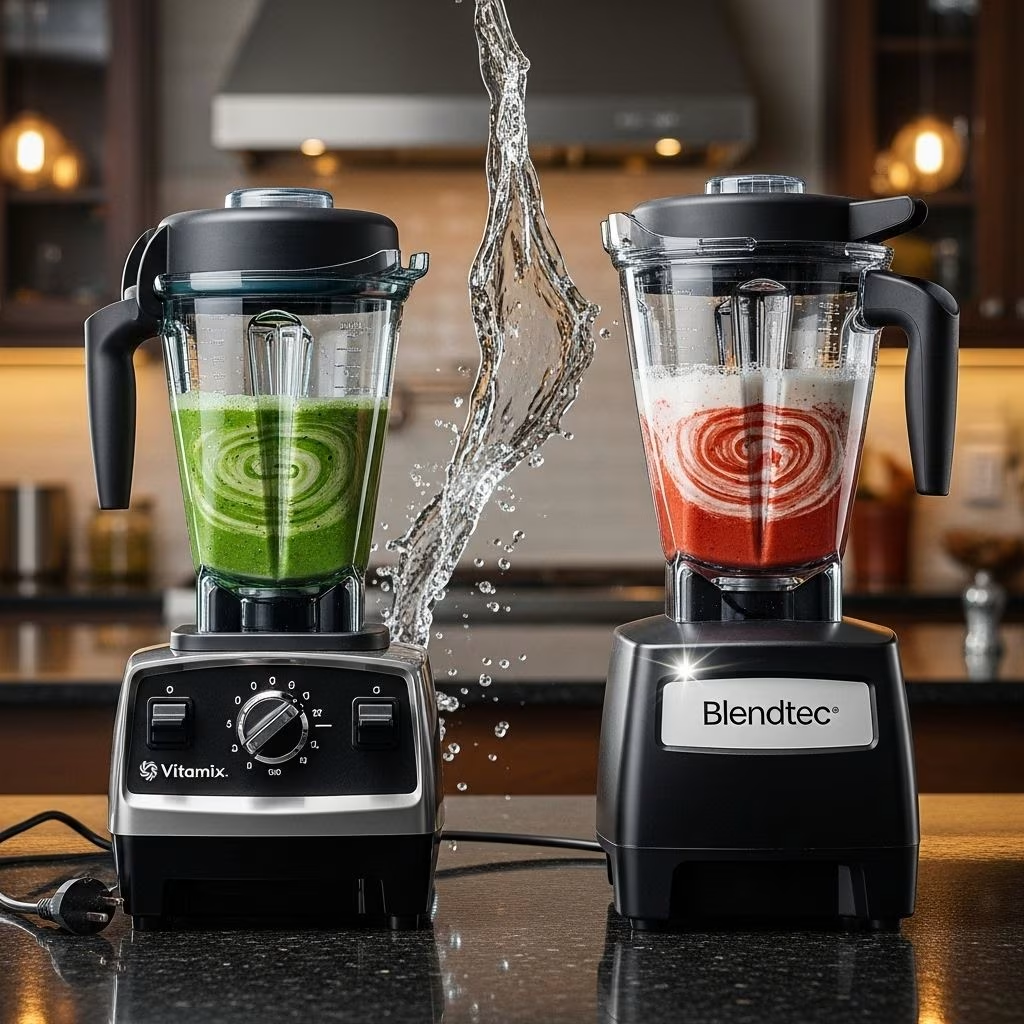
Vitamix blenders are renowned for their substantial, sturdy builds. Their classic design tends to be a bit taller and heavier, reflecting the brand’s focus on durability and long-term reliability. In contrast, Blendtec machines often feature a more modern, compact design, sometimes with sleeker lines and digital interfaces.
Both brands use high-quality plastics in their jars, along with stainless steel blades, but the tactile feel and perceived solidity of Vitamix often stands out. Vitamix’s construction can feel more industrial, appealing to those who equate weight and heft with durability. Blendtec’s streamlined base and interface, meanwhile, can offer a lighter look and feel, potentially fitting more comfortably into modern kitchen aesthetics.
- Vitamix: Bulkier, sturdy, more industrial look
- Blendtec: Sleek, compact, modern aesthetic
Power & Motor Strength
Both brands deliver motors far more powerful than typical 350-watt kitchen blenders, making them capable of handling tough ingredients like nuts, seeds, and fibrous vegetables.
Blendtec generally reigns supreme in pure horsepower, offering blenders with 3 to 3.8 peak HP motors, compared to Vitamix’s 2 to 2.2 peak HP motors. This extra power can be noticeable during heavy-duty tasks or when pulverizing surprisingly tough items. Still, both brands can handle ordinary kitchen blending tasks with ease—even making hot soup from scratch.
| Brand | Peak Horsepower | Notable Features |
|---|---|---|
| Vitamix | 2–2.2 HP | Sufficient for all kitchen tasks, better ramp-up control |
| Blendtec | 3–3.8 HP | Extra muscle for tough jobs, quick blending |
- Blendtec: Slight edge in raw power and efficiency in pulverizing tough objects
- Vitamix: Still highly effective; the lower power allows more control at slow speeds
Controls & Usability
Vitamix excels in manual controls. Its variable speed dial (typically with 10 speeds) paired with a pulse function gives users fine-grained control over blending texture—from coarse chopping to ultra-smooth purees. This manual precision makes Vitamix favored among culinary professionals and serious home cooks.
Blendtec blenders often feature digital touchpads and pre-programmed cycles, enabling users to select specific blend programs for smoothies, soups, ice cream, or batters. Some models have up to 10 speeds, but others have fewer; many rely heavily on automatic programs. For those who want “set it and forget it” convenience, Blendtec shines here.
| Control Style | Vitamix | Blendtec |
|---|---|---|
| Speed Settings | 10-speed dial; gradual RPM control (500–37,000) | Up to 10 speeds; min RPM ~4,080, max 28,000 |
| Pre-programmed cycles | Usually none | Multiple cycles for recipes |
| Pulse Function | Yes | Yes |
| Manual control | Excellent, gradual ramp up | More digital, less manual precision |
- Vitamix: More precise manual speed control, ideal for tailoring texture
- Blendtec: Convenient one-touch programs, easier for casual users
Performance Analysis
Both blenders excel in making smoothies, purees, and grinding flours. In detailed tests and user reviews, Vitamix consistently delivers smoother green smoothies and slightly finer purees, especially for fibrous or leafy greens. The blade stability and design (4-prong, held with two stainless steel barrels) account for better blending consistency.
Blendtec performs quickly and reliably, leveraging its extra power for speedy results. It’s particularly impressive in the “Will It Blend?” tests famous on social media, showing off destructive capacity by pulverizing non-food items, but in actual food prep, both machines handle most tasks with ease.
- Green Smoothies: Vitamix yields ultra-smooth, creamy texture; Blendtec is smooth but may leave finer bits in tough greens
- Soup Prep: Blendtec heats soups slightly faster (about 4.5 min vs. 5–6 min for Vitamix)
- Dry Grinding: Both can make flours; Vitamix offers an optional dry grains container for extra fine milling
- Nut Butters & Dips: Both are capable, but Vitamix’s tamper aids in processing thick blends
- Frozen Desserts: Both excel when combined with their appropriate jar
Jar Options & Accessories
Vitamix offers jars in various capacities, from 32 to 64 ounces. Notably, its standard 64-ounce jar can be filled to full capacity without sacrificing blending results—an advantage for large batch preparation. Blendtec offers 64 and 96-ounce jar options, but recommends not filling beyond half capacity for optimal blending.
For tough jobs, Vitamix’s tamper is standard, allowing users to push ingredients toward the blades during operation. Blendtec’s solution is its optional Twister Jar (not standard), which uses a rotating lid to keep food circulating.
- Capacity: Vitamix’s jars perform well at full volume; Blendtec’s are best filled half to two-thirds
- Tamper vs. Twister: Vitamix includes tamper; Blendtec’s Twister Jar sold separately
- Specialty Jars: Vitamix offers a dry grains container; Blendtec offers Kitchen Mill for flours
Cleaning & Maintenance
Cleaning is a breeze for both brands: add warm water and a drop of dish soap to the jar, blend for 30–60 seconds, then rinse. Most jar components are dishwasher-safe, but hand-washing can help preserve clarity and longevity.
Both blenders’ jar shapes allow easy access; Vitamix’s straighter walls make scraping down thick mixtures quicker. Blendtec’s wide-sided jars also facilitate cleaning but may benefit from additional time if residues stick in corners. Regular maintenance (checking blade, motor base, and lid seals) ensures maximal lifespan.
Noise Levels
No high-powered blender is quiet, but there are differences. Blendtec’s higher horsepower translates to a louder operational pitch, sometimes compared to gardening equipment. Some Blendtec models offer a sound enclosure, reducing noise. Vitamix tends to sound deeper and steadier, akin to airplane engines winding up at take-off—still loud, but less shrill or rough. For both, blending frozen ingredients or grains at high speed is particularly noisy.
- Blendtec: Louder, more abrasive sound; sound enclosures available on select models
- Vitamix: Deep, steady motor noise
Size & Countertop Fit
Vitamix blenders are bulkier and can be quite tall, occasionally challenging low cabinet clearance. However, the low-profile jar option is available and designed to fit better under most cabinets. Blendtec blenders feature a smaller footprint and are easier to slot into compact kitchens.
| Brand | Jar Height (Standard) | Low-Profile Option |
|---|---|---|
| Vitamix | Can be >20 inches total | Available, fits under cabinets |
| Blendtec | Generally shorter total height | N/A; base is typically more compact |
Price & Value
Both Vitamix and Blendtec are priced in the premium blender category, usually between $350–$600 depending on model, accessories, and jar options. While initially costly, both last many years, even with daily use.
Consider not just sticker price but included accessories (tamper, specialty jars), warranty terms, and servicing options. Vitamix’s warranty often runs seven years, while Blendtec’s can vary but is generally competitive. Higher-tier Blendtec models (with sound enclosures) may cost more, as do specialty Vitamix jars.
- Vitamix: Higher up-front cost, longer warranty, durable build
- Blendtec: Competitive price, more powerful motor, ease of use
Frequently Asked Questions (FAQs)
Which blender makes smoother smoothies?
Vitamix typically produces the smoothest texture, especially with greens, due to blade design and blending control. Blendtec is fast, but may leave minute flecks in very fibrous recipes.
Can either blender make nut butter without stopping?
Both can, but Vitamix’s included tamper makes the process easier. Blendtec’s Twister Jar (sold separately) helps, but without it you may need to stop and scrape frequently.
Which is better for flour and dry grinding?
Both perform well, but Vitamix offers an optional dry grains container for finer milling. Blendtec offers the Kitchen Mill as a separate product for flour.
Are the jars dishwasher-safe?
Most jars from both brands are dishwasher-safe, but hand-washing preserves clarity. Blades are permanently attached—no need to disassemble.
How do they compare for recipes beyond smoothies?
Both excel at ice creams, dips, soups, batters, and sauces. Manual control on Vitamix allows precise textures, helpful for salsas or mayonnaise. Blendtec’s programs streamline recipe prep, but manual adjustments are less flexible.
Which is quieter?
Neither is truly quiet, but Vitamix tends to produce less shrill noise. Blendtec offers sound enclosures on select models for noise reduction.
Which should I choose?
- Choose Vitamix if you crave manual control, professional results, and consistently silky blends.
- Choose Blendtec if you prefer digital ease, pre-programmed cycles, and a compact footprint.
Summary Table: Vitamix vs. Blendtec Features
| Feature | Vitamix | Blendtec |
|---|---|---|
| Power | 2–2.2 HP | 3–3.8 HP |
| Controls | Manual dial, 10 speeds, pulse | Digital touchpad, buttons, pre-programs |
| Smoothie Texture | Finest, creamier | Smooth but less refined for greens |
| Jar Capacity | 32–64 oz.; fill to brim | 64–96 oz.; fill half for best results |
| Included Accessories | Tamper | None; Twister Jar sold separately |
| Noise Level | Lower/deeper | Louder/shriller; sound enclosure models |
| Warranty | Typically 7 years | Competitive, varies |
| Best For | Manual control, pro kitchens | Convenience, quick results |
Final Thoughts
The choice between Vitamix and Blendtec comes down to your kitchen priorities. If you value tailored control, ultra-smooth results, and build quality, Vitamix may be your ideal match. If you’re drawn to digital interfaces, powerful motors, and quick, convenient cycling, Blendtec stands out.
Whichever you choose, both will radically outperform conventional blenders—and revolutionize your blending experience.
References
- https://mysolluna.com/2012/02/11/vitamix-blender-vs-bledntec-and-other-high-end-blenders/
- https://www.blenderbabes.com/blender-babes-101/blender-reviews/blendtec-vs-vitamix/
- https://www.youtube.com/watch?v=UB_FpmSPNuE
- https://www.centurylife.org/the-best-blender-vitamix-vs-blendtec/
- https://www.everythingkitchens.com/blog/vitamix-vs-blendtec-blender-comparison.html
- https://minimalistbaker.com/the-blend-off-vitamix-vs-blendtec-review/
- https://jenniferskitchen.com/blendtec-vs-vitamix/
- https://www.melskitchencafe.com/blendtec-vs-vitamix/