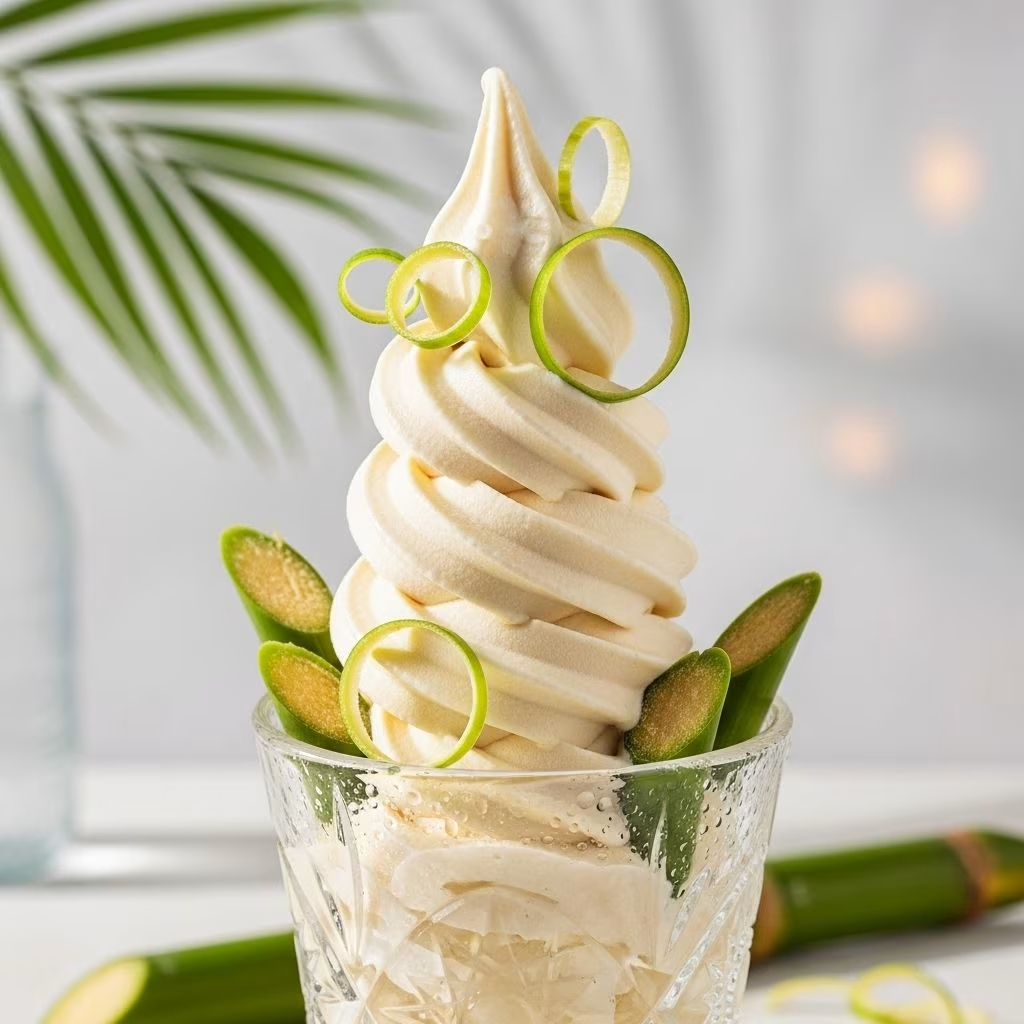
If you crave a taste of the tropics, sugar cane soft serve ice cream is a revelation—a dessert that celebrates the subtle, grassy sweetness of fresh cane, transformed into a creamy frozen delight. This article explores the inspiration, science, hands-on techniques, and creative variations behind sugar cane soft serve, guiding you step-by-step from raw cane to meltingly smooth cones and bowls.
Why Sugar Cane for Soft Serve?
Sugar cane is more than just a source for processed sugars. Unlike refined white sugar, fresh cane brings vegetal, floral notes and natural complexity. Using it in soft serve goes beyond simple sweetness and unlocks a distinct, delicate flavor profile. The result: a treat that straddles nostalgic comfort and tropical adventure, offering something truly new for ice cream lovers.
Understanding the Science of Soft Serve
Great soft serve relies on more than an ice cream maker. Its irresistible, melty consistency is the result of careful balancing of sugars, fats, and stabilizers. The recipe below features:
- Fresh sugar cane: For a unique, grassy-floral character
- Half-and-half: A blend of milk and cream providing rich flavor but keeping things light compared to pure cream
- Cornstarch & gelatin: Both help thicken and stabilize the custard base, reducing the size of ice crystals, yielding a pourable, soft-serve texture
- Cachaça or light rum (optional): Alcohol enhances flavor and prevents over-hardening in the freezer
Understanding why each ingredient matters allows you to both replicate and tweak your own version (see the Substitutions & Variations below).
Preparing Fresh Sugar Cane
Fresh sugar cane can look intimidating, but working with it is easier than you might think. Here are the steps for extracting maximum flavor and aroma:
- Use a heavy knife or cleaver to cut the cane into short lengths (around 3 inches each).
- Quarter each segment lengthwise to expose more juicy surface area.
- Roast the quarters briefly under a broiler until lightly dried—this step brings slight caramel notes and prepares the fibers for extraction.
- Strip away the tough outer skin and chop the cane into morsels.
- Pulse in a food processor until the cane is finely minced, resembling fresh ginger; this allows for maximum infusion when steeped.
Tip: After processing, you should expect about 1 1/4 to 1 1/2 cups of minced cane from a 1-foot segment.
Ingredients and Equipment
Main Ingredients
- 1 foot fresh sugar cane
- 3 1/2 cups half-and-half (divided)
- 3 tablespoons cornstarch
- 2 teaspoons unflavored gelatin
- 3/4 cup sugar
- 3/4 teaspoon kosher salt
- 2 tablespoons cachaça or light rum (optional)
Special Equipment
- Food processor (for mincing cane)
- Heavy knife or cleaver
- Cheesecloth (for straining)
- Ice cream machine
- Mixing bowls and airtight containers
Recipe: Sugar Cane Soft Serve Ice Cream
- Prepare the sugar cane:
- Cut cane into 4 three-inch segments and quarter each segment lengthwise. Arrange cut sides up on a baking sheet.
- Broil for about 5 minutes, just until the exposed surface looks a bit dry. Peel away the outer skin, then chop the cane into small pieces.
- Pulse in a food processor until cane is finely minced. You should have about 1 1/4 to 1 1/2 cups.
- Make the dairy base:
- Pour 1/4 cup of half-and-half in a small bowl and 3 tablespoons in another.
- Whisk cornstarch into the first bowl (should be fully smooth and lump-free). Sprinkle gelatin over the second bowl to bloom.
- Heat the remaining half-and-half (about 3 cups) in a heavy saucepan over medium until it just simmers. Remove from heat and stir in all the minced cane. Cover and steep for 2 hours to extract maximum flavor.
- Cook and thicken:
- Return the saucepan to medium-low heat. Add sugar and salt; whisk until dissolved.
- Whisk in the cornstarch slurry and cook, stirring constantly, until the base thickens enough to coat the back of a spoon—a finger swiped across the spoon should leave a clean line.
- Strain and set:
- Double-fold cheesecloth and line a container. Strain the hot custard; twist the cloth and squeeze well to extract as much liquid as possible (you want all the flavor but none of the fibers).
- Discard the pulp. Stir in the bloomed gelatin and cachaça/rum, mixing until gelatin dissolves fully.
- Chill:
- Cover and refrigerate until fully set—at least 4 hours, or overnight for the best structure and flavor melding. The base will be a soft, jiggly gel once set.
- Churn:
- Transfer the base to your ice cream maker and churn according to the manufacturer’s instructions. Process until you achieve the classic, delicate soft serve texture (the ice cream should not be runny but is still easily scoopable).
- Serve immediately for a true soft serve experience, or transfer to the freezer for 1-2 hours if a firmer consistency is desired. For best flavor, enjoy soon after churning, as the fresh cane notes are most pronounced when freshly made.
Pro Tip: If frozen hard, allow the ice cream to soften at room temperature for 10-15 minutes before scooping to revive its creamy texture.
Troubleshooting & Texture Tips
- Grainy texture? Ensure cornstarch is fully dissolved before heating. Overheating the base can cause lumping as well.
- Ice cream too firm? Alcohol in the form of cachaça or rum helps slow freezing so the result stays scoopable. Avoid omitting unless you want a firmer ice cream.
- Bland flavor? Increase the steep time with cane, or use extra-fresh sugar cane for a more aromatic batch.
- No ice cream maker? Freeze the set custard base in a shallow tray, then whip it vigorously every 30 minutes for 2-3 hours to imitate churned texture—a worthwhile hack in a pinch.
Substitutions & Recipe Variations
- Alcohol-free: Omit cachaça or rum for a child-friendly version; expect a slightly firmer texture.
- Lactose-free: Substitute half-and-half with equal parts unsweetened almond or coconut milk and dairy-free cream or coconut cream. Expect a subtle nutty or coconut undertone.
- Flavor twist: Add a few strips of lime or orange zest to the steeping step for a citrusy edge, or infuse with a scraped vanilla bean pod alongside the cane.
- Firm ice cream: To enjoy as a scoopable frozen dessert instead of soft serve, increase the gelatin by an additional 1/2 teaspoon and chill thoroughly after churning.
Serving Suggestions and Pairings
- Serve cones or bowls topped with fresh tropical fruits (such as diced mango, pineapple, or lychee) for a vibrant and refreshing treat.
- Shave chocolate or toasted coconut on top for extra texture and contrast.
- Add a sprinkle of flake salt just before serving to highlight the herbal sweetness.
- For an indulgent touch, drizzle with dark rum caramel or sweetened condensed milk.
| Serving Suggestion | Flavor/Texture Benefit |
|---|---|
| Fresh mango and pineapple | Juicy, tangy contrast to creamy ice cream |
| Dark chocolate shavings | Bitterness complements cane’s subtle sweetness |
| Toasted coconut flakes | Crisp texture, deep nutty flavor |
| Lime zest | Zesty, aromatic brightness |
Storage and Shelf Life
- Store leftover soft serve in an airtight container in the freezer. For best texture and flavor, enjoy within 2–3 days.
- If ice cream firms up too much, allow to sit at room temperature for several minutes until scoopable.
- Unlike many commercial formulas, homemade soft serve is best enjoyed soon after churning, as delicate cane flavors fade over time.
Frequently Asked Questions (FAQs)
Q: Do I have to use fresh sugar cane, or can I substitute cane syrup?
A: Fresh sugar cane is vital for the signature grassy-floral flavor. Cane syrup can add sweetness but won’t deliver the same complexity or freshness. If using syrup, omit the steeping step and reduce added sugar by half.
Q: Can this recipe be made with a standard ice cream base, using egg yolks?
A: While possible, this recipe relies on cornstarch and gelatin for a lighter, softer finish—more like soft serve. Egg yolks provide richness, but will mute the fresh cane’s delicate flavor. For a custard-style version, use 4 egg yolks in place of gelatin and cornstarch, and proceed as for classic ice cream.
Q: Can I use store-bought ice cream as a shortcut?
A: While not the same, you can gently melt premium vanilla ice cream and stir in a small amount of minced cane or high-quality cane syrup, then refreeze until just set. The flavor won’t be as pronounced, but it’s an easy approximation.
Nutritional and Cultural Notes
- Sugar cane soft serve is a gluten-free dessert if all ingredients and thickeners are gluten-free.
- Enjoyed across the tropics, sugar cane juice is a traditional street food—this treat transforms that experience for modern home kitchens.
- Half-and-half provides a balance between indulgent creaminess and a not-too-heavy finish.
Expert Tips for Best Results
- Use the freshest sugar cane possible; old cane is dry and fibrous, with dulled flavor.
- Don’t skip the broiling step—light toasting intensifies aromatic compounds.
- Chill the base thoroughly before churning for the smoothest texture.
- Eat the soft serve soon after churning for the brightest, most vivid flavor.
Inspired by a love of tropical flavors and modern ice cream science, this sugar cane soft serve brings the best of both tradition and innovation to dessert. Try it as a summer showstopper or as a unique treat for your next gathering.