Dear God, the Dishes: Lessons in Cooking and Life from Self-Isolation
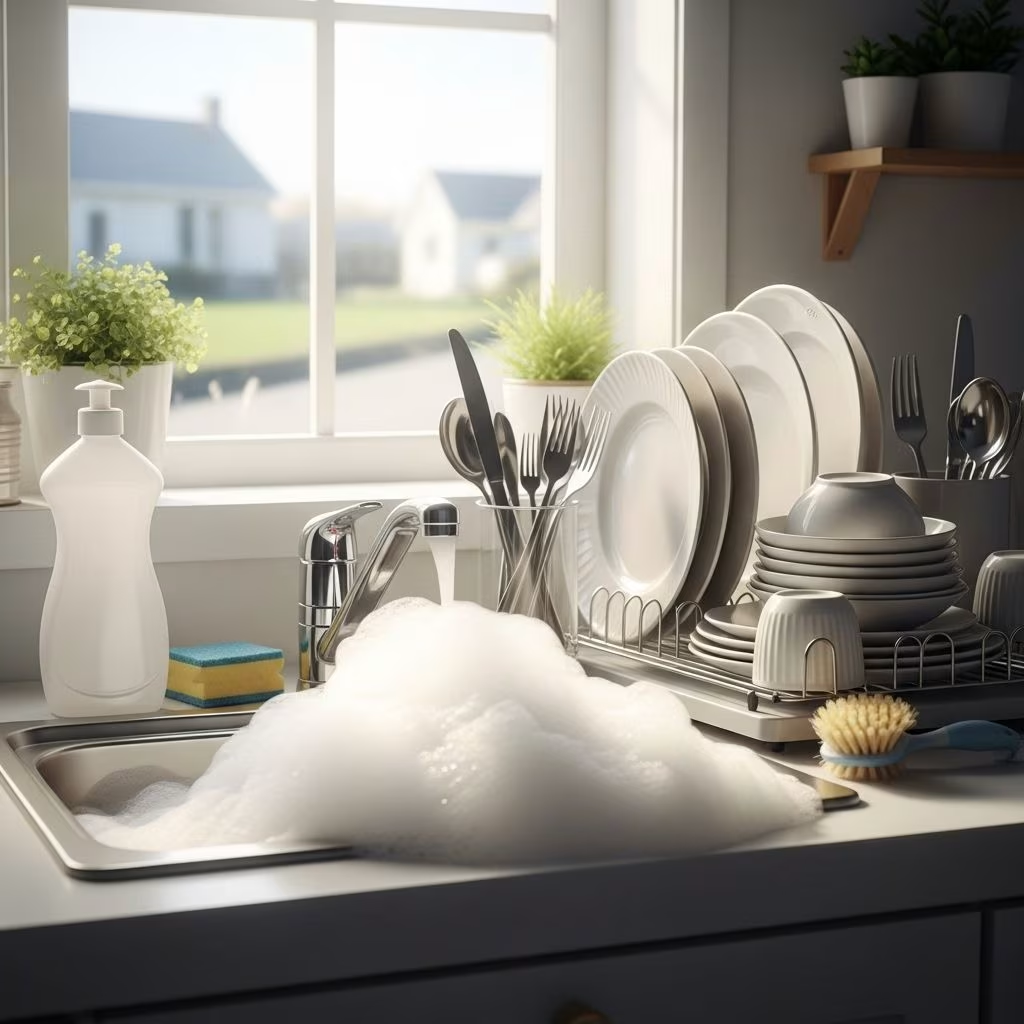
Self-isolation changed the way we live, but nowhere are the effects more visible — and tangible — than in the kitchen sink. Where one meal used to end and the next might begin hours later, there is now a persistent mound of dishes, ever growing, as families cook, eat, and snack their way through long days spent at home. The experience isn’t just about dirty plates and pots; it’s a lens into how we adapt under pressure, find new resources within ourselves and our households, and learn to glean small joys amid the seemingly endless monotony of kitchen chores.
The Kitchen as Both Shelter and Battlefield
Early in self-isolation, many of us turned to the kitchen as a source of comfort and control. When the outside world felt uncertain, cooking became a grounding ritual. But the romance of sourdough starters and elaborate stews soon gave way to the more mundane reality: with every meal cooked at home comes a heap of dirty dishes. And with restaurants closed and takeout less frequent, there’s no escaping this relentless cycle. The kitchen, once a haven, sometimes started to feel like a battlefield pitting creativity against fatigue, abundance against exhaustion.
- The sink rarely emptied — Bowls from breakfast lingered until lunch. Cutting boards from dinner joined the pile.
- Strained routines — Families navigated new patterns: work calls through the clatter of pans, children hungry again before the previous meal’s crumbs were swept away.
- Negotiation over shared labor — Partners revisited old agreements about chores, often having to renegotiate responsibilities as the scale of household work ballooned.
Three Meals a Day — and Snacks, and Snacks, and Snacks
Isolation didn’t just increase the number of meals we prepared; it multiplied the frequency of snacks and the complexity of what counted as a “meal.” The border between breakfast and lunch blurred, and every cup of coffee generated mugs to be washed. As days stretched on, the volume of kitchen detritus rose exponentially—not just from meals but from tea breaks, elaborate experiments, and forays into baking as both therapy and sustenance.
- Spontaneous new habits: Baking bread, prepping large batches of soup, and revisiting childhood comfort foods.
- Every pot in use: With limited time between meals, dishes didn’t always get washed before being needed again, leading to a scavenger hunt for clean utensils.
- The endless snack parade: Children (and grown-ups) grazed throughout the day, compounding the pile.
Relearning Routines, Negotiating Labor
The sudden shift to home-centered life highlighted the ongoing, often invisible work that keeps a household running. For some, the division of dish duty and kitchen labor had to be renegotiated daily, especially among partners balancing remote work and childcare. What became quickly apparent:
- Equal division isn’t always equitable: Schedules, energy levels, and cooking expertise varied widely.
- Communication is key: Clarifying expectations about what constitutes a “clean” kitchen avoided simmering resentment.
- Small rituals offered comfort: Listening to podcasts while washing dishes, setting the table with intention, and even inventing games for children to help ease the burden.
New Strategies for Old Problems
Many families found inventive solutions to manage dish volume and kitchen chaos:
- One-pot and sheet pan meals: Reducing the number of pans used by choosing recipes that cook everything together.
- Designated dish days: Assigning specific days or meals to different household members to even out the workload.
- Minimalist meal prep: Focusing on simple recipes and reusable cookware, like making use of the same salad bowl for lunch and dinner.
- Dishwashing as mindful practice: Finding peace in the repetitive nature of scrubbing, rinsing, and stacking, using the time as a mental reset between other tasks.
The Unexpected Cost of Home Cooking: Dishes Upon Dishes
Home cooking in pre-pandemic times was often a special occasion or a leisurely weekend pursuit. Self-isolation made it routine, and routine, in turn, exposed the hidden cost: time and effort, mostly in the form of cleaning up. What surfaced was a paradox — more time to cook meant more time spent cleaning, and the pleasure of making meals was inextricable from the labor that followed.
| Meal | Typical Dishes Generated | Shortcut Strategies |
|---|---|---|
| Breakfast | Pans, mugs, bowls, spoons | Batch prep (overnight oats); use same mug for refills |
| Lunch | Plates, cutting boards, salad bowls | Wraps or sandwiches (minimal utensils) |
| Dinner | Pots, pans, serving dishes, plates, cutlery | One-pot meals or combined stovetop/oven recipes |
| Snacks | Various cups, dippers, containers | Pre-cut fruit/veggies; use storage containers as serving bowls |
Making Peace with the Pile
As days blended into one another, many came to realize that the never-ending pile of dishes was, paradoxically, a sign of abundance. Each dirty plate was the byproduct of a shared meal, each pot a memory of something nourishing being made. Instead of seeing the mound as a burden, some learned to see it as a reflection of care and resilience — proof that even when the world felt constrained, the home could be a place of creation and sustenance.
- Letting go of perfection: Sometimes a few dishes linger overnight, and that’s fine.
- Focusing on gratitude: Each plate meant enough food, each mug a break for tea, each skillet evidence of another day through.
- Trusting in cycles: Messes get cleaned, meals are made — then the cycle begins again.
Practical Advice: Survival Strategies for Sanity and Sinks
Self-isolation renewed interest in techniques for keeping chaos at bay while making kitchen work more enjoyable:
- Clean as you go: Wipe down counters and rinse utensils during downtimes while cooking.
- Soak, don’t scrub: Letting pans soak can make cleaning easier and less frustrating.
- Use fewer dishes intentionally: Reuse plates, bowls, and glasses throughout the day for family members when possible.
- Embrace dishwashing tools: Quality sponges, dish soap, and, if you have one, a dishwasher on eco-mode can really help.
- Accept imperfection: The kitchen doesn’t need to be spotless at all times.
Keeping up with the work can be physically and emotionally draining. Many found it helpful to pair dish duty with something pleasant — a favorite podcast, a phone call, or even just a moment of quiet mindfulness. Treating the act like a transition or even a centering practice reframes it from drudgery to something almost meditative.
Lessons in Adaptation and Gratitude
The experience of non-stop home cooking and dishwashing during self-isolation revealed broader lessons, many of which lingered even after restrictions eased:
- Routine is a form of resilience: Adapting to new patterns helped create stability when much else felt uncertain.
- Shared labor builds connection: Negotiating chores, especially with children, became a valuable lesson in teamwork and mutual appreciation.
- Food is more than sustenance: Cooking and eating together became acts of care, connection, and sometimes even rebellion against the stress outside.
- Abundance, not scarcity: What first felt like “not enough”—not enough time, energy, ingredients, or patience—became reframed as “enough for today.”
Self-isolation, in all its uncertainty and strain, reminded us to be thankful for full sinks and full tables.
Frequently Asked Questions (FAQs)
Q: How can I reduce the number of dishes when cooking for a family?
Use one-pot or sheet pan meals, encourage everyone to reuse their glasses or plates for refills, and try batch cooking meals that can be portioned out over several days.
Q: What are some realistic ways to share dish duty in a household?
Divide responsibilities by meal or day, set a rotating schedule, and clarify expectations around what counts as “finished” (e.g., just loading the dishwasher or completely wiped counters).
Q: How do you maintain motivation to clean when it feels never-ending?
Pair dish duty with an enjoyable activity (music, podcasts), focus on small wins (clearing just the counter or sink), and remind yourself that the cycle is part of caring for yourself and your family.
Q: Are there shortcuts to speed up post-cooking clean-up?
Clean as you go, soak cookware immediately, consolidate utensils, and opt for minimalist recipes when you’re low on energy.
Q: Any advice for staying sane while spending so much time in the kitchen?
Lean into routines, celebrate small joys (like nailing a new recipe), involve others in prep and clean-up where possible, and let go of perfection in favor of consistency and connection.