Crunchy Garlic and Herb Bread Sticks: An In-Depth Guide
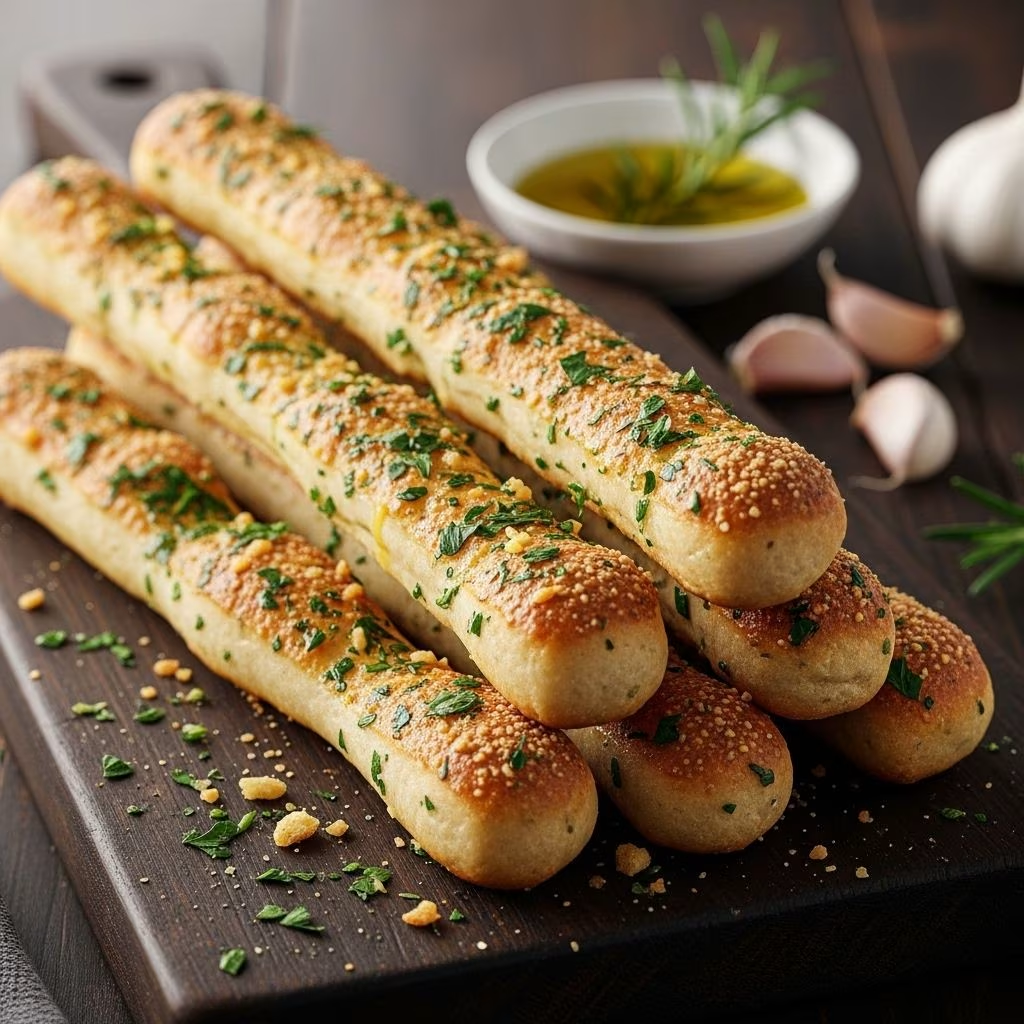
If you crave the satisfying snap of crunchy garlic and herb bread sticks, this comprehensive guide will walk you through every stage of the artisan breadstick-making process. Whether you serve them with marinara, alongside a comforting soup, or as a crisp snack, perfectly baked breadsticks deliver big flavor and irresistible texture. This article covers essential techniques, key ingredients, shaping tips, and answers to frequently asked questions to ensure your bread sticks emerge golden-brown and full of garlicky, herby aroma.
The Allure of Crisp Bread Sticks
Bread sticks, or grissini in Italian tradition, have universal appeal due to their crunchy bite and versatile flavoring. When infused with garlic and herbs, they provide an aromatic boost, making them a popular accompaniment for a variety of dishes or as standout snacks on their own. Their crispness is achieved through careful dough hydration and low-temperature slow baking, which sets them apart from the softer, chewier breadsticks found in many restaurants.
Essential Ingredients for Perfect Bread Sticks
Great breadsticks begin with simple but high-quality ingredients. Below are the essentials for flavorful, crunchy garlic and herb bread sticks:
- Bread flour: Higher protein content encourages gluten development for structure and crunch.
- Instant yeast: Provides efficient rise and ensures uniform texture.
- Lukewarm water: Promotes yeast activation.
- Olive oil: Adds richness and subtle flavor.
- Garlic powder: For even garlic flavor throughout the dough.
- Dried herbs: Such as parsley, oregano, basil, or a custom blend for complexity.
- Salt: Brings the flavors together and regulates yeast activity.
Optional additions can include grated Parmesan cheese, fresh minced garlic, or specialty herb blends for a personalized touch.
Step-by-Step Recipe: How to Make Crunchy Garlic and Herb Bread Sticks
Ingredients
- 1 cup (237ml) lukewarm water
- 2 1/4 teaspoons instant yeast
- 2 1/2 cups (about 300g) bread flour
- 1 teaspoon salt
- 1 teaspoon garlic powder
- 1 tablespoon dried parsley (or mixed dried herbs)
- 1 tablespoon olive oil
Instructions
- Combine water and yeast: In the bowl of a stand mixer, blend the lukewarm water and instant yeast. Let the mixture stand for about 1 minute, allowing the yeast to dissolve and activate.
- Form the dough: Add bread flour to the yeast mixture. Using a dough hook, knead at moderate speed until the dough comes together and becomes smooth and slightly elastic—about 3 to 5 minutes.
- Incorporate aromatics and oil: Add salt, garlic powder, parsley, and olive oil. Knead again until the ingredients are thoroughly combined and the dough feels supple.
- First proof: Cover the dough bowl tightly with plastic wrap or a damp towel. Allow to rise at room temperature for about 45 minutes, or until the dough is noticeably puffy but not fully doubled in size.
- Prepare for shaping: Lightly flour a clean work surface. Tip the risen dough out and gently press into a rough rectangle. Use a rolling pin to roll the dough into a rectangle approximately 10 by 20 inches, keeping the thickness even.
- Cut and shape: With a sharp knife or pizza cutter, slice the dough into strips about 1/2 inch wide and 10 inches long. Take each strip, twist it into a spiral, and lay it onto a parchment-lined baking sheet, spacing breadsticks apart.
- Bake: Preheat the oven to 300°F (150°C). Once all breadsticks are shaped, bake for about 40 minutes, rotating pans as needed for even browning, until the breadsticks are deep golden brown and crisp to the touch.
- Cool completely: Remove breadsticks to a cooling rack. Allow to cool completely before serving or storing for the best crunch.
Expert Techniques for Achieving the Perfect Crunch
- Slow baking at a lower temperature ensures even moisture loss and a shattering crispness throughout.
- Twisting the dough strips not only creates visual appeal but increases surface area for a crunchier texture and prevents the breadsticks from being too dense.
- Allowing the breadsticks to cool completely on a wire rack is crucial—it lets them firm up and lose residual steam, maintaining crispness.
Professional bakers sometimes leave breadsticks in a turned-off, slightly ajar oven after baking to ensure complete drying and preserve snap.
Flavor Variations and Customizations
- Herb blends: Use dried oregano, rosemary, thyme, basil, or Italian seasoning for different herbal accents.
- Fresh vs. dried herbs: Fresh herbs provide a brighter flavor but can brown quickly, so add after baking or as a finishing touch.
- Cheese additions: Sprinkle grated Parmesan or pecorino on top before baking for an umami-rich crust.
- Seed coatings: Roll breadsticks in sesame, poppy, or nigella seeds before baking to introduce new textures and flavors.
- Spice it up: Add cracked black pepper, crushed red chili flakes, or smoked paprika for a kicked-up version.
Pairing Suggestions and Serving Ideas
- Appetizer platters: Pair with antipasto, cheeses, and cured meats.
- Soup and salad: Serve alongside tomato soup, minestrone, or Caesar salad for a classic pairing.
- Dipping sauces: Offer with marinara, pesto, whipped feta, or olive tapenade for an interactive appetizer.
- Snack platters: Combine with crudités and dips for a picnic or party spread.
Troubleshooting Common Bread Stick Issues
| Problem | Likely Cause | Solution |
|---|---|---|
| Too soft or chewy | Oven temperature too high, insufficient baking time, or high dough hydration | Lower baking temp, extend bake time, roll dough thinner, allow proper cooling |
| Breadsticks darken unevenly | Hot spots in oven, overcrowding on pan | Rotate pans halfway, give space between breadsticks, bake in batches if needed |
| Yeast dough does not rise | Inactive yeast, cool environment, improper water temperature | Check yeast expiration, use lukewarm water, proof in a warmer spot |
| Lack of flavor | Insufficient salt, old/dull herbs, under-seasoning | Use fresh/dried herbs, increase seasoning to taste, don’t skip salt |
| Soggy after cooling | Insufficient baking or cooling on a solid surface | Cool on wire rack, ensure full bake, store only when fully cooled |
Storage and Make-Ahead Tips
- Storing: Keep fully cooled bread sticks in an airtight container at room temperature for up to 5 days.
- Reviving crunch: If the bread sticks lose crispness, briefly reheat in a 300°F (150°C) oven for 5 minutes.
- Freezing dough: Shape dough into sticks, arrange on a tray and freeze until firm, then transfer to a sealed bag. Bake from frozen, adding a few extra minutes to the baking time.
Nutrition and Dietary Variations
- Whole wheat option: Substitute up to half of the bread flour with whole wheat flour for extra fiber and nutty taste.
- Vegan adaptation: The base recipe is already dairy-free; simply use a vegan butter alternative if finishing with a butter brush.
- Gluten-free version: Use a high-protein gluten-free flour blend, but expect some difference in texture and rise.
Frequently Asked Questions (FAQs)
Q: Can I use active dry yeast instead of instant yeast?
A: Yes, active dry yeast works; dissolve it in lukewarm water and let it proof until foamy before proceeding with the recipe.
Q: Why are my bread sticks not as crunchy as described?
A: Crunch depends on oven temperature, baking time, and dough thickness. Use a lower temperature for a longer period, roll dough thin, and cool bread sticks thoroughly before storing.
Q: Can I add fresh garlic instead of garlic powder?
A: Fresh garlic can be used, but it may brown quickly and develop a sharper or slightly bitter taste when baked. For a robust, even garlic flavor throughout, powder works best. Sprinkle fresh minced garlic only as a topping for a milder finish.
Q: How do I store homemade bread sticks for lasting crispness?
A: Once fully cooled, store bread sticks in an airtight container at room temperature. To maintain crunch, avoid exposure to moisture and re-crisp in a low oven if needed.
Q: What are the best dipping sauces for garlic and herb bread sticks?
A: Classic options include marinara, garlic butter, pesto, cheese sauce, and olive tapenade. They also pair well with ranch or creamy herb dips.
Final Thoughts
Crunchy garlic and herb bread sticks are a rewarding baking project that delivers crispy, fragrant rewards. By following precise techniques, using quality ingredients and allowing for proper baking and cooling, you can master this savory treat at home for snacks, entertaining, or anytime you crave something crisp and satisfying.