The Simple Step That Could Save Your Home During a Hurricane
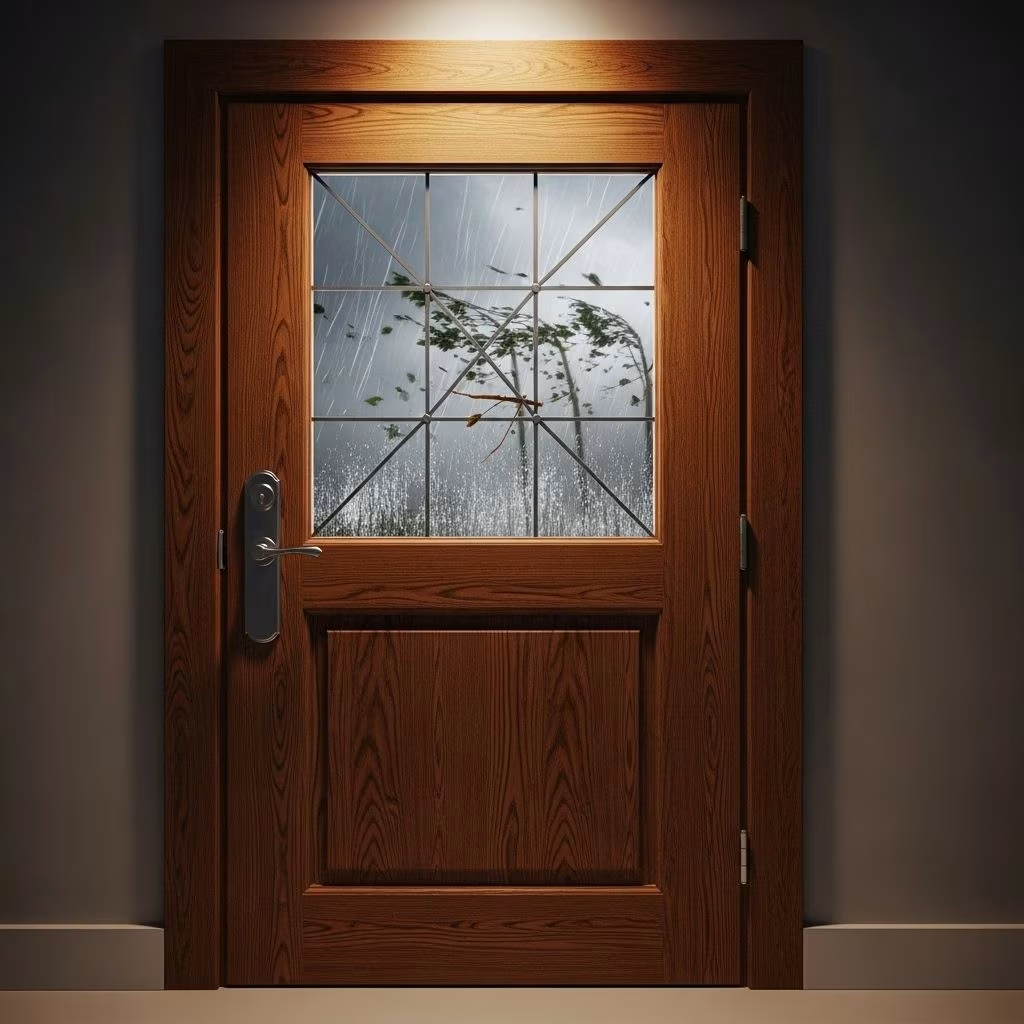
Hurricanes are among nature’s most destructive forces, with wind, rain, and pressure changes that put homes and their inhabitants at serious risk. While boarding windows and reinforcing entryways are standard practices, research from the Insurance Institute for Business & Home Safety (IBHS) has uncovered a crucial yet often overlooked trick: closing all interior doors. This simple step could make the difference between minor storm damage and catastrophic roof loss.
Understanding Hurricane Pressure: The Science Behind the Door Trick
When hurricane winds batter your home, the exterior shell is subjected to tremendous pressure. If a window or door is breached, high-velocity wind infiltrates the home, causing a sudden rise in internal pressure. Picture it like overinflating a balloon—the pressure seeks escape, and often, the weakest point yields first. In many homes, that point is the roof. Once the roof is compromised, rain pours in, escalating damage exponentially and potentially rendering the home uninhabitable.
According to IBHS, closing all interior doors helps disperse internal air pressure throughout the building, instead of allowing it to funnel upward and concentrate at the ceiling beneath the roof. This diffusion lowers the chances of the roof being peeled away during the peak of a storm.
Why Closing Interior Doors Matters
It might seem trivial, but during a hurricane:
- Open doors create air tunnels that channel wind pressures directly to the uppermost part of your home.
- Closed doors compartmentalize pressure, keeping forces lower and distributed across multiple rooms and hallways, which can significantly reduce potential structural failures like roof blow-offs.
- This strategy backs up other protective measures, like hurricane shutters and reinforced entryways, by addressing internal wind pressures rather than just the exterior forces.
Thus, closing every interior door is more than just a best practice—it’s now considered an essential hurricane-safety step, as emphasized in recent IBHS findings.
How to Prepare: Your Step-by-Step Hurricane Door Safety Checklist
- Close all interior doors: Not just the doors to bedrooms, but also bathrooms, closets, utility spaces, and pass-throughs.
- Close and lock all exterior doors and windows: Locked fixtures are generally better at resisting wind pressure.
- Reinforce garage doors and main entry doors: These are frequent points of failure in strong storms. Use bracing systems, additional deadbolts, and vertical locking pins as needed.
- Shutter or board up windows and glass doors: Impact-resistant shutters or pre-cut plywood panels can prevent windborne debris from breaking through.
- Clear surrounding areas: Remove or secure outdoor objects that could become dangerous projectiles.
Beyond Doors: Additional Home Protection Tips
While closing doors is vital, there are many other measures that experts recommend for comprehensive hurricane protection:
- Reinforce garage doors using manufacturer kits or bracing systems, as these doors commonly fail first.
- Upgrade door hardware by installing long screws, robust deadbolts, and multi-point locking systems to make entryways more resilient.
- Strengthen entry door jambs with metal reinforcement kits to prevent forced entry from windborne debris.
- Install permanent storm-rated doors and windows where possible. Select models rated for your local wind pressure specifications.
- Deploy impact-resistant shutters or heavy-duty panels for all windows and patio doors. Temporary covers should be readily available and properly fastened in advance.
Frequently Overlooked Vulnerable Points
The weakest elements in a home during a hurricane aren’t always obvious. Regardless of which direction the storm approaches from, your whole house is at risk. Experts emphasize:
- Protection is needed on every side of the home, not just the windward-facing aspect.
- Garage doors are particularly susceptible to failure, which can lead to rapid, catastrophic pressure changes inside the home.
- Double-entry doors often fail at the point where their surface bolts meet the header or floor; ensure these are anchored well.
- Window and patio doors, if unprotected, are frequent sites of wind and debris penetration.
Understanding How Pressurization Leads to Roof Failure
To grasp why closing doors matters, consider how modern homes are built as relatively airtight shells. During a hurricane, external wind can create a vacuum effect above the roof, simultaneously as pressurized air inside pushes upward against the underside of the roof deck:
- If wind breaches a door or window, the home rapidly fills with wind. Internal pressure increases as the inflow seeks escape, often blowing upward against the roof.
- An open interior plan, or open doors, enables unrestricted airflow, focusing forces at the roof structure.
- Closed doors slow this process, limiting the wind’s ability to build up pressure in any single location.
“Your interior doors act as barriers, helping prevent a wind tunnel effect and potentially keeping your roof in place long enough for the wind to subside,” says a leading disaster safety engineer.
Choosing the Right Door Reinforcements
| Entry Type | Recommended Protection | Common Failure Point | Upgrade Ideas |
|---|---|---|---|
| Garage Door | Removable or permanent bracing systems; replace with storm-rated models | Panel buckling, track detachment | Heavy-duty steel bracing, multiple track fasteners |
| Double Entry Door | Long screws, extra deadbolts, vertical locking pins | Surface bolts/header failure | Multi-point locks, jamb reinforcement |
| Single Entry Door | Jamb reinforcement kits, upgraded deadbolts | Jamb cracking, deadbolt failure | Steel plates, longer throw deadbolts |
| Sliding Glass Door | Impact-resistant shutters, panel covers | Glass shattering, frame distortion | Storm shutters, polycarbonate panels |
Myths and Misconceptions About Hurricane Door Protection
- Myth: Tape protects windows and doors from breaking.
Fact: Tape does not prevent glass breakage or structural failure. Use impact-resistant shutters or other substantial barriers instead. - Myth: Only windward-facing windows and doors need protection.
Fact: Wind changes direction during storms; zones of negative pressure form around the entire house. All sides require fortification. - Myth: Leaving interior doors open helps ventilate and equalize pressure.
Fact: Open doors create air tunnels that increase pressure on the roof, elevating risk of catastrophic damage.
What the Experts Say
The Insurance Institute for Business & Home Safety (IBHS) has conducted extensive wind tunnel tests to simulate hurricane conditions. Results confirm the importance of closing all doors, including those inside the home. This advice is now integrated in their official hurricane preparation recommendations.
Other experts, including engineers and insurance professionals, emphasize upgrading to storm-rated entryways, using robust anchoring hardware, and always securing all openings—including garages and rear doors. Comprehensive preparation, supplemented by the simple door trick, is essential for meaningful reduction of storm damage risks.
Comprehensive Hurricane Preparedness: Integrating the Door Trick
- Develop a hurricane checklist: Include closing all interior and exterior doors, securing windows, gathering supplies, and reviewing evacuation plans.
- Maintain emergency supplies: Water, non-perishable food, flashlights, batteries, and a first aid kit should be prepped in advance.
- Strengthen all entry points: Use current building codes as a minimum guideline; retrofit older homes where feasible.
- Practice closing all doors quickly: Before storm season, familiarize every household member with which doors to secure and how to verify closure.
Frequently Asked Questions (FAQs)
Q: Should I close interior doors even if all my windows are boarded up?
A: Yes. Although boarded windows offer critical protection against wind and debris, closing interior doors still helps disperse any pressure that may enter the home through minor cracks or if a shuttered window fails.
Q: Why are garage doors such a major concern during hurricanes?
A: Garage doors often cover large openings and are constructed from thinner materials. They are prone to blow-in under strong winds. Their failure allows sudden, massive pressure changes that can lead to catastrophic roof failure.
Q: Do I need to close doors to closets, laundry rooms, and bathrooms?
A: Yes. All interior doors act as barriers. Every compartment contributes to pressure management within the home.
Q: I have an open-concept home—how can I benefit?
A: Even if you can’t create perfectly separated spaces, closing available doors and securing barriers where possible still provides some reduction in wind flow and pressure concentration.
Q: Is simply closing doors enough to keep my roof safe?
A: While it’s a critical step, it’s only one part of a thorough preparedness plan. Combine it with reinforced entryways, storm-rated doors and windows, and strong shutters for the best protection.
Preparing Your Family: Communication and Practice Matters
- Discuss the door safety plan with everyone in the household before hurricane season starts.
- Identify all doors that must be closed in event of a warning, including less-used rooms or outbuildings attached to the home.
- Assign responsibilities so that every door—from the basement to the attic—gets checked and secured when an alert is issued.
- Practice the routine a few times each season so no one hesitates when time is of the essence.
Conclusion: The Power of Simple, Science-Based Actions
Defending your home from a hurricane starts with the right knowledge and practical steps. Installing shutters, reinforcing doors, and following local building codes are essential—but don’t overlook the value of closing every interior door. This action, backed by science and expert advice, could make all the difference for your home’s integrity and your family’s safety.
References
- https://www.thisoldhouse.com/natural-disasters/21015235/hurricane-safety-lessons-learned-from-past-storms
- https://www.goodhousekeeping.com/life/a62546872/door-trick-could-save-your-home-during-hurricanes/
- https://portal.ct.gov/-/media/CID/App10Hurricanepdf.pdf
- https://mountpleasantmagazine.com/2018/real-estate/lowcountry-hurricane-protection-shutters-weathering-storm/
- https://www.countryliving.com/life/news/a44691/hurricane-dishwasher-trick/
- https://www.guardianhurricaneprotection.com/hurricane-shutters-that-can-protect-a-home-from-hurricane-and-storm-in-cape-coral-florida/
- https://www.windowguysflorida.com/blog/category/hurricane-doors/