How to Find Out When Your House Was Built
Every home has a story, and knowing when yours was built is not just a matter of curiosity—it can inform renovations, help you understand its value, and even connect you to your community’s past. Whether you’re buying, selling, or simply want to become better acquainted with your property, unlocking the history behind your house’s construction is both fascinating and practical. This comprehensive guide will walk you through proven steps—from scouring public records to interpreting architectural cues—to discover when your house was built.
Why Knowing Your House’s Age Matters
Identifying the age of your home brings practical and historical benefits:
- Structural Insights: Certain decades saw the use of distinct building materials and methods; knowing the date helps in planning safe and effective renovations.
- Home Value: Insurance quotes, resale value, and tax assessments often require the home’s age.
- Understanding Your Home’s Past: Helps you trace ownership, major events, and even the cultural atmosphere at the time it was built.
- Historical Designation: Older homes may qualify for historic preservation programs or tax incentives.
Step-by-Step Guide: How to Determine When Your House Was Built
1. Check Public and Ownership Records
Arguably the most straightforward way to establish your home’s construction date is through official documents. Here’s where to start:
- Deeds and Title Abstracts: These documents list ownership changes, which often (though not always) correspond with new builds or significant renovations.
- Property Tax Records: County assessor’s websites can indicate the initial year a building was assessed for property tax, providing a strong clue to the year it was built.
- Building Permits: Local city or county building departments store permits for new construction and major additions, documenting when work was authorized and completed.
- County Recorder or Clerk’s Office: Historic land records and plot surveys, often available in person and sometimes searchable online.
Pro Tip: When searching records, bear in mind that the home’s ‘official’ build date may represent when it was substantially completed, not when every part was finished or future extensions added.
2. Examine the Deed History
The chain of title (the sequence of historical transfers of title to a property) can reveal when a parcel first hosted a residence. Look for sudden increases in property value or references to new buildings in older deeds.
- Visit your local recorder’s office or access online records.
- Request the title abstract for a summary of all recorded transactions, including references to construction or improvements.
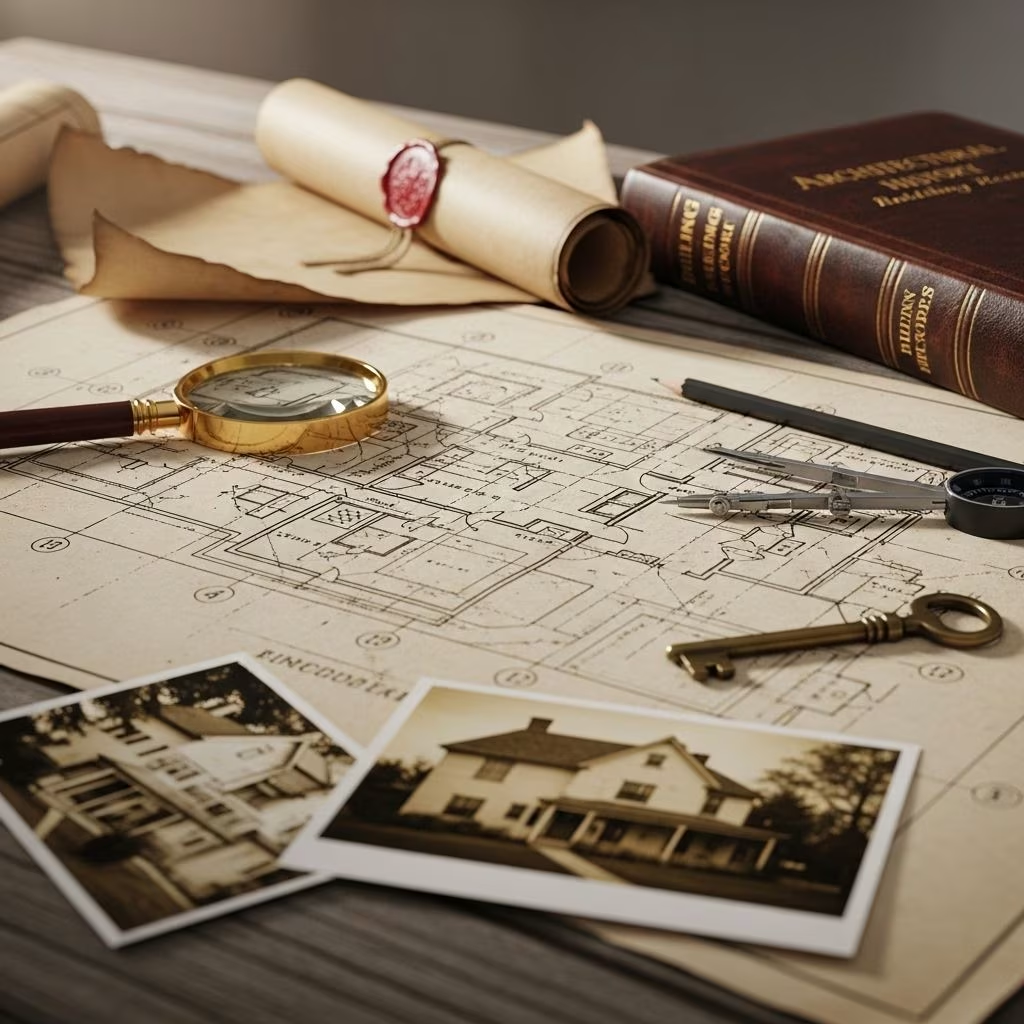
- Older homes may have handwritten or typewritten records; bring patience and a magnifying glass!
3. Search for Property Tax Assessment Records
Tax assessment documents are often surprisingly detailed, reflecting when a structure reached taxable value. Many counties maintain public online portals or will provide data upon request:
- Find the parcel identification number (PIN) or address and inquire with county assessor’s office.
- Look for the earliest year the home was listed as ‘improved’ real estate.
- Note if the value jumps in certain years, indicating major expansions or remodeling.
4. Consult Building Permits and Certificate of Occupancy
Much like a birth certificate for your home, the building permit and final certificate of occupancy signal when construction was approved and completed. Here’s how to utilize them:
- Contact your municipal building department for permit archives.
- Review the documentation for initial construction and any subsequent large-scale work.
- Many post-20th century homes will have well-documented permit histories; older houses may lack early records or have gaps.
5. Inspect Architectural Features and Building Materials
The style and composition of your house can often be linked to specific eras. By analyzing these elements, you can estimate the date range for original construction:
- Foundation and Subfloor: Older homes often have stone or brick foundations and rough-hewn wooden subfloors. Modern homes instead use poured concrete and engineered wood products like plywood or OSB.
- Electrical and Plumbing: Knob-and-tube wiring and galvanized steel pipes were common pre-1950s; newer homes use copper wiring and PVC pipes.
- Attic and Basement: Sometimes, builders or previous owners left dates or newspapers (used as insulation) that offer direct evidence. Window shapes, staircases, and old flooring types are also revealing.
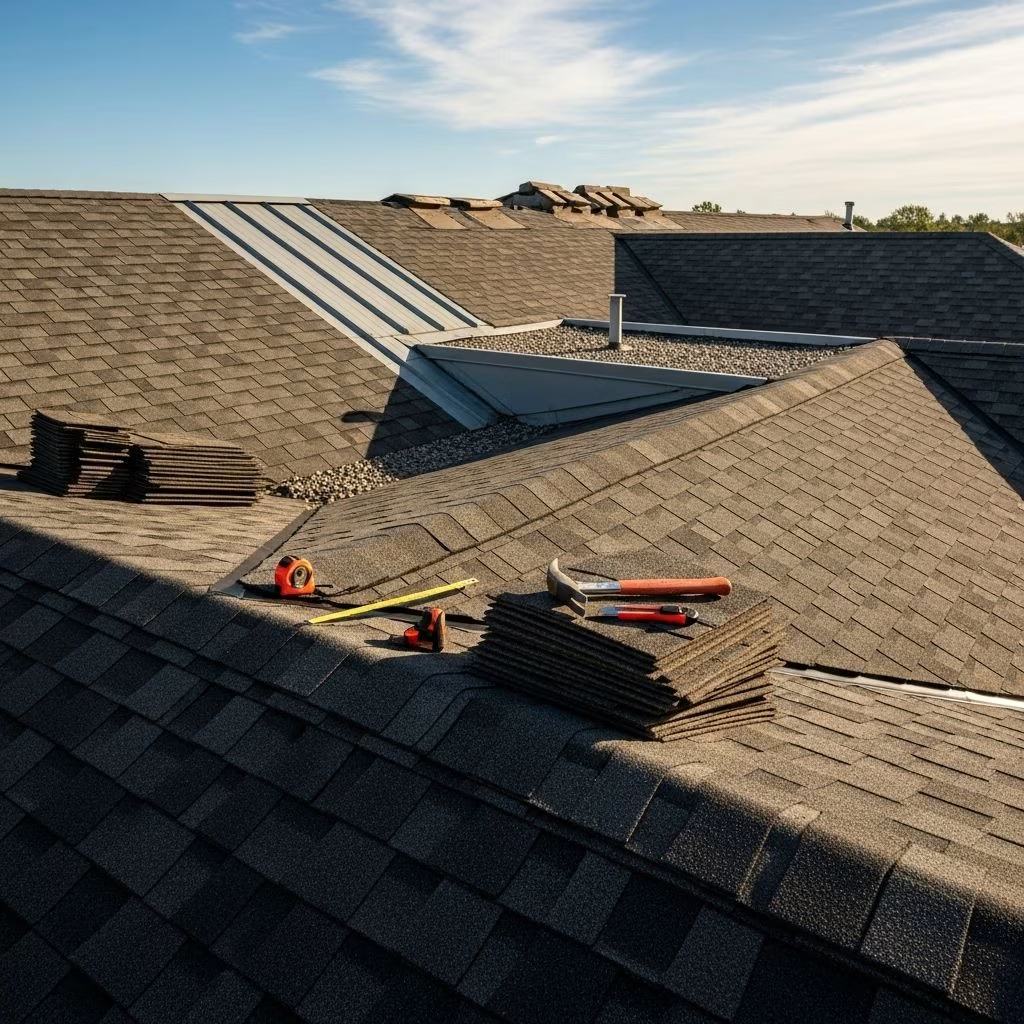
- Roofing and Windows: Specific rooflines, window frames, and trim details correspond with particular architectural movements (Victorian, Craftsman, Colonial Revival, mid-century modern, etc.).
Consult architectural style guides to correlate your findings with popular building periods.
6. Visit Local Libraries, Historical Societies, and Archives
Your local library or historical society may hold city directories, fire insurance maps (like Sanborn maps), or old photographs featuring your address. These can help:
- Cross-reference your home’s existence in old city directories or phone books.
- Analyze historical neighborhood maps for development timelines.
- Access archived newspapers for mentions of your address in articles or real estate ads.
7. Hire a Professional Building Inspector or Historian
If you hit dead ends or want an expert opinion, consider hiring a building inspector or historic preservation consultant. These professionals:
- Assess hidden features or construction methods seen in attics, basements, or crawlspaces.
- Identify modifications and their likely time periods.
- Provide documentation that may be needed for insurance or historic register applications.
An inspector’s report can offer not only an age estimate but also pinpoint potential issues related to the home’s age.
8. Research Your Home’s Architectural Style
Most architectural styles are tied to specific timeframes. By identifying the architectural style of your home, you can often narrow down the build date to a particular decade:
- Exterior Elements: Window shapes, roof pitches, doorways, and porch columns provide clues.
- Compare Features: Reference books, online databases, or your local historical society can help you match style details with construction eras.
- Document Unusual Features: Unique craftsmanship or nonstandard dimensions may indicate a builder’s signature or craftsman tradition from a specific period.
Bonus Tip: If your home was custom-built, archives may include plans or blueprints with dates and builder notes.
Additional Resources for Home Age Research
- Local Planning and Zoning Department: May have historic overlay maps and development records.
- USGS and Sanborn Maps: Historical maps from the United States Geological Survey or Sanborn Map Company give insights into housing development over time.
- Neighbor Testimonies: Longtime residents may recall when homes in the area were constructed.
- State or Regional Historical Registries: Check if your property or neighborhood is listed in state heritage programs, which often catalog build dates and histories.
Common Pitfalls and Important Considerations
- Remodeling and Additions: Substantial additions or renovations can complicate efforts to date the original structure.
- Discrepancies Across Records: Different sources may cite slightly different years due to delayed assessments, permitting timelines, or incomplete records.
- Pre-20th Century Homes: Older properties often have less precise documentation; use a combination of property, tax, and physical clues.
- Documentation Preservation: Always keep copies of your research for insurance, appraisal, or historic registry applications.
Frequently Asked Questions (FAQs)
Q: What if I can’t find my home in public records?
A: For homes predating modern records, supplement official searches with architectural analysis, tax records, and local history sources. Consult building inspectors and explore physical clues in your home.
Q: How accurate are building permits and tax records for determining the build date?
A: Permits and tax records provide reliable starting points, but may record only major renovations or first taxable improvements rather than the exact construction date. Use them alongside other sources for best results.
Q: Can I determine my home’s age from its plumbing and wiring?
A: Yes. Finding knob-and-tube wiring or galvanized pipes typically indicates pre-1950s construction, while copper and PVC signal newer builds. Upgrades may mask the original installation, so check other clues.
Q: What tools can help in dating my home’s architectural style?
A: Use architectural style guides, online photo archives, or consult a local historian. Features like window shape, trim, and floor plan layouts are highly informative.
Q: Should I hire a professional to assess my home’s age?
A: Hiring a building inspector or architectural historian can provide detailed analysis and documentation, particularly useful if you plan major renovations, seek historic designation, or need precise records for insurance.
Key Takeaways for Homeowners
- Start with public records and ownership documents, then layer in tax, permit, and historical sources.
- Physically inspect your home for construction clues—subfloor, wiring, plumbing, attic, and basement inclusions.
- Combine research methods for the most accurate estimate, especially for older or heavily renovated homes.
- Preserving your findings will aid future owners, insurance, and possible historic recognition.
Resources for Further Research
- Local Historical Society or Library
- County Assessor’s Office
- Online property and deed databases
- Building permit offices
- Sanborn Fire Insurance Maps and USGS historical maps