Upneeq Review: Can Prescription Eye Drops Lift and Brighten Your Eyes?
When you spend all night working late and still wake up early, the evidence shows up first in your eyes. Tired, slightly droopy eyelids can instantly dull your entire look, no matter how much concealer or eye cream you apply. Enter Upneeq—prescription-only eye drops marketed as a non-surgical fix for acquired ptosis (droopy upper eyelids). With beauty forums abuzz and eye professionals weighing in, we put Upneeq to the test for several weeks to answer one of the most intriguing questions in cosmetic beauty today: Do these drops really work, and are they worth the prescription?
What is Upneeq?
Upneeq is a prescription eye drop designed specifically to treat acquired blepharoptosis—a condition where the upper eyelid droops over time. This can make your eyes look less open, tired, and can even affect your vision in severe cases. Unlike over-the-counter eye drops formulated for redness or dryness, Upneeq is only available with a prescription and is considered by some as a “nonsurgical eyelid lift.” Optometrists, ophthalmologists, dermatologists, and other specialized medical professionals can all prescribe Upneeq after evaluating your suitability.
While acquired ptosis can happen for several reasons, including aging, past eye surgeries (such as LASIK), certain medical conditions (like stroke or nerve damage), and even after cosmetic procedures like Botox, not everyone is a candidate. Upneeq targets acquired ptosis—not congenital (from birth) forms. If your droopy lids are something you were born with, surgical intervention (blepharoplasty) remains the standard recommendation.
How Does Upneeq Work?
Most eyelid movement is controlled by delicate muscles. Upneeq works by stimulating the receptors in the Müller’s muscle of the upper eyelid. This causes the muscle to contract slightly, temporarily raising the upper lid and reducing the appearance of droopiness. The lifting effect begins within several minutes and can last through most of your workday.
Key facts about Upneeq’s mechanism of action:
- Targets and temporarily activates Müller’s muscle.
- Improves the “open” appearance of the eyes by subtly lifting the upper eyelid.
- Prescribed for individuals with acquired ptosis—not effective for congenital cases.
- The drop does not treat underlying causes but offers a temporary visible effect.
How to Use Upneeq Eye Drops
Application is quick and straightforward, making Upneeq practical for busy mornings or before big events. Here’s a step-by-step breakdown of the user experience:
- Wash your hands thoroughly to avoid contaminating your eyes.
- Obtain a single-use vial from the prescription box. These are individually packaged and require scissors or a knife to open—there’s no perforated tab.
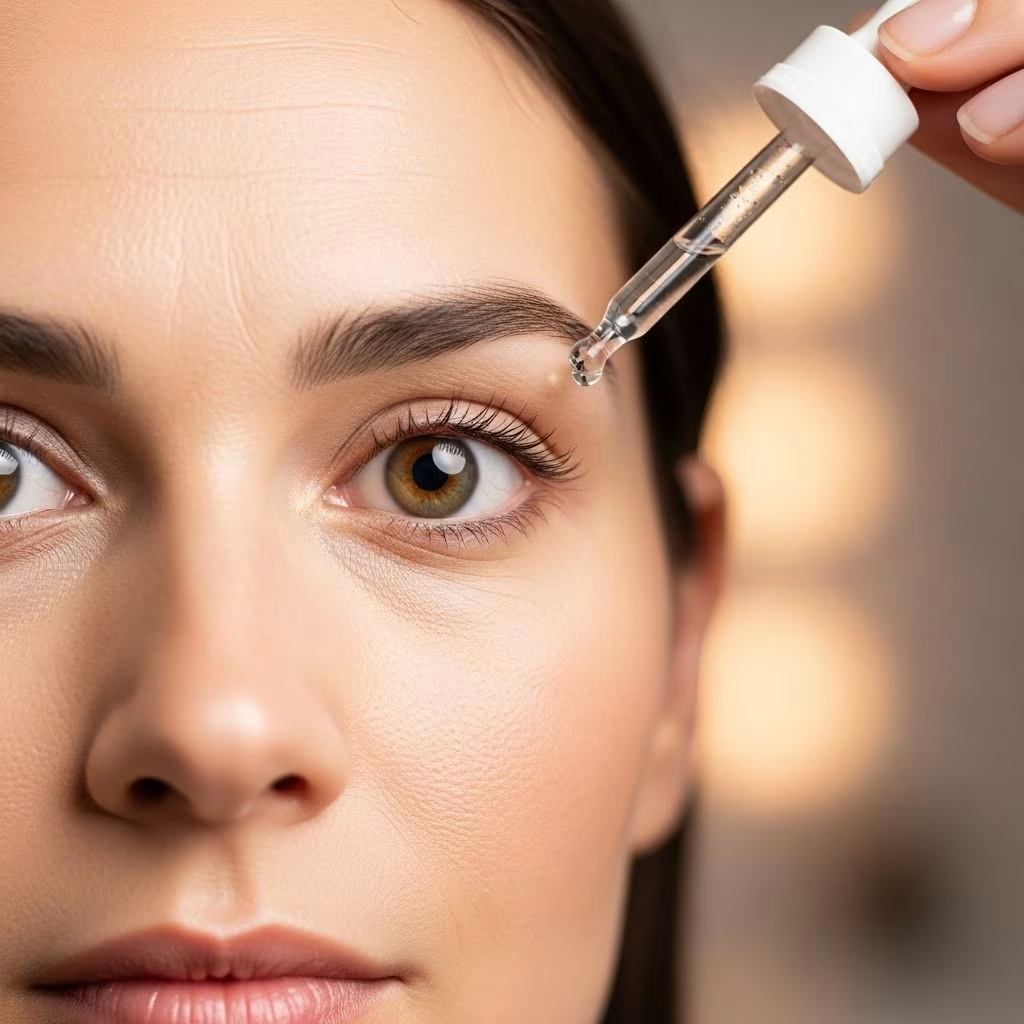
- Twist off the top of the vial. Hold your lower eyelid down with one hand and squeeze a drop into each eye as needed.
- Apply gentle pressure to the inner corner of the eye for 1-2 minutes. This helps prevent the drop from draining into your tear duct (which can reduce effectiveness).
- Blink several times to help distribute the drop evenly and avoid a teary sensation.
- Repeat these steps for the other eye. Discard the used vial safely.
Most users report noticeable results within 5 to 15 minutes, with effects varying slightly person to person. For many, the visible eyelid “lift” happens in under ten minutes.
Upneeq: Pros and Cons
After several weeks of daily use and an in-depth consultation with an optometrist, here’s how the product stacks up:
| Pros | Cons |
|---|---|
| – Visibly lifts droopy or tired eyelids for most users – Does not sting or cause watering in typical use – Very easy to use, discreet packaging – Rapid onset; results in as little as 5 minutes – Can boost confidence and the “awake” look | – Prescription only (not available at stores or online without visit) – Results are temporary (6–10 hours) – Slight risk of redness, itching, or watering (especially on first use) – Price can be a barrier without insurance coverage – Ineffective for congenital (lifelong) droopy lids |
Potential Side Effects
Most people tolerate Upneeq very well. However, as with all medications, there are some reported side effects worth considering. According to Dr. Inna Lazar, DO (optometrist), and user feedback, these are the most common:
- Watery eyes—usually resolves within 15 minutes of application.
- Mild redness or irritation—most common in the first applications.
- Rare: itching, burning, or headache. If these occur, stop use and contact your prescriber.
- No systemic side effects were observed in most healthy individuals using as directed.
Important: Never use Upneeq more than once every 24 hours. If you have unusual or severe reactions, discontinue use and consult your doctor.
Long-Term Safety and Special Considerations
Is it safe to use Upneeq every day? According to expert input, daily use is considered safe for healthy adults—however, those with certain systemic health conditions (such as hypertension, heart disease, or glaucoma) should consult their physician first. If you experience consistent discomfort, headaches, blurred vision, or any significant changes to your eyes, immediate medical advice is recommended.
Key recommendations for optimal safety:
- One dose per day maximum.
- Avoid use if you have active eye infections, severe allergies, or are recovering from recent eye surgery, unless advised by your doctor.
- If you use contact lenses, wait at least 15 minutes after using Upneeq before inserting them.
- Do not share single-use vials between people to prevent contamination.
Upneeq Before and After: What to Expect
The most common feedback from real-world users is a prompt, visible “opening” of the eyes within 10 minutes of application. With consistent daily use over multiple weeks, eyelids appear lifted, brighter, and less fatigued. Some users say the effect is most noticeable in photographs or under brighter lighting, where the distinction between treated and untreated is more apparent.
- Eye appearance can shift from slightly droopy and tired to noticeably refreshed and more symmetrical.
- The visible effect is most pronounced for those who have acquired ptosis—aging, post-LASIK, or post-injection droopiness—but minimal for those with naturally hooded lids.
- Results typically last through a workday (6–10 hours), making it ideal for daily or targeted (event-driven) use.
How Long Does Upneeq Last?
Duration of effect: Most users experience a lifted, wider-eyed look for 6 to 8 hours after a single application. The timeline can vary slightly depending on metabolism, severity of ptosis, and environmental factors like tear production or blinking frequency. Experienced users report the peak effect lasts for the majority of their workday: applying the drops in the morning (around 8 a.m.) yields visible results until at least mid-evening.
Frequently Asked Questions (FAQs)
Q: Who can prescribe Upneeq?
A: Upneeq is only available by prescription from specialists including optometrists, ophthalmologists, dermatologists, some plastic surgeons, and other qualified providers. Online telemedicine sites may also offer access with a video consultation.
Q: Is Upneeq safe for long-term use?
A: For most healthy adults, yes. If you have cardiovascular issues, eye disorders (like glaucoma), or chronic conditions, discuss with your provider first. Stop immediately and contact your doctor if you develop significant discomfort, stinging, or changes in vision.
Q: Can Upneeq be used if you wear contact lenses?
A: Yes, but you should wait at least 15 minutes after using Upneeq before inserting your lenses to avoid contaminating the lens and ensure proper absorption of the drop.
Q: How quickly will I notice results?
A: Most users report results in under 10 minutes (as fast as 5 minutes, up to 15 minutes). The effect can last most of the day. Occasional users find results more pronounced when used after a period of rest.
Q: What if I was born with hooded or droopy lids?
A: Upneeq is formulated for acquired (developed) ptosis. If you have congenital (from birth) drooping, the effect may be minimal or absent. Surgical eyelid lift (blepharoplasty) remains standard for these cases.
Key Takeaways
- Upneeq offers a simple, non-surgical option for temporarily lifting droopy eyelids caused by aging, certain eye surgeries, or nerve issues.
- Prescription-only: consult with a qualified provider and consider a telehealth evaluation if in-person visits aren’t possible.
- Results are temporary, generally lasting up to 8 hours—ideal for daily use or special occasions.
- Side effects are rare but can include minor irritation or redness; discontinue use for serious or persistent reactions.
- Upneeq is not an alternative to surgery for lifelong or congenital eyelid droopiness.
Decision: Is Upneeq Worth It?
If you’re among those frustrated by tired, drooping eyelids from age, surgeries, or certain injectables—and you want a real, non-surgical solution—Upneeq may deliver the wide-awake look you’ve been seeking. It’s discreet, user-friendly, with a swift onset and minimal side effects for most users. However, its temporary results and prescription-only status mean it may not be right for everyone. For those who qualify, the impact on daily confidence and self-image is significant—and sometimes, in beauty, that’s what really matters.