Patting vs. Spreading: Unlocking the Most Effective Skincare Application
If you have ever wondered whether the way you apply your skincare products affects your results, you are not alone. While many of us have instinctively rubbed or spread our moisturizers and serums into our skin, beauty experts and dermatologists are setting the record straight: patting is not only gentler, it may be far superior for promoting skin health and maximizing product benefits. This article demystifies the reasons behind the patting vs. spreading debate, outlining expert recommendations, application methods, and answers to your pressing skincare questions.
Patting or Spreading: The Core Beauty Debate
For decades, the typical skincare routine in Western beauty has involved squeezing a dollop of product on the fingertips, massaging it across the face with circular motions, and calling it a day. But many beauty professionals and enthusiasts now urge a reconsideration of this seemingly simple technique.
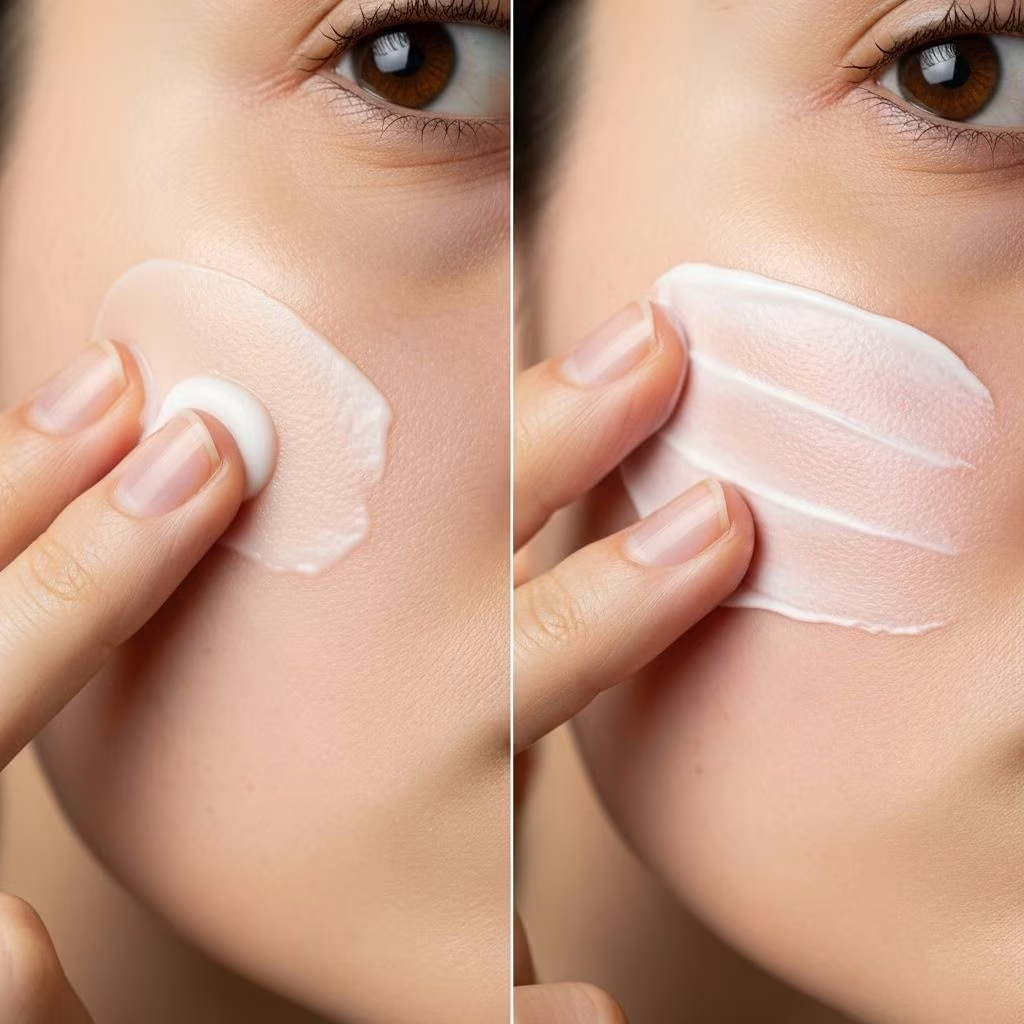
Patting, sometimes described as pressing or tapping, means using your fingertips to gently press the product into the complexion. In contrast, spreading or rubbing involves moving the product in sweeping or circular motions that drag the skin.
| Patting | Spreading/Rubbing |
|---|---|
| Gentle, minimal friction Reduces skin tugging Helps even distribution | May tug skin’s surface Can disrupt lymph flow Popular but may stretch skin |
Why Patting Is Preferred By Experts
Cosmetic dermatologists and skincare specialists agree: patting provides several compelling advantages over spreading:
- Less friction and skin damage: Patting avoids the tugging and pulling motion that stretching your delicate facial skin can cause, particularly around the thin undereye and eyelid areas.
- Reduces signs of aging: Repeated stretching and pulling of the skin (as happens with rubbing) can lead to microtrauma, increasing the risk of fine lines and wrinkles over time.
- Improves lymphatic drainage: Patting techniques, when applied along the correct directions (for example, outward from the nose or jawline), are less likely to disrupt lymph flow. Incorrect spreading can cause puffiness, especially in sensitive areas around the eyes.
- Promotes deeper product penetration: Gentle patting presses skincare deeper into the skin’s uppermost layers. This could increase absorption, especially for hydrating and water-based products, though definitive long-term studies are still needed.
- Ensures even product distribution: By patting, you press the product into the entire surface area, minimizing missed spots or overly concentrated zones.
These insights come directly from renowned dermatologists such as Dr. Francesca Fusco, who underscores that patting is not only a cultural beauty mainstay in places like Japan and Korea but is also grounded in sound science and skincare logic.
Mastering the Art of Patting: Step-by-Step
Switching to patting does not require specialized tools—your hands are your best applicators. However, the right technique maximizes results:
- Start with Clean Hands: Wash your hands thoroughly before touching your face to avoid transferring dirt or bacteria.
- Dispense Wisely: Dab a small amount of product onto the tips of your fingers.
- Warm It Up: Rub the product gently between your fingertips to warm and activate it. This helps with consistency and absorption.
- Application Sequence:
- Eye Cream: Using your ring finger (the weakest digit, offering the gentlest pressure), tap cream from the inner to outer corners of your eye. Use soft, piano-key motions, focusing on the orbital bone.
- Serums or Lotions: Gently pat from the center of your face outward. For cheeks, tap outward toward the hairline; for the jaw, pat upward; for the forehead, work up and out toward the temples.
- Neck and Décolletage: Pat product in upward, sweeping motions from the jawline down to the base of your neck and chest.
- No Pulling or Rubbing: Avoid dragging the skin. If more slip is needed, divide the product into smaller applications.
The Science of Skin Absorption
Understanding why technique matters starts with skin structure:
- The outermost layer (stratum corneum) is designed to keep bad stuff out and moisture in. Mechanical stimulation, such as patting, may signal the skin to become more receptive, though research is ongoing regarding whether patting increases meaningful ingredient absorption.
- Friction (rubbing) can increase blood flow by causing superficial flushing and may have temporary volumizing effects, but the trade-off is possible irritation and long-term stretching of skin fibers.
- Patting, in contrast, delivers product without disrupting the underlying structure. For sensitive or reactive skins, this can be crucial for reducing redness and preserving skin barrier integrity.
Global Beauty Rituals and Patting
The method of pressing or patting in skincare has deep roots in Asian beauty—especially Japanese and Korean skincare traditions. These cultures emphasize minimal friction and maximum hydration. Patting is a staple in multi-step regimens, including the application of essence, ampoules, and sheet masks. This technique is often recommended because it:
- Aligns with a gentler, more mindful beauty ritual.
- May reduce inflammation in populations prone to sensitivity or redness.
- Leaves a dewy, luminous finish that is a hallmark of J- and K-beauty.
Increasingly, Western skincare has adopted these methods, driven largely by the global popularity of Korean and Japanese brands.
When Should You Pat and When Should You Spread?
Though patting is widely recommended, there are circumstances where spreading—or a combination of both—is preferred:
- Best for Patting:
- Eye creams and serums
- Watery essences and lotions
- Post-treatment skin or sensitive/irritated conditions
- Hydrating toners or products with volatile, light textures
- Best for Spreading (with caution):
- Rich creams and balms—where gentle smoothing helps melt product into very dry skin
- Facial massage or lymphatic techniques (ideally using both gentle spreading and patting)
- Avoid Excessive Rubbing: Vigorous rubbing is rarely appropriate, as it may strip or sensitize skin, and risks damaging delicate capillaries.
Frequently Asked Questions: Skincare Application Techniques
Does patting really help products absorb better?
Patting may enhance surface absorption by softening and pressing products closer to the skin barrier. However, ingredient penetration depends largely on product formulation. For most people, patting is at least as effective as spreading, and is gentler overall.
Will patting prevent wrinkles and fine lines?
Dermatologists agree that minimizing friction (as with patting) can reduce the formation of fine lines over time, since skin isn’t being pulled or stretched repeatedly.
Are there products that should not be patted?
Very thick or occlusive products (like cleansing balms or heavy ointments) may require gentle spreading to ensure complete coverage, but always use a light touch. Avoid rubbing sensitive or inflamed skin.
Can you use both techniques in one routine?
Yes! Many routines alternate patting and spreading depending on the product. For example, pat watery serums, then gently spread creams over areas needing more moisture.
Does patting stimulate blood flow or lymphatic drainage?
Gentle pressing and patting can support circulation and lymphatic flow, especially when performed along correct facial massage lines.
Expert Tips for Better Skincare Application
- Always tap gently around the eyes using your ring finger, as the skin here is thinnest and most prone to damage.
- Adjust your pressure according to your skin’s sensitivity—be firmer for robust areas, and feather-light for delicate spots.
- Use clean hands for every step to prevent transferring bacteria or residue.
- Layer products from thinnest to thickest, patting each layer to seal in hydration.
- Listen to your skin: If you notice irritation or redness, revisit your technique and choose patting over rubbing.
Final Thoughts: Finding Your Best Skincare Technique
Choosing between patting and spreading ultimately comes down to skin type, product texture, and personal preference. But for most, patting stands out as the safer, more effective technique for daily application—especially if your aim is to maintain youthful, radiant skin for years to come. Incorporating mindful patting into your skincare ritual is a small, impactful change that adds both efficacy and self-care to your daily routine. Try it for a few weeks, and observe the difference in your complexion’s glow and resilience.
Sources
- Dr. Francesca Fusco, Cosmetic Dermatologist, as cited in Cosmopolitan’s beauty application explainer
- Rejuvaskin and Jurlique skincare expert blogs
- Korean and Japanese beauty best practices
References
- https://www.cosmopolitan.com/style-beauty/beauty/how-to/a12707/patting-versus-spreading-on-your-skincare/
- https://rejuvaskin.com/blogs/tips-tricks/patting-vs-rubbing-in-skincare-does-it-matter
- https://jurlique.com/blogs/news/why-pressing-in-your-skin-care-will-make-a-big-difference
- https://www.byvalenti.com/blogs/cosmetology/rubbing-patting-or-pressing-the-best-method-for-applying-skincare-serums-correctly
- https://www.youtube.com/watch?v=vqjXHcJ-6tc&vl=en
- https://www.marieclaire.com/beauty/news/a23093/rubbing-vs-pressing-skincare-method/
- https://fiorelabs.com/rubbing-vs-patting-whats-the-right-way-to-apply-skincare-products/