The Origins of the Beehive Hairstyle
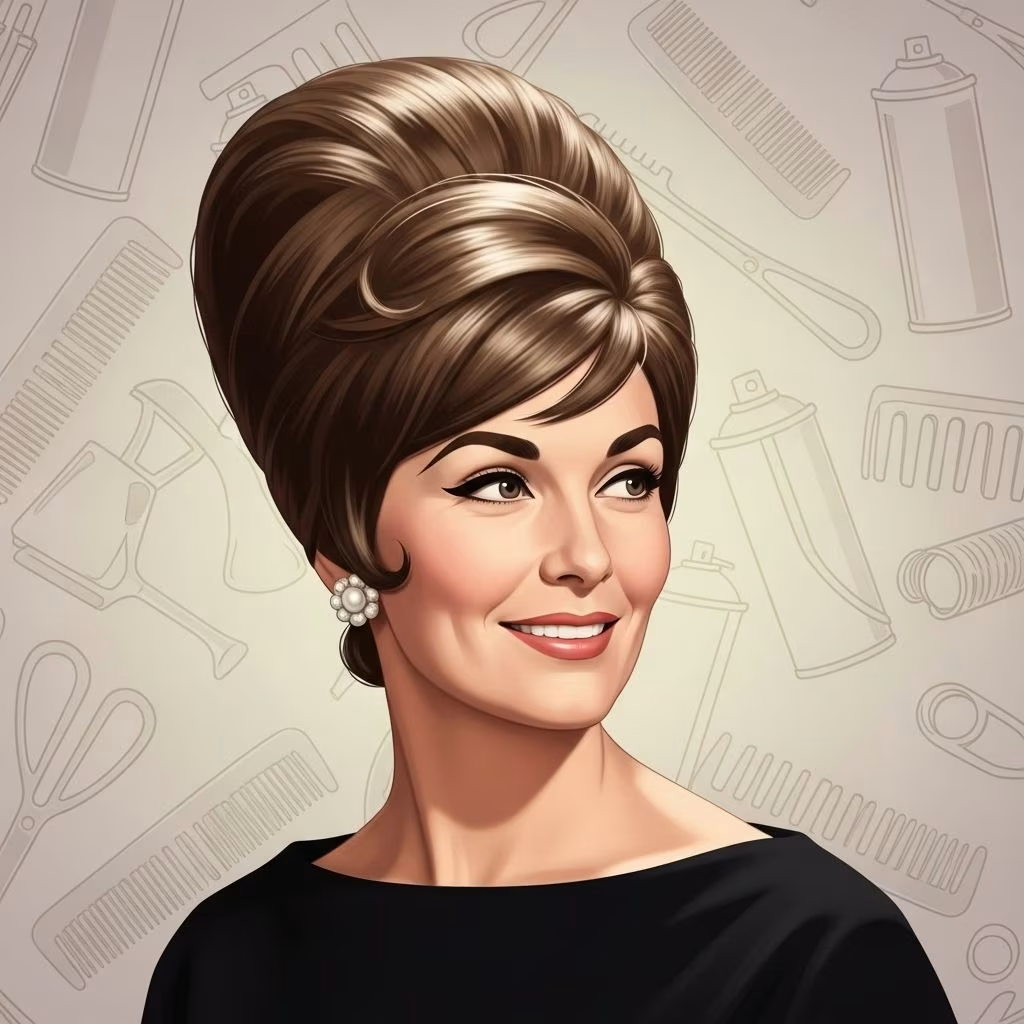
Few styles in beauty history have achieved the longevity and cultural recognition of the beehive hairstyle. Created in 1960 by Margaret Vinci Heldt, a celebrated Chicago-based stylist, this bold look came to define the decade and became an enduring symbol of glamour, rebellion, and creativity.
- Margaret Vinci Heldt rose to regional prominence in the 1950s for her innovative work at Margaret Vinci Coiffures in Chicago.
- Her styles were regularly featured in Modern Beauty Shop magazine (now Modern Salon), securing her position as a creative force in American hair fashion.
The Challenge: A New Look for a New Decade
In late 1959, editors at Modern Beauty Shop approached Heldt with an intriguing request: create a fresh hairstyle that could define the style landscape of the 1960s. The page boy, the flip, and the French twist had grown stale. “They called me and said, ‘Margaret, hairstyling has gone dead, there’s nothing exciting,'” Heldt recalled decades later.
Inspired by her favorite velvet fez hat—known for maintaining her hair’s structure and giving a unique silhouette—Heldt set out to design a daring, upward-reaching style that would fit snugly beneath the hat.
Crafting the Classic Beehive: The Creative Process
Heldt experimented with teasing, sculpting, and backcombing to achieve dramatic volume. She wanted the result to be elegant yet sensational—a perfect reflection of the spirit and optimism of the new decade.
- Hair Height: The beehive’s distinctive tall, rounded shape was achieved through systematic backcombing and strategic use of hairspray.
- Longevity: Once styled, the beehive was designed to hold up for days, provided its wearer wrapped her hair properly at night.
- Pinnacle Detail: For the magazine photo shoot, Heldt added a pin—copied from her own hat—that resembled a bee. The editor remarked, “It looks just like a beehive!” The name stuck, and a phenomenon was born.
How to Build a Beehive: Vintage Instructions
According to original instructions published in Modern Beauty Shop in 1960, creating the perfect beehive involves thorough preparation and careful attention to detail.
- Begin by washing and drying the hair completely.
- Tease sections starting at the crown, adding extra volume with padding if necessary.
- Shape the hair upward and inward with a brush, coaxing it into a round silhouette.
- Set the look with copious amounts of hairspray and finish with a decorative pin or embellishment.
Women eager to wear the style sometimes spent multiple hours at the salon or in front of the mirror. For maintenance, hair was often wrapped in scarves overnight to preserve the towering shape.
Cultural Impact: The Beehive in Stardom and Everyday Life
The introduction of the beehive paralleled a wider cultural shift. Women began embracing ambitious hairdos as a form of self-expression—and soon, Hollywood and pop culture icons helped turn Heldt’s creation into an international sensation.
| Decade | Celebrity/Trend | Influence |
|---|---|---|
| 1960s | Audrey Hepburn, Brigitte Bardot | Brought the beehive to film and fashion runways, establishing its glamorous reputation |
| 1980s | The B-52’s (music group) | Revived the style in New Wave music and eccentric fashion |
| 1990s | Marge Simpson (The Simpsons) | Turned the beehive into satire and cartoon iconography |
| 2000s | Amy Winehouse | Popularized retro glam revival and alternative culture aesthetics |
Across generations, the beehive has signaled everything from sophistication to rebellion. Its reach extended far beyond salons: the look appeared in fashion magazines, music videos, movies, and even television cartoons. In each case, its exaggerated height and dramatic shape were reinterpreted for a new audience.
Margaret Vinci Heldt: Life, Career, and Legacy
Born to Italian immigrant parents in Illinois, Margaret Vinci Heldt cultivated her talent and tenacity to become a local and national beauty icon. Her salon in Chicago was renowned for creativity, and her work was regularly published for industry professionals.
Heldt’s signature positive attitude and zest for life became legendary among her colleagues and family. Even in her later years, she remained deeply involved in celebrating the beehive’s legacy, attending anniversary events and interviews.
- 1950s: Established Margaret Vinci Coiffures, rapidly gaining recognition.
- 1960: Created the beehive for Modern Beauty Shop.
- 2010: Celebrated the 50th anniversary of the beehive at the Chicago History Museum.
Margaret Vinci Heldt passed away in 2016 at the age of 98, but her artistry continues to inspire stylists and pop culture alike.
The Technique and Science Behind “Big Hair”
In professional circles, “big hair” refers to any style that emphasizes height, fullness, or bold structure. The beehive is a direct descendant of earlier styles such as the bouffant, but its engineering and aesthetic twist set it apart.
- The process involves teasing (backcombing), which roughens the hair, creating greater surface area for volume.
- This is followed by careful sculpting and generous application of hairspray to maintain the structure.
- Sometimes, hair padding or supports are used inside the style for extra elevation and durability.
- Maintenance requires nightly wrapping and periodic touch-ups, depending on humidity and activity.
Comparing Beehive Variations
| Style | Features | Popular Era |
|---|---|---|
| Classic Beehive | Rounded, symmetrical, very high crown; accent pins | 1960s |
| Soft Beehive | Looser structure, less hairspray, more natural | Late 1960s-70s |
| Punk/Rock Beehive | Messy, exaggerated, often colored | 1980s onwards |
| Retro Glam Revival | High gloss, sleek, paired with dramatic makeup | 2000s-present |
Why the Beehive Endures
The beehive’s appeal lies in its boldness, its sculptural quality, and its power to reshape a person’s profile. For many, it was a symbol of ambition (“the higher the hair, the closer to God”) and a subtle act of defiance in a society transitioning away from conservative norms.
- The style challenged conventional beauty standards, making space for uniqueness and excess.
- It lent itself to personalization: pins, ribbons, and even colored streaks became part of its arsenal.
- It worked for both everyday wear and stage spectacle.
- It remains a touchstone for fashion designers, musicians, and filmmakers aiming for vintage flair.
Frequently Asked Questions (FAQs)
Q: Who invented the beehive hairstyle?
A: Chicago-based hairstylist Margaret Vinci Heldt created the beehive in 1960 for Modern Beauty Shop magazine.
Q: What inspired the design of the beehive?
A: Heldt was inspired by a velvet fez hat she loved—the hat’s silhouette and bee-shaped pin gave rise to both the shape and the name of the beehive.
Q: Which celebrities made the beehive famous?
A: Icons such as Audrey Hepburn and Brigitte Bardot popularized it in the 1960s, while the B-52’s, Marge Simpson, and Amy Winehouse revived its popularity in later decades.
Q: How do you maintain a beehive hairstyle?
A: The classic maintenance routine involves securing the style with strong hairspray and wrapping the hair in a scarf at night to protect its shape.
Q: Why is the beehive still relevant today?
A: Its striking silhouette, pop culture associations, and ease of reinvention keep it in demand from runway shows to retro parties and music videos.
The Beehive in Modern Fashion and Pop Culture
While its prominence peaked in the 1960s, the beehive continues to inspire stylists, celebrities, and everyday fashionistas. Periodically revived for nostalgia or dramatic effect, its retro appeal and rebellious undertones resonate across generations.
- Runway shows incorporate beehive-like shapes for ‘60s-inspired collections.
- Musicians use it to signal glam revival and eccentric theater.
- Film and television return to the beehive for period authenticity or ironic effect.
- Social media tutorials and style guides keep its legacy alive for new audiences.
Conclusion: Margaret Vinci Heldt’s Enduring Influence
More than just a hairstyle, the beehive marks a turning point in beauty activism and individuality. Margaret Vinci Heldt’s creative vision reframed what hair could be—a canvas for artistry, a beacon of self-expression, and an icon of cultural flux. As trends come and go, the beehive remains an emblem of fashion’s power to surprise, transform, and endure.
References
- https://www.cosmopolitan.com/style-beauty/a59958/beehive-hairstyle-creator-margaret-vinci-heldt/
- https://lifestyle.howstuffworks.com/style/hairstyles/creator-beehive-hairdo-died.htm
- https://www.mentalfloss.com/article/81774/retrobituaries-margaret-vinci-heldt-creator-beehive-hairdo
- https://clickamericana.com/topics/beauty-fashion/how-to-do-60s-beehive-hairstyle-dramatic-elegant-vintage-hairdo-celebrities-loved
- https://www.kissakishears.com/the-beehive-how-to-define-a-decade/
- https://fortune.com/2016/06/14/beehive-hairdo-margaret-heldt/