Mushiya Tshikuka’s Vision for My Natural Doll
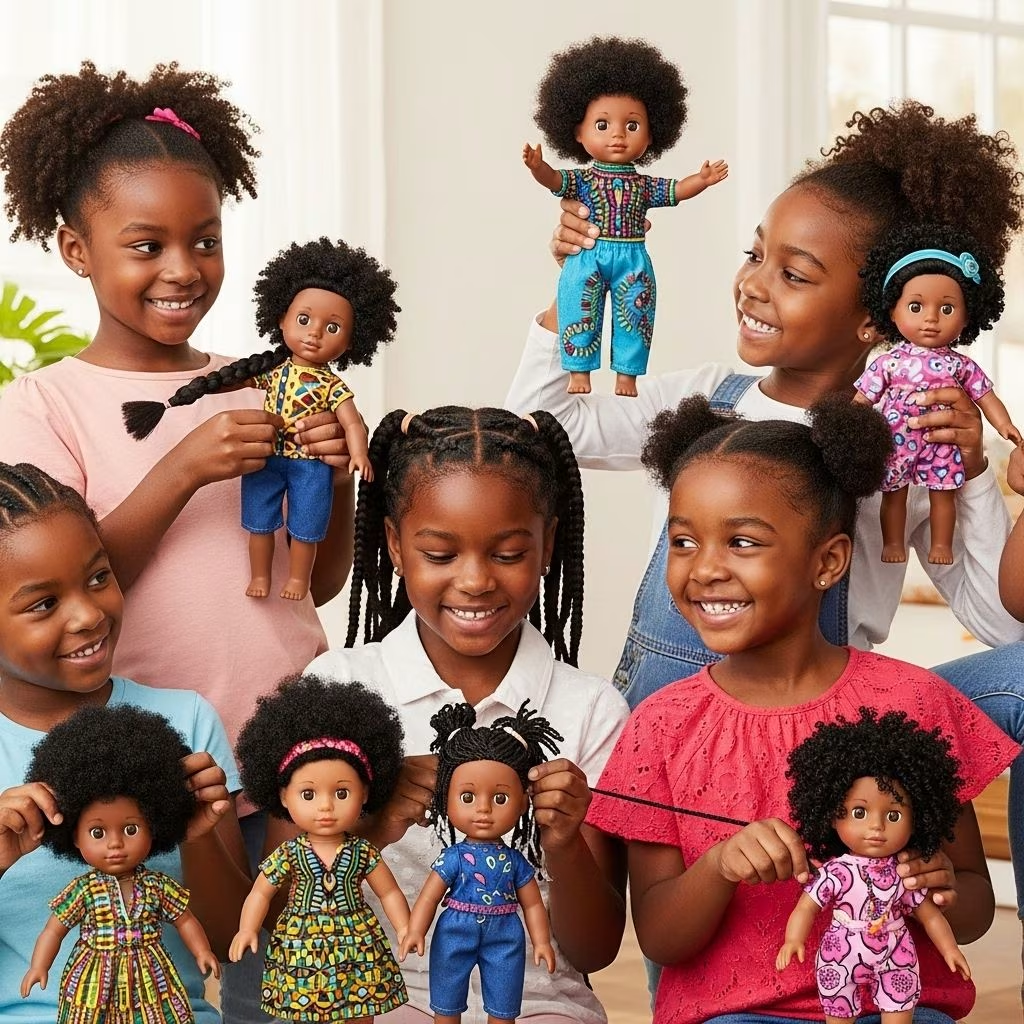
In a world where toy store shelves are overwhelmingly filled with dolls sporting Eurocentric features, one mother, entrepreneur, and stylist decided enough was enough. Mushiya Tshikuka, known best as the vibrant personality from WEtv’s ‘Cutting It in the ATL,’ set out to create something different: a doll that her daughters—and girls everywhere—could see themselves in. Thus was born My Natural Doll, a transformative project rooted in self-love, representation, and the celebration of Black identity.
Why Representation in Toys Matters
Like many parents of color, Mushiya faced the challenge of finding toys that reflected the unique beauty of her children. After years of frustration—returning gifts and refusing to purchase dolls that bore no resemblance to her daughters—she understood firsthand the psychological impact that toys and media can have on developing self-esteem. Traditional dolls, with light skin and straight hair, were omnipresent, while dolls that echoed the beautiful brown skin and tightly curled hair of her daughters were nearly nonexistent.
- Children internalize beauty standards from a young age through the toys and media they consume.
- Lack of representation in toys can reinforce harmful narratives about whose features and histories are valued in society.
- Empowering toys foster positive self-image and a sense of belonging.
Research backs up Mushiya’s intuition: when children see toys that look like them, it helps build confidence and shapes healthier self-esteem well into adulthood.
How the Idea for My Natural Doll Was Born
Mushiya’s journey didn’t begin as a business venture—it started with her two daughters, then ages 5 and 7. Despite receiving countless Barbies as gifts over the years, Mushiya would quietly return or dispose of those that failed to represent her children’s appearance.
Even dolls labeled as “Black” often featured light complexions or hair textures wholly different from Mushiya’s daughters’ tightly-coiled crowns. Traditional options featured hair described as yarn, big loop curls, or straight plastic; none had the authentic kinky hair visible every day in Mushiya’s household.
One day, after another fruitless search for a relatable doll and feeling weary, Mushiya’s daughter posed a simple, life-changing question: “Mommy, why don’t we just make one?” That spark, combined with Mushiya’s lifelong advocacy for educational and meaningful play, set the wheels in motion.
- Mushiya involved her daughters directly in the creation process, having them draw out their vision for the perfect doll.
- The experience became both a creative project and a powerful lesson in self-agency for the children.
- A year later, the vision became reality, as the girls proudly held the first My Natural Doll in their hands.
Designing Kéleshe: The First My Natural Doll
The inaugural doll, named Kéleshe, was crafted with meticulous attention to detail, not just for beauty but for authenticity and meaning.
- Skin Tone: A rich, chocolate-brown complexion, mirroring Mushiya’s daughters and so many girls of African descent often passed over in mainstream toy lines.
- Facial Features: Wide, expressive brown eyes, a rounded nose, and full lips—features carefully chosen in consultation with her children to reflect natural beauty, rather than whitewashed ideals.
- Hair: 100% virgin Ethiopian hair, sourced from Ethiopian women who donated never-dyed, never-chemically processed hair. The true-to-life, kinky texture makes the doll’s hair not just beautiful, but a tactile representation of pride in natural hair.
- Clothing: Rather than defaulting to Western styles or ill-fitted gowns, Kéleshe sports a vibrant dress made from Kikwembe fabric, honoring centuries of African history before, during, and after the slave era.
The result is a doll with roots deep in heritage, designed to celebrate #BlackGirlMagic fully. Every element—skin, hair, clothing—serves a purpose: to showcase the beauty and power in being unapologetically Black.
The Power Of Clothing: Beyond Stereotypes
Mushiya was intentional about what Kéleshe wore. Too often, Black history is presented solely through the lens of enslavement and hardship; for Mushiya, that narrative misses the grand scope of African greatness. “Real history began thousands and thousands of years ago; I think of slavery as two percent of our history,” Mushiya stated. That ideology is woven—literally—into the garments she chose for her doll.
- Kikwembe Print: The doll wears a vibrant Kikwembe dress, reminiscent of royal African attire before colonization and slavery, representing ancestral strength and excellence.
- Symbolism: The clothing choice reframes conversations around Black history, focusing on pride and nobility, not just oppression.
Building Self-Esteem, One Doll at a Time
Central to the My Natural Doll mission is its impact on children’s self-esteem. Mushiya wants every girl who holds her doll to see reflected beauty, strength, and cultural pride. Her hope is that, through play, Black girls will internalize positive messages of self-worth that ripple throughout their lives.
- Playing with dolls that reflect one’s appearance supports healthy self-acceptance and confidence.
- Girls with high self-esteem are less likely to allow themselves to be sidelined in relationships or professional environments.
- Empowerment starts young; confident children become empowered adults who impact their communities in transformative ways.
Mushiya’s vision is to change the community full-circle—by raising girls who know their value, the ripple effect benefits families, workplaces, and society at large.
Challenges and Triumphs: Launching a New Standard
Bringing My Natural Doll to life wasn’t without challenges. The toy industry is entrenched in norms shaped by decades of consumer messaging. Getting a new kind of doll onto store shelves—and into the hands of those who need it most—required determination, creative sourcing, and fearless advocacy.
- The high-quality materials, especially the 100% virgin hair, set the doll apart in both look and price point—available online to keep it accessible.
- Social media provided the platform Mushiya needed to connect with parents, activists, and influencers resonating with her mission.
- Parent and community buy-in propelled the My Natural Doll movement forward; each doll purchased is more than a toy, it’s a statement.
Why Natural Hair Representation is Revolutionary
Natural hair remains a political and cultural statement for many Black women and girls. Mainstream media and advertising have long elevated straight, light hair as the gold standard, marginalizing the beauty of kinky, coily, and curly textures. For Mushiya, and many like her in the natural hair movement, going natural is an act of self-love and rebellion against imposed standards.
- Social platforms empower everyday individuals to showcase natural hair as beautiful, influencing global standards previously set by advertising giants.
- Natural hair dolls become tools for family conversations about pride, acceptance, and authenticity.
- With accessible examples like Kéleshe, children learn early that “their hair is the —-,” reinforcing lifelong confidence.
Celebrating Community: A Wider Movement
The creation of My Natural Doll doesn’t just impact individual girls—it’s a part of the wider Black beauty and self-love movement. Social movements, natural hair shows, and organizations work alongside artists like Mushiya to redefine what is considered beautiful.
- The rise of community-run hair and beauty shows provides inspiration for those on the “edge of going natural.” Role models offer live demonstrations of confidence and style.
- Public figures and influencers amplify brands like My Natural Doll, making the message louder: all textures, colors, and features deserve celebration.
- Collective celebration of Black beauty helps dismantle biases, uplifting future generations.
What Parents and Kids Are Saying
Feedback on My Natural Doll has been overwhelmingly positive. Families have shared stories of pride, tears of joy, and gratitude for a product that finally centers their experiences. For many, the doll’s launch represents a turning point in what children expect from their toys and the stories they tell themselves.
- Parents cite newfound confidence, with children eagerly styling the doll’s hair to match their own.
- Educators have praised the doll for opening productive classroom discussions about heritage and beauty standards.
- My Natural Doll has even appeared in holiday wish lists and as birthday gifts of the heart—chosen not as a default, but as an emblem of pride.
Breaking the Mold: What Sets My Natural Doll Apart
| Feature | Traditional Dolls | My Natural Doll |
|---|---|---|
| Skin Tone | Frequently fair or uniformly light | Bespoke dark chocolate, rich brown shades, drawn from real life |
| Hair Texture | Straight, loose curls, synthetic/yarn hair | 100% virgin Ethiopian hair, tightly coiled and natural |
| Features | Eurocentric: narrow nose, thin lips, small eyes | Big brown eyes, full lips, rounded nose, modeled on girls of African descent |
| Clothing | Generic gowns or Western attire | Kikwembe prints, culturally rich and significant |
Frequently Asked Questions (FAQs)
Q: Why are dolls like My Natural Doll so important?
A: Such dolls provide essential representation for children of African descent, affirming that their skin, hair, and heritage are valuable and beautiful. This boosts self-esteem and sets the stage for long-term confidence.
Q: What makes My Natural Doll different from other dolls marketed as “diverse”?
A: My Natural Doll is uniquely authentic, using real virgin hair and facial features modeled on real Black children. Every aspect—from skin tone to clothing—celebrates true cultural heritage, avoiding tokenism or stereotypes.
Q: Can the doll’s hair be styled?
A: Yes, the 100% virgin Ethiopian hair can be styled, encouraging creativity and pride in natural hairstyles.
Q: Is My Natural Doll meant only for Black girls?
A: While created to affirm the beauty of Black girls, any child can benefit from playing with the doll, learning about diversity, inclusion, and the celebration of difference.
Q: Where can I purchase the My Natural Doll?
A: The dolls are available for purchase online, making it accessible to families worldwide and ensuring children everywhere can experience the joy of seeing themselves reflected.
The Lasting Impact: Creating New Standards of Beauty
Mushiya Tshikuka’s My Natural Doll is more than a toy—it’s an agent of change, boldly challenging the status quo and empowering Black girls to see themselves as beautiful, worthy, and powerful. Each doll purchased is a step forward in redefining global standards of beauty, and a personal story of transformation for the families who play, celebrate, and learn with them.
Through My Natural Doll, Mushiya invites parents, educators, and community leaders to join the movement toward inclusivity—not only in toys but in every aspect of culture and identity formation.
References
- https://www.cosmopolitan.com/style-beauty/beauty/a8466303/mushiya-tshikuka-my-natural-doll-interview/
- https://www.blackbeautyandhair.com/wetvs-mushiya-tshikuka-launches-new-my-natural-doll/
- https://www.phillyvoice.com/mushiya-tshikuka-dishes-411-styling-natural-hair-talks-headlining-phillys-natural-hair-show/
- https://rollingout.com/2022/10/17/mushiya-tshikuka-shares-inspiration-behind-my-natural-doll-brand/
- https://blackamericaweb.com/2016/11/22/reality-star-launches-natural-hair-dolls-to-teach-self-esteem/
- https://www.essence.com/beauty/best-black-girl-magic-beauty-moments-2016/