Menstrual Masking: The Period Blood Face Mask Phenomenon
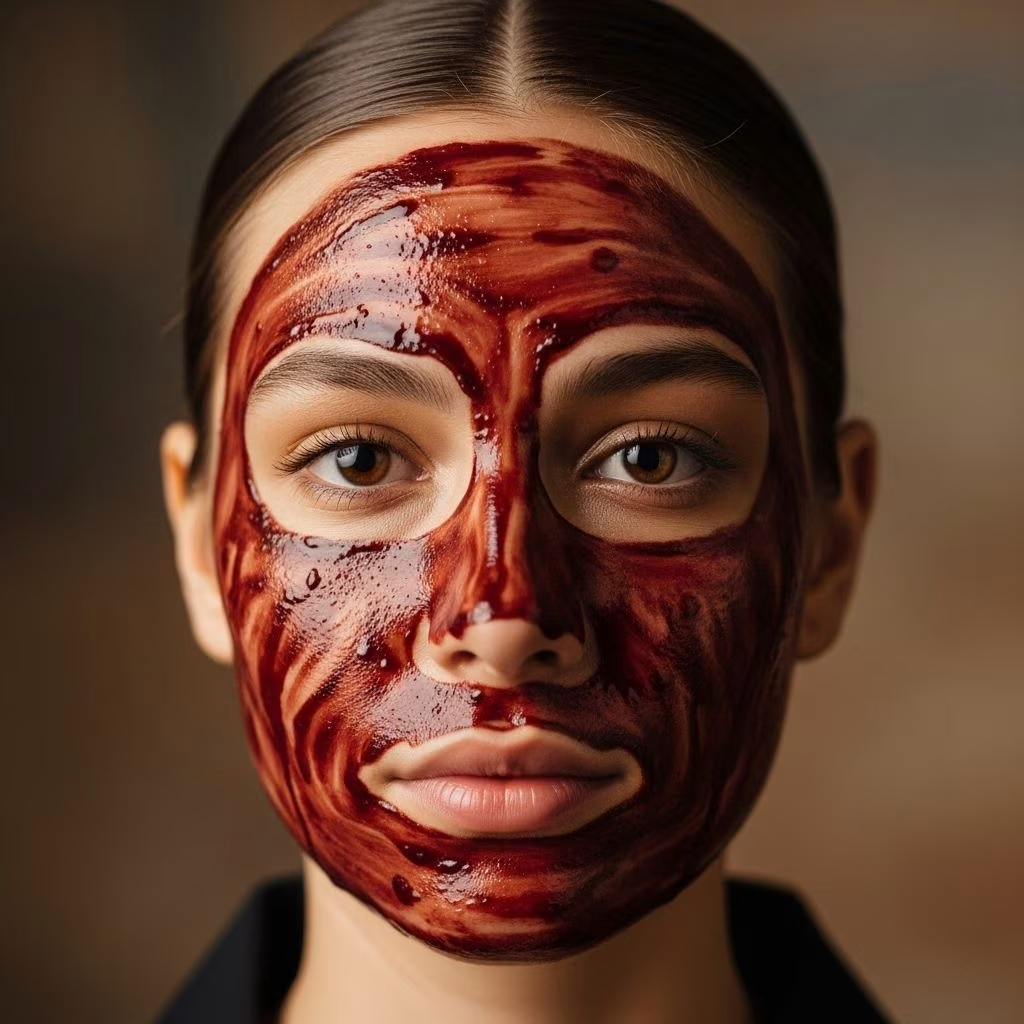
Over the past few years, a new and highly controversial beauty trend has emerged from the depths of social media: the period blood face mask. Known colloquially as “menstrual masking” or “moon masking,” the practice involves collecting one’s own menstrual blood—generally via menstrual cup—and applying it as a facial mask, in hopes of achieving clear, glowing skin or connecting to spiritual and ancestral rituals. This article explores the key aspects of this trend: its origins, purported benefits, the science, safety risks, and why it has provoked such strong reactions in both the beauty industry and broader online culture.
Contents
- How Did Menstrual Masking Become Popular?
- What Is a Period Blood Face Mask?
- The Spiritual and Cultural Roots of Menstrual Masking
- Is There Any Science Behind It?
- Potential Risks and Safety Concerns
- Dermatologist and Expert Opinions
- How People Actually Do It
- The Role of Social Media and Public Reaction
- Menstrual Masking vs. Vampire Facial: Key Differences
- Frequently Asked Questions (FAQs)
How Did Menstrual Masking Become Popular?
The rise in interest around menstrual masking can be traced back to a combination of factors, including the growing popularity of DIY beauty hacks, the rise of so-called “taboo-breaking” content online, and the influence of celebrities. When Kim Kardashian shared her experience with the “vampire facial”—a professional cosmetic procedure using a patient’s own blood—the online beauty world quickly bubbled over with speculation. This inspired many to ask: If processed blood can be beneficial for skin, could menstrual blood hold similar powers ?
On TikTok, hashtags like #periodbloodfacemask have amassed millions of views, with users posting raw, unfiltered videos applying their own blood to their faces and sharing anecdotal claims of glowing, improved skin .
What Is a Period Blood Face Mask?
A period blood face mask, as the name suggests, is the practice of applying menstrual blood directly onto one’s skin as a facial treatment. Typically, practitioners collect fresh blood using a menstrual cup and smooth it across their faces, letting it sit for anywhere between ten and thirty minutes before washing it off .
- Collection Method: Most commonly via menstrual cup, immediately after extraction.
- Duration: Varies—some users meditate or perform rituals while the mask sets.
- Frequency: Typically once per cycle, often during the heaviest flow days.
- Name Variations: Menstrual masking, moon masking, period blood facial.
Some advocates believe the mask offers not just beauty benefits but is also a means of reclaiming body sovereignty, breaking taboos, or connecting to ancestral lineage .
The Spiritual and Cultural Roots of Menstrual Masking
For a subset of menstrual masking enthusiasts, the appeal goes beyond physical beauty. Several social media users and activists cite their use of period blood masks as a continuation of matriarchal rituals, a spiritual act that aligns them with their ancestors or the feminine divine .
- Ritualistic Origins: Some individuals, such as artist Kamilla Bello, recount learning about menstrual blood masks through generational practices passed down from grandmothers and mothers.
- Matriarchal Lineage: The ritual is seen by some as a way to honor female power, fertility, and the cycles of nature.
- Meditation and Intention: The mask application often coincides with personal meditation, affirmations, or spiritual ceremonies.
For these individuals, the act transcends the physical and becomes a symbolic gesture, representing bodily autonomy, resistance against beauty norms, and a redefinition of what is “acceptable.”
Is There Any Science Behind It?
The purported scientific benefits of applying menstrual blood to the skin are highly contested. Advocates often point out that period blood contains stem cells, growth factors, and minerals like zinc and copper—compounds commonly found in topical skincare products and known for fighting acne and supporting skin repair .
A 2016 study did confirm that menstrual blood can be a rich source of stem cells with applications in regenerative medicine and skin tissue repair . However, experts unanimously caution that the extraction and utilization of these properties in medical contexts occur under sterile laboratory conditions—not through DIY masks.
| Component | Potential Benefit | Safety Issues |
|---|---|---|
| Stem Cells | Can aid tissue regeneration (when properly extracted) | Not accessible without professional processing |
| Zinc | Helps reduce acne inflammation | Present, but unregulated and contaminated |
| Copper | Supports skin healing | Low concentration; risk of infection |
| Bacteria | None | Major source of infection risk |
| Proteins | General support in skin repair | Mixed with blood, tissue, and bacteria |
Despite these theoretical positives, there remains no credible scientific evidence that unprocessed menstrual blood, applied topically, imparts any beauty or health benefits to skin .
Potential Risks and Safety Concerns
Dermatologists and infectious disease experts strongly caution against the use of period blood as a mask, citing several significant health risks.
- Infection: Menstrual blood is not sterile—it’s a mixture of blood, endometrial tissue, vaginal secretions, and bacteria . Applying it to facial skin can cause irritation or transmit bacteria, potentially leading to skin infections.
- Cross-Contamination: If an individual has any underlying infection (vaginal, cervical, etc.), this could be transferred to the skin, increasing risk of further complications .
- Biohazard Risks: Storing period blood for later use exacerbates risks, as the longer blood sits outside the body, the more hazardous bacteria proliferate .
- Unpredictable Reactions: Sensitive skin types may experience rash, itching, or acne flare-ups.
Dermatologist and Expert Opinions
Most professionals—including board-certified dermatologists like Dr. Viktoryia Kazlouskaya and Dr. Sonal Bansal—firmly advise against using menstrual blood as a skincare mask .
- “There is absolutely no scientific or medical evidence to support any benefits of using period blood on the skin,” says Dr. Kazlouskaya .
- Dr. Bansal warns, “It’s not safe to use period blood as a face mask. It can lead to skin infections, especially if you already have a vaginal or cervical infection.”
- Both experts emphasize that while professional treatments like the vampire facial utilize processed, sterile blood (specifically Platelet Rich Plasma, PRP), menstrual blood is biologically distinct and contains many impurities.
How People Actually Do It
Among those who embrace the trend, application typically follows a simple process:
- Collect fresh menstrual blood using a menstrual cup.
- Transfer blood into a clean container (some use jars for aesthetics).
- Cleanse and prep face before application (some users may exfoliate or tone first).
- Apply blood in thin, even layers, avoiding eye area and nostrils.
- Leave blood on for anywhere from 10 to 30 minutes—sometimes during meditation or ritual.
- Rinse thoroughly with water and follow up with regular skincare.
It’s worth stressing again: these procedures are performed at personal risk, without any endorsement from medical professionals. The lack of established guidelines means there’s no consensus on duration, volume, or post-care, creating inconsistent results and heightened health hazards.
The Role of Social Media and Public Reaction
Social media platforms have fueled curiosity and notoriety around menstrual masking. Videos on TikTok tagged #periodbloodfacemask have accrued millions of views, with content ranging from sincere testimonials about skin improvement to shock-value posts and public challenges .
- User testimonials: Some users claim skin has never looked better.
- Skeptics and critics: Others call out the trend as unsanitary, pseudoscientific, or even dangerous.
- Taboo-breaking: Many see the practice as radical, helping destigmatize menstruation and bodily fluids.
- Celebrity influence: Following Kim Kardashian’s “vampire facial” posts, interest in blood-related beauty hacks soared.
This polarization ensures that menstrual masking remains controversial—celebrated by some as empowerment, criticized by others as an irresponsible viral stunt.
Menstrual Masking vs. Vampire Facial: Key Differences
| Aspect | Menstrual Masking | Vampire Facial (PRP) |
|---|---|---|
| Source of Blood | Menstrual flow (collected at home) | Venous blood (drawn professionally) |
| Processing | None (raw application) | Blood processed to extract Platelet Rich Plasma |
| Sterility | Non-sterile, high risk of contamination | Processed in sterile, clinical environment |
| Scientific Evidence | No validated benefits | Backed by clinical studies for skin rejuvenation |
| Risk Level | High (infection, irritation) | Low to moderate (when performed professionally) |
| Main Appeal | Taboo breaking, DIY empowerment, spiritual ritual | Anti-aging, dermatologist-approved skin care |
Frequently Asked Questions (FAQs)
Q: Are there any real skin benefits from using period blood as a mask?
No scientific or medical evidence supports claims that menstrual blood improves skin health when applied directly. Any anecdotal improvement is likely incidental or due to other factors in the skin care routine .
Q: Is menstrual masking safe?
Most dermatologists strongly advise against it, citing high risks of infection and irritation. Menstrual blood contains bacteria and other contaminants that can harm facial skin .
Q: Do people use period blood masks for spiritual reasons?
Yes. Some practitioners view the ritual as a spiritual or ancestral practice, connecting them to matriarchal lineage or bodily autonomy .
Q: How does menstrual masking compare to a vampire facial?
Vampire facials use sterile, processed Platelet Rich Plasma drawn from a patient’s vein under professional conditions. Menstrual masking is a DIY, non-sterile practice without scientific backing .
Q: Can I store period blood for later use as a mask?
No. Storing menstrual blood increases biohazard risks as bacteria rapidly multiply outside the body. Only fresh blood is used by those following the trend—though this still carries health risks .
Q: What’s the bottom line on period blood face masks?
Despite social media hype and anecdotal claims, medical experts warn against this practice. There are no scientifically validated benefits and significant safety concerns. Approaching non-traditional beauty trends with caution, skepticism, and consultation with professionals is critical.
References
- https://sunnyperiod.com/blogs/all/using-period-blood-as-a-face-mask-and-other-things
- https://shopdiva.com/blogs/the-conscious-cycle/period-blood-face-masks
- https://www.healthshots.com/beauty/skin-care/whats-a-period-face-mask-and-is-it-good-for-skin/
- https://hypebae.com/2022/10/period-blood-menstrual-face-mask-review-beauty-studies
- https://www.cosmopolitan.com/uk/body/health/a42483999/does-period-blood-face-mask-work/
- https://www.dazeddigital.com/beauty/article/57221/1/menstrual-masking-why-women-are-putting-their-period-blood-on-their-face