


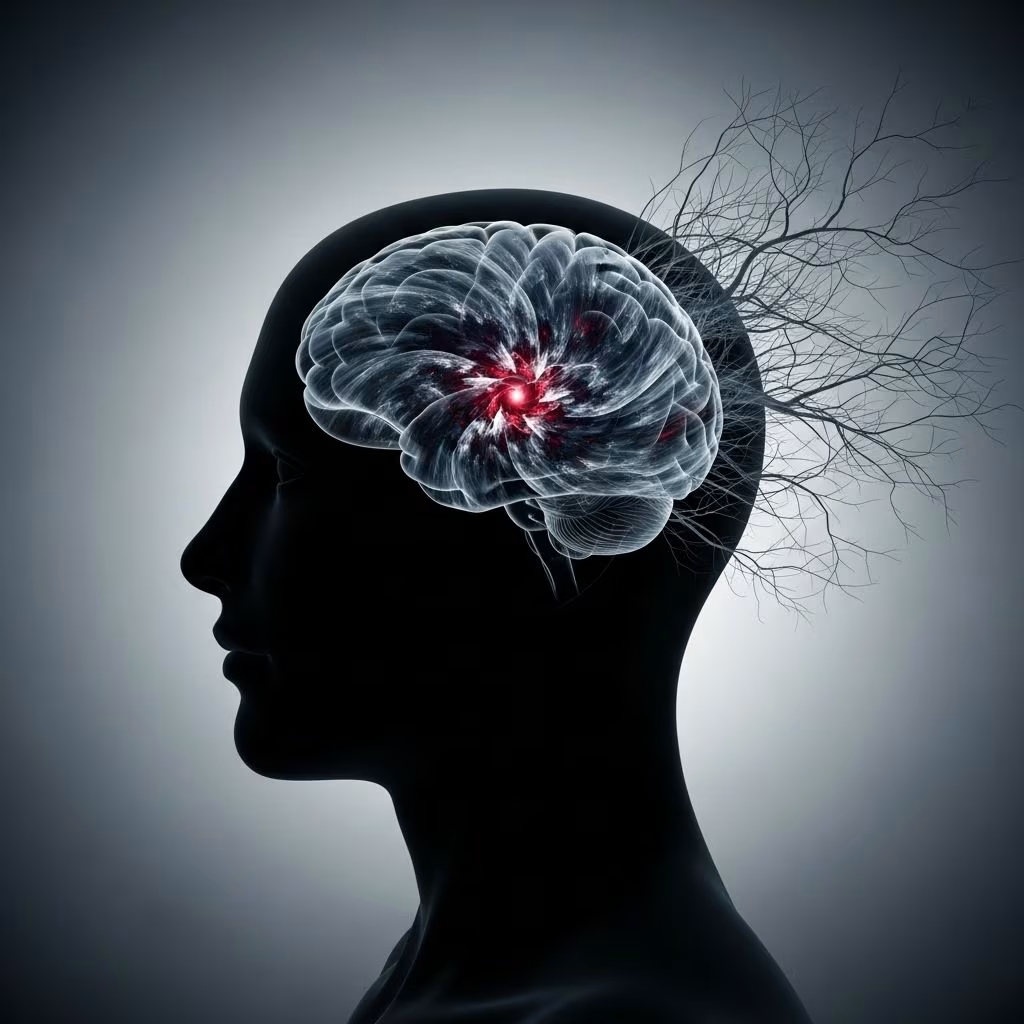
The Psychology of Fear: Why We Feel Afraid and How It Shapes Us
Fear is an inescapable part of the human experience. It is an emotion as ancient as life itself, hardwired into our biology to protect us from danger. Yet, the modern world has transformed how and why we feel afraid, with fear influencing our decisions, behaviors, and even mental health. Understanding fear—how it arises, why it can take over, and how we can address it—is essential for personal growth and well-being.
What Is Fear?
Fear is a basic, universal emotion that arises in response to a perceived threat or danger. It activates a powerful psychological and physiological reaction intended to keep us safe, preparing us either to confront the threat or to escape from it. While fear can be protective and adaptive, it may sometimes interfere with daily living, especially when it becomes excessive or irrational.
- Evolutionary role: Fear helped our ancestors survive by triggering quick decisions in dangerous situations.
- Everyday experience: Fear manifests in various ways, ranging from the sudden jolt of being startled to the lingering dread before a difficult conversation.
- Dual nature: Fear can both protect us and–if excessive–limit our opportunities or well-being.
Biological and Emotional Components of Fear
Understanding fear means examining its biological and emotional roots, each contributing to the experience in distinct but interconnected ways.
Biochemical Response: The Body’s Alarm System
The biological response to fear is a sophisticated, automatic process:
- When the brain detects a threat (real or perceived), it sends signals via the autonomic nervous system.
- The sympathetic nervous system primes the body for “fight, flight, or freeze” by releasing stress hormones, notably adrenaline (epinephrine) and cortisol.
- Physical signs include increased heart rate, faster breathing, muscle tension, sweating, and pupil dilation.
- These changes help prepare the body to face or escape the perceived threat.
The biochemical reaction detected is essentially the same even in situations deemed enjoyable, such as excitement during sports or thrill rides, highlighting how closely related fear can be to positive emotions depending on context.
The Brain’s Fear Center: The Role of the Amygdala
The amygdala, an almond-shaped set of nuclei in the limbic system, is central to processing fear:
- The lateral nucleus of the amygdala receives sensory input and quickly assesses potential threats.
- The central nucleus projects signals to various parts of the body, triggering the systemic fear response.
- The amygdala is crucial for fear conditioning—a learning process by which we learn to associate neutral cues with danger based on prior experiences.
Emotional Response: The Psychological Side of Fear
Biology aside, fear is intensely personal and emotional. Our life experiences, memories, and perceptions shape how we react to threats. For example:
- The fear of snakes might stem from a frightening encounter or be influenced by cultural stories.
- Social or existential fears, like the fear of rejection or failure, arise from psychological or emotional factors rather than physical threats.
- The subjective experience of fear varies: some people seek out thrilling, fear-inducing activities, while others avoid them.
Theories and Models Explaining Fear
Psychologists and neuroscientists have proposed various models to explain the origins and functions of fear. These theories shed light on the diversity and complexity of the emotion:
| Type of Theory | Key Features |
|---|---|
| Motivation/Personality | Categorizes fear into types like evolutionary danger, novelty, social, and learned fears. |
| Neurofunctional | Describes separate neural systems for fear and panic. |
| Adaptive/Evolutionary | Views fear as part of a broader survival system aimed at enhancing adaptability. |
| Basic Emotion | Considers fear one of a universal set of basic emotions present across cultures. |
| Modular | Suggests specific “modules” in the brain are tuned to particular threats (e.g., snakes, spiders). |
| Dimensional | Places fear in a two-dimensional space of arousal/valence or reward/punishment. |
| Social Construct | Posits that humans construct the experience of fear from core affect and cultural influences. |
Fear vs. Anxiety: Key Differences
Though often used interchangeably, fear and anxiety are distinct:
- Fear is an immediate response to a specific, identifiable threat or danger (such as encountering a snake).
- Anxiety is more general, often involving worry or apprehension about potential, future, or imagined threats, even in the absence of immediate danger.
Both emotions can be adaptive, but anxiety may become problematic when it leads to excessive worry, avoidance behaviors, and interferes with daily activities.
Types of Fear
Fear can manifest in various forms, each with unique characteristics and implications for behavior:
- Acute Fear: Sudden, short-lived response to immediate threats (e.g., encountering a bear).
- Chronic Fear: Long-lasting state, often present in people with anxiety disorders or PTSD.
- Rational Fear: Linked to situations that objectively present a threat to safety or well-being.
- Irrational Fear: Not based on objective danger. This can include fears of objects, situations, or outcomes that are unlikely or harmless.
Phobias: When Fear Becomes Overwhelming
Phobias are persistent, excessive fears of specific objects, situations, or activities. The feared entity is often not dangerous, but the psychological and physical reactions can be intense.
- Common phobias include arachnophobia (spiders), acrophobia (heights), and social phobia (fear of social situations).
- Phobias typically lead to strong avoidance behaviors and can significantly disrupt daily functioning.
Why Do We Feel Fear? Understanding Its Origins
At its core, fear is a survival mechanism. Its triggers, however, are shaped by both evolution and individual experiences.
Evolutionary Perspective
- Ancestors who quickly identified threats (like predators or natural disasters) were more likely to survive and reproduce.
- This “fight or flight” response was essential for avoiding danger and has been passed down biologically.
- Humans are especially attuned to certain universal threats (e.g., snakes, spiders, and darkness) due to evolutionary pressures.
Individual and Social Learning
- Personal experiences, especially traumatic events, can condition us to fear certain cues or situations through processes like Pavlovian conditioning.
- Cultural narratives, parental attitudes, and learned associations can foster specific fears—or, conversely, help us overcome them.
- Fear responses may generalize, causing caution in situations similar to original threats (for example, fearing all dogs after being bitten by one).
Symptoms and Effects of Fear
The experience of fear triggers a cascade of psychological and physiological symptoms:
- Accelerated heartbeat and rapid breathing
- Heightened alertness and vigilance
- Chills, sweating, or trembling
- Digestive distress or “butterflies” in the stomach
- Irrational need to escape or avoid the threat
- Difficulty concentrating
While short-term fear sharpens focus and supports survival, long-term or excessive fear can:
- Undermine health and well-being
- Lead to chronic anxiety, stress disorders, or depression
- Restrict life choices and personal growth
Common Fears and Phobias
Some fears are nearly universal, while others are highly individual. Understanding these distinctions can shed light on their origins and persistence.
- Universal fears: Heights, snakes, loud noises, darkness
- Social fears: Public speaking, rejection, embarrassment
- Situational phobias: Flying, closed spaces (claustrophobia), medical procedures
Phobias often lead to avoidance behavior that can significantly impact relationships, career, and overall functioning.
The Benefits and Drawbacks of Fear
Fear is neither inherently good nor bad. Its impact depends on context and intensity:
Benefits
- Keeps us safe by alerting us to real dangers
- Motivates learning and preparation for future threats
- Can inspire creativity and problem-solving under pressure
Drawbacks
- Excessive or generalized fear leads to avoidance and missed opportunities
- Chronic fear may foster mental health challenges (anxiety, depression, stress disorders)
- Limits personal growth and fulfillment
How Fear Is Learned and Unlearned
Fear is one of the most “teachable” emotions, learned quickly through personal experience, observation, or instruction. Yet, it can also be unlearned or managed through conscious effort.
- Conditioning: Negative experiences pair neutral cues with fear (e.g., a dog bite leads to fear of dogs).
- Generalization: Fear may spread to similar cues (e.g., fear of all dogs, not just the one that bit).
- Extinction: Repeated safe exposure to a feared object or situation (without negative outcome) can reduce fear responses over time.
- Cognitive restructuring: Challenging irrational fears and creating new, positive associations helps weaken fear’s grip.
Coping With Fear: Practical Strategies
Confronting and managing fear requires courage, self-awareness, and sometimes professional support. Common strategies include:
- Acknowledgment: Recognize and name your fear without judgment.
- Education: Learn about your fear, its causes, and triggers—which can reduce its power.
- Gradual exposure: Repeated, safe exposure to feared situations can help desensitize the anxiety response.
- Mindfulness: Practicing present-moment awareness to observe fearful thoughts without acting on them.
- Cognitive-behavioral therapy (CBT): Evidence-based treatment that addresses unhelpful beliefs and teaches effective coping mechanisms.
- Physical self-care: Breathing exercises, regular movement, and rest all support the body’s ability to recover from stress.
- Seeking support: Sharing your experiences with trusted friends, family, or a mental health professional.
When Fear Becomes a Problem: Anxiety Disorders and Phobias
When fear or anxiety is persistent, overwhelming, and interferes with daily life, it may indicate a psychological disorder such as:
- Generalized anxiety disorder (GAD): Ongoing, excessive worry about multiple issues.
- Panic disorder: Sudden episodes of intense fear and physical symptoms.
- Social anxiety disorder: Debilitating fear of social interaction or scrutiny.
- Post-traumatic stress disorder (PTSD): Persistent fear and hypervigilance following trauma.
- Specific phobias: Intense fear of specific objects or situations.
These conditions are treatable. Early intervention and evidence-based therapies, such as CBT, exposure therapy, or medication, can greatly improve quality of life.
Transforming Your Relationship With Fear
Instead of avoiding or denying fear, recognizing it as a natural signal can foster resilience and personal growth. Developing a healthier relationship with fear involves:
- Viewing fear as a messenger—an indicator of underlying needs or desires.
- Practicing self-compassion when fear arises, rather than self-criticism.
- Gradually taking steps outside your comfort zone to expand your sense of safety and competence.
Frequently Asked Questions (FAQs)
Q: Is fear always a negative emotion?
A: No. Though often uncomfortable, fear is adaptive and protective. It keeps us safe and motivated, but when excessive or irrational, it can become problematic.
Q: Why do some people enjoy fear-inducing experiences like horror movies or rollercoasters?
A: The biological response to fear shares elements with excitement. In a safe context, the adrenaline rush can be enjoyable for many people.
Q: How can I tell if my fear is irrational?
A: If your fear is out of proportion to the actual threat and causes you to avoid non-threatening situations repeatedly, it may be considered irrational or phobic.
Q: What is the difference between fear and anxiety?
A: Fear is a reaction to an identifiable, present danger; anxiety is a more general sense of unease about possible future threats, real or imagined.
Q: When should I seek professional help for fear or anxiety?
A: When fear or anxiety disrupts daily life, causes distress, or leads to avoidance behaviors, professional support from a mental health specialist is recommended.
References
- https://barnliferecovery.com/understanding-the-psychology-of-fear/
- https://research.umn.edu/news/psychology-fear-how-anxiety-turns-everyday-threat
- https://pmc.ncbi.nlm.nih.gov/articles/PMC3595162/
- https://www.simplypsychology.org/what-is-fear.html
- https://www.mcleanhospital.org/essential/fear-phobias
- https://www.psychologytoday.com/us/basics/fear
- https://www.mentalhealth.org.uk/explore-mental-health/publications/how-overcome-anxiety-and-fear
- https://www.psychologytools.com/resource/understanding-fears-and-phobias


