


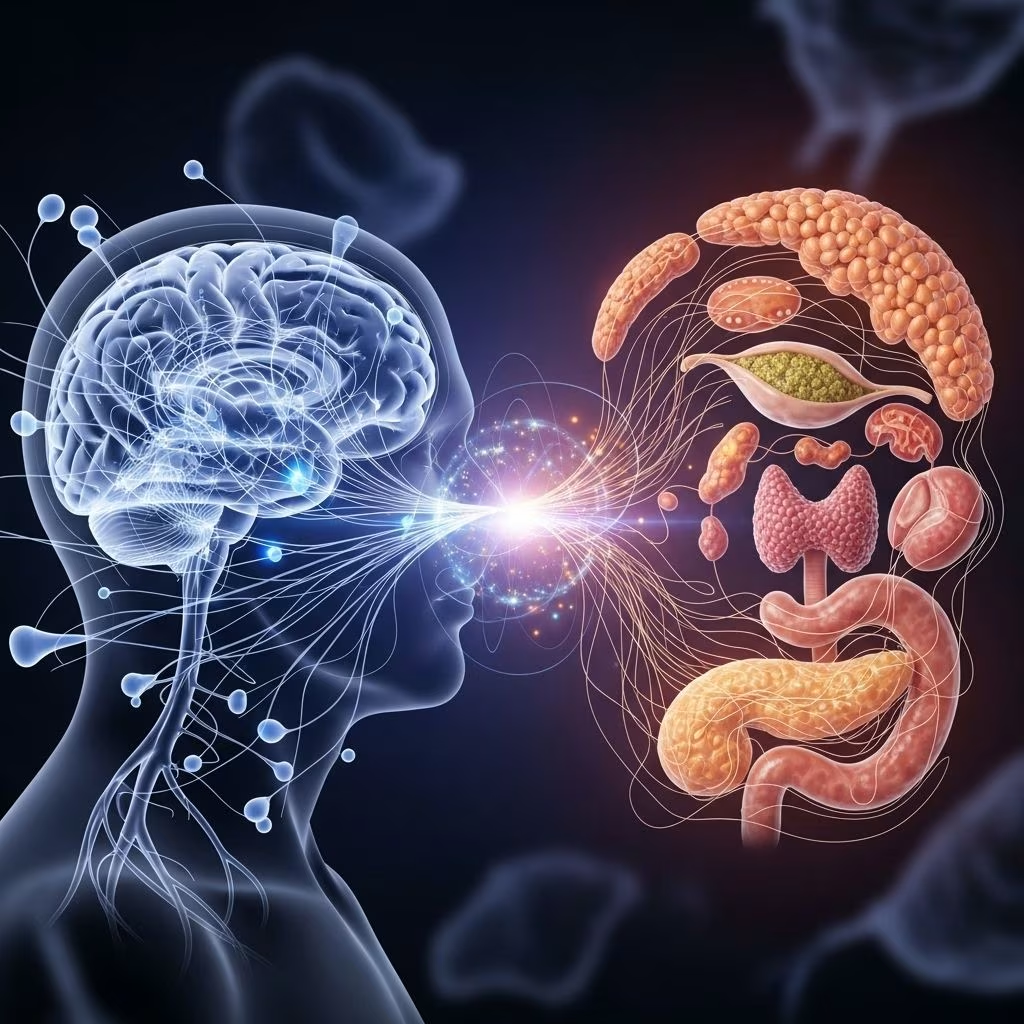
The human body depends on a complex interplay of systems that communicate, monitor, and regulate all physiological processes. Two of the most significant systems responsible for coordination are the nervous system and the endocrine system. These systems use different means of communication, but together, they form the backbone of internal regulation—ensuring we respond to the world around us and maintain a stable internal environment, known as homeostasis.
The Nervous System: Electrical Messengers of Rapid Response
The nervous system is like an intricate network of electrical wiring that sends information at remarkable speeds. Its main roles include detecting changes inside and outside the body, processing this information, and formulating quick responses.
Major Components of the Nervous System
- Central Nervous System (CNS): Consists of the brain and spinal cord. Acts as the control center, processing incoming sensory details and issuing commands.
- Peripheral Nervous System (PNS): All the nerves outside the CNS. The PNS connects the CNS to limbs and organs, transmitting information throughout the body.
Subdivisions of the Peripheral Nervous System
- Somatic Nervous System: Regulates voluntary movements and relays sensory and motor information (e.g., moving your arm).
- Autonomic Nervous System: Controls involuntary actions, like heart rate and digestion.
- Sympathetic Division: Prepares the body for action (“fight or flight”).
- Parasympathetic Division: Calms the body and helps it relax and recover (“rest and digest”).
How the Nervous System Works
Electrical impulses travel through neurons, the fundamental units of the nervous system. These impulses are converted to chemical signals (neurotransmitters) at synapses—tiny gaps between neurons or between neurons and their target tissues (like muscles or glands). This enables milliseconds-fast responses to the internal and external environment. For example, withdrawing your hand quickly after touching something hot is due to nervous system action.
Key Characteristics
- Method of Communication: Electrical impulses and neurotransmitters.
- Speed of Response: Rapid (milliseconds).
- Duration: Short-lived, immediate actions.
- Specificity: Responses are typically localized and targeted.
- Examples: Reflex actions, muscle contractions, sensory processing.
The Endocrine System: Chemical Messengers for Sustained Control
The endocrine system communicates by releasing hormones—chemical messengers—which travel via the bloodstream to affect distant organs and tissues. While its responses are slower than the nervous system, they are generally more prolonged and widespread.
Main Components of the Endocrine System
- Pituitary Gland: Often called the “master gland,” it regulates other glands and various physiological processes.
- Thyroid Gland: Influences metabolism, growth, and energy use.
- Adrenal Glands: Produce hormones that help manage stress, metabolism, and immune responses.
- Pancreas: Regulates blood glucose by secreting insulin and glucagon.
- Gonads (ovaries and testes): Responsible for sexual development and reproductive function.
How the Endocrine System Works
Endocrine glands produce hormones, which are then secreted directly into the bloodstream. These hormones travel throughout the body to interact with specific receptors on or within target cells. Only cells with matching receptors will respond, ensuring specificity despite the hormones’ broad circulation. For example, insulin from the pancreas lowers blood sugar levels throughout the body.
Key Characteristics
- Method of Communication: Chemical messengers (hormones).
- Speed of Response: Slow (seconds to minutes or longer).
- Duration: Longer-lasting effects (minutes to days).
- Specificity: Widespread effects; may influence many organs or the entire body.
- Examples: Regulation of growth, metabolism, reproductive functions, stress response.
Comparing the Nervous and Endocrine Systems
| Feature | Nervous System | Endocrine System |
|---|---|---|
| Messenger Type | Electrical impulses & neurotransmitters | Hormones (chemical messengers) |
| Main Structures | Brain, spinal cord, nerves | Glands (pituitary, thyroid, adrenal, pancreas, gonads) |
| Transmission Pathway | Neurons (nerve cells) | Bloodstream |
| Speed of Response | Very fast (milliseconds) | Slower (seconds to days) |
| Duration of Effect | Short-lived | Long-lasting |
| Area Affected | Localized | Widespread |
| Control Type | Both voluntary and involuntary | Involuntary |
Both systems are critically important for survival and often work together, but they differ in their modes, speeds, and specificities of action.
Interaction: How the Nervous and Endocrine Systems Work Together
Although functionally distinct, the nervous and endocrine systems constantly interact and coordinate to manage complex bodily processes:
- Hypothalamus: A part of the brain that serves as a crucial link, controlling many endocrine functions by signaling the pituitary gland to release hormones.
- Stress Response: In stressful situations, the nervous system activates the adrenal glands via nerve signals, producing an immediate response, while the endocrine system amplifies and prolongs this response through hormones (like cortisol and adrenaline).
- Growth and Maturation: Puberty is orchestrated by hormonal signals (endocrine) in response to cues originating from the brain (nervous).
Thus, homeostasis and adaptive responses arise from the continuous communication and feedback loops between these two systems.
Homeostasis: Maintaining Internal Balance
Homeostasis refers to the physiological balance or steady state that the body maintains despite fluctuations in the internal and external environment. Both the nervous and endocrine systems are vital for:
- Temperature regulation
- Blood glucose control
- Hydration and electrolyte balance
- Stress response
- Metabolic processes
Example: When you step on something sharp, sensory neurons (nervous system) detect pain and immediately signal muscles to withdraw your foot. Simultaneously, stress hormones (endocrine system) flood your body, raising your alertness and preparing you for further action.
Key Terms and Concepts
- Neuron: Nerve cell that transmits electrical signals throughout the body.
- Neurotransmitter: Chemical released by a neuron that transmits a signal to another cell.
- Hormone: Chemical messenger released by glands, travels through the blood to target tissues.
- Receptor: Protein on a target cell that detects signals, such as neurotransmitters or hormones.
- Homeostasis: Dynamic equilibrium of internal conditions.
Table: Major Glands and Their Hormones
| Gland | Main Hormone(s) | Primary Function |
|---|---|---|
| Pituitary | Growth hormone, ACTH, TSH, others | Regulates growth, controls other glands |
| Thyroid | Thyroxine (T4), Triiodothyronine (T3) | Regulates metabolism |
| Adrenal | Cortisol, adrenaline (epinephrine) | Stress response, metabolism |
| Pancreas | Insulin, glucagon | Blood sugar regulation |
| Ovaries/Testes | Estrogen, testosterone | Sexual development, reproduction |
Quick Comparison: Nervous vs. Endocrine Systems
- Nervous system: Fast, specific, short-term responses using electrical signals and neurotransmitters.
- Endocrine system: Slow, broad, long-term responses using hormones carried in the blood.
- Both are essential and complement each other to maintain health and homeostasis.
Frequently Asked Questions (FAQs)
What is the main difference between the nervous and endocrine systems?
The nervous system uses electrical signals and neurotransmitters to produce fast, short-lived, and localized responses, while the endocrine system uses hormones for slower, longer-lasting, and more widespread effects.
How do the nervous and endocrine systems work together?
They collaborate to regulate vital functions. The hypothalamus (nervous system) directs the pituitary gland (endocrine system), integrating neural and hormonal responses for balanced bodily function.
What is homeostasis, and why is it important?
Homeostasis is the maintenance of stable internal conditions necessary for survival—such as body temperature, blood glucose, and water balance. Both the nervous and endocrine systems are key to achieving this regulation.
Which system is faster?
The nervous system provides faster responses than the endocrine system, often within milliseconds to seconds.
Are there conditions caused by dysfunction of these systems?
Yes. Disorders like Parkinson’s disease (nervous system) or diabetes (endocrine system) exemplify what happens when communication or regulation fails.
Summary
Both the nervous and endocrine systems are vital for controlling and coordinating the myriad functions of the human body. While they operate differently and have unique strengths, they work together seamlessly to ensure we can sense, respond, grow, adapt, and thrive in an ever-changing environment. Understanding these systems sheds light on how our bodies maintain internal balance and react to the world around us.
References
- https://byjus.com/biology/difference-between-nervous-system-and-endocrine-system/
- https://med.libretexts.org/Bookshelves/Anatomy_and_Physiology/Anatomy_and_Physiology_(Boundless)/15:_Endocrine_System/15.1:_Overview_of_the_Endocrine_System/15.1B:_Comparing_the_Nervous_and_Endocrine_Systems
- https://www.youtube.com/watch?v=b6m35PlH7t8
- https://courses.lumenlearning.com/suny-fmcc-intropsych/chapter/the-endocrine-system/
- https://www.khanacademy.org/science/hs-bio/x230b3ff252126bb6:from-cells-to-organisms/x230b3ff252126bb6:human-body-systems/a/hs-the-nervous-and-endocrine-systems-review
- https://www.youtube.com/watch?v=NKpkU4-Sf9A
- https://homework.study.com/explanation/what-are-the-differences-between-the-nervous-and-endocrine-systems-with-regards-to-control-of-homeostasis.html


