


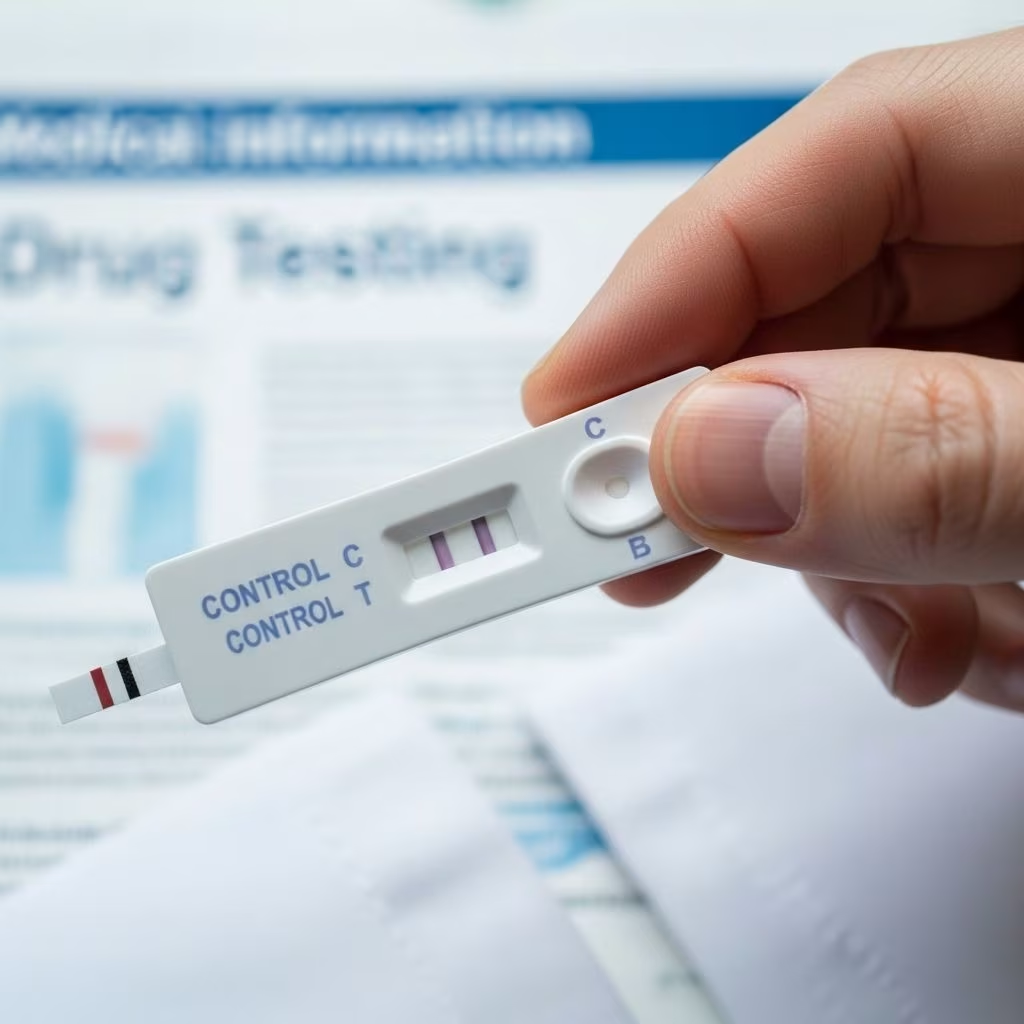
Millions rely on antidepressants to manage depression, anxiety, and related mental health conditions. If you’re taking antidepressants and need to take a drug test for employment, legal, or medical reasons, you might wonder: Do antidepressants show up on drug tests? The answer requires understanding drug testing technology, medication chemistry, and nuances of specific antidepressants.
Understanding Standard Drug Tests
The majority of routine drug tests—such as those performed for pre-employment screening, athletic eligibility, legal compliance, or pain management monitoring—are designed to detect substances that are considered drugs of abuse or those that carry a high potential for misuse. Most do not typically include antidepressants in their standard panels.
- 5-Panel Tests usually screen for:
- Amphetamines (including methamphetamine)
- Cocaine
- Marijuana (THC)
- Opiates (such as heroin, morphine, and codeine)
- Phencyclidine (PCP)
- 10-Panel Tests expand to include:
- Barbiturates
- Benzodiazepines
- Methadone
- Propoxyphene
- Quaaludes
Antidepressants are not typically classified as drugs of abuse and are almost never directly tested for in these standard screenings. The purpose is to catch illicit or controlled substances, not medications under medical supervision.
When Are Antidepressants Detected?
While not included in standard panels, antidepressants can be specifically screened for if there is a particular medical or forensic reason. Most commonly, this occurs in cases of suspected overdose, adherence checks in mental health care, or legal cases involving psychiatric medication use.
Examples of targeted antidepressant tests include:
- Tricyclic Antidepressant (TCA) Screen: Used to detect drugs like amitriptyline, nortriptyline, imipramine, doxepin, and desipramine in cases of suspected overdose or toxicity.
- Antidepressant Drug Profile Urine Test: A specialized laboratory test that analyzes urine using advanced techniques such as liquid chromatography/tandem mass spectrometry for a range of antidepressants, mainly in clinical or emergency settings.
| Test Type | Antidepressants Tested? | Common Use |
|---|---|---|
| 5-Panel | No | Employment, Sports, Legal |
| 10-Panel | No | Expanded screening; certain jobs |
| TCA Screen | Yes (TCAs only) | Medical emergencies, suspected overdose |
| Antidepressant Profile Urine Test | Yes (multiple classes) | Clinical, forensic, overdose cases |
False Positives: How Antidepressants Trigger Unexpected Results
The most common issue with antidepressants in drug testing is false positives. These arise when the chemical structure of certain antidepressants resembles that of controlled substances, causing the initial screen to mistakenly identify a prescription drug as an illicit one.
Common Antidepressants and Associated False Positives:
- Bupropion (Wellbutrin): May cause a false positive for amphetamines or methamphetamines.
- Sertraline (Zoloft): Can sometimes cause a false positive for benzodiazepines or LSD. Rare cases may mimic other substances due to chemical similarity.
- Fluoxetine (Prozac): May occasionally flag as amphetamines, methamphetamines, or LSD on certain preliminary tests.
- Trazodone: Has been reported to cause false positives for amphetamines.
- Venlafaxine (Effexor): May result in false positives for PCP (phencyclidine).
- Quetiapine (Seroquel): Though not an antidepressant, it may trigger false positives for methadone or opioids and is sometimes prescribed to those on antidepressants.
Remember: These results are generally from preliminary immunoassay screens. Laboratories use confirmatory tests—such as gas chromatography/mass spectrometry—that can distinguish the actual prescription medication from drugs of abuse, overturning false positives in most cases.
Why Do False Positives Happen?
Drug testing often begins with immunoassay screens that rely on antibodies to detect the presence of specific substances. However, these antibodies may not always distinguish between structurally similar compounds. As a result, a medication like sertraline could, in rare cases, lead to a false identification of LSD or benzodiazepines, simply due to cross-reactivity.
Some contributing factors include:
- The chemical structure of the antidepressant closely mimics the drug of abuse.
- The sensitivity of the test is set low enough to prevent missing true positives but increases the risk of cross-reactivity.
- Patient metabolism, other medications, and the timing of the last dose can also play a role.
What If You Receive a Positive Drug Test Result?
If you test positive for a substance you have not taken and you are on a prescription antidepressant, remain calm—this does not automatically mean you have failed your drug test. Instead, follow these steps:
- Inform the tester of all prescription medications you are taking before the test begins.
- Request a confirmatory test. Sophisticated methods like gas chromatography-mass spectrometry or liquid chromatography-tandem mass spectrometry can almost always distinguish between prescription drugs and illicit ones.
- Ask your doctor or pharmacist for written confirmation that your prescription could lead to a false positive, if needed.
- Contact your employer or the agency requesting the test if your initial screen is positive due to your prescription medication. Provide medical documentation as necessary.
Which Antidepressants Are Most Likely to Cause False Positives?
While most antidepressants generally do not trigger issues with standard drug testing, a few stand out for their increased likelihood:
- Tricyclics (amitriptyline, nortriptyline, imipramine): Primarily show up only if specifically tested, but their chemical structure can cross-react in certain screens.
- Bupropion (Wellbutrin): Linked to amphetamine-like false positives.
- Sertraline (Zoloft): Known to occasionally mimic benzodiazepines or LSD in screenings.
- Venlafaxine (Effexor): Linked to rare PCP false positives.
Over-the-Counter Medications and Other Compounds That Can Cause Confusion
In addition to prescription antidepressants, many other legal substances—including some over-the-counter medications and supplements—can create confusion in routine drug screening.
- Cold medicines: Some decongestants (pseudoephedrine) resemble amphetamines in structure.
- Ibuprofen: Has been reported in rare cases to trigger false positives for marijuana or benzodiazepines.
- Poppy seeds: Can lead to positive results for opiates.
Always disclose all substances you have taken—including supplements and OTC medications—when undergoing a drug test.
How Long Do Antidepressants Stay in the Body?
The detection window for a specific drug depends on its half-life, dosage, frequency of use, and the individual’s metabolism. Antidepressants, while not usually tested for, can remain detectable in the body for a period ranging from a few days to several weeks. For example:
- Fluoxetine (Prozac): Half-life of up to 4 to 6 days; may persist beyond a week after the last dose.
- Sertraline (Zoloft): Half-life around 24 hours, but metabolites may be detectable for up to nine days.
- Escitalopram (Lexapro): Half-life of 27-32 hours; may take up to a week to be mostly eliminated from the body.
- Tricyclics: May persist for several days due to longer half-lives and slow metabolism.
However, unless specifically targeted, these drugs will not be reported on standard tests.
Preventing and Responding to Drug Test Issues
To minimize the likelihood of any misunderstanding or career impact:
- Bring a list of your current prescriptions—including all antidepressants and other medications—to every drug screening.
- Communicate proactively with the test administrator before giving a sample.
- Consult your healthcare provider if you receive an unexpected result, and request a letter explaining your medical regimen if needed.
- Ask for a confirmatory test if you know your antidepressant can trigger a false positive.
It is unlawful for employers to discriminate against those taking legally prescribed medications; providing documentation and undergoing confirmatory testing protects your rights.
Frequently Asked Questions (FAQs)
Do Selective Serotonin Reuptake Inhibitors (SSRIs) show up on drug tests?
No, standard drug tests do not screen for SSRIs such as sertraline (Zoloft), fluoxetine (Prozac), citalopram (Celexa), or escitalopram (Lexapro). However, some may trigger false positives in rare cases.
Can tricyclic antidepressants be detected in drug tests?
They can be detected only with a tricyclic antidepressant (TCA) screen, not on a standard drug test.
Why did my drug test show positive for amphetamines if I only take Wellbutrin?
Wellbutrin (bupropion) is known to cause false positives for amphetamines. Confirmatory tests will usually resolve this issue.
If I take Zoloft, will it show up on a drug test?
Zoloft (sertraline) does not show up as itself on standard drug screens, but it has been reported to cause false positives for benzodiazepines or LSD in specific immunoassay tests.
How can I prove my positive drug result was from a prescription?
Request a confirmatory laboratory test and provide documentation from your doctor or pharmacist regarding your prescriptions.
Key Takeaways
- Antidepressants are not targeted on routine drug tests—standard employment panels only look for substances of abuse.
- Some antidepressants can trigger false positives for illicit drugs. Most notably, Wellbutrin, Trazodone, Zoloft, and Effexor.
- Specific testing for antidepressants occurs rarely, typically in overdose, poisoning, or psychiatric monitoring scenarios.
- Always disclose your prescriptions before testing and be proactive if an initial screening is positive.
References
- https://www.relialabtest.com/do-antidepressants-show-up-on-a-drug-test/
- https://countrywidetesting.com/blogs/news/will-antidepressants-show-up-on-a-drug-test
- https://www.walkinlab.com/products/view/antidepressant-drug-profile-urine-test
- https://medlineplus.gov/lab-tests/tricyclic-antidepressant-tca-screen/
- https://www.goodrx.com/health-topic/diagnostics/these-medications-can-cause-a-false-positive-on-drug-tests
- https://www.questdiagnostics.com/healthcare-professionals/clinical-education-center/faq/faq188
- https://www.psychiatriapolska.pl/pdf-113173-81728?filename=False_positive+drug+test.pdf
- https://www.mayocliniclabs.com/test-catalog/overview/57740


