


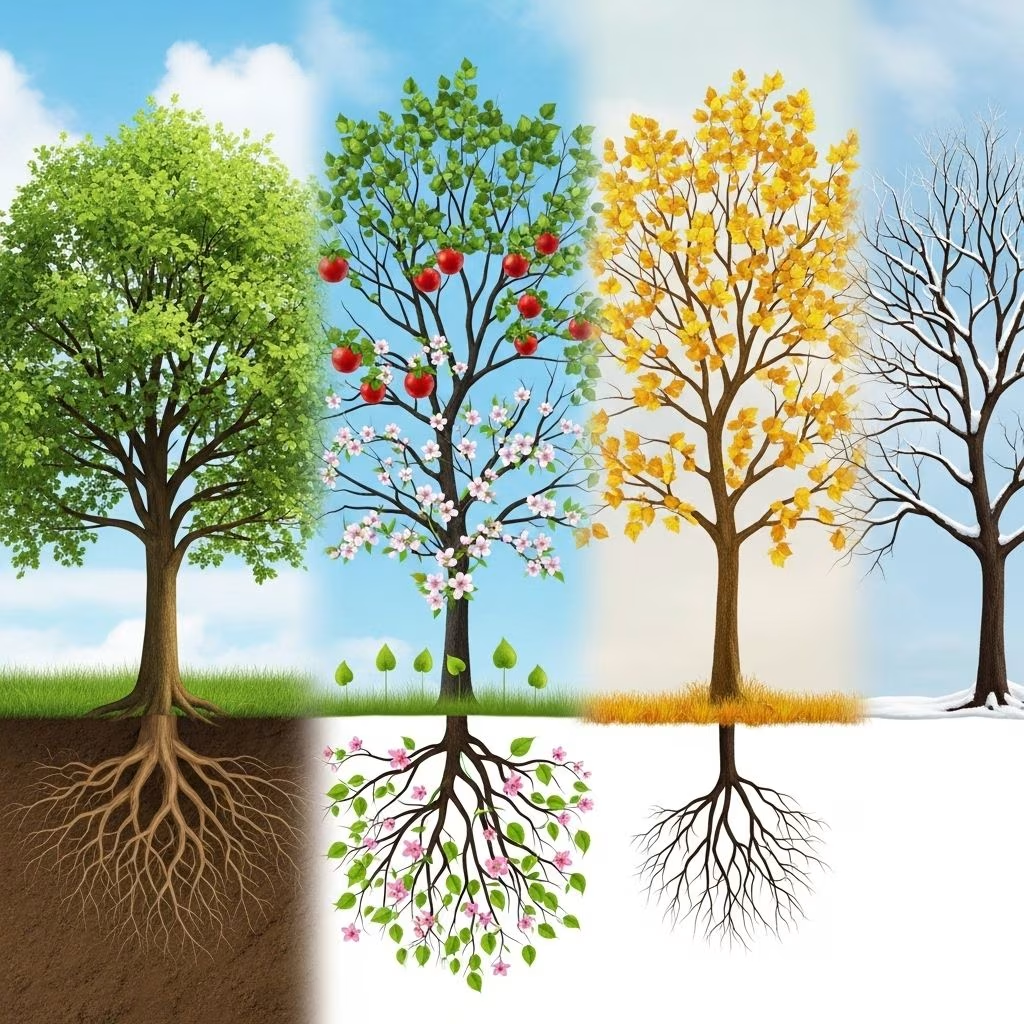
What Is Developmental Psychology?
Developmental psychology is the scientific study of how people grow, change, and adapt physically, cognitively, emotionally, and socially throughout the entire lifespan—from conception to old age. It explores why and how people develop as they do, identifying universal patterns as well as individual differences in development.
- Examines physical, cognitive, social, and emotional changes over time.
- Explores genetic and environmental influences on development.
- Spans infancy, childhood, adolescence, adulthood, and aging.
Major Dimensions of Development
- Physical Development: Growth of the body, brain, and motor skills.
- Cognitive Development: Changes in thinking, problem-solving, and decision-making abilities.
- Social-Emotional Development: Interpersonal skills, personality, identity, and emotional regulation.
Key Themes in Developmental Psychology
Several enduring questions shape the field of developmental psychology. These themes influence research directions, theory formation, and practical applications.
- Nature vs. Nurture: How do genetic inheritance and environmental factors interact to shape development?
Example: Does intelligence primarily result from raw genetic potential or educational exposure? - Continuity vs. Discontinuity: Is development a gradual, cumulative process or does it occur through distinct stages?
Example: Are changes in moral reasoning continuous or marked by milestones like those described in stage theories? - Stability vs. Change: Do early traits persist throughout life, or do individuals change in significant ways?
Example: Does a shy toddler become a reserved adult, or can personality shift over time?
Goals of Developmental Psychology
Developmental psychologists pursue three main objectives:
- Describe: Characterize normal and atypical patterns of growth and behavior.
- Explain: Identify causes or mechanisms behind developmental changes.
- Optimize: Use knowledge to support positive development and intervene when needed.
For example, understanding how children develop attachment helps parents foster secure and healthy relationships.
Core Processes and Domains
- Maturation: Genetically driven growth, independent of experience.
- Normative Development: Typical sequence of developmental milestones shared by most people.
- Idiographic Approaches: Focus on individual differences and unique developmental trajectories.
Major Stages of Human Development
Developmental psychologists examine changes and transitions across several key life stages:
| Life Stage | Major Focus | Developmental Challenges |
|---|---|---|
| Infancy & Early Childhood | Motor skills, language, attachment, sensory perception | Bonding, security, basic trust |
| Middle Childhood | Cognitive growth, self-concept formation, social learning | Peer relationships, academic skills |
| Adolescence | Identity, autonomy, moral reasoning, puberty | Role confusion, emotional turmoil |
| Adulthood | Work, relationships, parenting, generativity | Balancing family and career, personal fulfillment |
| Late Adulthood | Aging, cognitive change, reflection, end-of-life issues | Coping with loss, maintaining independence |
Influential Theories in Developmental Psychology
Multiple theories provide frameworks for understanding developmental processes. Each offers valuable perspectives on how and why change occurs.
- Jean Piaget’s Cognitive Developmental Theory:
Emphasizes stages in children’s cognitive growth, such as sensorimotor, preoperational, concrete operational, and formal operational periods. - Erik Erikson’s Psychosocial Theory:
Proposes eight distinct stages, each with a central psychological conflict (e.g., trust vs. mistrust, identity vs. role confusion). - Lev Vygotsky’s Sociocultural Theory:
Focuses on the impact of social interaction, language, and cultural context on learning and development. - Sigmund Freud’s Psychosexual Theory:
Explores the influence of early childhood experiences and unconscious drives on later personality and behavior. - Urie Bronfenbrenner’s Ecological Systems Theory:
Views development as shaped by multiple environmental systems, from family and peers to broader societal forces.
Other key figures in developmental psychology include Anna Freud, Barbara Rogoff, Esther Thelen, and more.
Research Methods in Developmental Psychology
The study of human development relies on rigorous scientific methods to ensure findings are reliable and valid. Common research designs include:
- Cross-Sectional Studies: Compare individuals of different ages at a single point in time.
- Longitudinal Studies: Track the same individuals over extended periods to observe how they change.
- Sequential Designs: Combine aspects of both designs for more comprehensive data.
- Experimental Methods: Manipulate variables to determine causal relationships (e.g., intervention studies).
- Observation & Case Studies: Provide in-depth insight into development in natural settings.
Developmental psychologists use statistics to interpret their data and draw meaningful conclusions, applying findings to real-world situations.
Applications and Careers
Knowledge from developmental psychology guides interventions, supports healthy development, and helps identify and address various challenges at different life stages. Professionals may work in a range of settings, including:
- Schools and educational organizations
- Hospitals and clinics
- Research institutions
- Community programs and policy-making bodies
Potential career paths include:
- Developmental psychologist
- Clinical psychologist (focus on children, adolescents, elderly)
- Educational consultant
- Developmental specialist for special needs populations
Examples of Developmental Research in Action
Below is a brief study illustrating how scientists examine motor skill development:
- Select a group of toddlers around the same age.
- Observe developmental milestones from crawling to walking.
- Record the time it takes each child to walk independently.
- Compare influences like home environment and playtime.
- Analyze which factors—biology, practice, or environment—most affect walking skills.
Practice Example:
If four infants take 10, 12, 9, and 11 days to progress from crawling to independent walking, their average time is 10.5 days, calculated as follows:\(\bar{x} = \frac{10 + 12 + 9 + 11}{4} = 10.5\) days
Developmental Psychology: Addressing Diversity and Atypical Development
Researchers consider both typical and atypical development, examining factors such as:
- Genetic and biological influences
- Social, cultural, and economic factors
- Risks, challenges, and opportunities unique to each life stage
Interventions can help children with developmental delays or disorders get on track early and support positive outcomes for individuals at any age.
Frequently Asked Questions (FAQs)
Q: Why is developmental psychology important?
A: It helps us understand changes throughout life and guides how we support healthy development in individuals and communities.
Q: Which factors shape human development most?
A: Both genetics (nature) and environment (nurture) interact to shape physical, cognitive, and social growth, though the impact of each can vary across traits and individuals.
Q: What is a developmental milestone?
A: It is a significant achievement or skill attained in sequence during growth, such as walking or language acquisition.
Q: Can development be changed or optimized?
A: Yes. Timely interventions, supportive environments, and effective education can optimize development and overcome some challenges.
Q: What careers are available in developmental psychology?
A: Professionals may work as researchers, clinicians, educators, consultants, or specialists in both normal and atypical development.
References
This article synthesizes authoritative content from reputable psychology sources including Simply Psychology, Wikipedia, Albert.io, National University, and Queens College.
References
- https://www.simplypsychology.org/developmental-psychology.html
- https://www.albert.io/blog/developmental-psychology-ap-psychology-review/
- https://en.wikipedia.org/wiki/Developmental_psychology
- https://www.nu.edu/blog/what-is-developmental-psychology/
- https://www.qc.cuny.edu/academics/psychology/career-advising-developmental-psychology/
- https://www.apa.org/education-career/guide/subfields/developmental
- https://positivepsychology.com/developmental-psychology-stages/


