


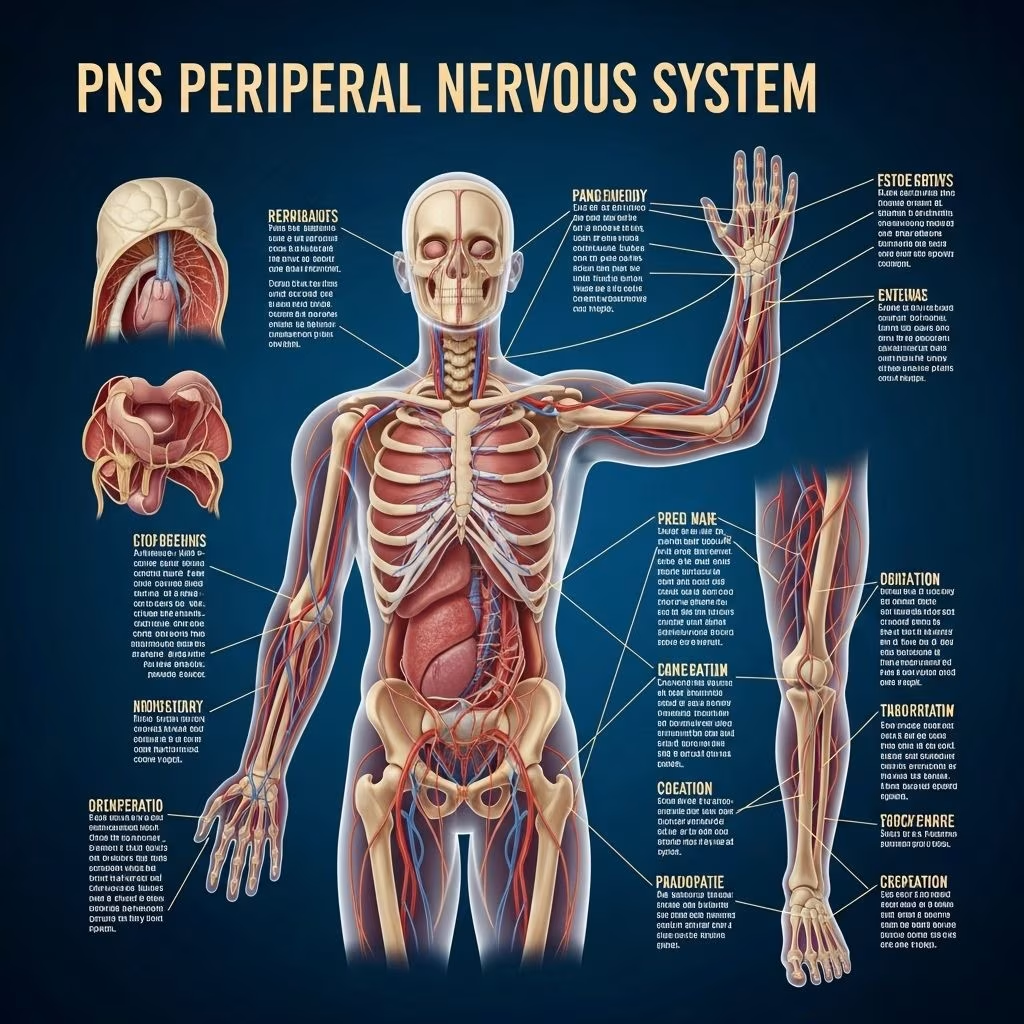
The peripheral nervous system (PNS) is an essential part of the human body’s neural architecture. Serving as a vast network of nerves outside the brain and spinal cord, it creates the vital connections that link the central nervous system (CNS) to the limbs, organs, and tissues. This article explores the PNS in depth—its structure, main divisions, functions, and the crucial role it plays in everyday health and bodily operation.
What Is the Peripheral Nervous System?
The peripheral nervous system is the portion of the nervous system that lies outside the brain and spinal cord. Unlike the CNS, which is protected by bone and the blood-brain barrier, the PNS is more exposed and vulnerable to toxins and physical trauma. Despite this, it serves as the crucial communication conduit, relaying signals between the CNS and all other parts of the body.
- PNS Definition: All neural tissue found outside the cranial vault (brain) and vertebral canal (spinal cord).
- Main Components: Includes nerves, ganglia, and sensory receptors.
- Core Function: Connects the CNS to organs, muscles, glands, and sensory structures, mediating both voluntary and involuntary functions.
Central Nervous System vs. Peripheral Nervous System
| Component | Central Nervous System (CNS) | Peripheral Nervous System (PNS) |
|---|---|---|
| Structure | Brain and spinal cord | Nerves and ganglia outside the brain and spinal cord |
| Protection | Protected by skull, spine, and blood–brain barrier | Not protected by bone or blood–brain barrier |
| Main Function | Processes, interprets, and stores information; issues instructive commands | Relays signals to and from CNS and the rest of the body |
Functions of the Peripheral Nervous System
The PNS is crucial for bodily operation, acting much like the body’s wiring system. Its primary functions include:
- Sensation: Carries sensory information (touch, pain, temperature, pressure) from the body to the CNS.
- Movement: Relays motor commands from the CNS to muscles, enabling voluntary movements such as walking or typing.
- Automatic Responses: Regulates involuntary processes such as heartbeat, breathing, digestion, and glandular activity.
- Homeostasis: Maintains internal balance by delivering info to organs and receiving feedback to the CNS.
Major Divisions of the Peripheral Nervous System
The PNS branches into two major subdivisions based on function and control: the somatic nervous system and the autonomic nervous system. Each of these divisions can be further broken down by the types of nerves and functions they serve.
Anatomical Components of the PNS
- Peripheral Nerves: Bundles of nerve fibers carrying signals between the CNS and body parts.
- Ganglia: Clusters of neuron cell bodies where nerves synapse outside the CNS.
- Receptors: Specialized end-organs that detect changes inside and outside the body.
Types of Peripheral Nerves
- Spinal Nerves: Originate from the spinal cord, supplying the trunk and limbs.
- Cranial Nerves: Emanate from the brain, serving the head and neck (with visual and olfactory nerves generally functionally part of the CNS).
- Autonomic Nerves: Regulate involuntary actions in smooth muscle, cardiac muscle, and glands.
The Somatic Nervous System
The somatic nervous system (SNS) governs all voluntary movements and consciously perceived sensations. It involves both sensory and motor functions:
- Sensory (Afferent) Pathways: Carry signals from sensory receptors (such as skin, eyes, and ears) toward the CNS. For example, when you touch a hot pan, sensory neurons inform your brain about pain and temperature.
- Motor (Efferent) Pathways: Transmit instructions from the CNS to skeletal muscles, controlling movements such as lifting an object or writing.
A key feature of the SNS is the reflex arc, allowing for swift, automatic responses (like quickly pulling your hand away from something hot) without direct brain involvement.
Functions of the Somatic Nervous System
- Controls voluntary muscle movements
- Mediates conscious perception of external stimuli (touch, temperature, pain)
- Enables reflex actions for rapid response to environmental danger
The Autonomic Nervous System
The autonomic nervous system (ANS) governs body functions that are not under conscious control. It orchestrates the activities of internal organs, smooth muscles, and glands. The ANS itself divides into two complementary branches: the sympathetic and parasympathetic nervous systems.
Sympathetic Nervous System
Often described as the “fight or flight” system, the sympathetic branch prepares the body for stressful or energetic activity:
- Increases heart rate and blood pressure
- Widens (dilates) bronchioles for increased oxygen intake
- Slows digestion and redirects blood flow to muscles
- Expands pupils for improved vision
Parasympathetic Nervous System
In contrast, the parasympathetic branch is considered the “rest and digest” system, conserving energy and promoting restorative processes:
- Slows heart rate
- Stimulates digestion and salivation
- Constrains pupils
- Promotes relaxation and tissue repair
Comparison of Autonomic Divisions
| Function | Sympathetic Nervous System | Parasympathetic Nervous System |
|---|---|---|
| Effect on heart rate | Increases | Decreases |
| Pupil reaction | Dilates pupils | Constriction |
| Digestive function | Slows | Stimulates |
| Primary purpose | Emergency/Stress response | Restoration, maintenance |
How the Peripheral Nervous System Works
The PNS accomplishes its functions using two basic types of nerve fibers:
- Afferent Fibers: Transmit impulses from peripheral organs (like skin or stomach) to the CNS.
- Efferent Fibers: Carry impulses from the CNS back to effectors such as muscles or glands.
Nerve fibers run through peripheral nerves, which are like cables running throughout the body. These nerves are further classified as:
- Sensory Nerves: Only carry sensations to the CNS.
- Motor Nerves: Only transmit instructions outward from the CNS.
- Mixed Nerves: Carry both sensory and motor signals in opposite directions.
Together, these nerves and fibers allow rapid communication so that the body can sense changes (internal or external), process them, and respond appropriately.
Clinical Importance of the Peripheral Nervous System
Disorders affecting the PNS can disrupt sensation, voluntary or involuntary functions, and overall health. Because the PNS is less protected than the CNS, it is more susceptible to:
- Peripheral neuropathy: Damage to nerves, often causing numbness, tingling, pain, or muscle weakness
- Injury: Trauma, compression, or severing of nerves can impair function
- Infections: Certain viruses and bacteria can target peripheral nerves
- Autoimmune conditions: Such as Guillain–Barré syndrome, which attacks the PNS
Peripheral Nervous System in Summary
- The PNS comprises all nervous tissue outside the brain and spinal cord, connecting the CNS with the rest of the body.
- Main divisions are the somatic (voluntary control and sensation) and autonomic (involuntary control) nervous systems.
- The autonomic system includes the sympathetic (emergency response) and parasympathetic (restorative processes) divisions.
- Maintains and regulates all vital body functions, responding to both conscious and unconscious demands.
Frequently Asked Questions (FAQs)
Q: What are the two major divisions of the peripheral nervous system?
A: The two major divisions are the somatic nervous system (controlling voluntary movement and sensory perception) and the autonomic nervous system (regulating involuntary functions such as heart rate and digestion).
Q: How does the PNS differ from the CNS?
A: The PNS consists of nerves and ganglia outside the brain and spinal cord, while the CNS is comprised solely of the brain and spinal cord. The PNS connects the body to the CNS but is less protected.
Q: What roles do sensory and motor nerves play in the PNS?
A: Sensory nerves transmit information from sensory receptors to the CNS. Motor nerves send instructions from the CNS to muscles, allowing voluntary movement.
Q: What happens if the PNS is damaged?
A: Damage can result in loss of sensation, impaired movement, pain, weakness, or dysfunction in organs controlled by the autonomic nervous system. Symptoms vary depending on the affected nerves.
Q: Why is the parasympathetic system important?
A: The parasympathetic system helps the body recover from stress, conserve energy, and maintain “rest-and-digest” activities, essential for health and long-term survival.
Key Takeaways
- The peripheral nervous system is indispensable for transmitting information to and from the CNS and all parts of the body.
- It regulates both voluntary activities (such as movement) and involuntary actions (such as heartbeat and digestion) via its somatic and autonomic divisions.
- Healthy PNS function is critical; disruptions can lead to significant muscle, organ, and sensory challenges.
References
- https://www.kenhub.com/en/library/anatomy/the-peripheral-nervous-system
- https://en.wikipedia.org/wiki/Peripheral_nervous_system
- https://www.simplypsychology.org/peripheral-nervous-system.html
- https://my.clevelandclinic.org/health/body/23123-peripheral-nervous-system-pns
- https://byjus.com/biology/peripheral-nervous-system/
- https://pubmed.ncbi.nlm.nih.gov/37170957/


