


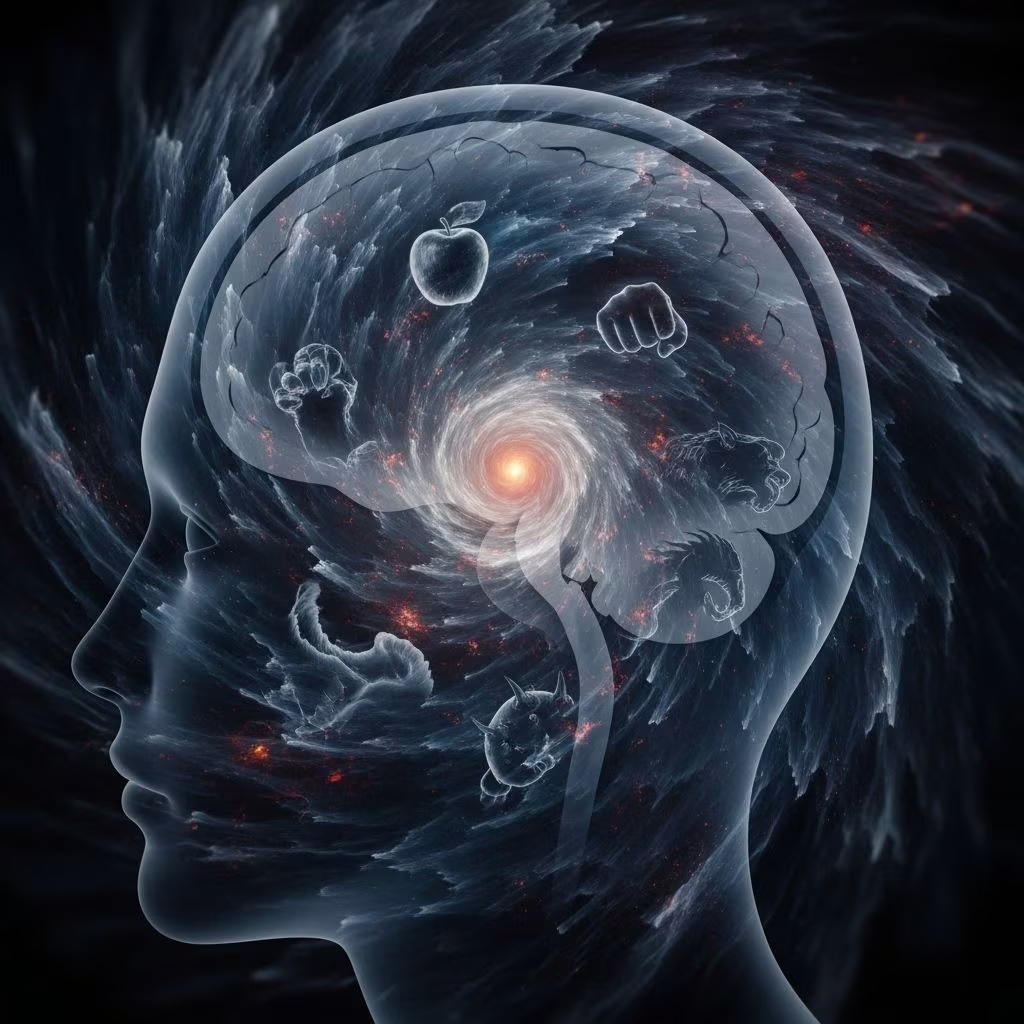
Sigmund Freud remains one of the most influential thinkers in the field of psychology, developing a comprehensive theory of personality that forever changed how people view the workings of the human mind. One of the cornerstone components of Freud’s model is the id, a primal force that underlies human behavior and emotion. This article explores the role of the id in Freud’s psychoanalytic theory, how it functions, and the ways it interacts with other aspects of personality.
Freud’s Psychoanalytic Theory of Personality
Freud proposed that human personality is composed of three interacting structures: the id, the ego, and the superego. Each of these components emerges at different stages of life and fulfills distinct functions within the psyche:
- Id: The source of instinctual drives and unconscious energy.
- Ego: The rational mediator between the unconscious id and the constraints of external reality.
- Superego: The internalized moral conscience and societal rules.
The balance and interaction between these three elements contribute profoundly to behavior, thoughts, emotions, and conflicts within the individual.
What Is the Id?
The id is the most primitive part of the personality and operates from birth. Freud described it as being the foundation of all psychic energy—making it central to his theory of human motivation. The id resides entirely in the unconscious and seeks the immediate fulfillment of fundamental drives and desires. It is impulsive, illogical, and oblivious to the constraints of reality or morality.
The Pleasure Principle
The id is governed by the so-called pleasure principle—the drive to seek pleasure and avoid pain. According to this tenet, any unsatisfied need or desire generates tension, which the id strives to discharge immediately, regardless of potential consequences or feasibility.
- Desires satisfaction of bodily needs (such as hunger, thirst, sexual urges).
- Operates without any regard for logic, reality, or morality.
- Acts as the engine of instinctual, often unconscious, drives.
Examples of Id-Driven Behavior
Infants are typically governed entirely by the id. For example, a hungry baby will cry until fed, with no patience or consideration for whether it is an appropriate time or place to eat. In adults, id impulses may surface as sudden urges, such as anger, desire, or the craving to satisfy hunger and comfort, regardless of social decorum.
Formation and Development of the Id
The id is present from birth and forms the original reservoir of all psychic energy. Whereas the ego and superego develop as the individual grows and interacts with the environment and social expectations, the id remains consistent throughout life as the core source of instinctual drives.
- Present at birth: The id is innate and active from the beginning of life.
- Unconscious operation: The id never becomes conscious and remains inaccessible to voluntary awareness.
- Persistence through life: Although shaped by experience, the id’s basic urges persist, albeit more regulated by the other components of personality as individuals mature.
Characteristics of the Id
The id exhibits several defining qualities that distinguish it from the ego and superego:
- Instinctual and impulsive: Operates on basic drives and primitive urges.
- Non-logical: Is not concerned with rationality, logic, or consequences.
- Primary process thinking: Engages in illogical, fantasy-driven, and wishful thinking.
- Self-serving: Driven solely by the fulfillment of its own needs, regardless of others.
- Resides in the unconscious: Its workings and contents are inaccessible to conscious thought.
Freud’s Structure of Personality: Id, Ego, and Superego
To better understand the role of the id, it is vital to explore the functions of the ego and superego and their dynamic with the id. Here’s a comparative overview:
| Component | Level of Awareness | Function | Principle |
|---|---|---|---|
| Id | Unconscious | Instinctual drives, basic urges | Pleasure |
| Ego | Conscious, preconscious, unconscious | Reality testing, mediator | Reality |
| Superego | Conscious, preconscious, unconscious | Moral standards and ideals | Moralistic |
The Interplay Among Components
These three systems continuously interact. The ego is constantly balancing the primitive demands of the id, the moral constraints of the superego, and the realities of the external world. This balancing act shapes personality and is central to mental health:
- If the id dominates, impulsivity and selfishness may prevail.
- If the superego dominates, guilt and rigidity can arise.
- The ego aims for compromise, negotiating between inner desires and external restrictions.
The Role of the Pleasure Principle
At the core of the id’s operation is the pleasure principle. This intrinsic mechanism drives the id to pursue immediate gratification for its urges, whether those urges are for food, comfort, sexual satisfaction, or aggression.
When the id’s needs are not met, tension builds, resulting in discomfort or anxiety. The id seeks to resolve this tension as quickly as possible, disregarding the demands of reality, consequences, or societal standards.
Id-Driven Behaviors in Daily Life
While the id is most visible in early childhood, its influence remains present throughout life. Instances of id-driven behaviors include:
- Acting on impulse without considering consequences (e.g., eating an entire cake out of sudden craving).
- Displays of aggression, temper, or frustration when desires are thwarted.
- Seeking pleasure even when inappropriate or potentially harmful.
- Reverting to childlike behaviors in times of intense stress.
In healthy functioning adults, the ego and superego help restrain these impulses, but during periods of stress or intoxication, the id’s drives may surface more uncontrollably.
Id, Ego, and Superego: Balancing the Psyche
The relationship among the id, ego, and superego is inherently conflictual. Freud emphasized the continual inner struggle among these components:
- The ego deploys defense mechanisms to manage the anxieties generated by the clashing demands of the id and the superego.
- Mental health, according to Freud, depends on the ego’s strength: its capacity to mediate between conflicting forces while maintaining functionality and self-control.
- When one component becomes disproportionately dominant (such as a repressed id), mental distress or maladaptive behavior may result.
Common Misconceptions About the Id
Freud’s concept of the id is frequently misunderstood or oversimplified. Below are clarifications of typical misconceptions:
- The id is not evil or bad; it is amoral and simply operates on basic drives.
- Everyone possesses an id; it is a universal feature of personality, not an abnormality.
- The id is not consciously experienced; its desires elicit feelings or impulses that may reach awareness, but the id itself is always unconscious.
- The id is not the sole driver of behavior; the ego and superego equally contribute to decision-making and self-control.
Freud’s Influence: The Legacy of the Id in Psychology
Freud’s structural model of personality and, in particular, the idea of the id, continues to shape psychological research and therapeutic practice worldwide. While modern psychology often questions elements of Freudian theory, the model’s utility in understanding conflict, motivation, and the unconscious persists across multiple domains:
- Clinical Psychology: Psychoanalytically-oriented therapies focus on uncovering and resolving unconscious conflicts between the id, ego, and superego.
- Popular Culture: Terms such as “id-driven behavior” remain in common language to describe impulsive actions.
- Developmental Psychology: Theories about early childhood continue to cite Freud’s concepts when discussing instinctual drives and regulation.
Frequently Asked Questions About the Id
What happens if the id dominates a person’s personality?
If the id gains dominance, individuals may act impulsively and selfishly, disregarding social rules, consequences, and others’ feelings. This can lead to difficulties in relationships and problems with self-control.
Does everyone have an id?
Yes, according to Freud, the id is an inborn and universal part of every human’s personality, present from birth.
Can you consciously control the id?
No, the id operates completely in the unconscious, and its influence is typically managed by the ego and superego using defense mechanisms and conscious reasoning.
How does childhood relate to the id?
During infancy and early childhood, the id is the primary component of personality, with the ego and superego developing later in response to family, culture, and experience.
Is the id responsible for aggression and sexual urges?
Yes, Freud viewed the id as the “reservoir” of sexual and aggressive energy, seeking immediate release of these basic urges, which are later shaped and redirected by the ego and superego.
Conclusion: The Id’s Continuing Relevance
Freud’s conceptualization of the id as the unconscious, driving force behind instinctual behavior continues to offer valuable insights into human motivation. While the field of psychology has evolved and diversified, the interplay between the id, ego, and superego serves as a powerful metaphor for understanding the complexity of personality, internal conflict, and the quest for balance between desire and responsibility.
References
- https://dotdashmeredith.mediaroom.com/2023-05-05-Verywell-Mind-Announces-First-Ever-Verywell-Mind-25
- https://www.scribd.com/document/750665437/verywellmind-com-the-id-ego-and-superego
- https://talkingbiznews.com/they-talk-biz-news/120140/
- https://www.prnewswire.com/news-releases/verywell-mind-and-parents-release-mental-health-days–kids-survey-finds-stigma-and-income-are-barriers-to-use-of-mental-health-days-in-schools-301606682.html
- https://positivepsychology.com/self-concept/


