


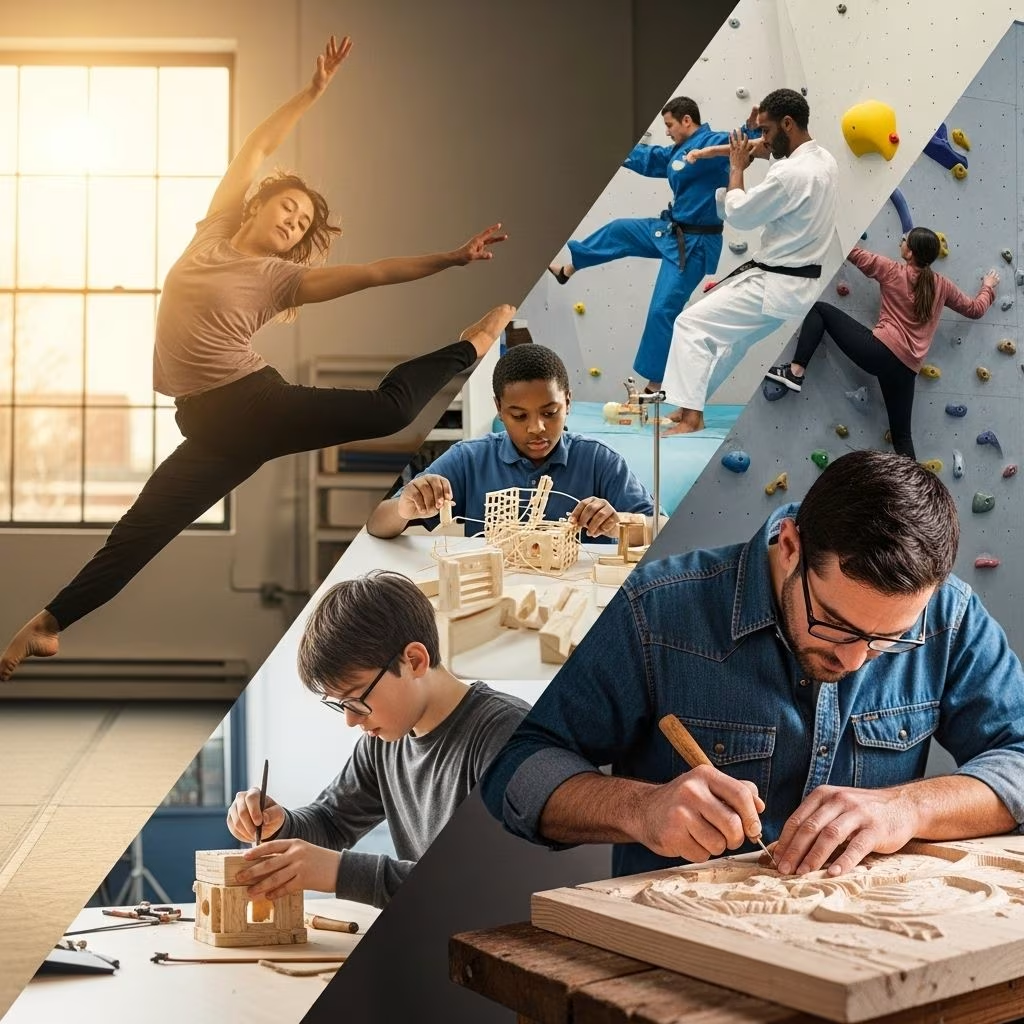
Bodily-kinesthetic intelligence is a foundational concept within Howard Gardner’s influential Theory of Multiple Intelligences. It recognizes the essential role physical movement, tactile experiences, and bodily awareness play in learning, creativity, and self-expression. This article explores the definition, characteristics, development strategies, and real-world examples of bodily-kinesthetic intelligence, providing a comprehensive guide for anyone interested in understanding its impact on education, career, and everyday life.
What Is Bodily-Kinesthetic Intelligence?
Bodily-kinesthetic intelligence is the capacity to use one’s whole body or parts of the body to solve problems, create products, or express ideas and emotions with skill and finesse. This form of intelligence is often described as “physical learning” or “learning by doing.” It enables individuals to control their bodily motions, handle objects adroitly, and excel in tasks that require interplay between the mind and muscles.
According to Gardner, bodily-kinesthetic intelligence is as vital as linguistic or logical-mathematical intelligence. It is seen most strongly in athletes, dancers, surgeons, craftspeople, actors, and anyone whose daily activities depend on acute awareness and precise use of the body.
Key Characteristics of Bodily-Kinesthetic Learners
- Excellent motor skills: Demonstrated through agility, balance, strength, endurance, and dexterity.
- Preference for active learning: Excel when learning involves movement, hands-on activities, or tactile experiences.
- Physical expression: Naturally use gestures, posture, and movement to communicate ideas or feelings.
- Muscle memory: Can easily mimic actions, learn dance routines, or master athletic skills.
- Curiosity through exploration: Prefer to discover and understand concepts by interacting physically with their environment.
People with strong bodily-kinesthetic intelligence are often described as energetic, coordinated, crafty, and eager to participate in physical activities. They typically thrive in environments that encourage movement rather than those that rely solely on lectures or visual demonstrations.
How to Identify Bodily-Kinesthetic Intelligence
Some telltale signs that an individual is a bodily-kinesthetic learner include:
- Frequent fidgeting or movement when required to sit still.
- Active participation and excitement in sports, dance, or performing arts.
- Strong ability to remember information learned through physical activity rather than passive observation.
- Talent for building, crafting, or manipulating objects with precision.
- Enjoyment of group games and role-playing.
Kinesthetic learners enjoy hands-on exploration, such as science experiments, drama, crafting, or any classroom activity involving movement. They typically do best academically in practical subjects and require frequent breaks in sedentary environments.
Real-World Examples of Bodily-Kinesthetic Intelligence
Bodily-kinesthetic intelligence can be seen in individuals across many domains:
- Athletes: Michael Jordan, known for legendary physical coordination and skill in basketball.
- Dancers: Fred Astaire, whose body awareness allowed for seamless, innovative dance performances.
- Architects and Craftspeople: James Hoban, who designed the White House using hands-on modeling and building skills.
- Inventors and Surgeons: Surgeons rely on precise hand-eye coordination and muscle memory for delicate procedures.
- Performing Artists: Actors use physical gestures, posture, and movement to bring characters to life.
- Children at Play: Kids who display remarkable natural talent in athletics, dance, and artistic crafts are often bodily-kinesthetic learners.
Howard Gardner’s Theory of Multiple Intelligences
Howard Gardner, a developmental psychologist, first described bodily-kinesthetic intelligence as part of his groundbreaking theory in 1983. He proposed that intelligence is not a single, uniform ability, but rather a set of distinct modalities — bodily-kinesthetic being one of nine recognized types. This theory revolutionized education by acknowledging the value of “physical intelligence” and encouraging diverse methods of teaching and assessment.
Benefits and Strengths of Bodily-Kinesthetic Intelligence
| Strength | Description | Applications |
|---|---|---|
| Motor Coordination | Control over body movements and balance | Sports, dance, surgery, physical therapy |
| Manual Dexterity | Manipulation of objects with precision | Crafts, sculpture, musical instrument performance |
| Expressive Movement | Ability to convey feelings and ideas physically | Theater, mime, education, leadership |
| Active Problem-Solving | Learning and innovating through doing | STEM education, architecture, invention |
| Endurance and Agility | Sustained physical effort and flexibility | Athletics, dance, emergency services |
Common Careers and Roles Suited for Bodily-Kinesthetic Learners
- Athletes and coaches
- Physical therapists and trainers
- Surgeons and dentists
- Dancers and choreographers
- Actors and performers
- Artists, sculptors, and craftspersons
- Mechanics and engineers
- Construction workers and architects
- Occupational therapists
- Event coordinators (involving setup and movement)
Strategies for Supporting Bodily-Kinesthetic Intelligence
Teachers, parents, and employers can foster bodily-kinesthetic intelligence with specific approaches:
- Incorporate movement in learning activities: Use role-playing, simulations, science experiments, and drama in lessons.
- Provide hands-on tasks: Include art projects, model-building, and crafts.
- Allow for active breaks: Let learners stretch or move periodically.
- Encourage participation in sports, dance, and theater.
- Use tactile materials: Paint, clay, wood, and musical instruments can nurture fine motor skills.
- Promote group games and collaboration on physical projects.
Bodily-kinesthetic learners thrive when allowed to move, touch, build, and experiment. By integrating these opportunities in school, work, or recreational activities, educators and mentors can bring out the best in these energetic and creative individuals.
Tips for Developing Bodily-Kinesthetic Intelligence at School and Work
- Emphasize active projects and kinesthetic exercises, such as building models or conducting laboratory experiments.
- Involve learners in group activities requiring teamwork and movement.
- Encourage note-taking with sketching, drawing, or hands-on materials.
- Connect learning to physical performances or demonstrations — e.g., teaching scientific principles via dance or exercise.
- Offer flexible classroom layouts and furniture that accommodate movement.
- Support participation in clubs focused on athletics, drama, and dance.
Activities and Exercises to Enhance Bodily-Kinesthetic Intelligence
- Yoga, Pilates, and mindfulness-based movement
- Sports training in basketball, soccer, swimming, or gymnastics
- Dance classes, choreography, and aerobic routines
- Martial arts and fencing
- Crafts, sculpting, painting, pottery, and woodworking
- Pantomime or acting workshops
- Role-playing and simulation-based learning
- Interactive science experiments
- Musical instrument instruction
- Group games and team-building activities
Combining Body and Mind: The Cognitive Connection
Researchers such as Jean Piaget have argued that thought itself emerges through bodily experiences, especially in early childhood. Recent findings suggest that movement and posture can influence cognitive performance — for example, walking or physical exercise boosting creativity and problem-solving. Poor posture and lack of movement have been associated with diminished academic achievement and cognitive development in children.
Challenges Faced by Bodily-Kinesthetic Learners
- Traditional education often emphasizes verbal and visual learning, overlooking the power of physical engagement.
- Kinesthetic learners may struggle in settings that require prolonged periods of inactivity or passive listening.
- Lack of appreciation for active learning styles can lead to underperformance or boredom in these individuals.
Recognizing and accommodating bodily-kinesthetic intelligence ensures more inclusive educational and work environments, benefiting not only the learners themselves but also the enterprises and teams they engage with.
Frequently Asked Questions
Q: What is the main difference between bodily-kinesthetic intelligence and other forms of intelligence?
A: Bodily-kinesthetic intelligence centers on physical movement and learning through ‘doing,’ unlike linguistic (word-based) or logical-mathematical (reasoning-based) intelligence. While all forms play vital roles, kinesthetic intelligence stands out for hands-on, embodied problem-solving.
Q: What professions best suit those with high bodily-kinesthetic intelligence?
A: Bodily-kinesthetic individuals thrive in careers requiring movement and precision, including athletics, dance, surgery, crafts, acting, and engineering. Any profession emphasizing active skill and physical coordination is ideal.
Q: How can teachers support kinesthetic learners in the classroom?
A: Teachers can promote physical participation through movement-based activities, diverse tactile materials, flexible seating, frequent breaks, role-playing, and collaborative tasks, aligning educational delivery with kinesthetic strengths.
Q: Can bodily-kinesthetic intelligence be improved over time?
A: Yes, practicing activities that challenge and refine motor skills, such as sports, crafts, dance, yoga, and interactive games, can develop bodily-kinesthetic intelligence throughout life.
Q: Is bodily-kinesthetic intelligence found only in athletes or dancers?
A: No. While often associated with athletes and dancers, bodily-kinesthetic intelligence can be developed and applied in medicine, mechanics, teaching, craftsmanship, and daily life. Anyone with a preference for physical engagement can cultivate it.
Summary Table: Bodily-Kinesthetic Intelligence Overview
| Aspect | Description |
|---|---|
| Definition | Ability to use the body for problem-solving, creation, and expression |
| Hallmarks | Active learning, physical skill, hands-on engagement, body awareness |
| Typical Roles | Athletes, dancers, surgeons, actors, craftspeople, teachers |
| Development Strategies | Movement-based activities, tactile materials, hands-on projects |
| Challenges | Classroom or work environments focused on non-interactive learning |
FAQs About Bodily-Kinesthetic Intelligence
Q: Can bodily-kinesthetic intelligence help with other forms of learning?
A: Yes. Physical engagement often reinforces memory, boosts creativity, and aids conceptual understanding in linguistic, mathematical, or spatial learning tasks.
Q: How early in life does bodily-kinesthetic intelligence develop?
A: Research suggests that this intelligence emerges in infancy, as movement and tactile interaction are a child’s initial modes of exploration and cognitive growth.
Q: What activities can parents use at home to support bodily-kinesthetic intelligence?
A: Activities such as building blocks, painting, dancing, playing catch, and family games can nurture body awareness and coordination in children.
Q: Is it possible for adults to develop bodily-kinesthetic intelligence later in life?
A: Yes, adults can enhance this intelligence by engaging in new physical activities, sports, crafts, and movement-based training.
Conclusion
Bodily-kinesthetic intelligence brings a dynamic, physical dimension to learning and creativity. By understanding and nurturing this intelligence, individuals and organizations can unlock new paths to innovation, engagement, and personal achievement. Whether through education, career, or daily living, the power of movement and hands-on experience continues to influence success and fulfillment.
References
- https://study.com/learn/lesson/kinesthetic-intelligence-skills.html
- https://www.mentalup.co/blog/bodily-kinesthetic-intelligence
- https://www.learningbp.com/bodily-kinesthetic-intelligence-definition-characteristics-activities-development/
- https://www.healthline.com/health/bodily-kinesthetic
- https://international-montessori.org/swfiles/files/Bodily-Kinesthetic-Intelligence.pdf
- https://personalitymax.com/multiple-intelligences/bodily-kinesthetic/
- https://mathandmovement.com/kinesthetic-learner-characteristics/


