


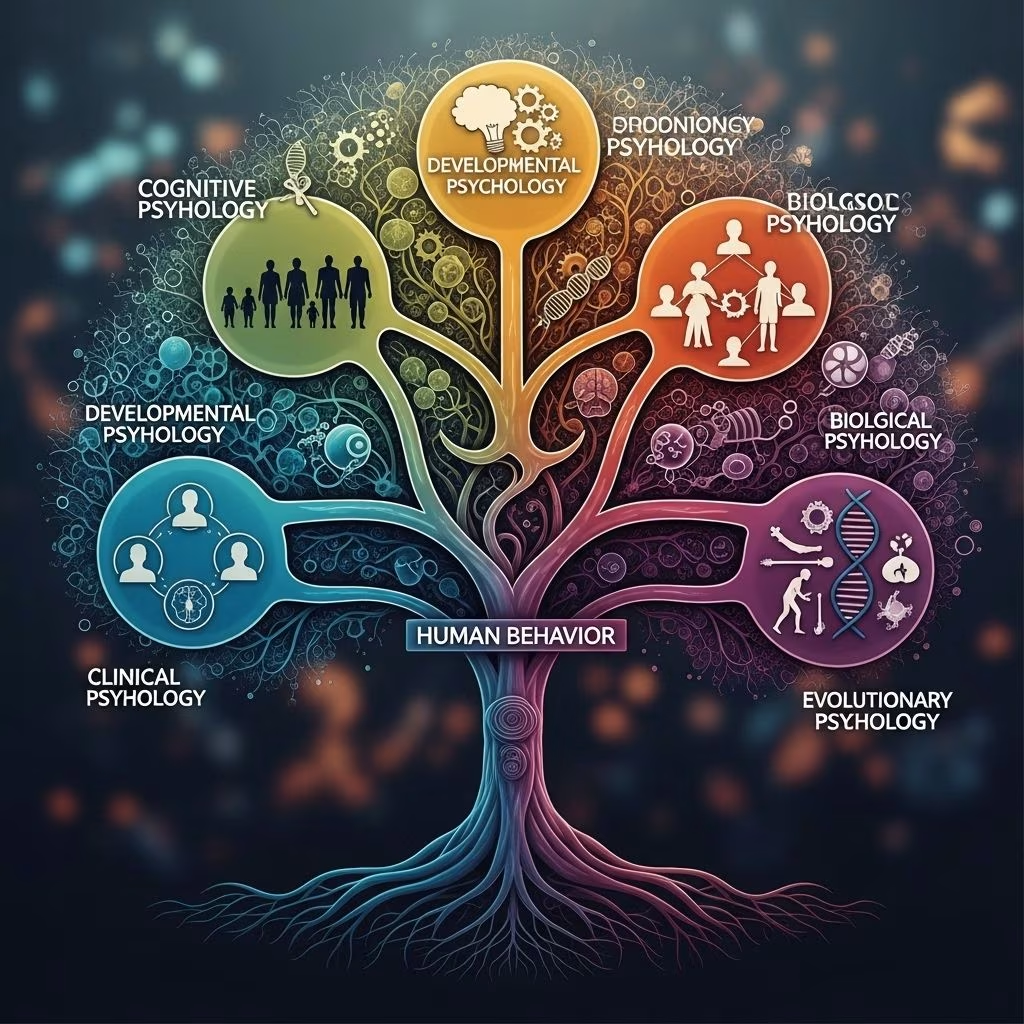
Major Branches of Psychology: Deep Insights Into Human Behavior
Psychology is an expansive science focused on understanding the complexity of the human mind and behavior. By dividing psychology into distinct branches, researchers and practitioners gain deeper insights into thinking patterns, emotional processes, and actions. Each branch offers unique perspectives and research methodologies that ultimately contribute to better mental health, human well-being, and scientific advancement.
Introduction to Psychology
At its core, psychology is the study of the mind and behavior. It evaluates thought processes, emotions, social interactions, cognitive functioning, personality traits, and even the physical workings of the brain.
The discipline applies a range of research methods to investigate the mysteries of the human mind and to develop interventions for challenges that individuals encounter in daily life.
Psychology branches are often categorized as basic (theoretical) or applied (practical). Regardless of classification, these branches are interrelated and mutually reinforce each other to deepen our understanding of mental processes and behavior.
Clinical Psychology
Clinical psychology is perhaps the most recognized branch, focusing on the assessment, diagnosis, and treatment of mental disorders and emotional difficulties.
Clinical psychologists utilize various evidence-based therapies, such as cognitive-behavioral therapy (CBT) and psychoanalysis, to help individuals, families, and communities overcome mental health challenges.
These professionals work in diverse environments, including hospitals, private practices, community health centers, and academic institutions.
Their roles may include:
- Conducting diagnostic assessments and psychological tests.
- Collaborating with broader healthcare teams and other specialists.
- Providing psychotherapy and counseling.
- Engaging in research, training, and consultation.
Clinical psychologists address a spectrum of mental health issues, ranging from depression, anxiety, and stress to severe conditions like schizophrenia and bipolar disorder. Their work is pivotal in shaping mental health care policy and ongoing innovations in treatment methods.
Cognitive Psychology
Cognitive psychology delves into the mental processes that underlie human thought, learning, memory, and perception.
This branch studies how people acquire, process, and apply information, offering vital insights into everyday activities such as problem-solving, attention, language, and creativity.
Core areas of focus include:
- Memory formation and retrieval
- Decision-making and judgment
- Perception and sensory processing
- Attention and information filtering
The findings in cognitive psychology have led to practical applications in areas like user interface design, education, rehabilitation for brain injuries, and the development of artificial intelligence. Cognitive psychologists frequently collaborate with neuroscientists and other branches to enhance understanding of the brain’s intricate workings.
Developmental Psychology
Developmental psychology is dedicated to studying the lifelong changes that individuals experience, beginning in infancy and continuing through adulthood and old age.
The discipline explores how physical, emotional, cognitive, and social abilities evolve over time. Specific topics include:
- Prenatal development and early childhood growth
- Language acquisition and cognitive milestones
- Personality development and identity formation
- Aging and psychological changes in later life
Developmental psychologists investigate how early relationships, upbringing, and life experiences shape future behavior and mental health outcomes. Their research underpins practices in education, parenting, counseling, elder care, and public health initiatives.
Social Psychology
Social psychology examines how interactions, relationships, and group dynamics influence people’s behavior, thoughts, and emotions.
It studies processes such as conformity, persuasion, group behavior, leadership, and social influence. Social psychologists analyze phenomena including:
- Prejudice and discrimination
- Interpersonal attraction and relationships
- Attitude formation and change
- Communication and nonverbal behavior
Insights from social psychology are applied in diverse fields, such as marketing, organizational management, public policy, and conflict resolution. The findings contribute to understanding cultural dynamics and promote positive social change.
Other Significant Branches
Beyond the main branches, psychology encompasses numerous specialized fields that address unique aspects of human behavior and mental health. Some noteworthy branches include:
- Abnormal Psychology: Investigates deviations from typical patterns of behavior, thought, and emotion. This branch is crucial for understanding and managing mental disorders, including their causes and treatments.
- Behavioral Neuroscience (Biopsychology): Explores the biological bases for behavior, examining the interplay between genes, physiology, and the environment.
- Personality Psychology: Focuses on individual personality differences, traits, and patterns. It helps in understanding what drives personal motivation, emotion, and consistent behavioral tendencies.
- Positive Psychology: Studies strengths, thriving, and well-being, aiming to understand what makes life meaningful and fulfilling.
- Quantitative Psychology: Applies statistical and mathematical modeling to psychological research and measurement (such as psychometrics).
- Community Psychology: Investigates the role of social environments and community programs in mental health improvement.
- Educational Psychology: Examines how people learn and applies insights to enhance teaching methods and educational outcomes.
- Industrial-Organizational Psychology: Focuses on workplace behavior, productivity, and organizational dynamics.
- Forensic Psychology: Applies psychological principles in legal and criminal contexts, assisting in assessments, profiling, and criminal investigations.
- Health Psychology: Studies how psychological factors impact physical health, illness prevention, and recovery.
- Experimental Psychology: Conducts controlled studies to understand foundational psychological processes.
- Evolutionary Psychology: Investigates how evolutionary principles influence human behavior and cognition.
- Neuropsychology: Bridges psychology and neuroscience to study brain injuries and neurological disorders.
- School Psychology: Addresses children’s learning and behavioral concerns in educational settings.
Quick Comparison Table
| Branch | Main Focus | Key Applications |
|---|---|---|
| Clinical Psychology | Mental disorders, therapy | Counseling, diagnosis, treatment |
| Cognitive Psychology | Thought, memory, perception | Rehabilitation, education, AI |
| Developmental Psychology | Lifespan changes | Child care, education, geriatrics |
| Social Psychology | Social influence, group dynamics | Marketing, team building, policy making |
| Abnormal Psychology | Disorders, deviant behavior | Clinical assessment, interventions |
| Personality Psychology | Individual differences | Personality tests, counseling |
| Positive Psychology | Well-being, strengths | Coaching, resilience training |
Basic vs. Applied Psychology
Branches of psychology may be categorized as:
- Basic (Theoretical) Psychology: Aims to advance knowledge about fundamental mental processes and behavior. It includes research-oriented fields like cognitive psychology, neuropsychology, and personality psychology.
- Applied (Practical) Psychology: Seeks to solve real-world problems using psychological principles. Examples include clinical psychology (mental health care), educational psychology (improved teaching), industrial-organizational psychology (workplace productivity), and forensic psychology (legal applications).
Most psychologists integrate both perspectives, using discoveries from basic research to guide practical interventions and vice versa.
Frequently Asked Questions (FAQs)
Q: What are the most popular branches of psychology?
A: Clinical, cognitive, developmental, and social psychology are among the most widely practiced and researched branches, but there are many more specialized fields.
Q: Which branch of psychology deals with mental health disorders?
A: Clinical psychology primarily addresses the assessment and treatment of mental health disorders, though abnormal psychology focuses on the study of unusual patterns and conditions.
Q: How do basic and applied psychology differ?
A: Basic psychology seeks to understand fundamental principles and processes, while applied psychology uses those insights to solve practical problems and improve human well-being.
Q: Can psychologists specialize in more than one branch?
A: Yes, many psychologists work across multiple branches, especially in academic, research, or multidisciplinary settings where knowledge and skills from several subfields may be required.
Q: What degree is needed to become a psychologist?
A: Most psychology careers require a minimum of a master’s degree, with many research or clinical positions needing a doctorate (Ph.D. or Psy.D.). Licensing requirements vary by country and specialty.
References
- https://www.wgu.edu/blog/types-psychology-the-4-branches2402.html
- https://www.mastersinpsychology.com/careers/psychology-types/
- https://www.edology.com/blog/psychology/major-branches-of-psychology
- https://www.simplypsychology.org/branches-of-psychology.html
- https://www.apa.org/education-career/guide/subfields
- https://www.snhu.edu/about-us/newsroom/social-sciences/types-of-psychology
- https://online.king.edu/news/major-branches-of-psychology-guide/
- https://en.wikipedia.org/wiki/List_of_branches_of_psychology


