


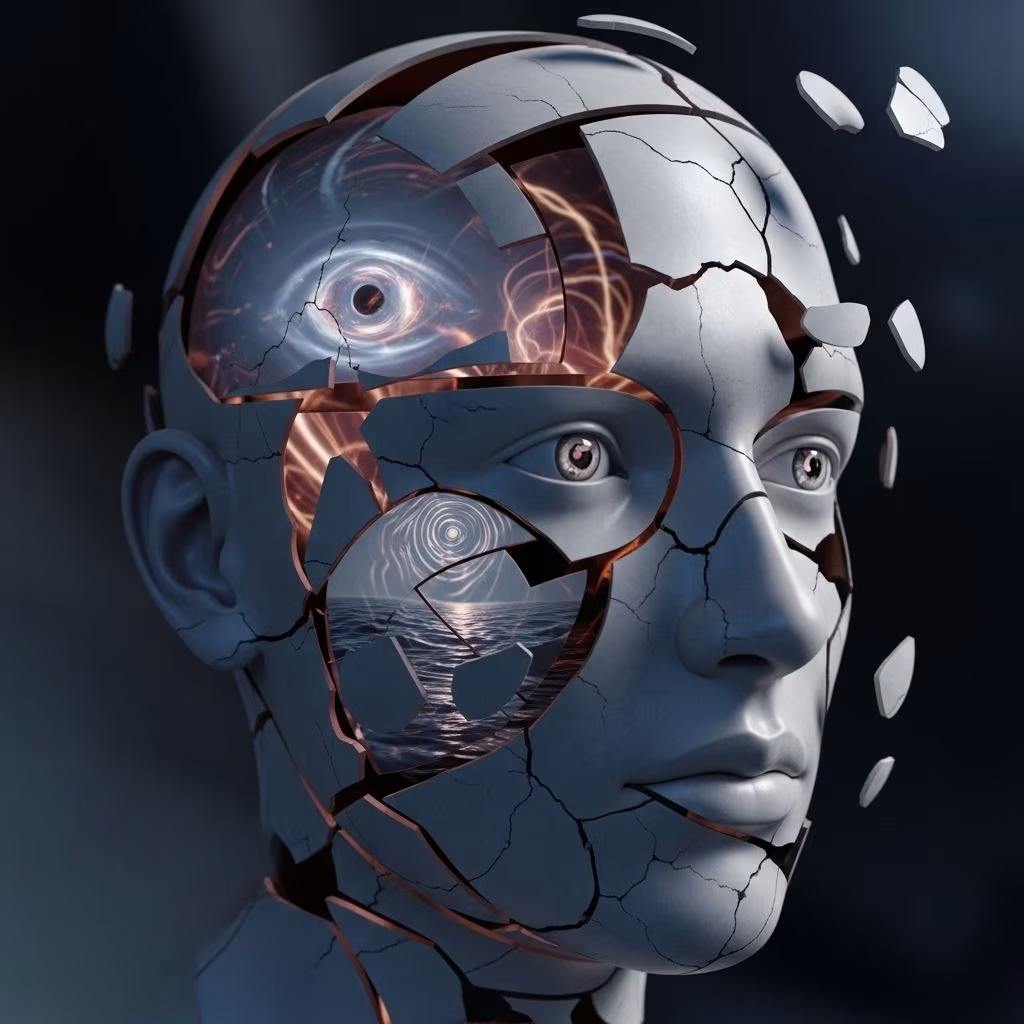
Delusions: Overview and Significance in Psychosis
Delusions are fixed, false beliefs that persist despite clear evidence to the contrary and are not aligned with cultural, religious, or societal norms. These beliefs form a central part of several psychiatric disorders, especially those on the psychosis spectrum, such as schizophrenia and delusional disorder. Understanding delusions—their types, themes, and how they affect individuals—is crucial for effective diagnosis and management in mental health care.
What Are Delusions?
Delusions involve holding on to ideas or convictions that are demonstrably false and cannot be corrected by reasoning or factual evidence. These beliefs are typically immune to logical argument and are often personally significant to the individual. Delusions may occur:
- As part of psychotic disorders (e.g., schizophrenia, bipolar disorder with psychotic features)
- In isolation as delusional disorder, where delusions are the only major psychiatric symptom
- Secondary to medical conditions, substance use, or neurological disorders
Delusions typically cause distress, disrupt daily functioning, and can severely impede social, occupational, and personal wellbeing. Their identification and classification help guide effective treatment strategies.
Primary Types of Delusions
Delusions are classified according to their content and underlying theme. Differentiating between these types provides insights into the nature of the psychosis and guides clinical management.
- Bizarre Delusions: Beliefs that are implausible and logically impossible (e.g., mind being controlled by aliens).
- Non-bizarre Delusions: False beliefs that could conceivably happen in real life but are untrue (e.g., being watched by authorities).
- Mood-Congruent Delusions: Delusions whose content matches the individual’s mood, such as grandiosity during mania or guilt during depression.
- Mood-Incongruent Delusions: Delusions that do not correlate with the person’s emotional state.
Main Delusional Themes
The core themes most frequently observed in psychotic disorders include:
- Persecutory (Paranoid) Delusions: Belief of being targeted, harmed, or harassed by others. These are the most common type, especially in schizophrenia and delusional disorder. Individuals may feel conspiracies are plotted against them, leading to anxiety, mistrust, and social withdrawal.
- Grandiose Delusions: Exaggerated beliefs concerning one’s power, importance, or abilities. The individual might think they possess special talents, powers, or relationships with prominent figures or deities.
- Jealous Delusions: Persistent, unfounded beliefs that a spouse or partner is unfaithful, often resulting in interpersonal conflict and emotional distress.
- Somatic Delusions: False convictions about having a physical illness or abnormal bodily sensation (e.g., believing organs are missing or infected).
- Referential Delusions: Perception that ordinary events, people, objects, or media contain special, personal significance or messages (e.g., thinking a television news story contains coded messages about oneself).
- Erotomanic Delusions: Belief that another person, typically someone of higher status or a celebrity, is in love with the individual.
- Delusions of Control: False belief that one’s thoughts, actions, or feelings are being controlled by an outside force or entity (e.g., supernatural, technological).
- Thought Broadcasting: Conviction that one’s thoughts are being broadcast or accessible to others.
- Thought Insertion: Belief that thoughts are being implanted into one’s mind by an external source.
- Nihilistic Delusions: Belief that oneself, others, or the world does not exist or is about to end.
- Mixed-Type Delusions: Presence of two or more delusional themes without a single dominating theme.
How Delusions Originate and Progress
Delusions develop through complex interactions between genetic, biological, psychological, and environmental factors. Key contributors and mechanisms include:
- Brain abnormalities: Dopamine dysregulation, structural changes, and dysfunction in brain networks may predispose individuals to psychotic thinking.
- Psychosocial stressors: Trauma, interpersonal conflict, and chronic stress can trigger or exacerbate delusional beliefs.
- Substance use: Use of drugs and alcohol may amplify or precipitate delusional thinking, especially in vulnerable individuals.
- Medical and neurological conditions: Certain diseases (e.g., neurodegenerative disorders, infections) and medications can cause secondary delusions.
Stages of Delusion Formation (according to Klaus Conrad):
- Trema: Initial stage with vague tension and apprehension.
- Apophany: Emerging sense of significance in otherwise mundane stimuli.
- Anastrophe: Formation of self-referential experiences and interpretations.
- Consolidation: Delusional beliefs become fixed and elaborate.
- Residuum: Long-term stabilization of delusions, often resistant to change.
Delusions and Psychotic Disorders
Delusions are a primary symptom in various psychoses, playing a central role in diagnosis and understanding the disorder. Major conditions characterized by delusions include:
- Schizophrenia: Marked by profound loss of contact with reality and the presence of persecutory, referential, and grandiose delusions.
- Delusional Disorder: Primary presence of non-bizarre delusions without other prominent psychotic symptoms. Subtypes are classified based on delusional content (e.g., persecutory, grandiose, jealous, somatic).
- Bipolar Disorder (with psychotic features): Manic or depressive episodes accompanied by mood-congruent or incongruent delusions.
- Depression with Psychotic Features: Severe depressive episodes include delusions, often mood-congruent such as guilt or deserved punishment.
- Medical or substance-induced psychosis: Underlying medical conditions or substance intoxication/withdrawal trigger delusional thinking.
| Delusion Type | Common Features | Associated Disorders |
|---|---|---|
| Persecutory | Belief of being targeted, harmed, or plotted against | Schizophrenia, Delusional Disorder |
| Grandiose | Exaggerated sense of self, abilities, or power | Schizophrenia, Bipolar Disorder |
| Somatic | False belief of physical illness/defect | Delusional Disorder, Medical Conditions |
| Jealous | False belief in partner’s infidelity | Delusional Disorder |
| Referential | Belief that external events hold special meaning | Schizophrenia, Delusional Disorder |
| Erotomanic | Belief that someone is in love with the person | Delusional Disorder |
| Nihilistic | Belief of imminent destruction or nonexistence | Severe Depression, Psychosis |
| Delusions of Control | Belief external force controls mind/body | Schizophrenia |
Common Symptoms of Delusions
Individuals experiencing delusions may present with the following symptoms:
- Firmly holding beliefs that contradict reality
- Difficulty accepting reasonable arguments or evidence
- Suspicion and mistrust of others
- Social withdrawal or avoidance
- Feelings of anxiety, agitation, or fear related to delusional themes
- Altered behavior in response to delusional beliefs (e.g., legal action based on persecutory delusions)
- Impaired functioning at home, work, or in relationships
- Potential for aggression or self-harm (especially with persecutory or nihilistic delusions)
Diagnosing Delusions and Related Disorders
Diagnosis involves a comprehensive assessment by mental health professionals that includes:
- Detailed clinical interview exploring belief content, persistence, and impact
- Psychiatric scales to assess symptom severity and type
- Rule-out of medical, neurological, or substance-induced causes
- Information from family, caregivers, or other observers
- Consideration of cultural, religious, and societal norms to distinguish pathological beliefs from culturally sanctioned ones
Treatment Approaches for Delusions
Treatment of delusions is multifaceted and often tailored to the individual’s needs and underlying condition. The two main modalities are:
- Medication:
- Antipsychotics are the cornerstone treatment, effective in reducing intensity and frequency of delusional beliefs.
- Mood stabilizers and antidepressants may be added in cases of mood disorders with delusions.
- Psychotherapy:
- Cognitive Behavioral Therapy (CBT) helps challenge and reframe delusional beliefs, improve insight, and develop coping strategies.
- Supportive therapy addresses emotional distress and improves social functioning.
- Addressing underlying causes:
- Treating substance abuse, managing medical illnesses, and psychosocial support are crucial for sustained improvement.
- Family and community support:
- Education, communication, and practical support for caregivers help manage the impact of delusions.
Impact of Delusions on Daily Life
Delusions can have profound effects on nearly every aspect of life, including:
- Disruption of relationships due to mistrust, suspicion, or jealousy
- Impediment in professional settings relating to productivity or collaboration
- Emotional distress, anxiety, depression, and risk of self-harm
- Increased isolation, stigma, and social withdrawal
- Legal trouble or financial hardship arising from acting on false beliefs
Frequently Asked Questions (FAQs)
Q: What distinguishes a delusion from an ordinary belief?
A: Delusions are false and held with absolute conviction, resistant to logical reasoning or evidence. Ordinary beliefs are open to discussion, evidence, or reconsideration.
Q: Can delusions be treated successfully?
A: Yes, many individuals respond well to a combination of antipsychotic medications and evidence-based psychotherapies, though long-term management is often needed for chronic conditions.
Q: Are delusions always a sign of a severe mental illness?
A: Not necessarily. Delusions can arise in other contexts, such as neurological disorders, severe depression, or substance use, but persistent delusions often indicate underlying psychosis.
Q: What should families do if a loved one develops delusions?
A: Seek professional help promptly, offer empathetic support, avoid arguing over delusional beliefs, and prioritize safety and practical management strategies.
Q: How common are delusions?
A: Delusional disorder affects about 0.2% of the general population, but delusions as a symptom are much more common, especially within psychotic disorders like schizophrenia.
Key Takeaways
- Delusions are fixed, false beliefs central to many psychotic disorders.
- They manifest in diverse forms, each with specific content and impact.
- Their presence requires sensitive, multidisciplinary evaluation and treatment.
- Long-term management and support can greatly improve quality of life and reduce the risks associated with delusional thinking.
References
- https://olympicbehavioralhealth.com/rehab-blog/delusion/
- https://en.wikipedia.org/wiki/Delusion
- https://www.webmd.com/mental-health/delusions-types
- https://www.healthline.com/health/schizophrenia/types-of-delusions-in-schizophrenia
- https://my.clevelandclinic.org/health/diseases/9599-delusional-disorder
- https://www.ncbi.nlm.nih.gov/books/NBK539855/
- https://www.ncbi.nlm.nih.gov/books/NBK563175/


