


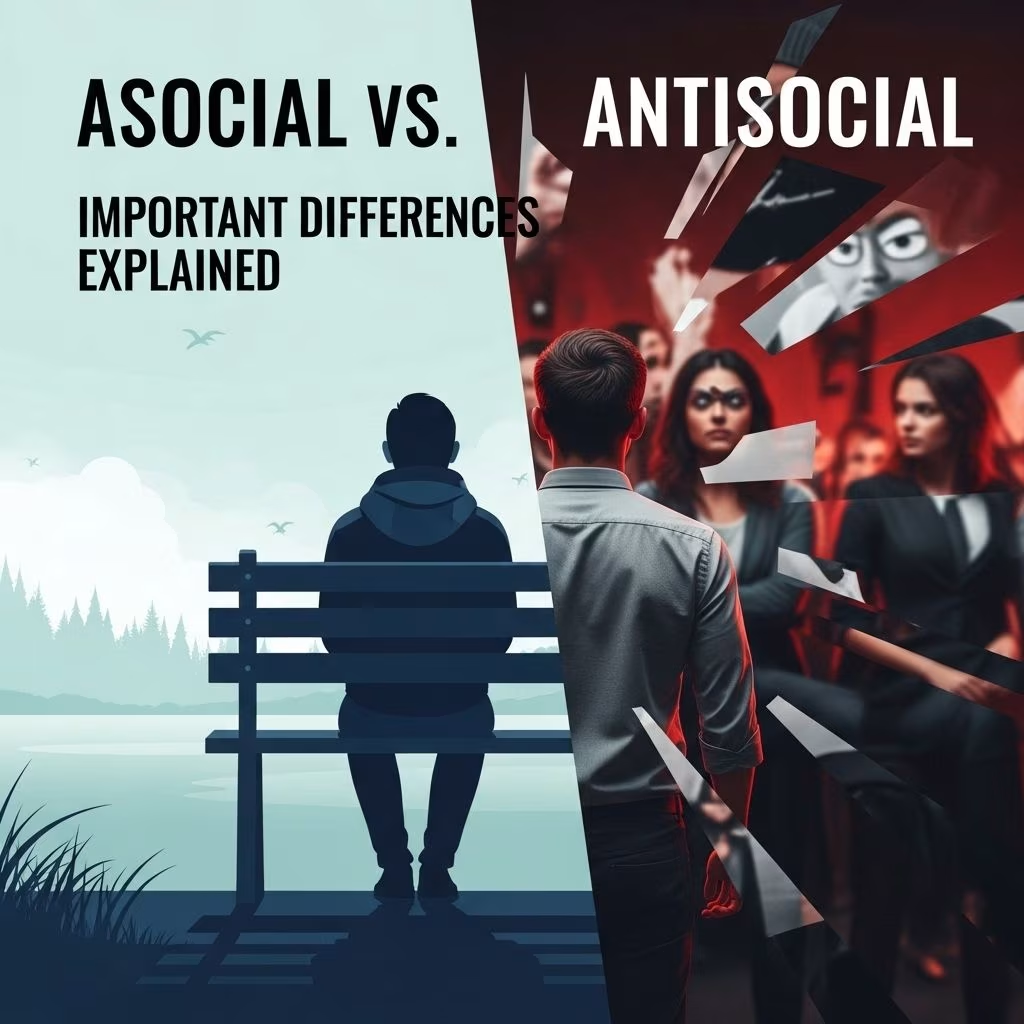
While the terms asocial and antisocial are often used interchangeably in daily conversation, they refer to very different sets of behaviors and personality characteristics within mental health discussions. This article explains the important distinctions, explores underlying motivations, provides practical examples, and outlines approaches to support and intervention.
What Does ‘Asocial’ Mean?
Asocial behavior refers to a tendency to avoid social interaction, typically due to a preference for solitude or difficulties with social confidence. It does not inherently involve hostility or intention to harm others. Common aspects include:
- Preference for spending time alone
- Discomfort or anxiety in new social situations
- Limited interest in developing new relationships
- Challenges initiating or maintaining conversations with unfamiliar people
- Possible link to social anxiety, avoidant personality traits, depression, or neurodevelopmental conditions like autism spectrum disorder
Individuals who are asocial may derive genuine satisfaction from solitary activities and may simply feel emotionally drained by frequent social engagement. In many cases, asociality is a stable personality trait rather than a sign of active illness.
What Does ‘Antisocial’ Mean?
Antisocial behavior, by contrast, often involves an active disregard for the rights, feelings, or safety of others, and can be associated with repeated violation of societal norms. In psychiatry, this pattern may reach the threshold for a diagnosis of antisocial personality disorder (ASPD). Key features include:
- Lack of empathy toward others
- Repeated rule-breaking and disregard for laws
- Manipulative and deceitful behaviors
- Impulsivity and poor self-control
- Reckless behaviors that threaten personal or public safety
- Frequent antagonism, hostility, or aggression
- Difficulty or inability to sustain long-term relationships
This disorder is far less common than asocial traits and is considered a serious mental health condition with significant impacts on functioning and relationships. Antisocial behaviors can be destructive to others and typically violate accepted moral or legal standards.
Comparing Asocial and Antisocial Traits
| Trait/Characteristic | Asocial | Antisocial |
|---|---|---|
| General Motivation | Preference for solitude; indifference to socializing | Disregard for others; driven to violate norms or harm |
| Social Relationships | Few, but may be able to maintain stable ones | Difficult to maintain; unstable, conflict-prone |
| Attitude Toward Others | Neutral or avoidant; low intent to harm | Frequent manipulation, lack of remorse, hostility |
| Regard for Social Norms | May unintentionally ignore norms | Intentionally violates norms and rules |
| Empathy | May struggle to connect, but not indifferent | Limited to no empathy; often self-centered |
| Self-Image | May have low self-esteem or self-doubt | Often inflated self-image, arrogance |
Common Misconceptions
- Being asocial is not the same as being antisocial—one does not imply risky or dangerous behaviors.
- Introversion is distinct from asociality: introverts may enjoy socializing in small doses, while asocial individuals may prefer to avoid it altogether.
- Not all antisocial individuals are criminals, but ongoing antisocial conduct can lead to conflicts with the law or other serious consequences.
- Asocial behavior is a trait; antisocial behavior is often considered a disorder when it causes significant harm or impairment.
Causes and Underlying Factors
Asociality
The causes of asocial behavior can vary. Some common contributors include:
- Biological factors and temperament (natural preference for solitude)
- Social anxiety or shyness
- Past negative social experiences
- Other mental health conditions, such as depression, avoidant personality disorder, or autism spectrum disorder
These factors may interact—someone with social anxiety may avoid gatherings because they feel vulnerable to scrutiny or rejection, while others simply find little personal value in socializing and do not experience distress from their social withdrawal.
Antisocial Behavior and Personality Disorder
Antisocial behavior has more complex roots. Potential risk factors include:
- Genetic predispositions and family history
- Adverse childhood experiences, trauma, or abuse
- Disrupted attachment and lack of positive role models in early life
- Substance use and environmental stressors
Antisocial personality disorder (ASPD) formally requires a clinical diagnosis and persistent patterns of behavior starting since adolescence or earlier.
Key Differences in Motivation and Treatment of Others
- Asocial individuals mainly wish to avoid social interaction to reduce discomfort, recharge energy, or because of low interest. Their avoidance is mostly self-protective, not hurtful to others.
- Antisocial individuals may engage with others when it serves their own interests, or they might avoid others out of contempt or indifference. Their actions often harm others, either indirectly (manipulation, deceit) or directly (aggression, rule-breaking).
Asocial vs. Antisocial: Similarities
Despite the differences, there are some areas of overlap, including:
- Both may have difficulty forming new relationships
- Limited social circles or avoidance of group activities
- Possible disregard for typical social expectations (though the intent and consequence differ fundamentally)
Important Differences Summarized
- Harm to Others: Asocial people tend to avoid others but rarely harm them; antisocial people are prone to harming, deceiving, or manipulating others, often without remorse.
- Motivation: Asociality is about indifference or discomfort; antisociality is about violation, thrill-seeking, or exploitation.
- Empathy: Asocial individuals may have normal empathy but are shy or uninterested; those with antisocial traits often lack empathy entirely.
- Self-Esteem: Asocial individuals may have low or neutral self-esteem; antisocial individuals may exhibit grandiosity.
When to Seek Help
Neither asocial nor antisocial behaviors automatically mean someone has a mental health disorder. However, intervention may be helpful when:
- Asocial traits cause distress, loneliness, or hinder daily life (e.g., workplace or school performance)
- Antisocial behaviors lead to conflicts with the law, harm relationships, or result in dangerous activity
- Emotional symptoms like prolonged sadness, anxiety, hostility, or substance abuse are present alongside social difficulties
A mental health professional can assess the context, severity, and underlying causes, and recommend coping strategies or therapeutic support tailored to individual needs.
Therapeutic Approaches
Asociality
- Cognitive-behavioral therapy (CBT) may help with social anxiety and confidence-building
- Social skills training and gradual exposure to social settings
- Treatment of underlying conditions (e.g., depression, anxiety)
- Acceptance of one’s natural personality if social withdrawal is not distressing or impairing
Antisocial Personality Disorder
- Long-term psychotherapy, with a focus on behavior change and accountability
- Anger management and impulse control training
- Family interventions and substance abuse treatment, if needed
- Treatment for co-occurring mental health conditions is often necessary
Frequently Asked Questions (FAQs)
Can someone be both asocial and antisocial?
While the two tendencies exist on different spectrums, it is theoretically possible for someone to avoid social contact (asocial) and also display harmful or rule-breaking behavior (antisocial). However, they usually appear separately due to distinct motivations.
Is being asocial a mental health problem?
On its own, being asocial is not a mental health disorder. It’s a trait that varies between individuals; it only becomes a concern if it causes distress, dysfunction, or is related to a separate mental health issue.
What causes someone to be antisocial?
Antisocial behaviors can result from genetic factors, early life experiences, trauma, or learning through negative role models. The development of ASPD is complex, involving both environment and biology.
How can I tell if someone is asocial or antisocial?
Observing an individual’s motivation and impact on others offers clues:
- Asocial people prefer time alone and avoid drama or aggression
- Antisocial people frequently engage in manipulative, reckless, or harmful behaviors toward others
Can treatment help with asocial or antisocial tendencies?
Yes. Many people with asocial traits benefit from confidence-building and therapy for anxiety or depression. Those with antisocial behaviors, especially if severe, may require specialized and long-term interventions.
Practical Tips for Supporting Individuals
- Respect personal boundaries—don’t pressure asocial people into unwanted social interactions
- Encourage professional evaluation if harm, conflict, or legal issues are persistent
- Offer emotional support for loneliness, anxiety, or depressive symptoms
- Maintain open, nonjudgmental communication about concerns and behaviors
Final Thoughts
Understanding the distinction between asocial and antisocial behaviors can foster greater empathy and awareness in society. Whether addressing personal needs or supporting loved ones, accurate knowledge is key to promoting mental and emotional well-being.
References
- https://www.mentalhealth.com/library/asocial-vs-antisocial-difference
- https://amfmtreatment.com/blog/antisocial-personality-disorder-vs-social-anxiety-differences-similarities-treatment-options/
- https://www.choosingtherapy.com/asocial-vs-antisocial/
- https://www.betterhelp.com/advice/sociopathy/sociopath-definition-and-symptoms/
- https://www.medicalnewstoday.com/articles/high-functioning-sociopath-vs-antisocial-personality-disorder
- https://www.psychologytoday.com/us/blog/and-running/202102/antisocial-personality-or-antisocial-behavior


