


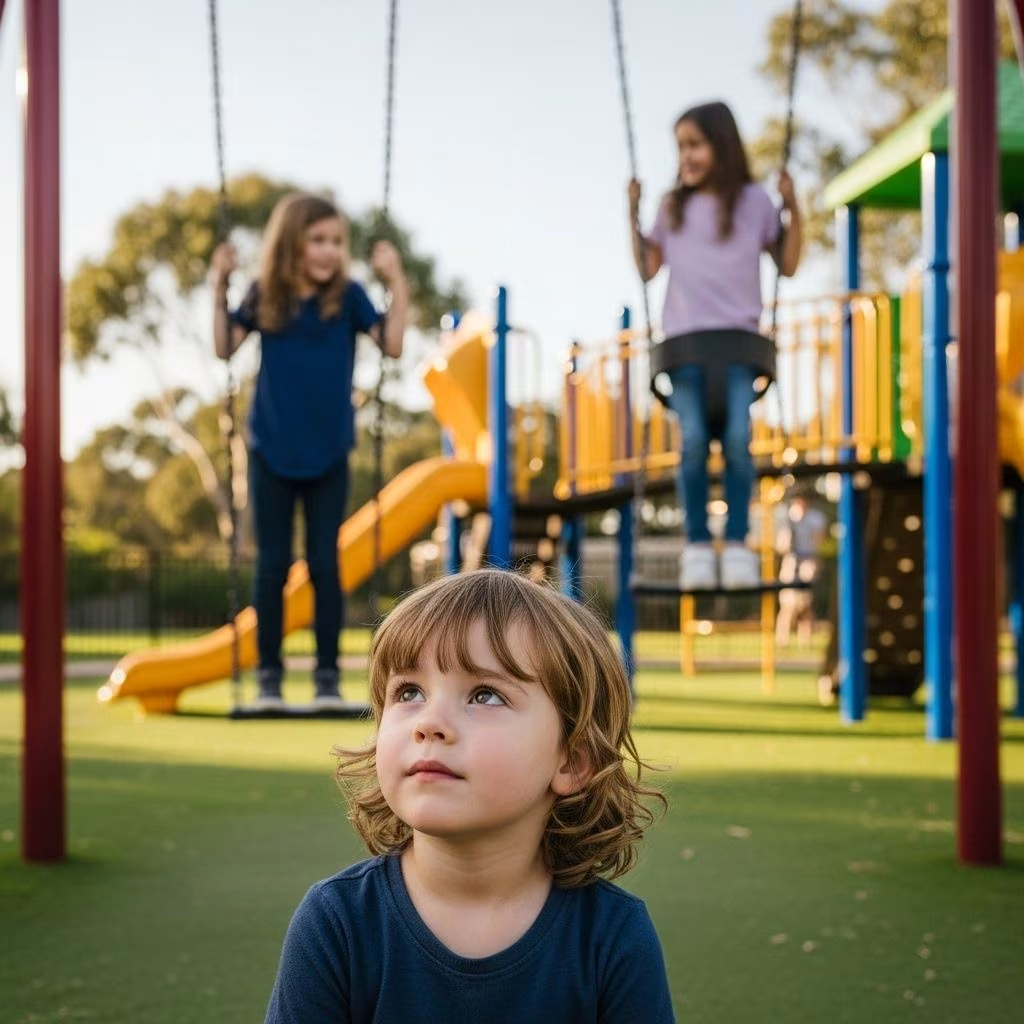
How Youngest Child Syndrome Shapes Development
Birth order plays a pivotal role in personal development, affecting not only our relationships within the family but also our sense of self, choices, and individuality outside it. Youngest Child Syndrome refers to a collection of personality traits and behavioral patterns often found in the “babies of the family.” These traits are shaped by the unique circumstances of being the youngest and include both positive and negative aspects. This article takes an in-depth look at how youngest child syndrome forms, its psychological underpinnings, typical characteristics, and the lifelong impact it can have.
Understanding Youngest Child Syndrome
Youngest child syndrome is believed to arise from the interplay between birth order, family dynamics, and parenting styles. In families with two or more children, each sibling tends to take on different roles. The oldest may carry the most responsibility, the middle child may navigate between power dynamics, and the youngest often becomes the “baby,” sometimes coddled and held to different standards. This unique environment fosters a range of traits and behaviors specifically found among youngest siblings.
- Attention-Seeking: Youngest children frequently compete for attention with older siblings and may develop habits like charm, humor, or risk-taking to stand out.
- Dependence: Due to receiving help and care from family members, they may lag in independence compared to older siblings.
- Manipulation: Many youngest children rely on charm or wit as a coping mechanism, learning to get what they need or want in creative ways.
- Risk-Taking: With less pressure to conform to rules, youngest siblings may be bolder or more willing to break conventions.
- Stereotypes: Family members sometimes reinforce unhelpful stereotypes, such as seeing the youngest as “spoiled,” “helpless,” or the perpetual “entertainer.”
Birth Order Theory
Birth order theory posits that an individual’s birth position significantly affects personality development. According to family psychologists, the youngest child is often seen as the family baby, receiving the most leniency and affection, while also struggling for recognition and independence.


