


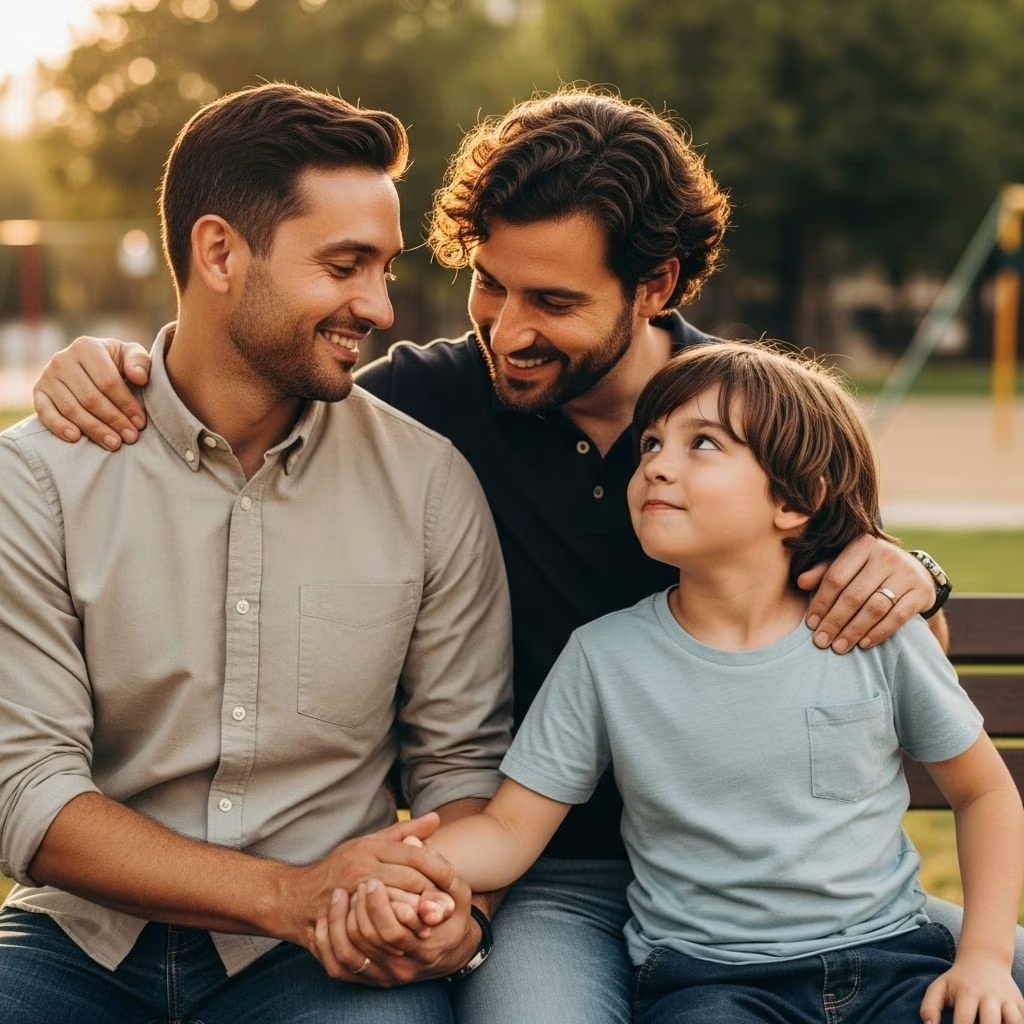
My Family, My Truth: A Gay Dad’s Rebuttal to Hate
Just as parents everywhere strive for love, stability, and honesty in their homes, so too do same-sex families—even when society questions their legitimacy. In an era where diversity in family structures is increasingly visible yet still vulnerable to open attacks, it is crucial to hear from those living this reality. This article, inspired by the original personal essay in Marie Claire, presents an in-depth account of a gay father’s family, addressing prejudice, celebrating resilience, and asserting once and for all: my family is not an atrocity.
Contents
- The Attack on Our Family
- What Makes a Family ― Beyond Biology and Prejudice
- Answering the Critics: Facts Over Fear
- The Everyday Reality: Joys and Challenges
- Support Networks and Community
- Lessons for the Future: Raising the Next Generation
- Frequently Asked Questions (FAQ)
The Attack on Our Family
Prejudice against LGBTQ families is not new, but it often becomes personal in the public square. One such moment occurred when vocal critics labeled families like ours as ‘atrocities.’ Here’s how it felt being on the receiving end—and why fighting back with truth matters.
- Public denigration: On social media and in comment sections, some insist that our family is ‘broken’ or even dangerous for children.
- The impact of language: Words like ‘atrocity’ are not just abstract insults; they cause real pain and perpetuate stigma that can have lasting harm, particularly on children.
- A call to respond: Rather than internalize these attacks, I chose to speak up for my son and countless others in loving, non-traditional families.
What Makes a Family ― Beyond Biology and Prejudice
At its core, a family is more than the circumstances of how its members come together.
- Love and commitment: Our family—my husband and I, and our son—was built on the same core principles as any other: love, stability, and mutual respect.
- Intentional parenting: Like many same-sex couples, we became parents through careful planning, soul-searching, and a genuine desire to nurture and support a child.
- Defining legitimacy: Despite critics’ obsession with biology, modern parenthood is defined by intentionality and presence, not mere genetics.
Table: Common Myths vs. Our Reality
| Myth | Our Reality |
|---|---|
| Children of gay parents are deprived of stability. | We provide a nurturing home filled with love, structure, and security. |
| Same-sex parenting causes confusion or harm. | Our son is thriving—curious, empathetic, and confident. |
| Families like ours are a threat to ‘traditional values.’ | Diversity in families strengthens social fabric and promotes empathy in children. |
Answering the Critics: Facts Over Fear
Those who attack LGBTQ families commonly recycle the same misconceptions. Here’s how the research and real stories push back against their narrative.
- Scientific consensus: Studies show children raised in same-sex households fare just as well emotionally, socially, and academically as their peers from other family structures.
- Emotional well-being: What truly matters is the quality of parenting and the stability of home life, not the gender or sexual orientation of the parents.
- The diversity advantage: Experiencing diverse family structures helps children develop empathy and resilience, skills valued in every community.
For every critic who insists that our child is ‘at risk,’ there are dozens of teachers, neighbors, and friends who see him flourish and recognize our commitment as parents.
The Everyday Reality: Joys and Challenges
Our story is not a political argument—it’s a lived reality. Parenting, with all its exhaustion, joy, and complexity, is universal. Here’s what daily life in our family looks like:
- School runs and bedtime stories: Evening routines center on consistency, warmth, and laughter. We attend school events, help with homework, and cherish sleepy bedtime conversations.
- Dealing with curiosity and questions: Our son receives all sorts of questions from classmates, sometimes innocent, sometimes ignorant. We prepare him to reply with pride and patience.
- Facing occasional stares: Public outings, especially in unfamiliar places, sometimes attract extra attention. It can be awkward, but it also opens teachable moments about difference and acceptance.
- Household teamwork: Like every family, we juggle chores, bills, careers, and childcare. Cooperation and honest communication are at the heart of our family’s happiness.
The everyday moments—learning to ride a bike, celebrating report cards, navigating colds and tantrums—bind us together as family.
Support Networks and Community
No family thrives in isolation. Our journey has been bolstered by support systems both formal and informal:
- Chosen family: Friends and allies, both LGBTQ and straight, form an extended network that shares holidays, milestones, and solidarity through challenges.
- LGBTQ parenting groups: Connecting with others in similar situations offers validation, advice, and opportunities to advocate for broader acceptance.
- Supportive schools and organizations: Teachers and community leaders who recognize diverse family forms help create safe spaces for all children.
- Legal protections: Ensuring our family’s stability sometimes means seeking formal recognition—second-parent adoption or co-parenting agreements—to protect against discrimination.
Sometimes, support comes from unexpected places: a kind teacher, an accepting neighbor, or a local business that includes all types of families in their activities. These moments affirm our place in the community and help us push back against negativity.
Lessons for the Future: Raising the Next Generation
Every parent worries about the future they will hand to their children. In a climate of debate and transformation, our efforts are doubled:
- Teaching self-worth and pride: We emphasize that our son be confident in his family and his unique story.
- Modeling empathy and resilience: Conversations about difference, kindness, and advocacy are regular parts of our parenting.
- Preparing for prejudice: We cannot shield our son from all negativity, but we ensure he has the skills to navigate a sometimes hostile world—and that he always knows he is loved.
The most important lesson for the next generation is that family is defined by love, presence, and respect—not conformity.
Frequently Asked Questions (FAQ)
Q: Does your son miss having a mother?
A: Our son has a large network of caring women—grandparents, aunts, friends—who enrich his life. He knows that ‘family’ comes in many forms, and he feels supported and loved.
Q: How do you address negative comments or prejudice?
A: With honesty and dignity. We focus on open conversations at home, and we teach our son to respond confidently but not to feel responsible for educating everyone he meets.
Q: What about the claim that same-sex couples can’t be ‘real’ parents?
A: Parenting is about love, presence, and active care. Our parenting is grounded in these values, and our son’s well-being and happiness speak for themselves.
Q: Do you face legal hurdles?
A: Yes. Legal recognition can be complex, depending on where you live, and we’ve taken steps to secure our family’s rights. Advocacy remains essential for all LGBTQ families.
Q: How do you celebrate family milestones?
A: Birthdays, holidays, and achievements are cherished with traditions, friends, and laughter. Our son grows up surrounded by genuine joy and togetherness.
In Closing: Our Family, Like Any Other
You can try to legislate or disparage us out of existence, but our daily lives—filled with laughter, squabbles, bedtime stories, and unconditional love—stand as proof of what family truly is. In loving our child and each other, we do what millions of parents do every day: build a future, one ordinary and extraordinary moment at a time. And that is never an atrocity.
References
- https://www.marieclaire.com/sex-love/a4985/gay-parents/
- https://www.autostraddle.com/daddy-issues-some-fathers-day-reading-422616/
- https://www.jernerlaw.com/two-men-a-woman-and-a-baby-a-new-jersey-case-sets-new-law-for-3-parent-families/
- http://blog.polymathchronicles.net/2010/10/marie-claire-you-are-dead-to-me.html


