Astrology Aspects Explained: Your Essential List to Planetary Conversations
Astrology is more than simply reading your Sun sign. At its deepest levels, astrology is about understanding the intricate web of planetary aspects—the geometrical relationships formed between planets in the sky. These aspects act like cosmic conversations, providing powerful insights into your personality, life events, and relationships. Whether you’re a beginner, a seasoned reader, or simply astrology-curious, this comprehensive guide will walk you through everything you need to know about aspects in astrology.
What Are Astrology Aspects?
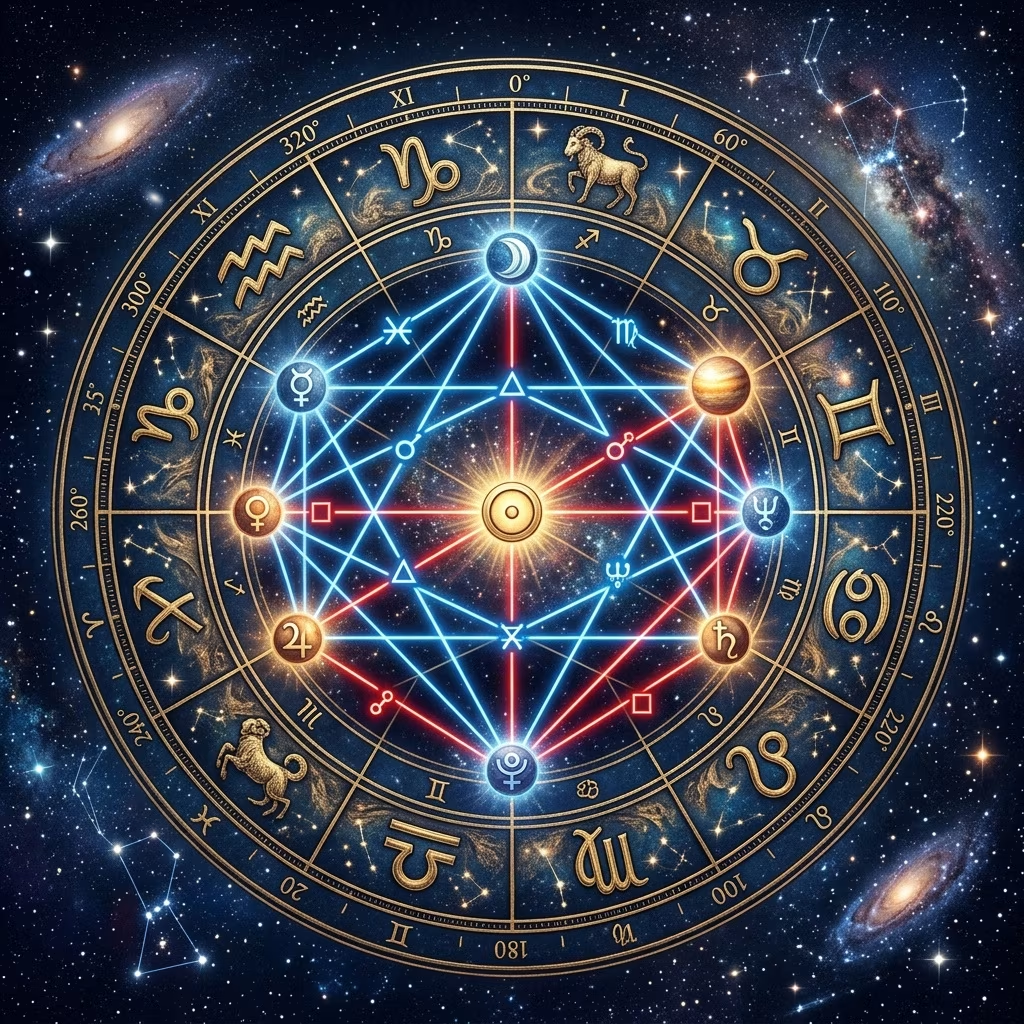
Astrology aspects are the angular distances between planets (as well as the Sun and Moon), usually measured in degrees along the 360° circle of the sky. Think of aspects as energies in dialogue—sometimes in harmony, sometimes in tension, and at times sparking transformation or creativity. Each aspect tells a story about how planetary energies mingle, supporting or challenging one another, which in turn colors our personalities and experiences.
- Conjunction: Planets are close together (0° apart), blending energies.
- Opposition: Planets stand across from each other (180° apart), often creating polarity and tension.
- Trine: Planets form a supportive angle (120° apart), cultivating talent and ease.
- Square: Planets are at a challenging angle (90° apart), sparking action and friction.
- Sextile: Planets at a harmonious angle (60° apart), offering opportunities for growth.
Beyond these well-known aspects, astrology includes a spectrum of “minor” aspects that refine and nuance interpretation even further. Let’s unravel their meanings in detail.
Why Aspects Matter: How Planets Communicate
When astrologers analyze a birth chart, they don’t simply look at where your planets are—they also examine the angles the planets make to one another. These angles, or aspects, determine the dynamic interplay of energies that shape:
- Your personality traits (e.g., blending Venusian charm with Saturnian discipline)
- Major life themes and cycles (e.g., tension from a Mars-Saturn square)
- Relationship compatibility (when two charts are compared, called synastry)
- Daily, yearly, and generational patterns (especially from fast- or slow-moving planets)
The Moon and Mercury typically make the most aspects, since they move quickly, adding insight into day-to-day life and emotional weather. On the other hand, aspects formed by slow-moving outer planets (like Jupiter, Uranus, Neptune, and Pluto) unfold dramatically over months or even years, marking collective shifts and generational evolution.
Aspects in Your Birth Chart: Layered Personality
Your birth chart is a celestial blueprint. Aspects introduce layers and nuances the basic planetary placements cannot reveal alone. For example, a person with the Sun in Leo might usually enjoy the spotlight. But, if Saturn is forming a square or opposition to their Leo Sun, that energy could be muted or challenged, making the individual more reserved or cautious about attention.
Aspects can also blend seemingly unrelated energies. If Venus (love, beauty, money) is conjunct Jupiter (expansion), that person may easily attract abundance and goodwill—but if Venus is squared by Saturn, there could be lessons or delays in love and finances, bringing more seriousness or restraint.
Compatibility and Relationship Aspects: The Web of Synastry
While many people focus on the compatibility of Sun, Moon, or Rising signs, the real magic happens when we overlay two full birth charts and examine the inter-aspects. This branch of astrology is called synastry, and it explores how two people’s planetary placements form aspects to each other.
- Strong, harmonious aspects (trines, conjunctions, sextiles) between important planets—especially Moon, Venus, and Mars—can foster deep understanding and attraction.
- Challenging aspects (squares, oppositions) may create tension, encourage growth, or reveal where compromise is needed.
- Sometimes, even if two people’s basic elements seem incompatible, powerful aspects between their birth planets can override textbook differences, producing compelling chemistry and potential for rapport.
Understanding the synastry between charts brings deep insight into both what connects and what challenges your romantic, business, or platonic relationships.
Major Astrology Aspects: The Core Five
Below are the foundational planetary aspects you will encounter in any chart analysis:
| Aspect | Degrees | Astrological Meaning |
|---|---|---|
| Conjunction | 0° | Powerful blending; two energies merge and amplify each other, taking on a joint character. Can be harmonious or challenging, depending on planets involved. |
| Opposition | 180° | Catalyst for growth; energies are pulled in opposite directions, fostering awareness, polarity, and often external events requiring balance. |
| Trine | 120° | Natural flow; planets cooperate effortlessly, talents and strengths come easily, representing harmony and support. |
| Square | 90° | Dynamic tension; creates conflict, challenge, and the drive to act, but can lead to growth through friction. |
| Sextile | 60° | Opportunities; energies are supportive, bringing learning, connection, and creative potential. |
Minor and Subtle Astrology Aspects: Nuanced Influences
Astrology goes deeper than the classic five. Minor aspects add detail—and sometimes subtle or hidden forces—into the picture. Here are key additional aspects every student should know:
- Semi-square (45°): Subtle friction; planets are linked with low-grade tension, like an irritation one can’t quite resolve. This aspect provokes action, but not always in dramatic ways. Often felt as underlying stress that can be channeled productively when recognized.
- Sesquiquadrate / Sesquisquare (135°): Involves stubborn, buried conflict or discord. Neither planet wants to cooperate, so this manifests as background agitation, or patterns that require moderation, negotiation, and honest discussion to resolve.
- Bi-quintile (144°): Highly creative and subtle—this aspect doubles the quintile and points to latent talents, originality, and solutions out of the blue. If you are willing to work for it, this aspect can reveal special gifts and break open inspiration or innovation.
Astrologers may also use other specialized aspects such as quincunx/inconjunct (150°), quintile (72°), and septile (51.4°), which fine-tune the unique personal themes in a reading.
How to Read Aspects in Your Birth Chart
To read aspects, you’ll need a copy of your birth chart, listing the planetary placements by sign and degree. Astrology software or online calculators will typically display your aspects, but here’s a quick guide to analyzing them:
- Find two planets, note their degree in the zodiac.
- Calculate the number of degrees between them.
- Refer to the aspect angles to determine which type of aspect they form.
- Interpret how the planets’ energies combine—do they support, challenge, or enrich each other?
Pro tip: Not every combination or aspect will be significant—in practice, astrologers focus on aspects between key personal planets (Sun, Moon, Mercury, Venus, Mars), as well as major aspects involving Jupiter, Saturn, and outer planets for broader life themes.
Illustrative Example: How Aspects Color Your Sun Sign
A Leo Sun is often vibrant and self-assured. But if their Sun is opposed by Saturn, that Leo may be more self-critical, avoid the spotlight, or feel a conflict between self-expression and duty. If that same Leo Sun is supported by a trine from Jupiter, their confidence and exuberance may blossom, helping them shine and inspire others.
Planetary Aspects and Daily Life: Why Timing Matters
Transits (the current movement of planets in the sky) form aspects to your natal positions, sparking growth, shifts, or opportunities at key moments in life. For instance, when transiting Jupiter trines your natal Venus, you may receive a boost in luck or love. When Mars squares your Moon, you might experience emotional restlessness or family drama. Paying attention to the aspects occurring in real time empowers you to harness cycles productively.
Frequently Asked Questions about Astrology Aspects
What are orb allowances in aspects?
‘Orbs’ refer to the acceptable margin in degrees for an aspect to be considered active. Most astrologers use orbs of about 6-8° for major aspects like the conjunction, trine, or square, and tighter orbs (1-3°) for minor aspects to ensure their significance.
Which aspects are the most powerful in astrology?
Generally, conjunctions, oppositions, and squares are the most powerful, as they produce the most obvious energy or events. The specific planets involved also make a difference—a Mars-Pluto square will feel much different than a Venus-Jupiter conjunction. Harmonious aspects (trines, sextiles) are easier to work with, but tense aspects often prompt necessary change.
How do aspects affect compatibility in synastry?
Strong trines, conjunctions, or sextiles between personal planets (Sun, Moon, Venus, Mars) indicate ease, understanding, and chemistry. Hard aspects like squares or oppositions can reveal tension, but they also create attraction and growth if couples actively work together to resolve differences. Every relationship will have a mix of both, creating a unique dynamic.
Do outer planet aspects have generational effects?
Yes. Outer planets like Uranus, Neptune, and Pluto move slowly, so aspects between them can reflect generational themes, collective movements, and widespread cultural shifts. For example, a Pluto-Uranus square in the sky might coincide with rapid societal upheaval or innovation across whole populations.
Key Takeaways: Mastering Aspects in Astrology
- Aspects are the language between planets: They describe how energies interact in both your birth chart and in real-time transits.
- The five major aspects (conjunction, opposition, trine, square, sextile) set the stage for your personal development.
- Minor aspects add more nuance and subtlety to chart interpretation—don’t ignore them!
- Reading aspects unlocks deep self-awareness and can reveal your patterns in love, career, and personal growth.
- Compatibility is more than Sun signs: It’s the dynamic wiring of your synastry aspects that tells the real story.
- Aspects in transit bring cycles of growth, opportunity, and challenge throughout your life.
Whether diving into your chart or exploring relationship dynamics, understanding astrology aspects is a gateway to self-mastery. With practice and curiosity, you’ll uncover a cosmic symphony uniquely tuned to your soul’s journey.