The Surreal Rise of Co–Star: Astrology’s App-Turned-Cultural Phenomenon
In today’s digitized world, few mobile applications have made as big a splash on the cultural landscape as Co–Star, the astrology app known for its biting push notifications and hyper-personalized horoscopes. Blending ancient celestial wisdom with NASA data and a sharp sense of humor, Co–Star has captured the attention—and sometimes the existential dread—of millions, especially among Gen Z and Millennials. But why has this specific astrology platform, among a crowded market, achieved such meme-worthy status? To understand, we must delve into its origins, viral mechanics, and the very real emotional responses it evokes.
Meet Co–Star: Astrology for the Algorithm Age
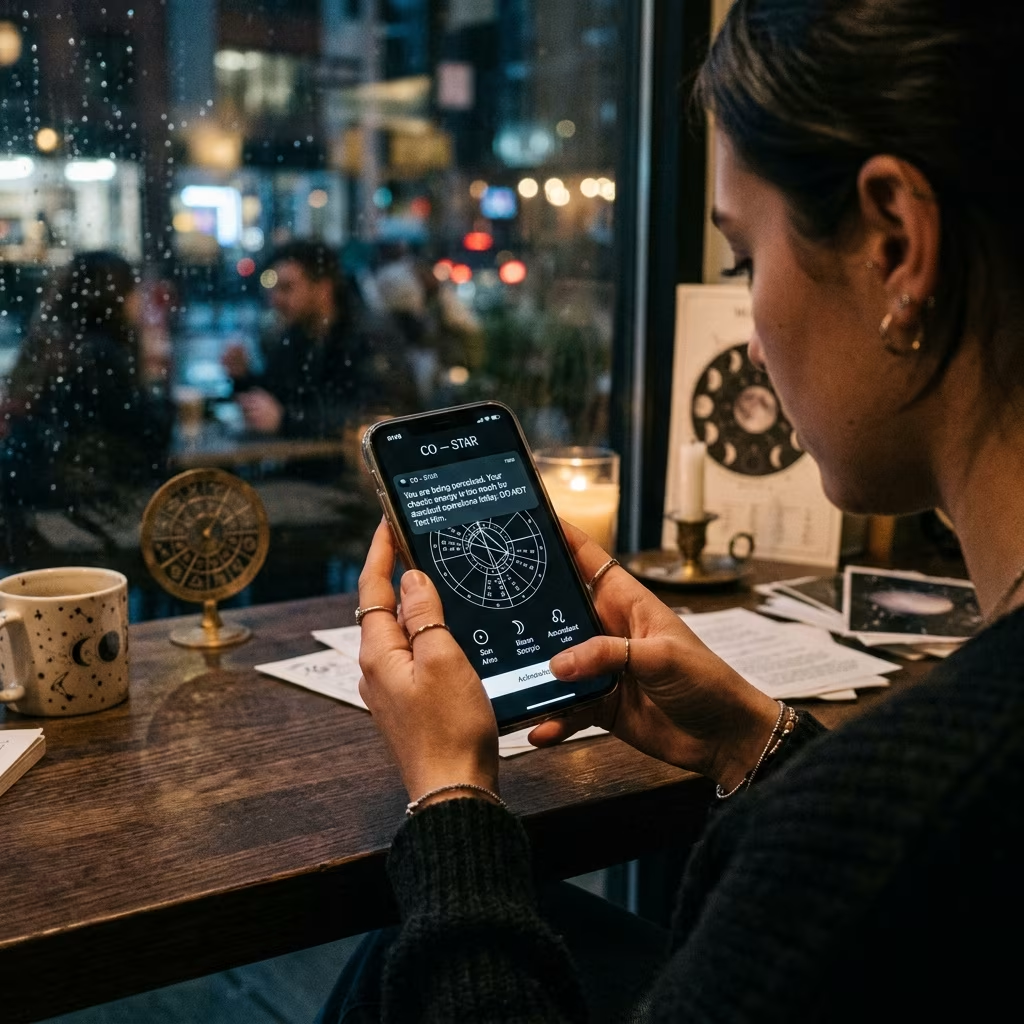
Unlike traditional horoscopes that group millions under generic sun signs, Co–Star uses users’ birth times and places, calculating full natal charts to offer what it claims are uniquely tailored readings. This scientific backbone—incorporating real NASA data—lays the groundwork for a different kind of astrological experience. But what really sets Co–Star apart is its distinct voice: irreverent, poetic, and at times, almost alarmingly blunt.
- Personalized daily horoscopes: Delivered based on time, date, and location of birth.
- Friend chart comparisons: Users can add friends, compare compatibility, and see detailed relationship maps.
- Push notifications: Known for their meme-worthy, savage, and sometimes cryptic messages.
- In-depth astrology education: Explains birth chart components, planetary alignments, and more.
The Art of the Push Notification: Brutal, Viral, and Addictive
Much of Co–Star’s notoriety can be credited to its push notifications. Far from run-of-the-mill reminders or bland affirmations, Co–Star’s messages cut through noise with lines that can feel uncomfortably honest—sometimes bordering on the existentially savage. It’s not unusual to receive notifications such as:
- “Do: Extra cheese. Don’t: Ex’s Instagram.”
- “You are not required to make sense to anyone.”
- “No one cares. Work harder.”
These notifications quickly became fodder for tweets, memes, and group-chat screenshots, as their unique mix of poetry, philosophy, and sass resonated with a generation keen on radical self-awareness—and, perhaps, a dash of digital masochism.
From App to Internet Meme: Co–Star in the Social Media Age
Within just a few months of its launch, Co–Star was being shared on platforms like Twitter, Instagram, and TikTok, often in the form of memes or screencaps of especially savage notifications. This content went viral, providing a social feedback loop that elevated Co–Star from a simple app to a cultural phenomenon. Headlines followed, celebrity endorsements appeared, and Co–Star’s minimalist interface and signature attitude set a new standard for astrology apps.
The Instagram Effect
- Users eagerly posted their most relatable Co–Star notifications, turning the app’s content into shareable moments.
- This viral marketing led to explosive growth and positioned Co–Star at the forefront of a digital astrology renaissance.
Gen Z and the New Mysticism
Perhaps most significantly, Co–Star became a touchstone for a demographic that is deeply online, yet hungry for meaning. Gen Z’s embrace of astrology dovetails with broader trends—rejection of organized religion, search for community, and insistence on transparency and authenticity. Co–Star’s unvarnished tone and data-backed algorithms granted the ancient practice of astrology a fresh, modern legitimacy.
Who Is Banu Guler? The Mind Behind the Algorithm
The creative force driving Co–Star’s philosophy and brand is Banu Guler, the company’s founder. Guler’s vision was to fuse the emotional resonance of astrology with the precision of digital technology. With a background in both design and product management, she recognized the gap between the warm, fuzzy astrology of magazine horoscopes and the blunt, algorithmic world of apps. Guler distilled her approach into three key principles:
- Astrology as a conversation starter: Real talk, not mere affirmation.
- Truth over comfort: “There are no bad zodiac signs, only complicated dynamics,” she has said, emphasizing complexity over simplicity.
- Accessibility: Making in-depth astrology easy and understandable for anyone with a smartphone.
Interviewed by major publications and tech panels alike, Guler has repeatedly stressed that while the app is algorithmically driven, there’s a human hand in the mix, ensuring the voice remains both personal and provocative.
Co–Star’s Core Features: A Deeper Look
What defines the Co–Star experience, and how does it differ from competitors? Below is an analysis of the app’s most noteworthy features:
| Feature | Description | Impact |
|---|---|---|
| Personalized Horoscopes | Based on complete natal chart, including moon and rising signs; updated daily. | Offers targeted, relatable advice—much more nuanced than generic sun sign readings. |
| Push Notifications | Biting, poetic reminders and directives, often meme-worthy. | Drives daily engagement, inspires viral sharing, and cements brand identity. |
| Friend Comparisons | See relationship charts, compatibility insights, and friendship dynamics. | Encourages social interaction and sharing, personalized to each user pairing. |
| Education Tools | Explains astrological basics, like houses, planetary transits, aspects, and retrogrades. | Makes astrology accessible, demystifying a complex field for new users. |
| Premium Reports | Deeper analysis of love, personal questions, compatibility reports. | Monetizes through personalized insights for invested users. |
Critical Reception and Challenges: The Divide Between Devotees and Detractors
Not everyone is enchanted with Co–Star’s approach. Critics—some traditional astrologers, some casual users—argue that the app’s directness can border on the harsh, sometimes instigating anxiety instead of empowerment. There’s also broader debate about whether algorithmic astrology diminishes or enhances the human element.
- Fans praise the app’s accuracy, humor, and willingness to avoid sugar-coating.
- Critics express concern over negative messaging, and potential to worsen users’ moods if poorly timed.
Still, most agree that Co–Star’s willingness to break with the earnest tone of legacy astrology is what made it so distinctive—and so shareable.
Testimonials from the App Community
- “Sometimes I need the tough love.”
- “Some days Co–Star reads me for filth, but it’s always eerily spot-on.”
- “It can be a wakeup call, not just comfort food.”
Such feedback—often reposted by the app itself—demonstrates the cultural cachet Co–Star holds, blurring lines between entertainment, therapy, and philosophy.
Blending Science and Mysticism: How Does Co–Star Work?
One of Co–Star’s most intriguing elements is its melding of hard science (astronomical positioning sourced from NASA) with ancient interpretation (astrology’s symbolic meanings). The process typically involves:
- Gathering Data: Users submit their exact birth date, time, and place.
- Calculating Natal Charts: NASA data pinpoints the celestial arrangement at that moment.
- Algorithmic Analysis: The app’s backend combines this chart with a continually updated interpretation model, based on both software and human astrologers’ insights.
- Daily Output: Custom notifications, compatibility updates, and in-app readings are generated, unique to the individual and their connections.
It’s a feedback loop wherein algorithm meets art, delivering results that feel both impersonal and singularly intimate.
Astrology in the 21st Century: Why Is Gen Z So Obsessed?
Astrology has always been cyclical in popularity—so why has it spiked again now? Experts and users alike point to several unique 21st-century factors:
- Digital Anxiety: In a world of constant information and competition, astrology offers a comforting narrative.
- Customization Culture: Young people crave experiences tailored uniquely to them—horoscopes in the Instagram age must be as personalized as playlists.
- Connection: Co–Star encourages users to add friends, sparking conversations that aren’t just small talk but “real talk.”
- Community: For those cautious about religion or institutional structures, astrology provides ritual, language, and belonging without dogma.
The result? Astrology has morphed into both a pastime and a social touchstone—one in which apps like Co–Star are the gatekeepers.
Most Memorable Co–Star Notifications: A Collection
Below are some of Co–Star’s most infamous push notifications, many of which have made the rounds as viral memes or “roasts”:
- “You don’t have to pretend you’re okay today.”
- “Sensitivity is not a sign of weakness.”
- “Stop texting them first.”
- “Sometimes, the one you need to forgive is yourself.”
- “Do: Karaoke. Don’t: Toxic nostalgia.”
Each notification is deliberately crafted to balance sincerity and sarcasm, offering insight with a twist of wry detachment.
The Business of Astrology: Monetizing the Mystical
Astrology is no longer just a late-night party trick or a back-page magazine filler; it’s big business. Co–Star monetizes through:
- Premium Features: Deep dive compatibility reports, “Ask the Stars” personalized responses.
- Merchandise: Branded apparel, accessories, and more.
Yet, the service maintains a strong ethos: using technology to empower, not exploit, a generation navigating complex emotional waters.
What’s Next for Co–Star and Digital Astrology?
The runaway success of Co–Star has prompted imitation and innovation. New astrology apps now employ AI and increasingly sophisticated interpretive models to attract users. Meanwhile, Co–Star continues to refine its algorithms and ethos—offering ever more granular advice, building out its educational resources, and supporting a rapidly growing community.
For Co–Star users, the app is less a fortune teller and more an enigmatic friend in your pocket: one who offers tough truths, comic relief, and—more than anything—a sense of connection in the cosmic noise.
Frequently Asked Questions (FAQs)
Q: Is Co–Star astrology scientifically accurate?
A: Co–Star uses NASA astronomical data to track planetary movement, but the interpretive element—astrology—remains a symbolic system, not a science. The analysis is personalized, but not empirically predictive.
Q: Why are Co–Star push notifications so blunt?
A: The app’s notifications are purposely designed to “cut through the noise” with direct, memorable advice. This style resonates with Gen Z’s appetite for honesty and self-awareness, as well as meme culture.
Q: Are my personal data and birth information safe on Co–Star?
A: According to Co–Star’s privacy policy, user data is encrypted and not sold to third parties, aligning with industry standards for digital privacy.
Q: Do I have to pay for Co–Star?
A: The app is free for core features, including daily horoscopes and basic compatibility charts. However, in-depth reports and certain features are premium and require payment.
Q: What makes Co–Star different from other astrology apps?
A: Its combination of personalized, data-driven horoscopes, poetic and honest push notifications, and community features sets Co–Star apart in a crowded market.
References
- https://apps.apple.com/us/app/co-star-personalized-astrology/id1264782561
- https://apps.apple.com/au/app/co-star-personalized-astrology/id1264782561
- https://play.google.com/store/apps/details/Co_Star_Personalized_Astrology?id=com.costarastrology&hl=en_IE
- https://play.google.com/store/apps/details?id=com.costarastrology&hl=en_US
- https://www.vice.com/en/article/co-star-astrology-app-review/
- https://www.cosmopolitan.in/life/features/story/we-did-a-five-day-experiment-with-an-astro-app-and-heres-how-it-went-1033128-2024-06-26