Matchmaking Goes Celestial: An Astrology-Based Dating Revolution
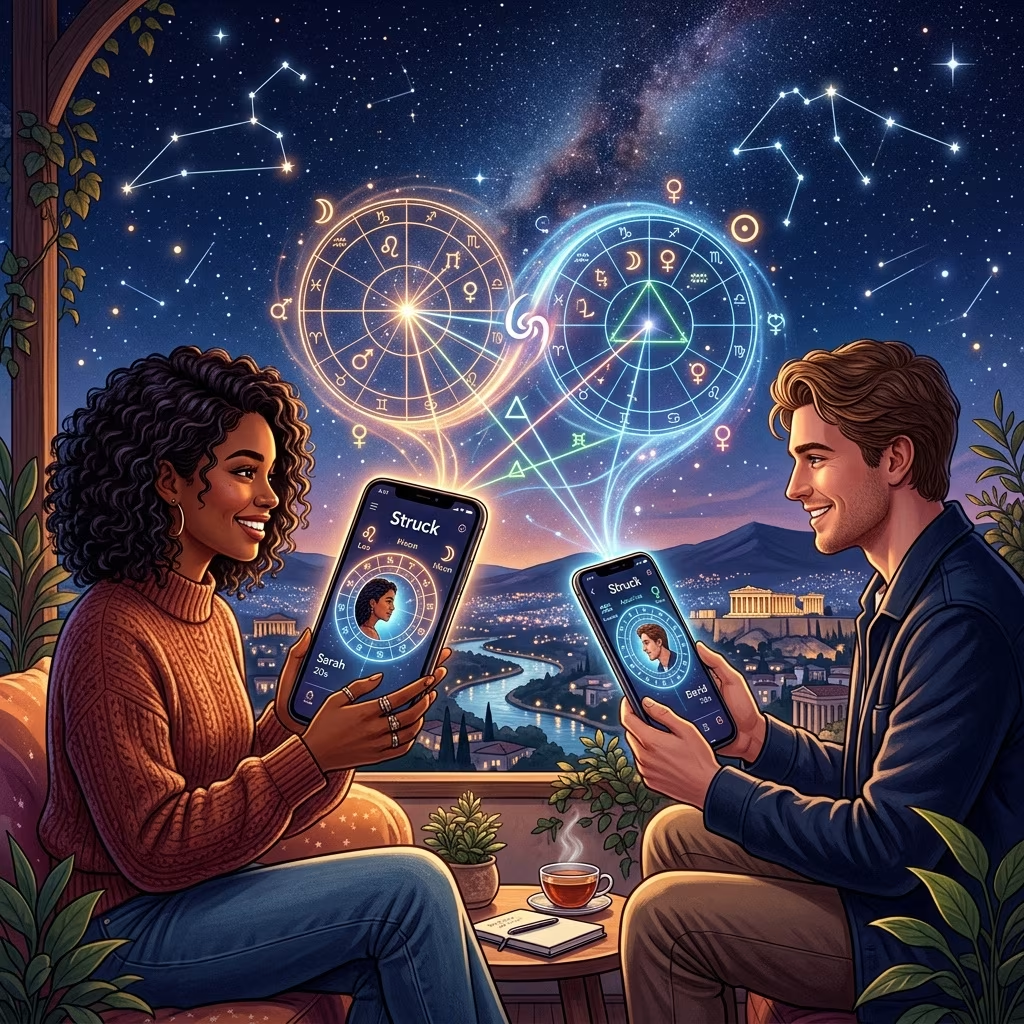
Dating apps used to be simple: you’d see someone’s photo, maybe their name, age, and a few basic preferences. If you were lucky, you’d learn their hobbies or favorite food. Today, astrology—a millennia-old system of cosmic symbolism—has entered the digital matchmaking world in a big way. Struck, an app designed by former Apple engineers Rachel Lo and Alex Calkins and astrologer Nadine Jane, is placing your entire natal chart at the heart of finding a romantic match.
What Makes Struck Different?
- Struck asks for your full birth date, time, and place to generate a detailed birth chart.
- You choose six personal traits most reflective of your chart.
- Your matches are shown with their complete astrological profile—not just their sun sign.
- Struck matches singles based on not only compatibility, but also authentic astrological synastry.
The Rise of Astrology in Modern Dating
Swiping through potential partners can feel shallow and fleeting. Astrology lovers have long wished for more cosmic cues. While some mainstream apps let you display your sun sign, that’s barely scratching the surface. True synastry—the astrology of relationships—requires examining the interplay of all personal planets: the sun, moon, rising (ascendant), Venus, and more. Struck is the first widely adopted app that calculates and analyzes these intricate placements for every user.
Inside the Struck Experience: How It Works
Setting up a profile on Struck is more involved than on most dating apps—but for astro-enthusiasts, that’s part of the charm.
Steps to Create Your Struck Profile
- Provide your date, time, and location of birth to generate your birth chart.
- Review a custom analysis outlining key placements (e.g., how your rising sign affects first impressions).
- Pick six personality traits (including strengths and struggles) from those astrologically tied to your chart—like “anxious,” “power-hungry,” “aesthetic,” or “persevering.”
- Add up to six profile photos, a short bio, and select up to three personal “priorities” (e.g., politics, arts, health).
- Include demographic info: height, pronouns, sexual orientation.
This process encourages deep introspection—Struck isn’t for the commitment-shy or those looking to game the system with vague answers.
The Struck Match Algorithm
Instead of endless swiping, Struck delivers a curated number of astrologically compatible matches per day. When you view a profile, you get:
- The person’s entire natal chart (with sun, moon, rising, and planetary positions).
- A brief explanation of why the algorithm thinks you could connect.
- Quick access to the traits and priorities each person chose.
An unexpected twist: the matches sometimes pair users with signs not traditionally considered compatible. Why? Because matches are based on multi-planet alignment, not stereotypes. As astrology advisor Nadine Jane explains, “There’s much more to a person’s chart than just their Sun sign—we have their Moon sign, which encompasses our deeper self, and our Rising sign, which is our first impression. The algorithm takes all of your personal planets, as well as your outer planets, and registers the aspects—that’s the question of, ‘How is this planet talking to this other planet? Are they in harmony or are they in discord?’”
Beyond Sun Signs: The Science of Birth Chart Compatibility
Struck’s approach to astrology is rigorous. At its core, the app looks at your personal planets (Sun, Moon, Mercury, Venus, Mars) and outer planets (Jupiter, Saturn, etc.) to determine how energy flows between two charts. This means considering harmonious aspects (trines and sextiles), challenging ones (squares and oppositions), and unique connections like:
| Astrological Element | Role in Compatibility |
|---|---|
| Sun Sign | Basic personality, ego, interests |
| Moon Sign | Emotions, inner needs, intimacy style |
| Rising Sign | How you appear and initiate connections |
| Venus & Mars | Love language, attraction, romantic expression |
| North Node | Soul growth, karmic connections |
The Importance of the North Node
One of Struck’s secret weapons is factoring in the North Node—a mathematical point associated with your life’s growth and destiny. If someone’s moon sign aligns (is ‘conjunct’) with your North Node, the chemistry could feel especially fated. Astrologer Nadine Jane comments, “Their natural abilities and innate sense of self are super aligned with your growth and evolution. They could be a wonderful teacher for you or represent the way your soul or personality or life needs to evolve as you age.”
What Is It Like Using Struck?
Astrology is at the forefront from your very first log in. Once you complete your chart and profile, you receive a select number of handpicked matches.
- You see each match’s chart—no more awkwardly asking for birth times on date one.
- Each match comes with a rationale based on synastry, letting users understand why the connection could work.
- The focus is on authentic connection—both cosmic and personal, through shared interests and unique life priorities.
There’s an added charm: if matches aren’t showing up, you can blame the stars and not your photo selection or icebreaker skills.
The Founders and Philosophy Behind Struck
Struck’s development story is as authentic as its astrological philosophy. Cofounders Rachel Lo and Alex Calkins left Apple to launch a platform merging their technical expertise with a sincere respect for astrology. Their advisor, renowned astrologer Nadine Jane, leveraged her expertise from Instagram to help make Struck a tool for genuine self-discovery—not just romantic gimmicks.
The app gained momentum after a delayed App Store launch, initially serving Los Angeles and the Bay Area, before quickly expanding to New York and other U.S. cities by user request. Its careful, city-by-city rollout ensures robust engagement and cosmic diversity.
Authenticity Over Gimmicks
- Unlike trend-driven astrology startups, Struck rejects the idea that deepest compatibility is as simple as matching signs.
- The platform was shaped by team members who believe astrology should foster personal growth, not serve as a marketing tool.
The Pros and Cons of Astrology-Based Dating
| Pros | Cons |
|---|---|
|
|
Is Struck Only for True Astrologers?
Though Struck clearly appeals to the astrology faithful, its founders describe it as inclusive—“Skeptics welcome.” For users who may not know their birth time, the app provides ways to estimate or skip certain details, though more accurate information leads to better matches. Above all, Struck encourages honesty, personal growth, and (yes) openness to new ways of connecting.
How Struck Compares to Other Astrology Dating Apps
The astrology-dating-app landscape isn’t empty, but Struck stands out for its sophistication and depth. Unlike apps that only mention sun signs or provide generic daily horoscopes, Struck:
- Presents users’ full natal charts side by side.
- Generates matches based on the whole chart—sun, moon, rising, and planets.
- Provides a personalized, astro-backed rationale for each match.
- Merges classic dating priorities (lifestyle, interests) with astrological insight.
This results in fewer, higher-quality matches, and a dating experience that feels more curated, intentional, and meaningful.
Frequently Asked Questions (FAQs)
Q: Do I need to know my exact birth time to use Struck?
A: For the most accurate natal chart and compatibility readings, it’s best to have your precise birth time. However, Struck does allow users to estimate if they’re unsure, though some chart details may be less specific.
Q: What’s different about Struck compared to apps like Bumble or Hinge?
A: Struck is built around astrology. Matches are based on deep compatibility—not just location or common interests—but on the integration of your astrological charts and key traits. You can view your potential match’s full natal chart and get an explanation of the cosmic dynamics at play.
Q: Can skeptics or those new to astrology use Struck?
A: Absolutely. Struck’s inclusive and visually engaging approach means newcomers can learn about themselves as they interact. The app is open to all, whether you’re a horoscope regular or just astro-curious.
Q: Is Struck available everywhere?
A: After launching in Los Angeles and the Bay Area, Struck expanded to New York and rolls out to new cities based on user demand. Availability continues to grow, with users encouraged to request their locations from within the app.
Q: What happens if I don’t get matches right away?
A: Since Struck matches are curated, the pace is intentionally slower than endless swiping apps. Fewer, more thoughtful matches helps maintain authenticity. Patience—and faith in cosmic timing—is encouraged!
Why Astrology and Dating Belong Together
For centuries, astrology has informed everything from political alliances to personal decisions. In the age of algorithms, its ancient wisdom is finding new relevance. By merging the symbolism of the cosmos with modern technology, Struck offers singles more than just another swipe. It’s an invitation to reflect, learn, and connect on a soul level—with both yourself and someone new.
- If you’re looking for love with a cosmic twist and crave deeper connections beyond surface-level attraction, Struck may offer what you seek.
- If you’re tired of making “small talk” with incompatible matches, let the stars help curate your love life.
- For astrology devotees and the simply curious alike, Struck provides a space for authentic, introspective dating with celestial guidance.
References
- https://www.cosmopolitan.com/sex-love/a33623097/struck-dating-app-astrology/
- https://www.latimes.com/lifestyle/story/2020-09-07/struck-astrology-based-dating-app
- https://www.purewow.com/news/struck-astrology-dating-app
- https://www.webworm.co/my-dream-dating-app-has-been-banned/
- https://www.cosmopolitan.com/sex-love/g37213438/best-astrology-dating-apps/
- https://www.onlinepersonalswatch.com/news/2020/08/struck-a-dating-app-that-matches-users-based-on-their-entire-birth-chart.html