Tarot Therapy: At the Intersection of Self-Discovery and Mental Health
In today’s expanding landscape of wellness, tarot therapy is emerging alongside established methods like mindfulness meditation, cognitive behavioral therapy, and even newer trends such as ASMR or crystal healing. Once seen primarily as a mystical tool for divination, tarot is gaining renewed attention among psychological professionals—and everyday people—for its ability to facilitate self-reflection, emotional insight, and creative problem-solving in the journey for better mental health.
What Is Tarot Therapy?
Tarot therapy is the practice of using traditional tarot cards not to tell the future, but to externalize thoughts, emotions, and personal circumstances. By laying out symbolic images, individuals are able to visualize complex feelings and mental patterns that might otherwise remain unarticulated. This grounding of abstract psychological states into concrete images is at the core of tarot’s contemporary appeal as a therapeutic aid.
As Dr. Inna Semetsky, a Columbia University psychologist, explains: “Tarot cards can create a visualization of your situation. Once you see things laid out, it becomes clear what you actually want. They help you externalize your problems.”
- The imagery on tarot cards provides a universal yet adaptable framework for individual introspection.
- The cards act as prompts to discuss feelings and experiences that may be difficult to articulate verbally.
- Tarot therapy can promote emotional clarity and assist in self-understanding.
How Does Tarot Work in Mental Health Practice?
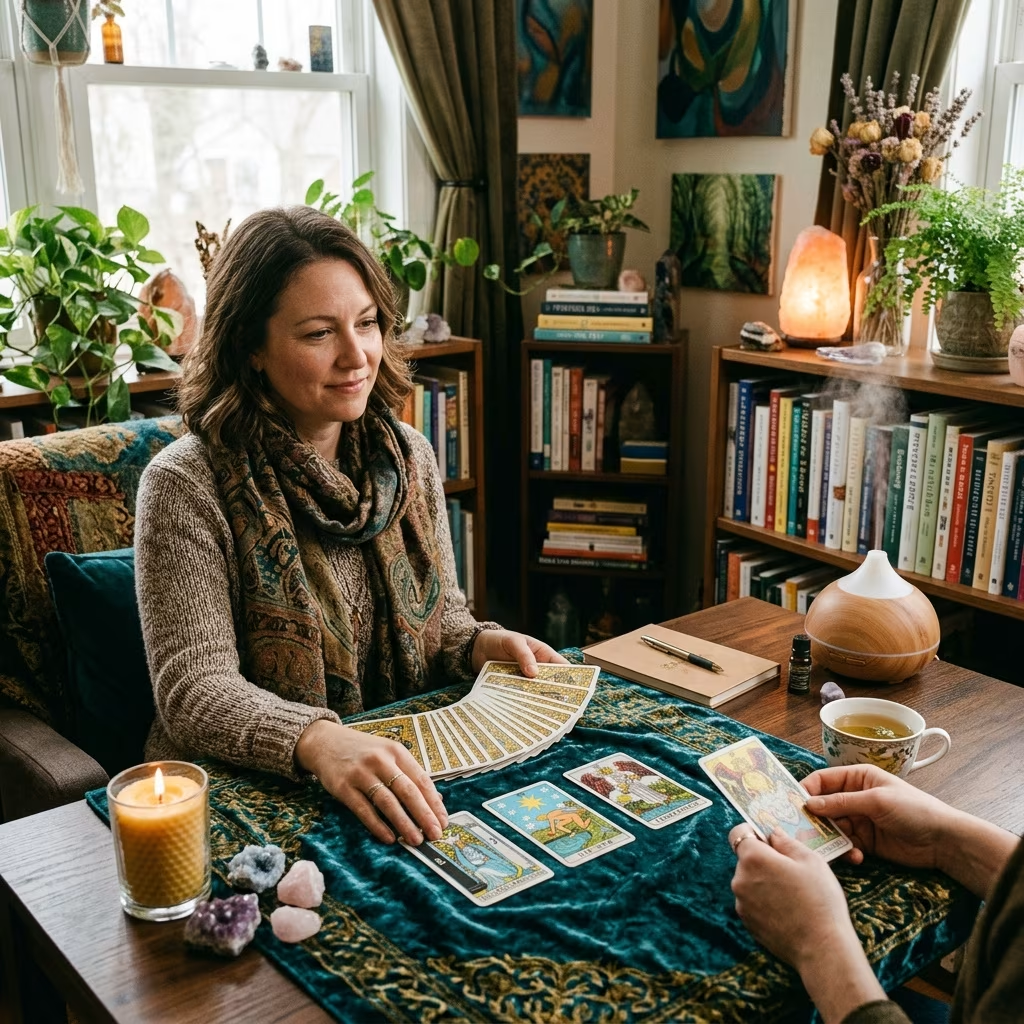
Unlike traditional fortune-telling, modern tarot therapy uses the cards as reflective, meditative tools that help visualize everyday struggles, aspirations, and obstacles. In sessions, a reader often pulls a spread of cards, each carrying its own symbolism, to discuss with a client:
- Which emotions or memories do the cards evoke?
- How do the images or archetypes relate to life circumstances?
- What patterns or challenges become visible via the visual metaphors?
According to psychologist Jayni Bloch: “Using tarot in an appropriate way can enhance therapy. It’s not for fortune-telling—it’s a tool that gives you something to meditate on.” Tarot readings are highly individualized, leveraging the versatile language of the cards to address each person’s unique situation—yet they also tap into issues that feel universal in human experience.
The Psychology Behind Tarot’s Utility
Tarot’s value comes from its ability to make abstract, internal dilemmas visible and tangible. The universality of the symbols allows many people to relate personal meaning to the cards, generating insights that may otherwise stay buried. The process can be especially effective for those who find it difficult to verbalize mental struggles. By assigning concrete visuals to concepts like hope, fear, loss, and healing, individuals gain a new lens for self-exploration and can begin practicing reframing and cognitive distance from distressing thoughts.
Case Study: A Session in Practice
Consider the experience of seeking guidance from a therapeutic tarot practitioner like Jessica Dore, a licensed social worker renowned for her daily card reflections and large online following. In a typical session, Dore might pull a spread of ten cards, exploring the symbolism as relevant to her client’s situation. For example, the appearance of Seven of Swords, Knight of Swords, Queen of Pentacles, and King of Pentacles may be discussed in relation to themes of impulsivity, nostalgia, and stability versus change.
Although the cards theoretically offer universal symbols, the conversation becomes deeply personal as the client projects their experiences, fears, and hopes onto the images. What results is a sense of being seen—having one’s private struggles recognized in an empathetic, non-judgmental space.
Personalization and the Illusion of Specificity
Despite their universality, tarot cards gain power from the client’s process of finding personal resonance within the images. The effect is similar to that of projective psychological tools like the inkblot (Rorschach) or storytelling exercises: the brain naturally finds meaning within ambiguous prompts.
Tarot Therapy: A Complement, Not a Substitute
While tarot therapy is gaining traction within alternative, holistic health circles and is being increasingly integrated by open-minded psychotherapists in metropolitan areas like San Francisco, New York, and Philadelphia, it is crucial to recognize its limitations:
- Tarot is not a replacement for licensed psychotherapy, particularly when addressing severe mental illness or trauma.
- There is a lack of scientific research documenting tarot’s efficacy as a standalone mental health intervention.
- Many tarot practitioners are not mental health professionals and cannot diagnose conditions or prescribe medication.
Still, many therapists incorporate tarot as an adjunctive tool—a creative entryway into deeper therapeutic conversation and self-reflection, not unlike journaling, dream analysis, or guided visualization exercises.
Why Are People Turning to Tarot?
The explosion of interest in tarot and similar alternative modalities often springs from a desire for more accessible, relatable, and visual frameworks for processing psychological discomfort. Some of the main reasons individuals cite for exploring tarot as part of their mental wellness journey include:
- Wanting to increase self-awareness and mindfulness.
- Desiring actionable prompts for journaling or meditation between conventional therapy sessions.
- Seeking a ritualistic, personal check-in for emotional status.
- Feeling dissatisfied or disconnected from mainstream therapeutic approaches.
- Yearning for community-based, non-judgmental spaces to discuss emotions and meaning.
For some, tarot can act as a bridge into more formal therapy; for others, it offers an ongoing practice in reflection, embodying the ritual of wellness that is increasingly common within self-care culture.
The Role of Visual Storytelling in Healing
Tarot’s unique strength lies in its ability to tell stories: through the arrangement and symbolism of cards, one crafts narratives about the self, reframes old wounds, and imagines new futures. Visualization is a key tool in psychological healing—the same fundamental mechanism behind vision boards, developmental psychology, and even certain modalities of trauma therapy.
Through the act of:
- Laying out cards symbolizing fears and aspirations,
- Creating a visual map of one’s mental landscape,
- Assigning meaning and sequence to experiences,
- Seeing oneself as both the protagonist and the interpreter of a personal narrative,
individuals often achieve greater emotional clarity and acceptance.
Tarot in Professional Therapy Offices
The integration of tarot into mental health settings occurs largely through word of mouth, as most therapists do not advertise tarot as part of their practice. However, in cities like San Francisco, New York, Philadelphia, and even internationally in Canada, Australia, and New Zealand, an increasing number of professionals discreetly use tarot as an entry point for therapeutic dialogue.
According to Allison Zamani, associate therapist at the Center for Mindful Psychotherapy, “Tarot doesn’t replace therapy in my work, but it can be a different lens to borrow from.” Most people come to therapy seeking greater self-understanding, and alternative methods can sometimes make the process more approachable or relatable.
Can Tarot Be Practiced Alone?
Many enthusiasts use tarot cards for personal reflection at home: drawing cards, meditating on their meaning, and journaling insights. However, those with experience often emphasize the value of guided interpretation and dialogue with a trained practitioner—whether a therapist or a sensitive, ethical card reader:
- The presence of a practitioner creates a safe, validating environment for deeper exploration.
- Internally-held issues often become clearer when verbalized to someone else.
- Therapists can spot deeper psychological themes and help reframe experiences in healthy ways.
While solo tarot practice can be empowering and normalizing for everyday emotions, complex or longstanding psychological pain is best addressed with professional support.
Tarot, Neuroscience, and the Limits of Alternative Healing
While tarot offers a visually rich, story-driven modality for emotional self-exploration, it is not a scientifically validated replacement for evidence-based psychotherapy. As neuroscientist Eldin Hasa observes, traditional therapy targets cognition and behaviors directly, helping individuals replace distorted thoughts and build healthier neural pathways—a process known as neuroplasticity. Tarot may facilitate introspection, but it does not offer the empirically tested, professional guidance necessary for addressing acute trauma or mental illness.
| Tarot Therapy | Traditional Psychotherapy |
|---|---|
| Symbolic, visual, open-ended prompts for discussion | Structured, evidence-based methods (CBT, DBT, etc.) |
| Enhances self-awareness, mindfulness, introspection | Targets specific symptoms, rewires cognitive pathways |
| Can be practiced with or without professional guidance | Requires professional, licensed therapists or clinicians |
| No clinical diagnosis, not a substitute for medical care | Can diagnose and treat mental health conditions |
| Supports general wellbeing, personal growth | Addresses clinical disorders, trauma, chronic mental illness |
Community and the Language of Wellness
Tarot therapy’s appeal is not solely in its technique, but in the community-based, supportive environments it tends to cultivate. Friends recommend practitioners to one another; sessions occur at festivals, retreats, and informal gatherings; and the language of healing within these spaces emphasizes empowerment, growth, and personal narrative.
According to some practitioners, the vocabulary surrounding tarot—whether labeled as “healing,” “holistic health,” or “growth”—is evolving, albeit sometimes confusing. What matters most is whether the individual feels seen, heard, and helped in their process of coping and self-discovery.
Frequently Asked Questions (FAQs)
Q: Can tarot replace traditional therapy for mental health issues?
A: No, tarot is not a substitute for professional therapy, especially for mental illness or trauma. It serves better as a supplement for self-reflection, mindfulness, and general wellbeing.
Q: How do therapists use tarot in clinical practice?
A: Some therapists use tarot as a reflective tool, guiding clients through the symbolism as part of a broader therapeutic conversation. It is not used for diagnosis or predicting the future.
Q: Is tarot therapy supported by scientific research?
A: There is little clinical research supporting tarot as a standalone therapy. Most evidence is anecdotal or based on individual reports of improved self-awareness and emotional comfort.
Q: Can I use tarot cards by myself for mental wellness?
A: Yes, many people use tarot at home to check in with their emotions and journal reflections. However, for deeper psychological challenges, guidance from a professional is advised.
Q: What are the risks of unqualified tarot readings?
A: Since interpretation is subjective, readings by unqualified individuals can reinforce biases or fail to recognize deeper issues, underscoring the importance of professional oversight for mental health concerns.
Final Thoughts: A Growing Path in Wellness
Tarot therapy, when practiced responsibly and ethically, is becoming a valuable adjunct to the modern mental health toolkit. Its emphasis on visualization, storytelling, and personal empowerment resonates with a generation hungry for meaning beyond traditional medical models. For those who feel stuck or misunderstood, a tarot deck can offer not just insight, but also a reminder: you are the author of your story, and every card is another page waiting to be written.
References
- https://www.cosmopolitan.com/health-fitness/a29440976/tarot-therapy-mental-health-astrology/
- https://www.womenshealthmag.com/uk/collective/healthy-habits/a46649466/are-people-really-using-tarot-readings-as-an-alternative-to-therapy/
- https://www.cosmopolitan.com/lifestyle/
- https://www.scribd.com/document/612984401/Cosmopolitan-USA-The-Mental-Health-Issue-6-202