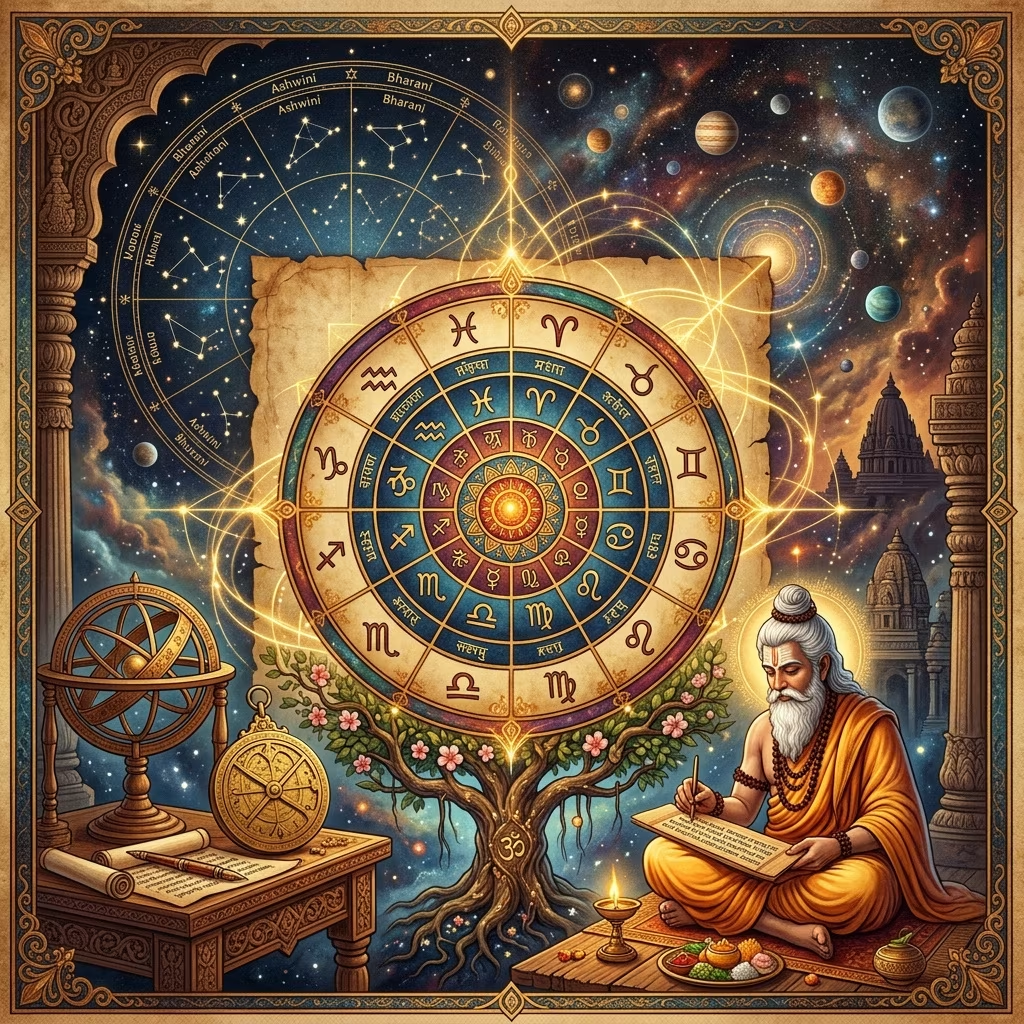
Your Intro to Vedic Astrology
Vedic astrology is an ancient astrological system originating from India, offering profound insights into human destiny, life purpose, and relationships. Known as Jyotish—meaning “science of light”—this practice explores planetary motions, their positions with respect to time and space, and their effect on living beings on Earth.
What is Vedic Astrology?
Vedic astrology is based on the sacred spiritual texts of ancient India called the Vedas. As explained by Vedic astrologer Kamlesh Trivedi, the word “Vedic” means “sacred knowledge,” and Jyotish translates to “light.” The system is believed to have emerged during the Vedic era, with key scriptures written by Bhrigu, known as the father of Vedic astrology.
- Focuses on planetary motions and positions with respect to time and space.
- Used to forecast individual life events, understand personal karma, and provide cosmic guidance.
- Includes Muhurat astrology, a branch that helps determine auspicious dates for important events.
Historical Roots of Vedic Astrology
The Sanskrit term for Vedic astrology is Jyotish, often translated as “science of light” or “heavenly body”. Its origins trace back to the Rigveda, one of India’s earliest spiritual texts. Vedic astrology originally guided the timing of rituals and sacrifices, and eventually evolved to help individuals understand their destiny. It interconnects with other ancient Indian practices such as yoga and Ayurveda.
- First appeared in sacred Indian texts, mainly the Rigveda.
- Tradition claims Vedic astrology has existed since 10,000 B.C.
- Accepted as both science and lifestyle practice throughout India.
- Offers guidance for personal, spiritual, and even financial growth.
How Vedic Astrology Works
Vedic astrology calculates planetary positions using the sidereal zodiac system, which is directly tied to observable constellations. Unlike the tropical system used in Western astrology, Vedic astrology’s charts shift in alignment with the stars.
- Sidereal zodiac system: Observes actual star positions in the sky.
- Considers the impact of planetary motion on karma, dharma (life path), and relationships.
Muhurat astrology, a sub-branch, is used for timing important events for greatest cosmic advantage:
- Weddings
- Business launches
- Relocations
- Spiritual rituals
Vedic Astrology vs. Western Astrology
| Aspect | Vedic Astrology | Western Astrology |
|---|---|---|
| Origin | Ancient India (Vedic texts) | Greek & Roman traditions |
| System | Sidereal: Observes actual constellations | Tropical: Fixed stars, based on solstices/equinoxes |
| Connection | Connected to the Moon | Connected to the Sun |
| Focus | Karma, Dharma & life path | Personality, psychology |
| Dates of Zodiac Signs | Shifted 23-24 degrees (almost one sign difference) | Traditional zodiac dates |
| Main Branches | Includes Muhurat (auspicious timing) | Focused on natal charts |
The biggest difference is that Vedic astrology closely tracks the moon and actual star positions, while Western astrology relies more on solar positions and seasonal cycles.
- Western astrology: Emphasizes psychological traits.
- Vedic astrology: Explores fate, spiritual lessons, karma, family, and life’s purpose.
- Both systems share the 12 zodiac signs, but birthdays may align with different signs in each system.
- Many modern practitioners use both systems to deepen cosmic understanding.
The Vedic Zodiac: Your Actual Vedic Sign
Vedic astrology uses the same twelve signs—but the dates change based on the sidereal zodiac. Your sign in Vedic astrology may differ from your Western horoscope.
- Aries: April 13 – May 14
- Taurus: May 15 – June 14
- Gemini: June 15 – July 14
- Cancer: July 15 – August 14
- Leo: August 15 – September 15
- Virgo: September 16 – October 15
- Libra: October 16 – November 14
- Scorpio: November 15 – December 14
- Sagittarius: December 15 – January 13
- Capricorn: January 14 – February 11
- Aquarius: February 12 – March 12
- Pisces: March 13 – April 12
If you’re an Aries according to Western astrology, you might be a Pisces in Vedic astrology depending on your birth date.
Core Concepts: Karma, Dharma, and Destiny
Vedic astrology deeply explores karma (accumulated actions) and dharma (life purpose). Charts are interpreted to reveal innate gifts, challenges, and the spiritual roadmap guiding personal and emotional development.
- Insight into relationship dynamics and family ties
- Identification of strengths and weaknesses via elemental placements
- Guidance for spiritual growth and finding harmony
- Relieves stress by interpreting cosmic influences on emotional ups-and-downs
Vedic astrology maintains that a birth chart isn’t just a psychological tool—it’s a cosmic map predicting karmic lessons and opportunities.
How to Use Vedic Astrology
Whether you’re seeking self-discovery, timing for major life events, or guidance on relationships, Vedic astrology offers:
- Detailed birth chart readings (natal charts)
- Insights into personal and professional compatibility
- Forecasting of periods of challenge, growth, and spiritual development
- Muhurat guidance to schedule events for auspicious outcomes
Can You Use Both Systems?
According to experts, both Vedic and Western astrology are powerful tools. Each brings unique value—one is not superior to the other. Contemporary practitioners often use both systems to enrich their cosmic analyses.
- Vedic astrology: Deep insight into karma, destiny, and auspicious timing.
- Western astrology: Quick reference for personality and psychological tendencies.
- Together: More complete astrological profile.
Frequently Asked Questions (FAQs)
Q: What is the main purpose of Vedic astrology?
A: To interpret planetary influences to reveal insights about fate, karma, and one’s life path. It also guides timing for auspicious events.
Q: Why do Vedic and Western astrology signs differ?
A: Vedic astrology tracks the actual positions of constellations (sidereal), while Western astrology uses a fixed seasonal system (tropical), often resulting in your birthday sign shifting by almost a full sign between systems.
Q: Which system is more accurate or powerful?
A: Both systems have merit and value. Vedic astrology excels in revealing karma and life lessons, while Western astrology is more focused on personality and psychology.
Q: What is Muhurat astrology?
A: A Vedic branch that identifies the most auspicious dates and times to hold significant events, maximizing positive cosmic support.
Q: Can Vedic astrology predict my future?
A: Vedic astrology offers predictions based on planetary motion and alignment, emphasizing karmic lessons, periods of growth, and opportunities for spiritual evolution.
Why Try Vedic Astrology?
- Helps map out both short-term and lifelong cycles of challenge and success.
- Offers insight into your purpose, gifts, and challenges.
- Aids in timing key events (love, career, spiritual rituals).
- Connects you to a rich spiritual tradition rooted in ancient wisdom.
How to Get Started with Vedic Astrology
- Find your Vedic birth chart using reliable astrology platforms.
- Compare your Vedic zodiac sign to your Western sign for deeper understanding.
- Consult a Vedic astrologer to interpret karma, dharma, and forecast events.
- Incorporate both systems for a complete astrological journey of self-discovery.
Summary Table: The Key Differences
| Characteristic | Vedic Astrology | Western Astrology |
|---|---|---|
| Calendar System | Sidereal (based on star positions) | Tropical (based on seasons) |
| Elemental Basis | Moon connection | Sun connection |
| Main Focus | Karma, life path, dharma | Psychology, personality |
| Astrological Reading | Birth chart, timing of fate, relationships | Sun sign personality, compatibility |
Final Thoughts on Vedic Astrology
Vedic astrology is a sophisticated, spiritually grounded system providing answers beyond the surface traits of Western astrology. Whether you are seeking answers about your life’s direction, relationships, or major decisions, it offers a cosmic roadmap based on ancient wisdom and precise star tracking. By comparing both systems, you can gain a more complete understanding of yourself and make informed choices that harmonize with the universe.
References
- https://www.aol.com/articles/vedic-astrology-vs-western-astrology-175300357.html
- https://www.cosmopolitan.com/lifestyle/a39642096/vedic-astrology/
- https://www.mindbodygreen.com/articles/vedic-astrology-101
- https://www.cosmopolitan.com/horoscopes/
- https://awakened-woman.com/2023/02/17/empowerment-series-astrologer-psychic-seen-in-cosmopolitan-e-news-popsugar-and-us-weekly-esoterica-esa-shares-love-predictions-with-aw/
- https://www.swetavikram.com/blog/wondering-what-to-wear-every-day-of-the-week-ayurveda-can-help
- https://www.tandfonline.com/doi/full/10.1080/20004214.2021.1980991