Anti-Rape Undergarments: Combining Fashion, Technology, and a Cultural Debate
In recent years, the conversation around personal safety for women has taken a new turn with the introduction of anti-rape undergarments—innovatively designed pieces of clothing that claim to help prevent sexual assault through physical resistance. While promoted as wearable defenses that could empower women and deter would-be attackers, these products have also prompted a powerful response from critics, advocacy groups, and cultural commentators. Supporters see them as technological ingenuity in support of safety, while detractors raise concerns about victim-blaming and the actual effectiveness of such garments.
The Birth of Anti-Rape Undergarments
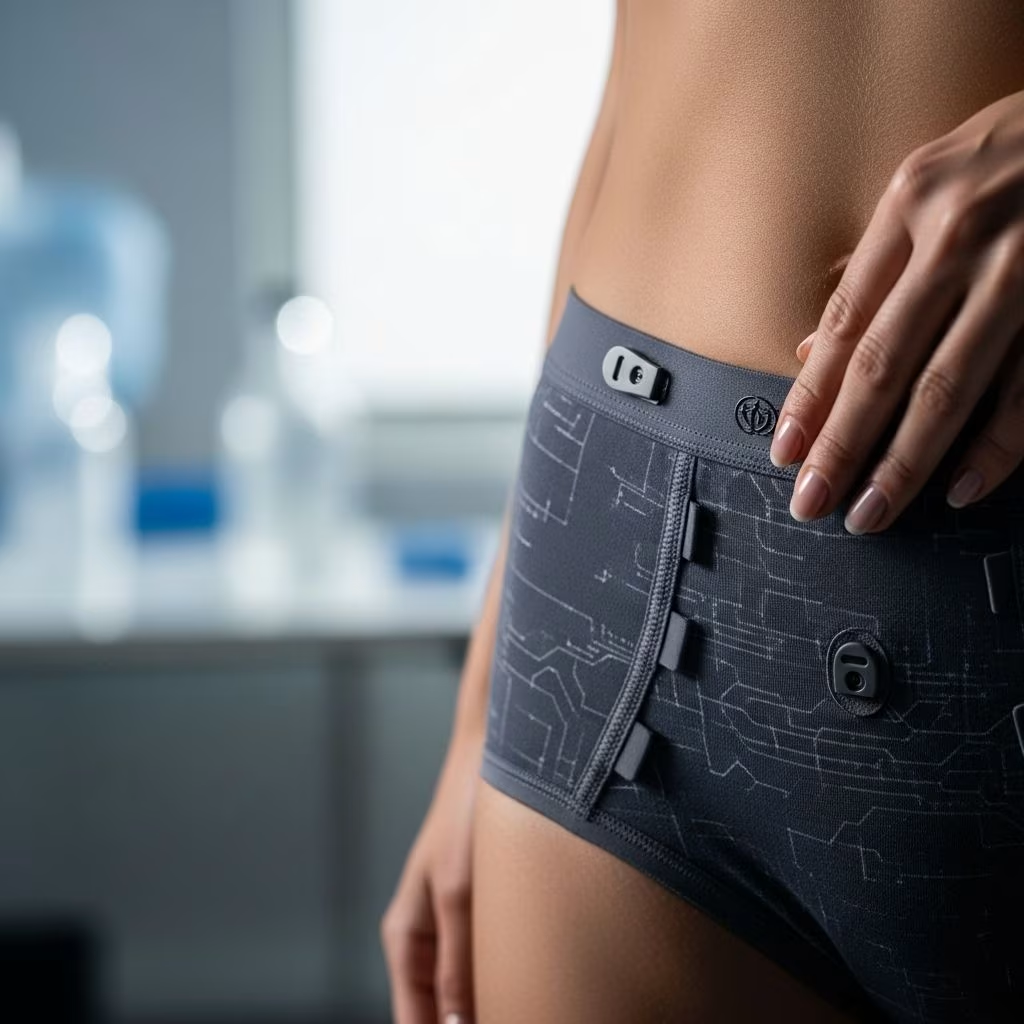
Anti-rape undergarments gained public attention through a crowdfunding campaign launched by a startup called AR Wear. Positioned as a practical, everyday solution, their products included reinforced underwear and running shorts, designed to withstand pulling, tearing, and even cutting, while remaining comfortable for regular use.
- Product Design: The garments feature a skeletal structure with cut-resistant straps and webbing built into the waistline, thighs, and central areas. This engineering is intended to make it extremely difficult for an attacker to forcibly remove them.
- User Experience: Despite the internal harness system, the underwear was marketed as lightweight and easy to wear under everyday clothes, from jeans to dresses, and supposed to be non-invasive compared to previous designs.
- Funding and Outreach: AR Wear sought $50,000 in crowdfunding to take their prototypes into production, leveraging social platforms to build momentum and awareness.
The company’s mission was clear: “We feel very strongly about women’s safety and believe that we have successfully combined technology and fashion to help solve a problem that has not been adequately addressed in our society.”
Intended Purpose and the Promise of Protection
The anti-rape undergarment movement is rooted in providing women and girls a sense of agency and physical control over their bodies, particularly in situations where the risk of assault may be heightened—such as jogging in secluded areas, traveling alone at night, or being in unfamiliar social environments.
- The Technological Shield: The key selling point is the use of durable materials and secure locking mechanisms which, in theory, could delay or prevent forced removal by an attacker—even if sharp objects are used.
- The Psychological Factor: For some, simply knowing they’re wearing such protection could provide increased confidence and peace of mind, helping to reduce fear in daily life.
- Expanding the Product Line: While starting with underwear and shorts, AR Wear hinted at future developments in wearable items suitable for various activities, ensuring comfort and unobtrusiveness as priorities.
Support for Anti-Rape Undergarments: A Step Toward Personal Empowerment?
Supporters of anti-rape clothing argue that, given the prevalence of sexual assault and the slow pace of societal change, any tool that can offer women more control should be welcomed.
- Some cite Department of Justice statistics suggesting that self-protection—whether physical or passive—can reduce the likelihood of rape completion without necessarily increasing the risk of injury.
- Proponents often frame these garments as a supplementary measure—not a replacement for education, social change, or legal reform, but an immediate option for women seeking extra security.
- The design’s subtlety and compatibility with everyday outfits is presented as an advance over previous, bulkier anti-rape gear, reducing the stigma or discomfort around personal protection.
Criticism and the Backlash: Perpetuating Rape Myths and Victim-Blaming?
The emergence of anti-rape underwear has not gone unchallenged. A powerful chorus of critics—from advocacy groups to cultural commentators—have questioned not only the effectiveness of such products, but the deeper societal messages they reinforce.
- Responsibility Shift: Detractors argue that placing the onus of preventing rape on women’s clothing choices is a form of victim-blaming, distracting from the need to address perpetrator accountability and the social structures enabling sexual violence.
- Perpetuating Myths: The marketing often focuses on “stranger danger”—the idea that most assaults are random and occur in public spaces—which is statistically disproven. In reality, the overwhelming majority of sexual assaults are committed by someone the victim knows.
- Limited Applicability: Critics point out that anti-rape underwear cannot address assaults that do not involve forced clothing removal, incapacitation, or intimate partner violence.
- False Sense of Security: There is concern that products like these could lead to complacency, making users believe they are fully safe when the threat remains much more complex.
- Access and Comfort: Additional objections have been raised about practicality: Are they easy to manage for daily activities (like using the restroom)? Are they inclusive across diverse body types and situations?
| Argument For | Argument Against |
|---|---|
| Empowers women with added protection and peace of mind | Places responsibility for avoiding rape on potential victims |
| Can potentially reduce instances of completed assaults | May not be effective against known assailants or non-physical assaults |
| Combines technology and fashion for real-world safety | Perpetuates myths and fears about ‘stranger danger’ |
| May encourage manufacturers to focus more on women’s safety needs | Could create a false sense of security; doesn’t address root causes |
The Core Debate: Who Bears the Responsibility for Preventing Assault?
A central tension in the anti-rape underwear debate revolves around the question of responsibility. Is it realistic—or fair—to expect individuals to defend themselves with clothing, when the burden should rest squarely on potential perpetrators and society at large?
- Primary Prevention: Many advocates call for investment in education, training, and cultural change to dismantle rape myths, challenge harmful gender norms, and hold offenders accountable, rather than focusing on gadgets or personal defenses.
- The Role of Technology: Some argue that, while technological solutions can be helpful, they are no substitute for shifting attitudes, improving legal consequences, or creating environments where assault is less likely to occur.
As activists at organizations such as the Blackburn Center argue, “The fundamental problem with this product and every similar product: it puts the responsibility for not being raped directly on the potential victim, and misses the perpetrator (THE cause of the rape) entirely.”
The Broader Conversation on Rape Culture and Safety Tools
Anti-rape undergarments are only one in a long line of products marketed to women as tools for self-defense or assault prevention: pepper spray, rape whistles, alarms, drug-detecting nail polish, and more.
- Such items often come with messaging that reinforces the need for women to modify their behavior or wardrobe for their own safety.
- This, critics say, does little to challenge the systemic causes of sexual violence—or to create an environment where women can truly feel safe without defensive measures.
The appearance of products like anti-rape underwear forces society to reckon with difficult questions: What actually prevents sexual violence? Are personal safety devices enough? Or should the focus be on transforming culture rather than fortifying individuals?
Innovation, Intention, and Limitations: A Nuanced Perspective
To fairly evaluate anti-rape undergarments, several factors should be considered:
- Innovation: The engineering and design demonstrate a creative response to immediate concerns—but may never address larger systemic issues on their own.
- Intention: The creators’ intention to enhance women’s agency and safety is genuine, but the risk of perpetuating victim-blaming cannot be ignored.
- Limitations: Such products may only play a minor role in a much bigger societal effort to prevent and respond to sexual violence.
Frequently Asked Questions (FAQs) About Anti-Rape Undergarments
What exactly is anti-rape underwear?
Anti-rape underwear refers to undergarments reinforced with cut-resistant material and locking mechanisms, designed to prevent unauthorized removal or tampering by an attacker.
How effective are these garments in preventing sexual assault?
Some studies suggest self-protective action can reduce the likelihood of completed assault, but anti-rape undergarments can only address scenarios involving physical attempts to remove clothing. They cannot provide absolute security.
Do such products increase the risk of violence if an attacker becomes frustrated?
According to a 2005 United States Department of Justice report, victims’ self-protection actions do not significantly increase risk of serious injury, but more data is needed for a definitive conclusion.
Who are the majority of sexual assault perpetrators?
The majority of assaults are committed by someone known to the victim—friends, acquaintances, relatives, or intimate partners—rather than strangers.
Are anti-rape underwear a solution to rape culture?
Critics argue that while these garments may offer individual peace of mind, they do little to address deeper issues of rape culture, perpetrator accountability, or structural change.
Conclusion: Navigating a Complex Terrain
Anti-rape undergarments illuminate the ongoing struggle to balance innovative personal safety tools with the necessity of cultural transformation. As the debate continues, it is crucial to keep focus on the eradication of victim-blaming, the pursuit of justice for survivors, and the creation of a society where women do not feel compelled to wear armor to feel safe. While technology can play a supporting role, the ultimate prevention lies in shifting attitudes, policies, and systemic responses to sexual violence.
References
- https://www.cosmopolitan.com/uk/fashion/news/a23860/big-isssues_anti-rape-pants/
- https://www.blackburncenter.org/post/2015/09/02/were-anti-antirape-underwear
- https://www.cosmopolitan.com/style-beauty/fashion/news/a16275/anti-rape-undergarments/
- https://colorlines.com/article/anti-rape-wear-reinforces-every-rape-myth-you-can-think/
- https://www.doc.wa.gov/docs/publications/reports/400-re003.pdf
- https://en.wikipedia.org/wiki/Chastity_belt
- https://www.wellbeingintlstudiesrepository.org/cgi/viewcontent.cgi?article=1006&context=anirmov