DKNY’s Diversity Revolution: A Landmark Spring 2014 Runway
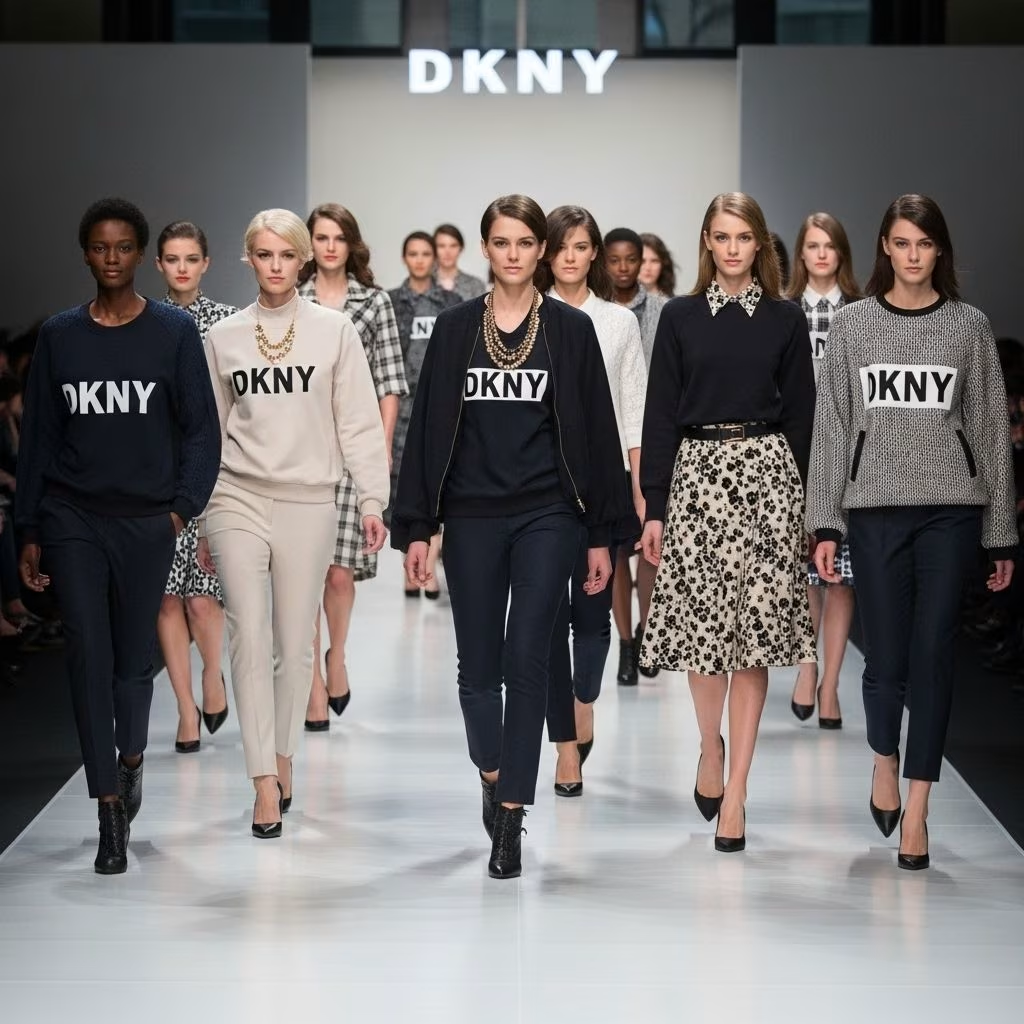
Donna Karan’s DKNY Spring 2014 show at New York Fashion Week was not just another display of contemporary style—it was an unexpected, powerful statement about diversity and inclusion. By boldly casting non-traditional models alongside industry professionals, DKNY offered a new vision for what the world’s most watched runways could and should look like, fundamentally challenging norms and expectations within high fashion.
The Stage Is Set: Unveiling a New Kind of Runway Casting
The anticipation was palpable as editors and guests filled the venue, but few could have predicted what DKNY was about to deliver. The show did not simply start with models striding down the catwalk. Instead, attendees were greeted by a short film featuring a vibrant mix of individuals—models, artists, and everyday New Yorkers—describing their personal journeys to New York City. This video presentation immediately set the tone for the show’s core message: New York is a melting pot, a city where diversity is the unifying thread, and DKNY wanted the runway to echo that reality.
Among the film’s stars was Julianna Huxtable, a transgender artist, DJ, and writer whose presence on-screen was met with noticeable excitement from the crowd.
From Film to Fashion: Executing Diversity on the Runway
The film faded, and, as per tradition, two statuesque, professional models emerged—tall, thin, and fitting the conventional ‘model’ archetype. For a fleeting moment, the audience wondered if the show’s promise of inclusion had already reached its peak.
But then, in a surprising twist, the runway transformed: Angel Haze, the acclaimed rapper well known for challenging boundaries of both music and gender, was the first of almost two dozen non-models to take center stage, her stride met with enthusiastic applause. She was swiftly followed by Julianna Huxtable herself, now elevated from on-screen interviewee to live runway participant—an unmistakable cue that DKNY was about to keep pushing the boundaries.
- Angel Haze: First non-model on the runway, representing intersectional identity and musical influence.
- Julianna Huxtable: Showcased as both a video subject and runway model, highlighting gender diversity.
- Melissa Burns: Plus-size, curvaceous blonde who broke traditional model standards and drew raucous applause.
- Ducati: Artist featured in wide-leg black pants and striped coat, receiving crowd admiration.
- Andrej Pejić: Androgynous, gender-fluid modeling star blending menswear and womenswear aesthetics.
Celebrating Different Body Types: The Moment for Plus-Size Models
For years, the fashion industry has clung to a uniform ideal for model body type: tall, thin, and often unrelatable for the general public. DKNY’s show disrupted this expectation in spectacular fashion. The moment that most dramatically symbolized this shift was the arrival of Melissa Burns, a plus-size, curvaceous blonde whose charisma and powerful walk eclipsed even the industry’s seasoned professionals. Outfitted in a striking black jersey dress and a black-and-white striped shearling coat, Burns was greeted with an outpouring of cheers, hoots, and applause—a clear audience affirmation for expanding fashion’s vision of beauty.
Soon after, artist Ducati made her appearance in wide leg black pants and a striped coat, adding further dimension and diversity to the cast of models being celebrated on the world stage.
Androgyny and Gender-Fluidity on the DKNY Runway
The show’s commitment to rewriting conventional standards did not stop at body size. Andrej Pejić, famous for their androgynous appeal and self-identification as “living in between genders,” added another layer to the celebration of authentic self-expression. Pejić, who has historically modeled both men’s and women’s clothing, symbolized a rejection of binary gender norms and demonstrated that fashion can, and should, be a space for everyone—regardless of where they fall on the gender spectrum.
| Model/Participant | Identity/Role | Significance |
|---|---|---|
| Angel Haze | Rapper, Non-Model | Representation of intersectional identity and musical impact |
| Julianna Huxtable | Transgender Artist/DJ/Writer | Visibility for the transgender community |
| Melissa Burns | Plus-Size Model | Challenge to narrow body ideals |
| Ducati | Artist, Non-Model | Artistic diversity and personal style on runway |
| Andrej Pejić | Androgynous Professional Model | Redefining gender representation in fashion |
Why This Matters: DKNY’s Statement and the Industry’s Future
Donna Karan stated her motivation plainly: these casting decisions were intended to honor “the city, the people, and the uniqueness of the style that walks the streets of New York.” By bringing together such an eclectic cast, DKNY’s Spring 2014 show not only reflected the energy and diversity of the city itself but also sent an implicit challenge to the broader fashion industry: celebrate uniqueness and let your runways truly mirror the world outside your doors.
Will this become the norm? Only time will tell, but the immediate impact was clear. Critics praised DKNY for moving inclusion beyond simple tokenism, making it visible, audible, and tangible in a space too often accused of sameness and exclusivity.
- Emphasis on authentic street style: Rather than curating a fantasy, DKNY showcased looks and people that would not be out of place navigating New York’s sidewalks.
- Highlighting real New Yorkers: Casting people based on individuality and story, not just industry statistics.
- Broad applause and positive response: Vibrant crowd reactions demonstrated a public hunger for more representative casting choices.
The Broader Context: Fashion’s Historical Struggle with Diversity
While the DKNY runway garnered admiration, it’s critical to acknowledge how exceptional this moment was in context. Fashion runways have long preferred a singular aesthetic. Transgender, androgynous, and curvier individuals have historically been marginalized, with token representation often considered revolutionary. The DKNY Spring 2014 show didn’t eliminate these entrenched norms overnight, but it undeniably contributed to shifting perceptions:
- Transgender Visibility: The inclusion of Julianna Huxtable and Andrej Pejić marked an important milestone in welcoming transgender and gender-nonconforming talent onto prominent stages.
- Body Inclusivity: Melissa Burns’ moment in the spotlight demonstrated audience enthusiasm for models reflecting more realistic body types.
- Breaking the Model Mold: By featuring artists, musicians, and actual New Yorkers, DKNY proved runway value isn’t exclusive to agency-connected faces.
Industry Reflections & Forward Momentum
Fashion critics and observers speculated whether DKNY’s casting would influence other designers to take similar risks. There’s cause for optimism: mainstream media coverage, including that from Cosmopolitan, applauded the brand’s choices and speculated that the growing interest in authenticity and unique style would continue to gain traction.
Notably, DKNY’s approach went beyond performative gestures—instead, it matched casting to their designs’ spirit of city-chic accessibility, resonating with a diverse customer base and possibly setting a precedent for future fashion weeks.
Frequently Asked Questions (FAQs)
Q: Who are some of the groundbreaking figures featured in DKNY’s Spring 2014 show?
A: Key figures included transgender artist and writer Julianna Huxtable, rapper Angel Haze, plus-size model Melissa Burns, artist Ducati, and world-renowned androgynous model Andrej Pejić. Their varied backgrounds underscored the show’s message of embracing diverse identities on the runway.
Q: What specific impact did the show have on the fashion industry’s approach to diversity?
A: The show was widely praised for its authentic approach to diversity and is seen as a milestone moment—one that inspired greater interest and openness in including people of various sizes, gender expressions, and backgrounds at future runway events. Its influence prompted discussions on runway casting globally.
Q: Why did Donna Karan choose to organize the show with such diverse casting?
A: Donna Karan aimed to celebrate the vibrancy and uniqueness of New York City, reflecting real people and eclectic styles found on its streets, and encouraging the industry to shift away from traditional, narrow definitions of beauty and presentation.
Q: How did the audience respond to the show’s non-traditional casting?
A: The crowd’s reaction was enthusiastic, with cheers and applause meeting each non-model and non-traditional participant. The show’s atmosphere was charged with a sense of excitement and affirmation for the broader message of diversity.
Q: Is diversity on the runway now more common after this DKNY show?
A: While diversity still remains an evolving goal in fashion, DKNY’s Spring 2014 presentation is cited as pivotal in raising the standard and conversations surrounding inclusive runway casting. It encouraged many other designers and brands to reconsider their approach to model selection and to reflect the true diversity of their audiences.
Related Reading
- 8 Transgender Models Who Would Dominate the Runway
- You Might Actually Start Seeing Models With Curves in Fashion Shows
References
- https://www.cosmopolitan.com/style-beauty/fashion/news/a20148/diversity-dkny-show-2014/
- https://dergipark.org.tr/tr/download/article-file/179539
- https://www.gorgeautiful.com/dkny-rtw-spring-summer-2014-new-york-fashion-week/
- https://investors.crocs.com/news-and-events/press-releases/press-release-details/2014/Crocs-Enters-Third-Year-of-Fashion-Forward-Blogger-Program/default.aspx
- https://en.wikipedia.org/wiki/Bella_Hadid
- https://fashionweekdaily.com/rita-ora-is-everywhere-including-the-november-cover-of-cosmopolitan/