Tariffs and the Global Rise of K-Beauty
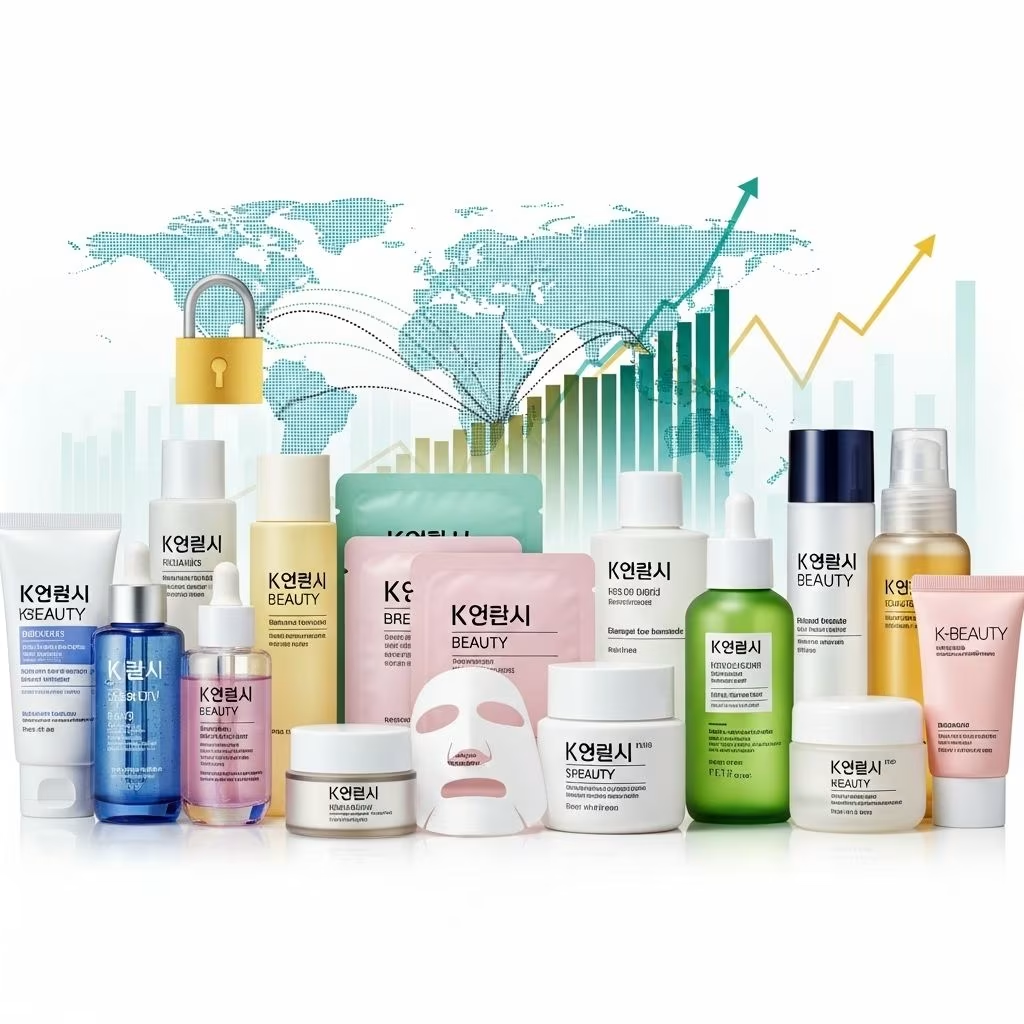
Korean skincare, widely referred to as K-Beauty, has rapidly become a staple in cosmetic routines worldwide. Famed for its innovative formulas, distinctive packaging, and trendsetting practices like ‘glass skin,’ the industry has experienced exponential growth, transforming from an East Asian curiosity into an international beauty powerhouse. Central to this expansion are export strategies, consumer demand, and, increasingly, tariffs and trade regulations that threaten to disrupt the market equilibrium.
This article explores the impact of tariffs on K-Beauty exports, breaking down how such economic policies influence product pricing, brand competitiveness, trade relations, and the future trajectory of Korean skincare worldwide.
Understanding Tariffs: Definition and Mechanisms
Tariffs are taxes or duties imposed by governments on imported goods at border entry points. Intended to protect domestic industries, manage trade balances, or serve as leverage in trade negotiations, tariffs can directly affect both the pricing and accessibility of international products such as Korean cosmetics.
Key points about tariffs include:
- Tariffs result in higher prices for imported goods, as importers and retailers often pass these costs on to end consumers.
- Tariffs may be implemented or adjusted according to trade agreements, changing political landscapes, or economic strategies.
- Non-tariff barriers, like ingredient restrictions or import licensing, also complicate trade and market access for cosmetics brands.
Global Expansion of K-Beauty: Export Growth and Trends
The Korean skincare and cosmetics export market has shown remarkable growth, reaching US$10.2 billion in 2024 with a robust 20% year-on-year increase. By the first half of 2025, exports already hit US$5.51 billion, up nearly 15% from the prior year.
K-Beauty is renowned for its:
- Innovative ingredients (e.g., snail mucin, rice water, fermented plant extracts)
- Cutting-edge formulations (e.g., ampoules, sheet masks, BB creams)
- Emphasis on healthy, glowing skin
- Attractive, trend-driven packaging
Among global regions, demand is especially strong in the U.S., Europe, China, Southeast Asia, and India. In the United States alone, imports surpassed US$1.7 billion in 2024, a notable 54% increase over the previous year.
How Tariffs Impact K-Beauty Exporters and Consumers
While the international popularity of K-Beauty continues to rise, numerous countries have imposed or proposed tariffs that affect its growth and accessibility. These tariffs impact Korean skincare exports in several ways:
- Pricing: Tariffs increase the wholesale and retail cost of imported products, often making luxury or premium brands less accessible to the average consumer.
- Market Reach: Elevated tariffs can limit brands’ ability to expand into key markets by making products more expensive or less competitive.
- Profitability: Margins decrease for manufacturers, importers, and retailers, potentially forcing brands to revise supply chain strategies or introduce alternative product lines.
- Innovation and Adaptation: Brands may invest more in sustainable packaging, distinctively local ingredients, or innovation to maintain their competitive edge despite elevated tariffs.
Example: As of August 2025, the United States proposed a 25% tariff on imported Korean skincare, compared to previous levels around 10%. This substantial increase could dramatically affect final retail prices and consumer access.
Tariff Policies and Country Comparison Table
| Country/Region | Tariff Status (2025) | Market Impact |
|---|---|---|
| United States | Up to 25% tariff proposed (as of Aug 2025); prior KORUS FTA allowed most cosmetics tariff-free | Higher prices, slowed exports, increased competition for U.S. brands |
| European Union | Tariffs around 10% on select skincare categories | Moderate price increases, regulations on ingredients |
| China | High tariffs on packaging, components, and select imports | Brands may face elevated costs and stricter regulations |
| India | Variable tariffs; rapid export growth despite fees | Rising demand offsets tariff impact in select segments |
| Southeast Asia | Generally lower tariffs; depends on local trade deals | Strong consumer interest drives market resilience |
How Brands Respond: Innovation and Strategy
Korean skincare brands have not remained static in the face of tariff pressures. Their evolving response strategies include:
- Localizing Production: Some brands establish manufacturing or packaging hubs within major target markets to lower import duties and improve logistical efficiency.
- Sustainable Packaging: By using eco-friendly materials or locally sourced packaging, brands may qualify for lower tariffs or position themselves as premium, conscious players in the beauty sector.
- Ingredient Adaptation: Reformulating products to comply with local ingredient regulations or consumer preferences, keeping both quality and compliance in mind.
- Digital Expansion: Leveraging online sales, social media influence, and direct-to-consumer platforms bypasses some traditional retail barriers and reaches consumers across borders more efficiently.
The K-Beauty category specifically focusing on skincare is projected to reach half of South Korea’s domestic production value, around US$7.5 billion by the end of 2024, despite tariff challenges. Because of this prowess, brands often retain their market share even when cost pressures rise.
Non-Tariff Barriers and Regulatory Challenges
Besides tariffs, Korean skincare exporters must navigate a web of non-tariff barriers:
- Ingredient Restrictions: Some countries ban or strictly limit certain substances common in K-Beauty formulas (e.g., specific botanical extracts, preservatives).
- Import Licensing: Complex documentation, product registration, and licensing requirements vary by destination market.
- Packaging Compliance: Requirements on recycling, labeling, or allergen disclosure can increase operational costs and slow market entry.
Combined, these restrictions can be just as impactful as direct tariffs, requiring brands to be agile and adaptive in formulation and supply chain strategy.
Trade Agreements and Government Support
Several international and bilateral agreements have helped buffer the K-Beauty sector against the full impact of tariffs:
- KORUS FTA (Korea-U.S. Free Trade Agreement): Implemented in 2012, initially allowed many Korean cosmetics into the U.S. tariff-free, supporting export growth before recent tariff proposals.
- EU-South Korea FTA: Facilitated easier access for Korean brands in European markets, though some categories are still subject to tariffs and strict regulations.
- Government Initiatives: South Korea has taken active steps to support the beauty industry, including negotiating new trade agreements and offering aid to brands facing export difficulties.
As new policies emerge and global economic alliances shift, continual government support will be essential to help K-Beauty brands navigate the evolving trade landscape.
Consumer Perspective: How Tariffs Affect Beauty Enthusiasts
From the consumer’s side, tariffs have tangible consequences:
- Higher Retail Prices: Increased import duties mean end consumers pay more for their favorite K-Beauty products, pushing some items into luxury territory.
- Limited Product Availability: Small brands may choose not to export to high-tariff markets, curbing choice and diversity for consumers.
- Known Alternatives: Domestic brands or products manufactured locally may become more attractive due to lower prices or comparable quality as tariffs climb.
Despite these challenges, consumer demand for K-Beauty has proven resilient, with enthusiasts often willing to pay a premium for trend-leading, effective formulas rooted in innovative science.
Projected Growth: The Future of K-Beauty in a Tariffed World
Industry analysts expect the global K-Beauty market to continue expanding, with projections reaching US$20.4 billion by 2035—a growth rate of about 6.1% per year. Factors driving this positive outlook include:
- Persistent global appetite for Asian skincare innovation
- Strong social media and influencer marketing presence
- Continual adaptation to global trade challenges
- Consumer loyalty to high-quality, cutting-edge products
While continued tariffs and regulatory constraints remain significant obstacles, K-Beauty’s ongoing creativity, digital commerce expansion, and government support are expected to sustain growth and consumer engagement for years to come.
Frequently Asked Questions (FAQs)
Q: Why are tariffs imposed on South Korean skincare products?
A: Tariffs are often enacted to protect domestic cosmetic industries, address imbalanced trade, or strengthen negotiating positions in international trade deals.
Q: Which countries have the highest tariffs on K-Beauty?
A: The United States has proposed tariffs of up to 25% as of August 2025; China and some others may impose even higher rates, depending on current trade relations.
Q: How do tariffs affect the price of Korean skincare abroad?
A: By raising the import cost, tariffs often result in higher retail prices for consumers and force brands to adjust their market strategies or product offerings.
Q: Are there any trade agreements that benefit K-Beauty exports?
A: Agreements like the KORUS FTA and EU-South Korea FTA have historically lowered tariffs and facilitated access, though policy changes can still introduce new barriers.
Q: Can K-Beauty brands still thrive despite global tariffs?
A: Yes. Brands that innovate, leverage digital channels, and adapt to local requirements often maintain strong global demand and competitive resilience.
Key Takeaways for the Beauty Industry
- Tariffs are a significant factor shaping the K-Beauty global market, influencing pricing, market competition, and overall brand strategy.
- K-Beauty continues to grow rapidly worldwide despite rising costs and trade barriers.
- Strategic innovation, government support, and digital commerce are essential tools for navigating the complex world of international skincare exports.