How to Apply Perfume: Expert Tips for Long-Lasting Scent
Do you ever spritz your signature fragrance only to feel the scent fade after a few hours? If you struggle with making perfume last or wonder about the ideal way to apply your favorite scent, expert guidance can transform your daily routine. Professional perfumers agree: understanding where, how, and how much perfume to apply makes all the difference—both for longevity and for the experience of your scent. This comprehensive guide breaks down the best ways to apply perfume, key dos and don’ts, how to handle different types of fragrances, and advanced tips like scent layering for a personalized touch.
Why Perfume Application Matters
Perfume is more than just a finishing touch—it’s an invisible element that can define your style and mood. Yet even the most expensive fragrances can disappoint if not applied correctly. Factors such as skin type, body temperature, and application techniques all affect how a scent wears throughout the day.
Where to Spray: Understanding Pulse Points and More
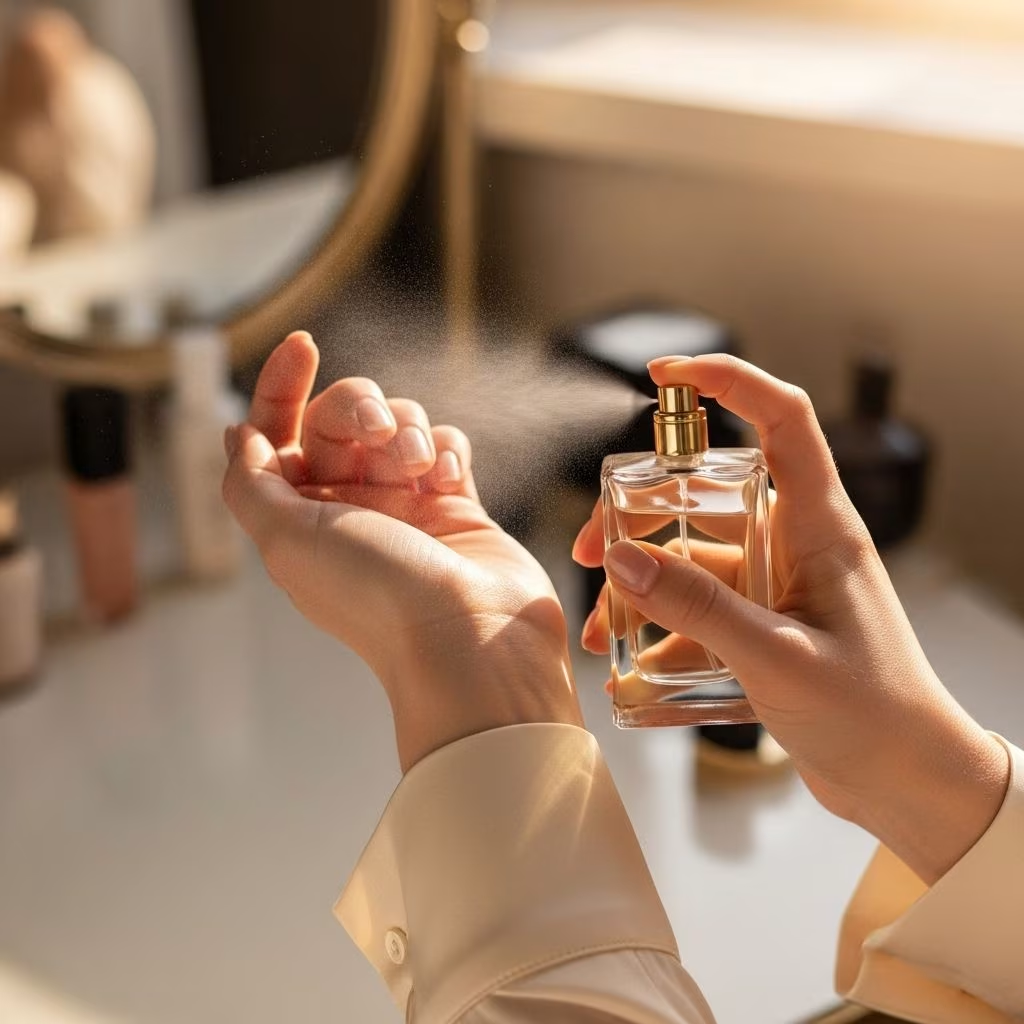
One of the key tips from fragrance professionals is to target your pulse points. These are areas on your body where blood vessels are close to the skin, naturally emitting more heat. The warmth helps diffuse the fragrance, causing it to radiate and linger longer.
- Wrists: Classic and effective. Avoid rubbing them together post-application.
- Neck: A warm spot enhances projection without overwhelming.
- Behind the ears: Discreet and warmly scented.
- Inside your elbows: As your body moves, it gently releases fragrance.
- Behind the knees: A subtle location that lets the scent rise throughout the day.
- On your ankles and calves: Especially recommended if you want your fragrance to subtly rise as you walk.
Another lesser-known tip is to spritz on the tops of your ears, as the skin there is often a bit oilier, which helps lock in scent for longer.
Should You Spray Your Hair or Clothes?
Hair and clothing can be excellent carriers of scent. Fibers on clothing tend to lock in fragrance, often making it last even after washing. For hair, opt for a perfume specifically formulated for it, as alcohol-based perfumes can be drying. Alternatively, spray perfume onto a hairbrush and run it through your hair for an even, gentle application.
- Clothing: Spritz lightly over fabrics like cotton and wool to ensure the scent holds.
- Hair: Use a dedicated hair fragrance or spritz perfume on a brush—not directly on hair—to avoid dryness.
Why the ‘Spray and Walk’ Method Falls Short
Walking through a cloud of perfume may look glamorous, but experts agree it’s ineffective. Most of the fragrance dissipates into the air rather than settling on your skin or clothing, making it a wasteful method with little scent payoff. For best results, apply perfume directly to your chosen points.
Common Application Mistakes to Avoid
- Rubbing wrists together: This common habit can break down fragrant molecules, altering the scent’s integrity and causing it to fade faster.
- Over-spraying: More isn’t always better. Too much perfume can overwhelm rather than enhance, causing olfactory fatigue—for you and those around you.
- Spraying perfume only in the air: Direct skin or fabric contact is required for meaningful staying power.
Tailoring Your Spritz: How Many Sprays for Each Fragrance Type?
Different types of fragrances have varying concentrations of aromatic compounds, which affect how much and how often you should apply:
- Eau de Parfum (EDP): With a balanced intensity, two to three sprays on pulse points are usually sufficient. For more lasting sillage (how far the scent travels), four to five spritzes may work for those who prefer a stronger impact.
- Extrait de Parfum: Far more concentrated and expensive, one to two sprays are plenty—preferably focused on pulse points, letting intensity speak for itself.
- Body Mists: Lighter and designed for layering, these can be applied more generously on skin and hair. Start with four or five sprays and reapply throughout the day as needed.
| Fragrance Type | Concentration (%) | Recommended Sprays | Where to Apply |
|---|---|---|---|
| Eau de Parfum (EDP) | 15-20% | 2-5 | Pulse points & light touch on clothes |
| Extrait de Parfum | 20-40% | 1-2 | Pulse points only |
| Body Mist | 1-3% | 4-8 (reapply as needed) | Skin, hair, clothing |
Advanced Hacks for Maximizing Scent Longevity
1. Prep Your Skin Right
Moisturized skin holds scent longer. Layer an unscented body oil or lotion over your body before application—the extra hydration acts like a glue for fragrance molecules. Dry skin, by contrast, struggles to hold onto scents as effectively.
2. Try Scent Layering
Layering fragrances isn’t just a trend—it’s a creative way to develop a unique, long-lasting signature scent. Here’s how to layer effectively:
- Start with the most intense fragrance, applying it directly to pulse points.
- Follow with a lighter scent, applied to complementary points or gently over the initial layer.
- Test combinations on scent blotters first to ensure they harmonize before applying to skin.
Popular layering combos include:
- Vanilla + Citrus
- Musk + Jasmine
- Peony + Sandalwood
Layering isn’t just about artistry; heavier scents on pulse points and lighter notes on hair or clothes allow fragrance to evolve beautifully throughout the day.
3. Never Waste the Last Drops
When your perfume bottle is almost empty, pour the remaining drops into an unscented body lotion. This helps you use every last bit while boosting your scent’s longevity in a subtle, moisturizing way.
4. Cotton Swab Touch-Ups
Spray perfume onto a few cotton swabs, seal them in a small bag, and keep them in your purse for easy, discreet touch-ups throughout the day. This eliminates the need to carry around bulky bottles.
5. Remove Unwanted Scents Easily
If you try a fragrance that turns out to be overpowering or just not for you, use a makeup wipe to quickly and effectively wipe away unwanted scents from your skin.
6. Know Your Perfume Lingo
Understanding perfume terminology helps you shop confidently and manage scent expectations:
- Top Notes: The first, most fleeting notes you smell after spraying.
- Heart (Middle) Notes: The main body of the perfume that emerges after the top notes fade.
- Base Notes: The longest-lasting, deepest scent components that linger on your skin the longest.
How to Apply Perfume for Special Occasions vs. Daily Wear
For work or casual days, less is more: focus on one or two pulse points, and consider lightly misting your clothes. For evening or special events, apply to multiple pulse points and hair (using hair-safe fragrance products) to ensure your signature scent makes a memorable impression.
Pro Tips for Different Skin Types and Seasons
- Oily Skin: Holds fragrance longer. Start with fewer spritzes and adjust as needed.
- Dry Skin: Scent fades faster; always layer with a moisturizer or body oil first.
- Summer: Use fresh, lighter scents and less-perfume, as heat amplifies projection.
- Winter: Opt for warmer, deeper fragrances and don’t hesitate to apply a bit more for a comforting cocoons of scent.
Scent Application: Step-by-Step Routine
- Start with freshly cleansed, moisturized skin.
- Apply an unscented body oil or lotion to your pulse points.
- Hold the perfume bottle 3-6 inches from your skin; spray directly.
- Let the perfume dry naturally without rubbing in.
- Optionally, spray a light mist over clothing or hair (using suitable products).
Frequently Asked Questions (FAQs)
Q: Do I need to reapply perfume during the day?
A: For most eau de parfums, application in the morning suffices, but lighter formulations like body mists may require reapplication every few hours, especially after physical activity or washing your hands.
Q: Is it okay to mix different perfumes?
A: Yes—this is called fragrance layering. Start with simple combinations and build confidence as you explore what works on your unique skin chemistry.
Q: Should I store perfume in the bathroom?
A: Bathrooms are often humid, which can break down fragrance molecules. Store your perfume in a cool, dry place away from direct sunlight for best longevity and scent preservation.
Q: Why can’t I smell my perfume after a while?
A: This is often due to olfactory fatigue—where your nose becomes desensitized to familiar scents. Others around you may well still detect your fragrance even if you cannot.
Q: What’s the best way to test a new perfume?
A: First try it on a paper blotter, then on your skin, as natural oils can alter scent development. Wait a few hours to appreciate the full evolution from top to base notes.
Scent Application Do’s and Don’ts
- Do: Apply perfume to clean, moisturized skin for the best base.
- Don’t: Rub wrists together, as this breaks down complex perfumery notes.
- Do: Consider layering for bespoke fragrance experiences.
- Don’t: Spray perfume only in the air and walk through—target skin or clothing instead.
- Do: Store bottles out of sunlight and away from heat for maximum freshness.
Final Thoughts
Mastering the craft of perfume application is about respecting the chemistry of scent and your own unique skin. With these tips—from pulse point targeting to layering and tailored application for different seasons—you will maximize both the longevity and projection of every perfume in your collection. Let your signature scent speak volumes, all day long.
References
- https://www.cosmopolitan.com/style-beauty/beauty/a65797401/how-to-apply-perfume/
- https://www.cosmopolitan.com/style-beauty/beauty/advice/a34783/fragrance-hacks/
- https://www.cosmopolitanme.com/beauty/arab-fragrance-layering
- https://www.aromaconcepts.com/products/london-cosmopolitan-edp-emir-85ml
- https://www.youtube.com/watch?v=6pYYPL_MeKw
- https://myop.in/collections/cosmopolitan